Hope Against Entropy

(Editor’s note: apologies if you’re on my email list and receiving this a second time.  It won’t happen too often.  If you’re not on my email list, you should be!  Please write “SUBSCRIBE” to laura@jevaia.org).vision-nepal-global-exposure-workshop-088-2
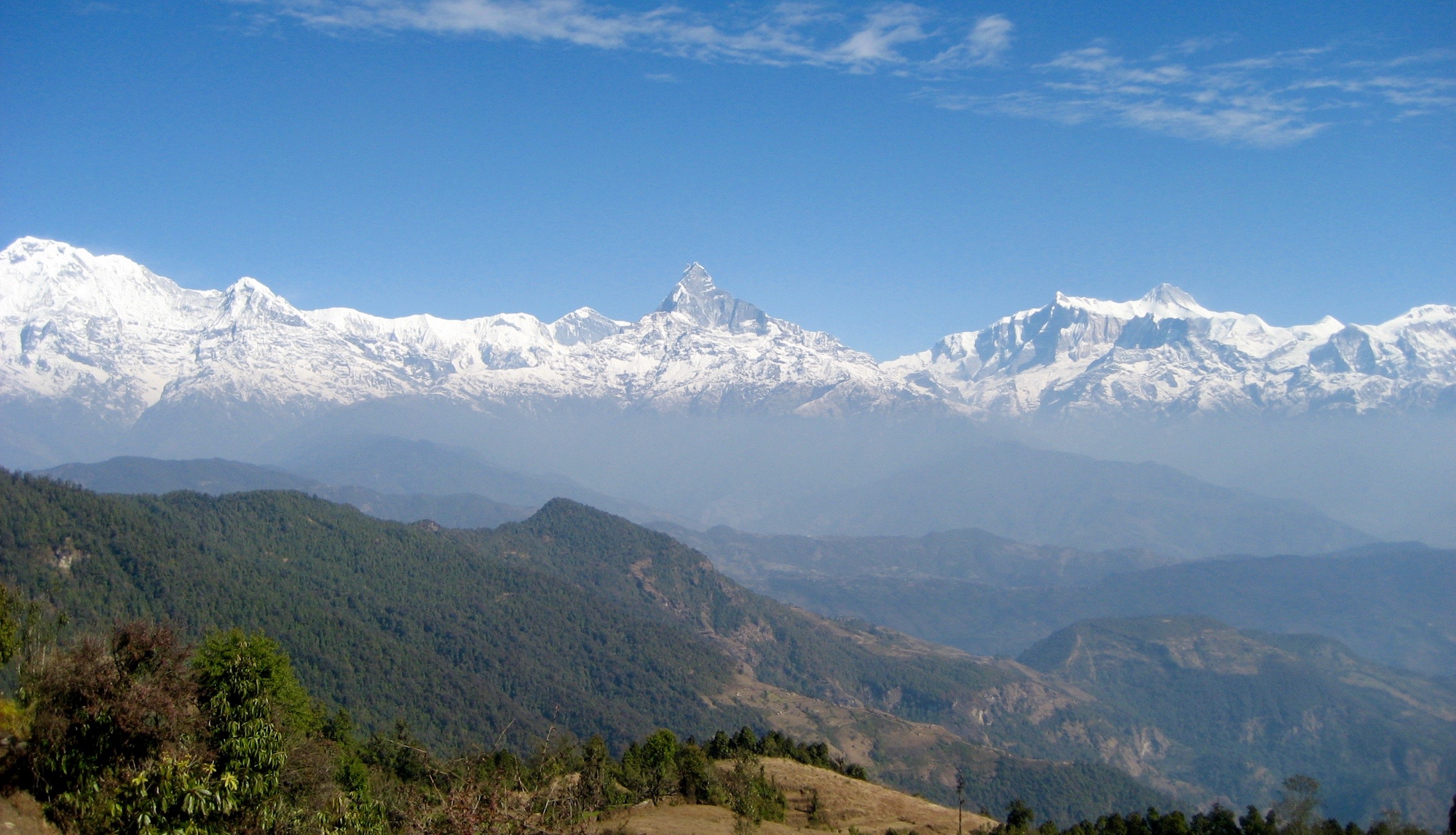
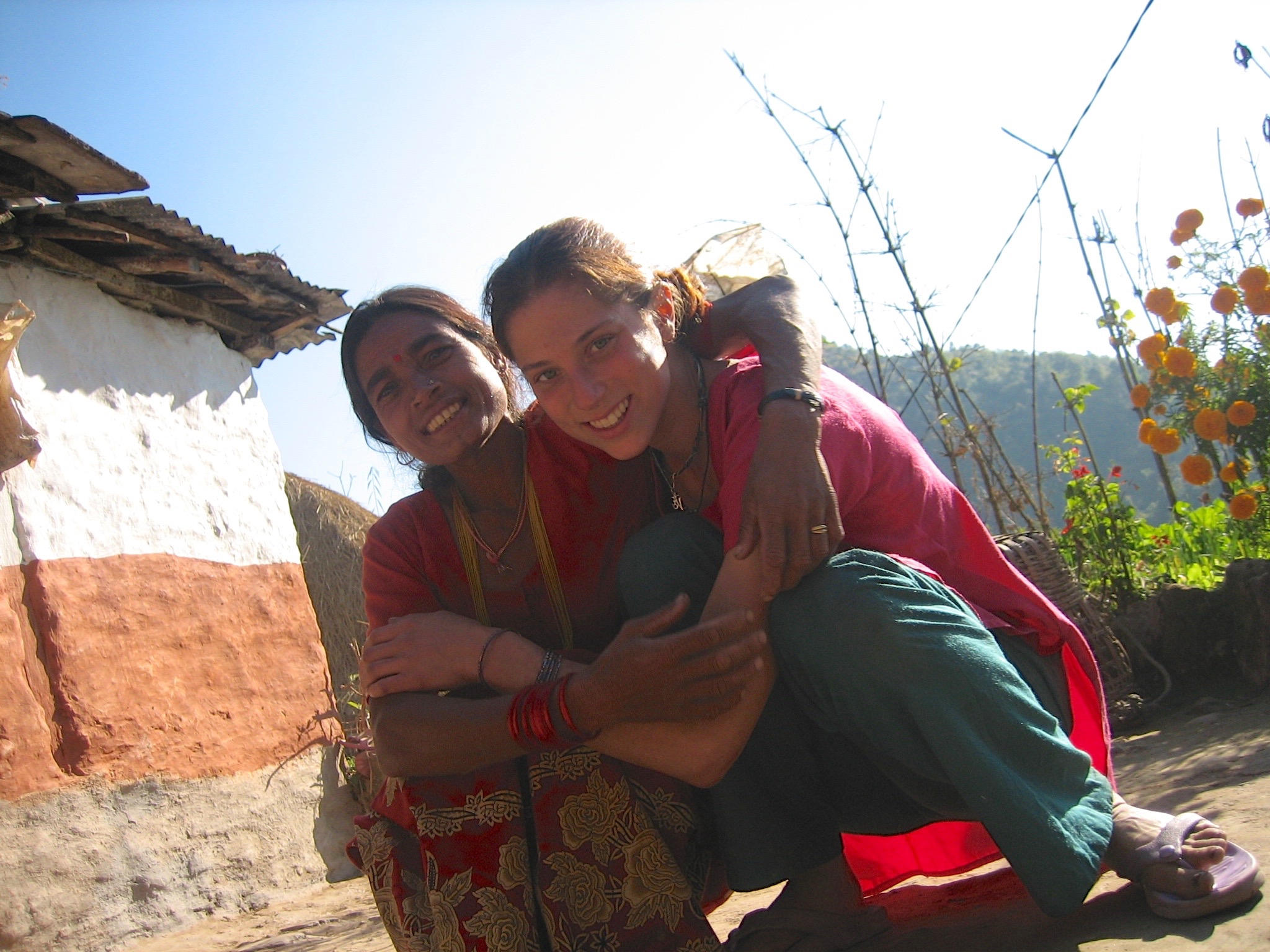
Good morning from sunny Pokhara!  I arrived yesterday and enjoyed a nice homecoming tour of all my regular haunts. Since August, Pascal has rigged up a home-made antenna on the roof, Aidan’s other front tooth has finally come in, and the corn has been cut down in the garden in front of our office, replaced with new seedlings.  I absolutely love this season in Nepal – the cold, wide air, the clear mountain skyline which is obscured by fog during the monsoon, the evening snuggles with my nephews under warm blankets.  Tonight I head up to beautiful Kaskikot to see Aamaa.

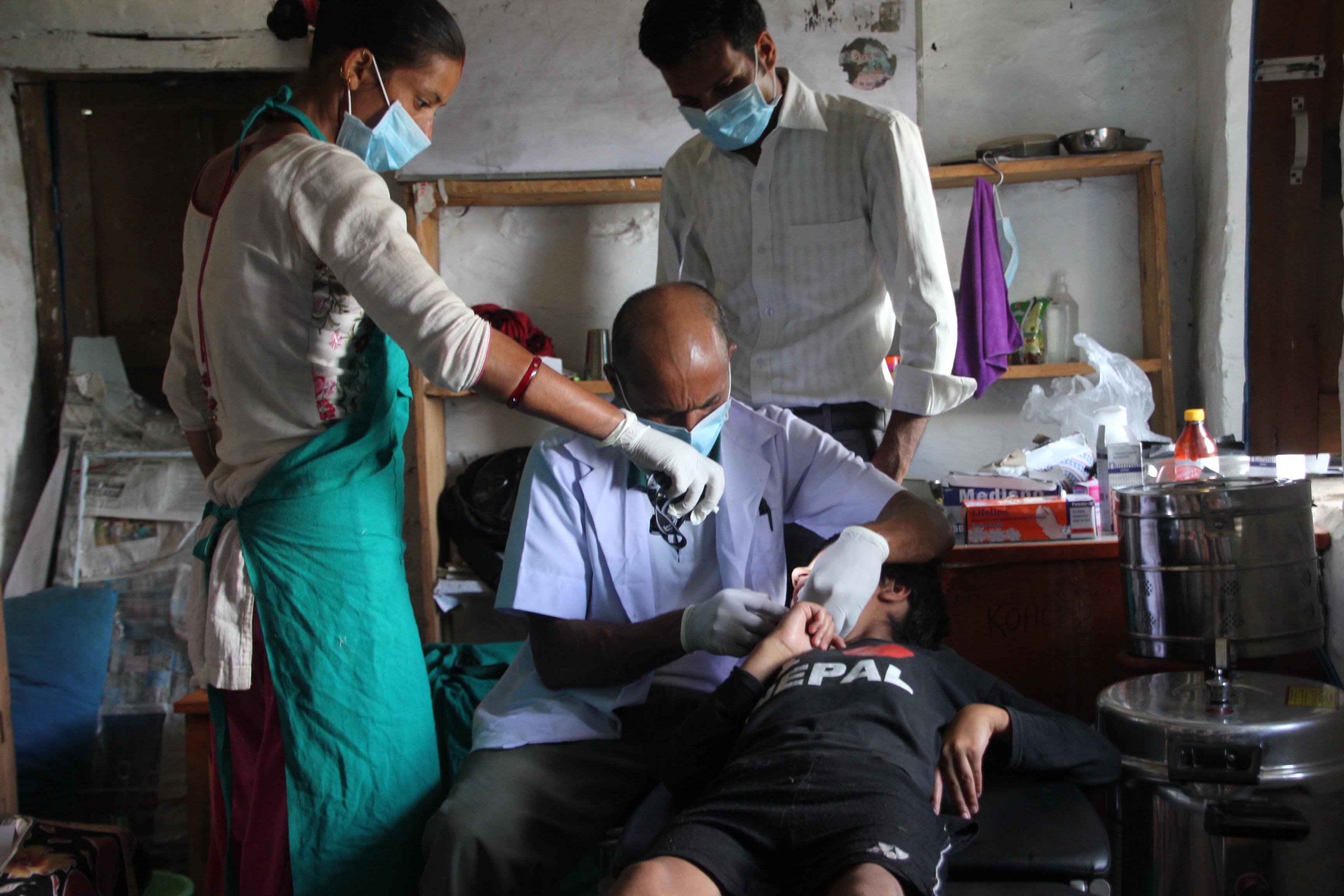
photoI’m so excited to tell you about our plans for this winter.  After 10 years of chipping away at all this, we are just days away from a two-week collaboration with dentists, researchers, and students from Berkley, UCSF, UConn and the University of Puthisastra in Cambodia. It is a strange and wonderful feeling to be preparing for such a large and qualified group of visitors after so many years of working away with few outside witnesses to our efforts.  There are many great things wrapped up in upcoming this ball of projects.

The first is helping to implement a UCSF/Berkley study of oral health and nutrition in mothers and their children.  Our own JOHC field teams will get to work with the researchers to conduct this study in one of our villages.  The second project is training our technicians in some new techniques, which they’ll incorporate in to their sustainable clinics.  Third, we have the chance to bring dentists to our rural clinics for medical audits.  Believe it or not, after an entire decade, this will be the first time we’ve had foreign dentists come to visit our clinics.  

And finally, we’re going to pilot an evaluation of past patients who’ve been treated by our technicians over the years.  If you don’t think that sounds like Christmas, listen here! This means comparing the outcomes achieved by our local dental technicians to the results produced by fully credentialed dentists in prior studies of the same treatment techniques. img_3285 This is a HUGE step towards our goal of having Nepal’s national health care system adopt rural dental clinics in to all of its health posts. Why? Thank you for asking!  Because the main criticism is that community-level health workers aren’t qualified to perform dental medicine…even though that excludes millions of people from care.  But we’re making the case that, rather than write off local health workers, the medical field must find ways to properly train them to provide the best care possible in their settings.  And that’s what we’re doing!
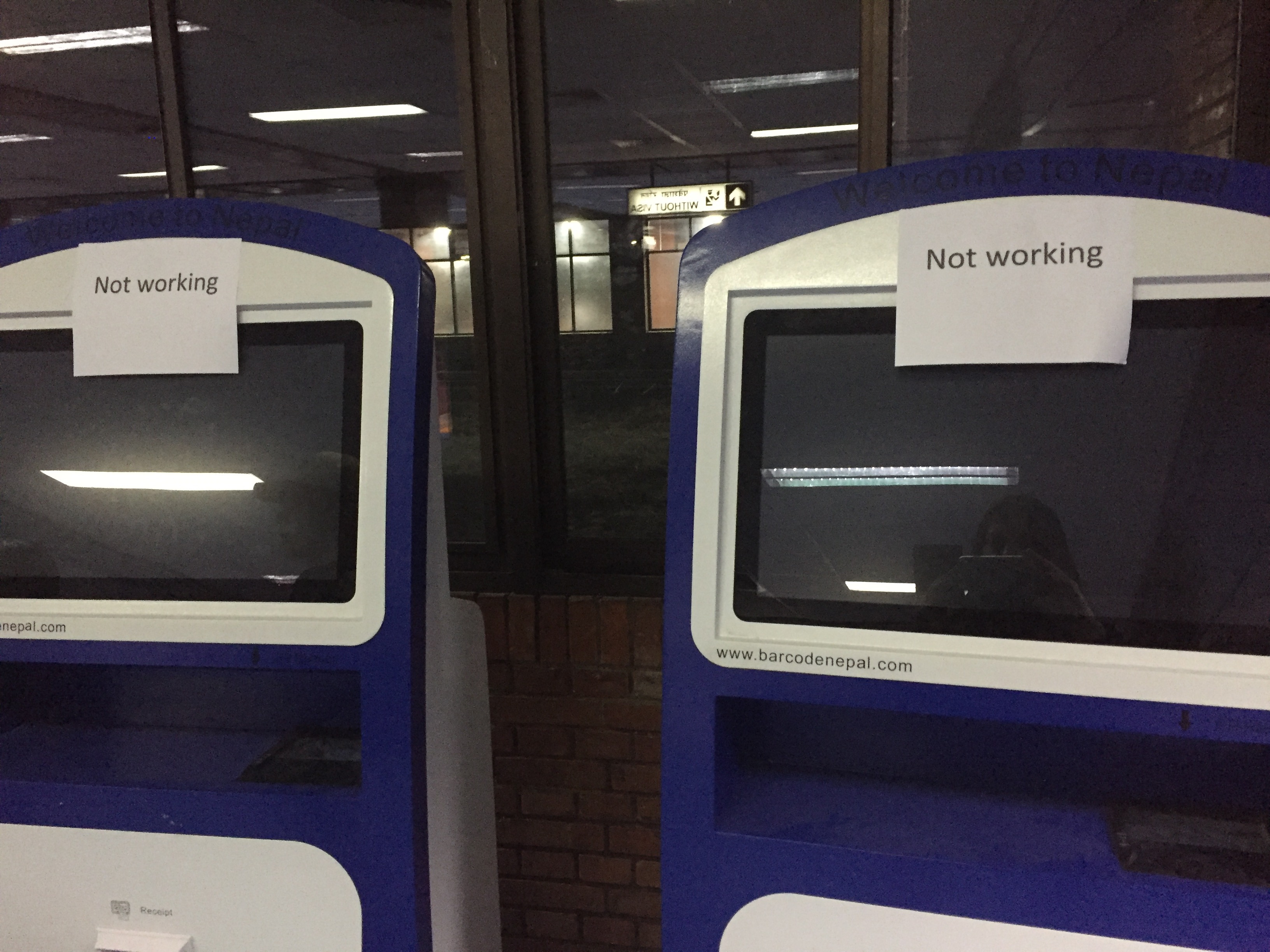
Ok, so those are the technical points.  Now let’s talk about me organizing for fourteen people to show up next week from California, Connecticut, India and Cambodia.  We have a schedule, a budget, a training plan, hotels, flights, and t-shirts.  We’re doing our best to keep things under control.  But we are up against the entropy of Nepal, people.  THE ENTROPY OF NEPAL.  Pretty much anything could derail our plans and contingency plans: a wedding, a political strike, rain, someone’s grandpa dying, a forestry meeting, a buffalo falling ill.  A buffalo having a baby.  A traffic jam.  A flat tire.  Lost luggage.  Fog on Sunday afternoon.  Somebody decided to drive this point home for me at the recently renovated, lusciously carpeted arrival terminal in the Kathmandu airport, which has a new row of fancy kiosks for visa filing:
img_0854

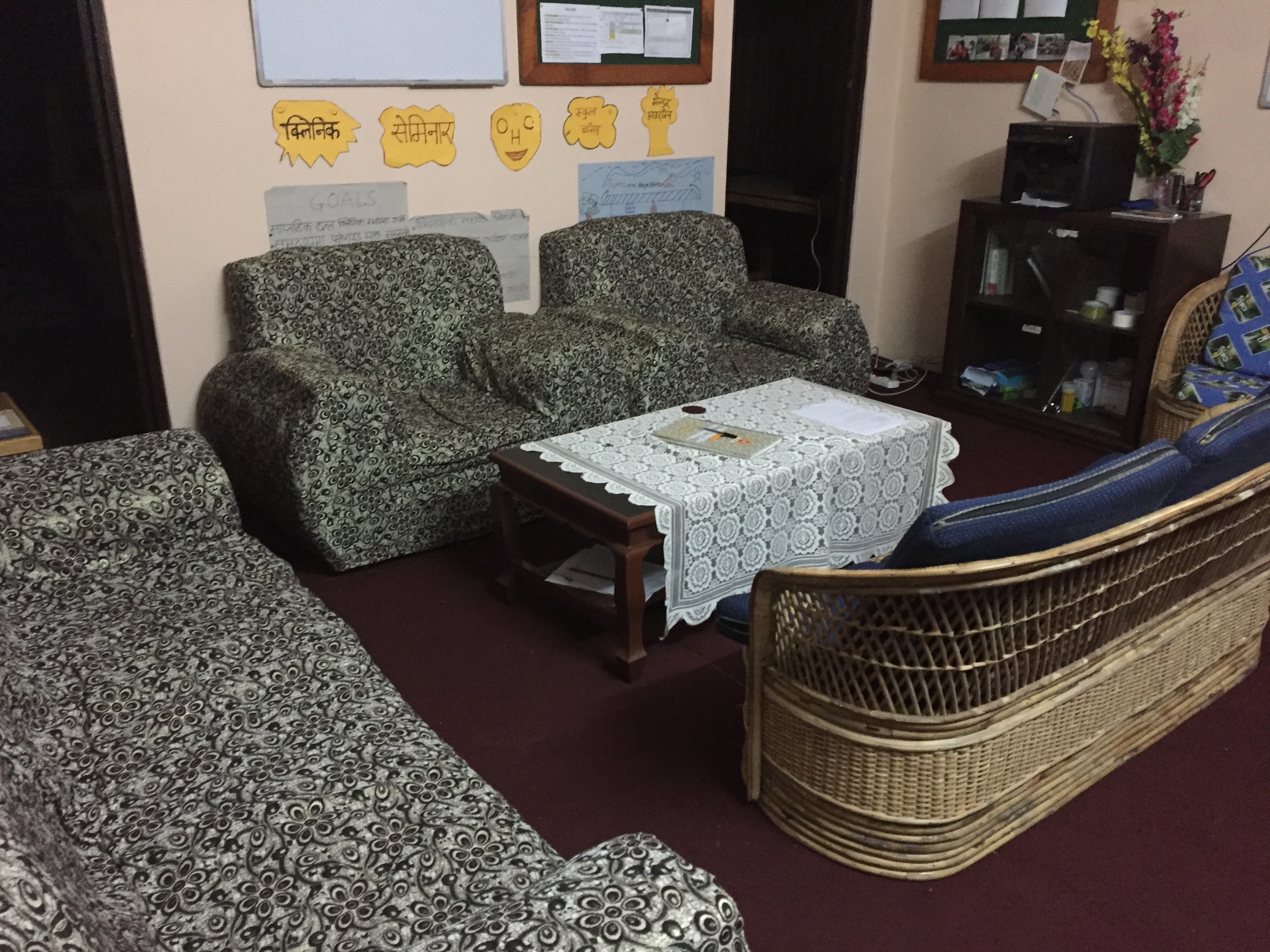
On the plus side, sometimes fate works to your advantage.  Consider our office.  This fall, our landlord’s son got married.  The son received a number of couches by way of dowry.  They don’t fit in our landlord’s apartment, so I arrived to find them in our office, which now looks rather like a furniture store.  If you have any idea how much I have obsessed over the setup of our office, you will especially appreciate this stroke of….er….luck…
img_0872

Well, in solidarity, I think I’ll leave you there on the edge of your seat.  Except for sharing a photo of this year’s Race to the Rock, which was one of our best yet.  If you missed it, please consider Jevaia in your end of year giving.  After all, we’ve made it this far – through many political trials combined with road mishaps, fuel strikes, weddings, earthquakes, and baby buffalos – almost exclusively on the wings of individual donors, and here we are entering a very exciting new chapter.  Thank you for being a part of the ride with me and all of us.

*
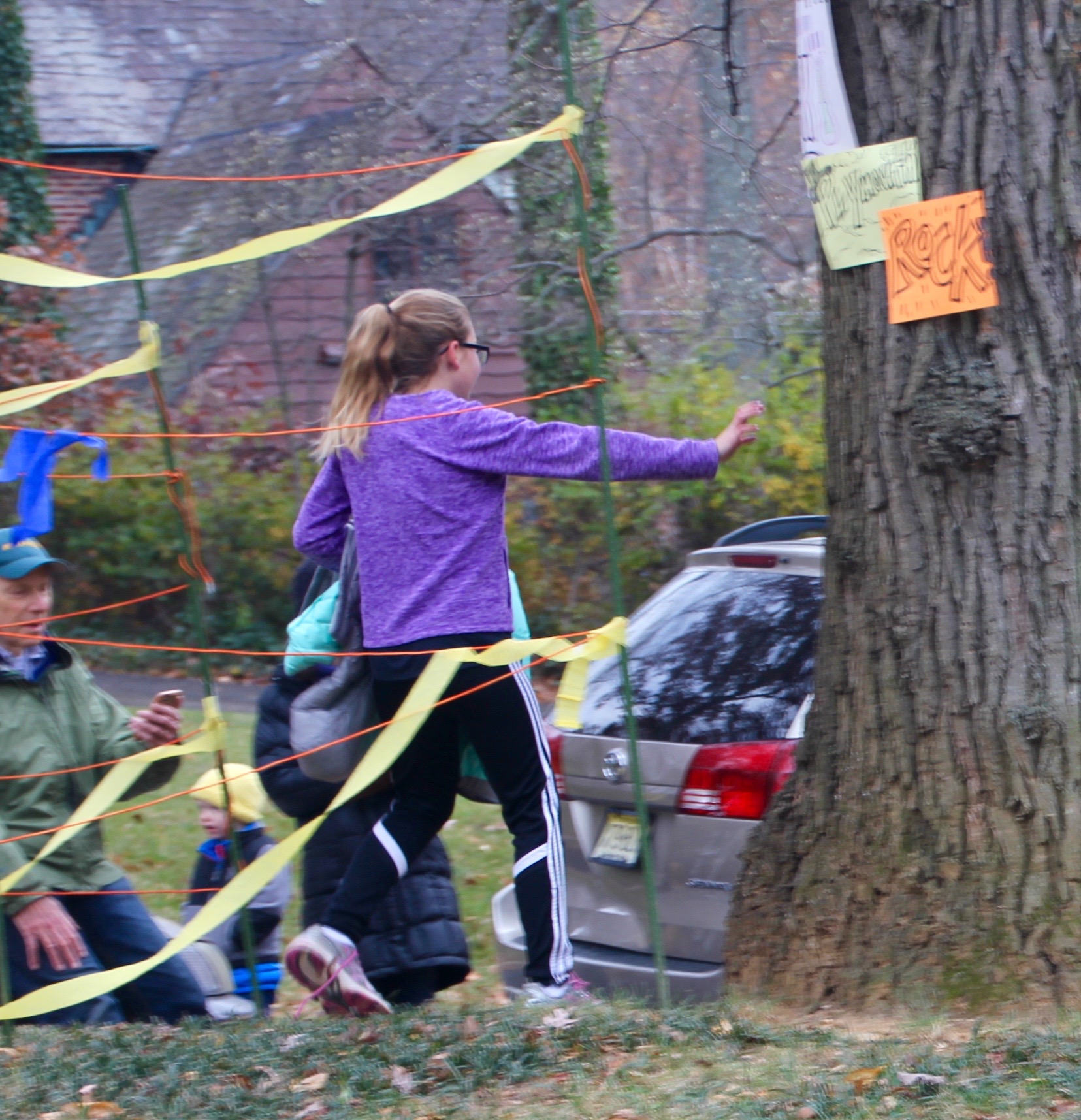
img_4046

Between


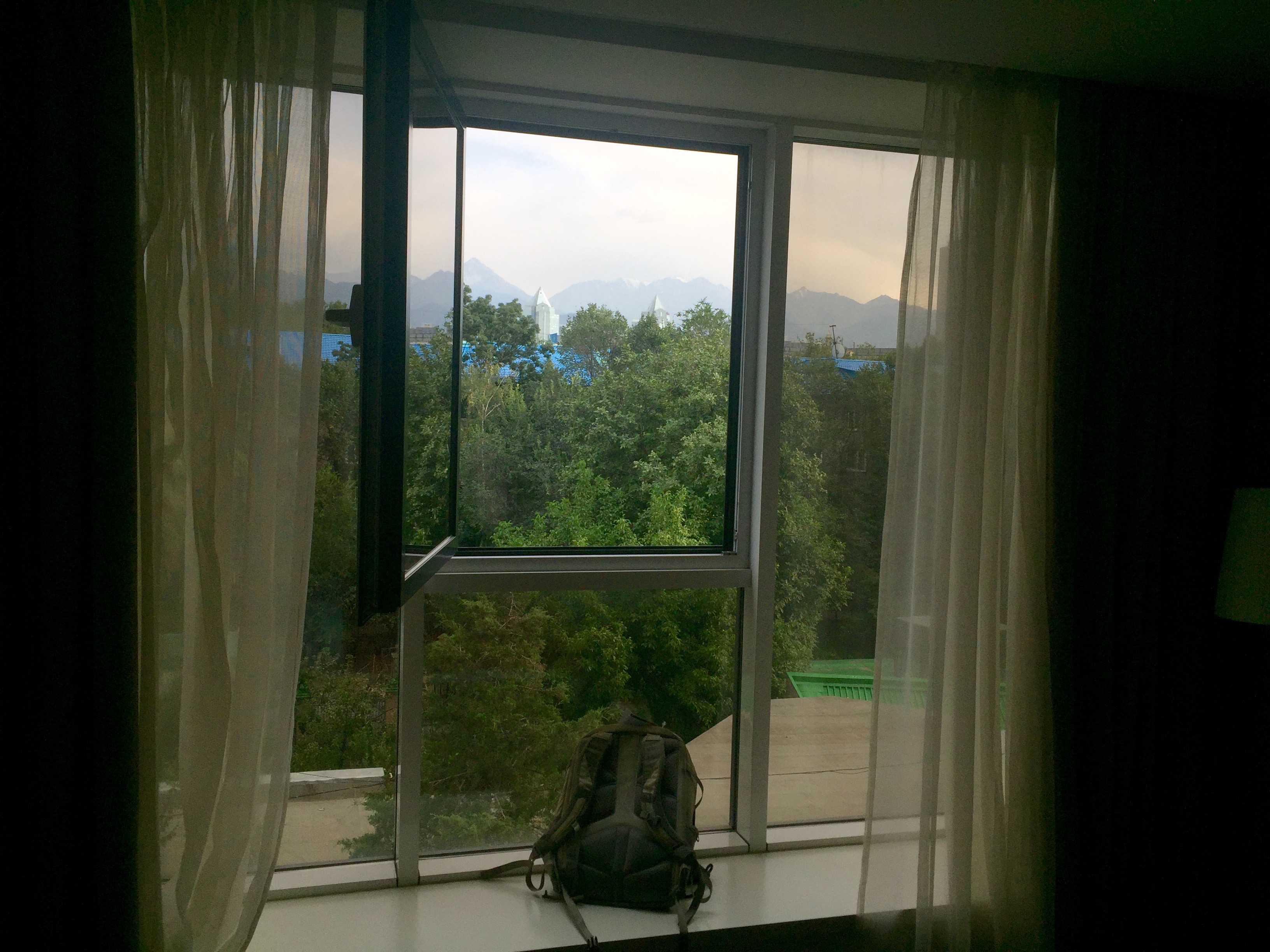
On my way home (by way of Delhi…woe), I have stopped over in the city of Almaty to visit my college friend Freeman, who works for the State Department in Kazakhstan. I know you almost certainly have no idea where Kazakhstan is, and that’s fine. It’s a former Soviet state that shares part of its eastern border with China and its southern border with Kyrgystan and Uzbekistan. Kazakh culture is heavily Russian with a mix of other influences from China and central Asia, and people are predominantly Muslim.  There’s also a significant Korean population, and the art and food maintain a lingering fragrance of the old Silk Road.  The eastern and southern borders are braced by the upper parts of the Himalayan mountain range that eventually makes its way down through Pakistan, India and Nepal.

That Crazy Russian Alphabet

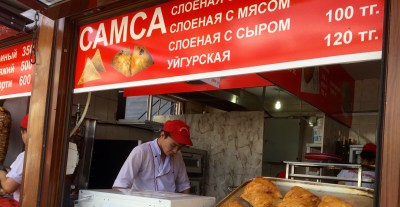
That Crazy Russian Alphabet (bonus: Camca = Samosa)

Basically, Kazakhstan is a gorgeous cultural crossroads, surrounded by mountains, where everything is written in that crazy Russian alphabet that looks like English after a rough night.

On the first day, Freeman and I used a combination of gondolas and hiking to get up to Talgar Pass at 3200m, just outside the city. Later we had an amazing dinner at a Georgian restaurant. Cause also, Georgian.
Talgar Pass, 3200m

Talgar Pass, 3200m

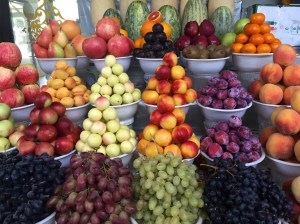
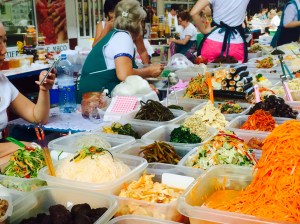
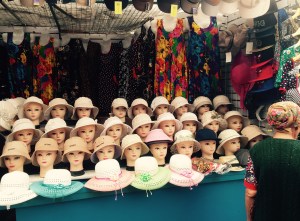
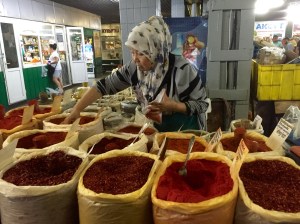
The second and third days we went sightseeing around Almaty. In the Green Market we browsed all manner of essentials including fruit displays from Mars, sacks of rust-colored spices, butt-pad underwear, and a vibrant expanse of fermented Korean goods stretching off nearly to Korea. We spent some time wandering “the area of cheap goods from China, which are the same everywhere,” according to Freeman, who was our only expert in this situation.

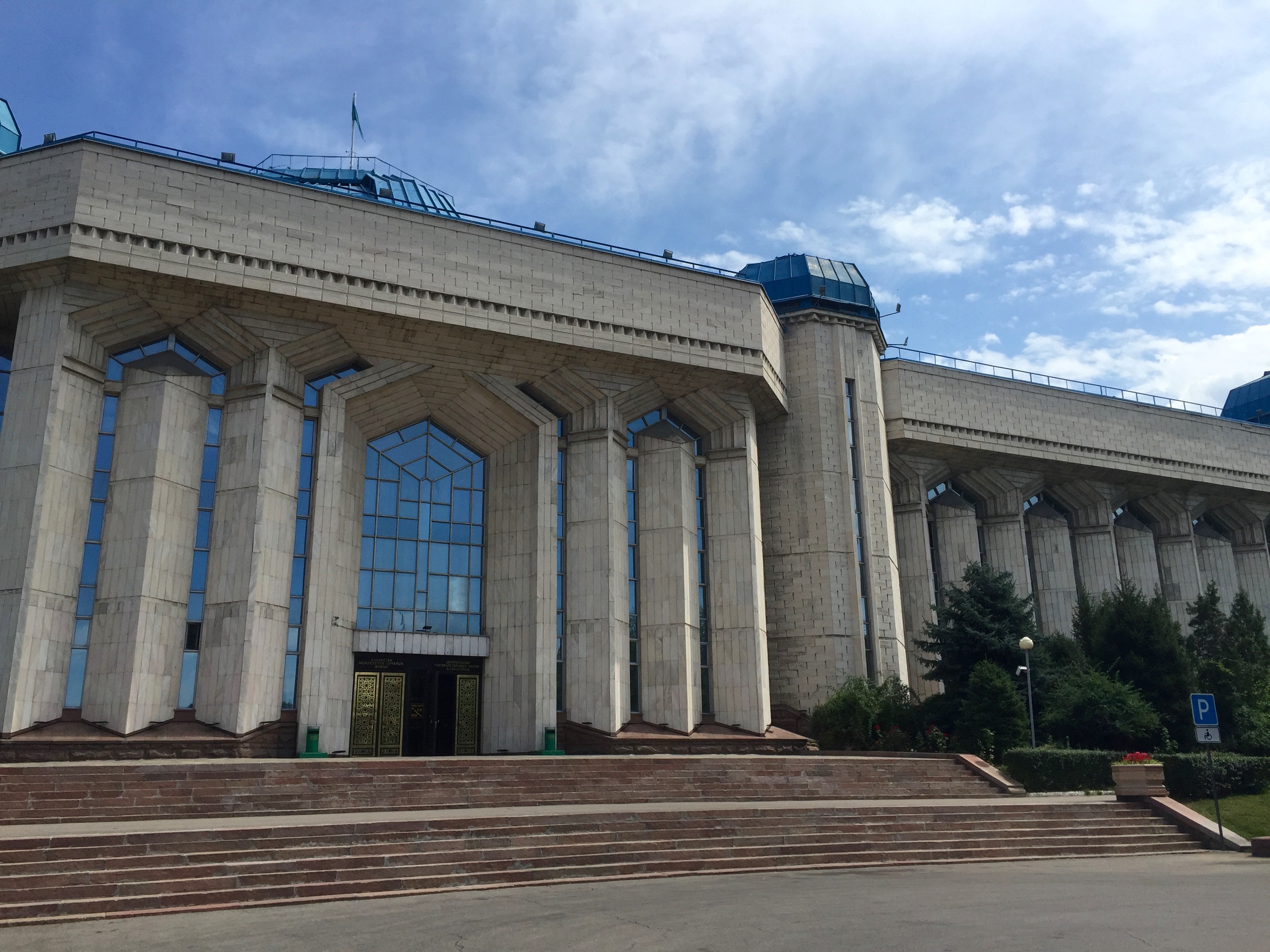
One of the most interesting things about Almaty is the mash up of quaint, European-like streets lined with chic cafes and flower gardens, combined with austere Soviet-era concrete fortresses dotted throughout the city: apartments, offices and municipal buildings. On one hand, Kazakhs have enacted such delicate flourishes as distributing mountain runoff over the natural downhill slope of the entire city to create a delightful canal system that sends fresh, cooling streams of water gurgling down the sides of the manicured city lanes. On the other hand, we walked these lovely streets to get to the Central Musuem, which turns out to be housed in the Citadel of Sauron, beamed over directly from the Middle Earth.


IMG_9715


“When the Russians build something, they go big,” Freeman explained.

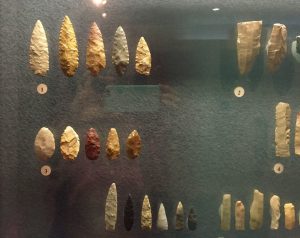
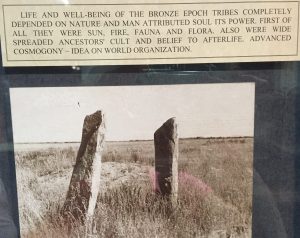
Inside the Central Museum we saw two of my favorite things: mesmerizing spearheads made by prehistoric humans tens of thousand of years ago, and extremely detailed ideas on advanced cosmonogy world organization, painstakingly translated for English speakers.

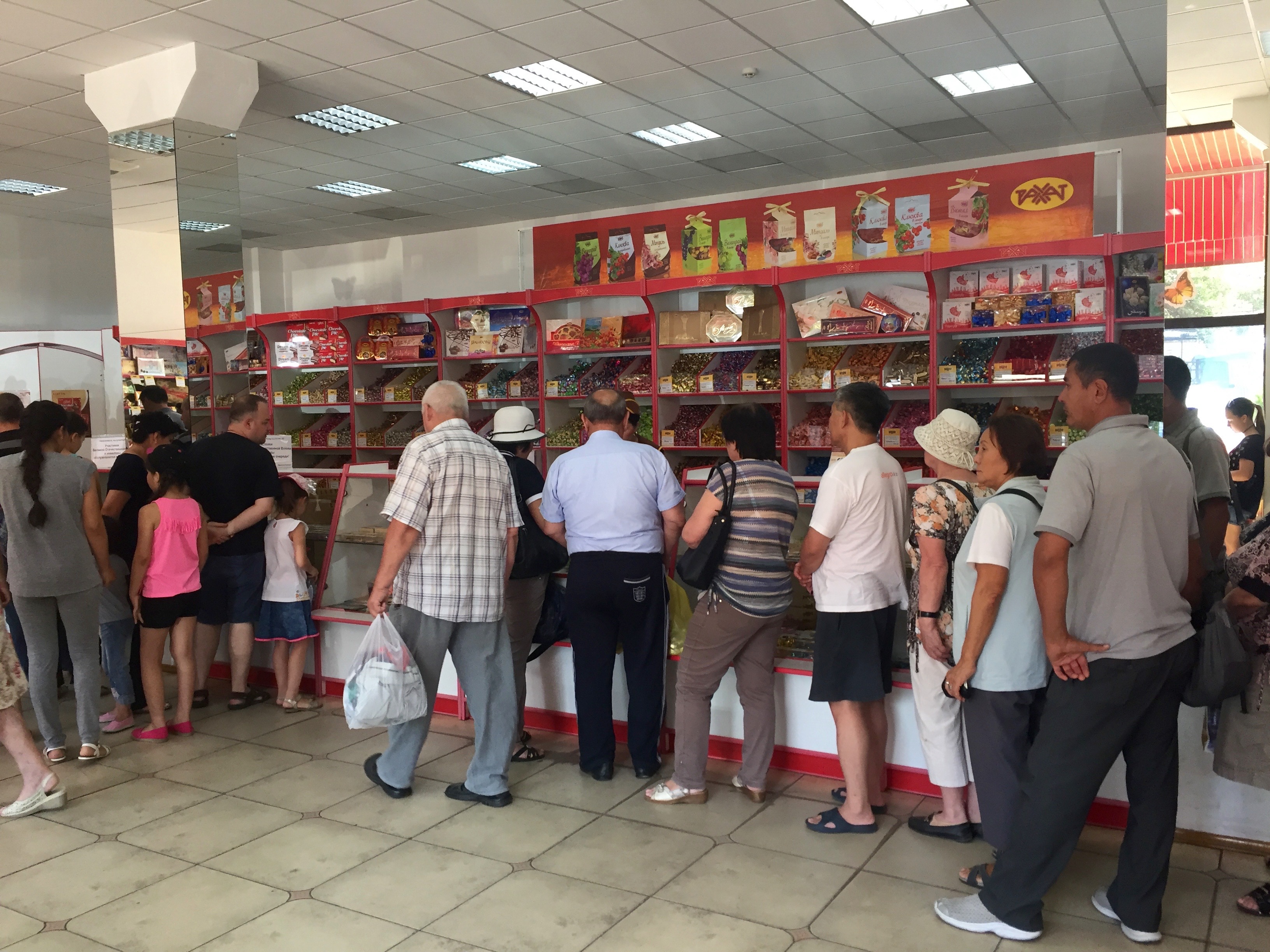
I was enthralled when we visited a candy store lined with bins of billions of dazzling wrappers in every color, which, it’s candy store-ness notwithstanding, Freeman pointed out had retained a very typical Soviet-era setup, whereby customers wait in long lines while employees put goods in to containers for them. Of course, we’re talking about candy here, and an endless supply at that; under the Soviet Union, basic goods and food were often in short supply. Freeman said it was similar in China, and when he first came to the U.S. at age 11, it was incredible to him to enter a grocery store and be allowed to touch the food.


IMG_9631


See, I never thought of that.

As I come to the end of my summer travels, I appreciated the complexity and diversity and contradictions of Almaty. At night, we tried to watch the Olympics, but Kazakh TV was only showing the things where Kazakh athletes were competing, so we attempted to be riveted by the race walking marathon – YES, A WALKING MARATHON – TRY TO STAY RIVETED – and the trampoline competition. When race-walking got to be a lot, I flipped occasionally to the BBC or CNN, where the U.S election is the only thing on, far away and too close, oddly irrelevant, and yet more relevant than ever.  During the time I’ve been in Nepal this summer, there has been an onslaught of international terrorist attacks and domestic racial violence in the U.S….the other day, a friend posted a photo he captured at a Connecticut political rally (where he was protesting) proclaiming “Diversity = White Genocide.”

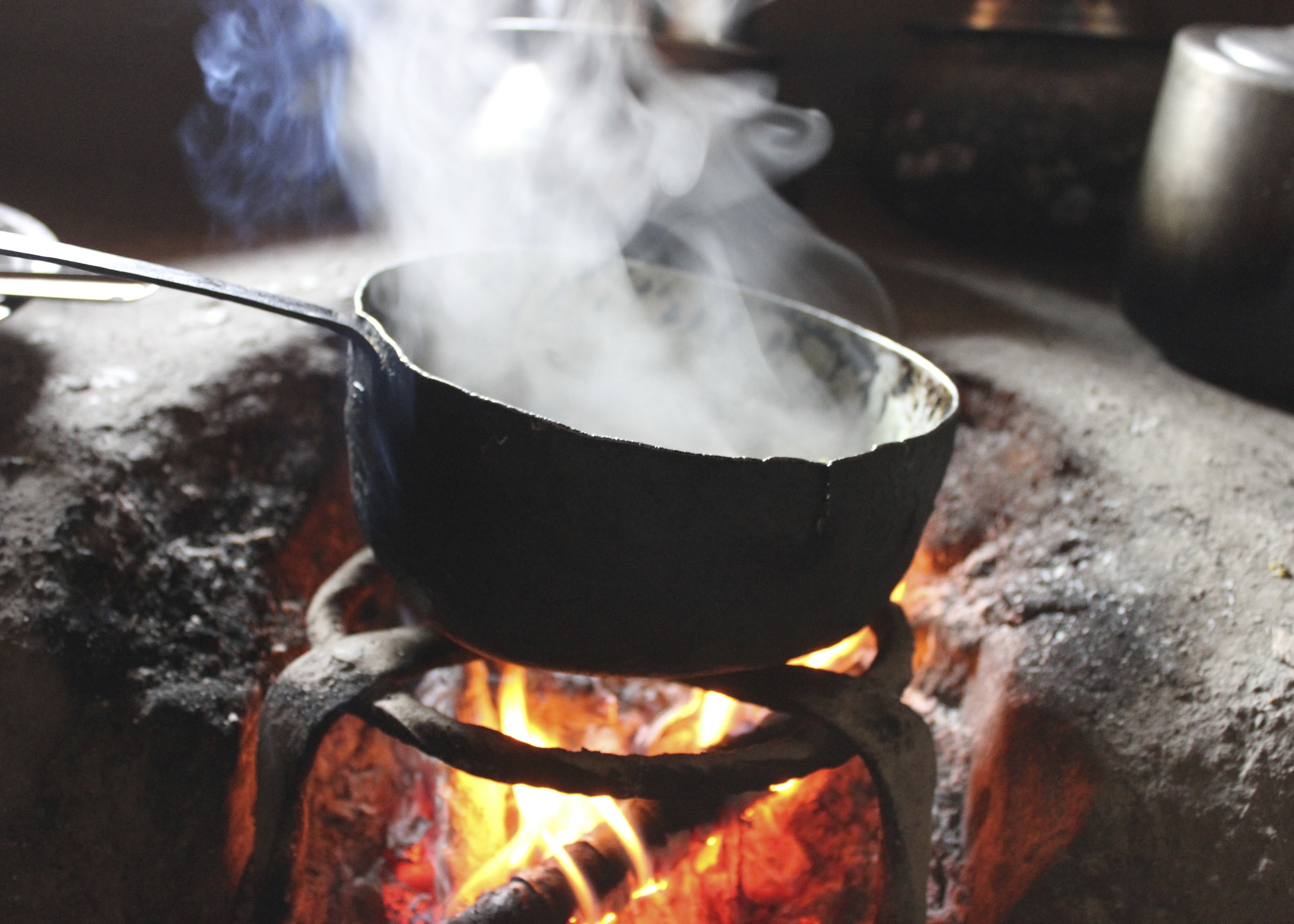
Mean time, Aamaa has no idea who Barack Obama is, and a major event of our summer was that I acquired some new sheets of corrugated tin to replace the 25-year-old kitchen roof, which was leaking directly into the cooking fire.  How is it possible that a person can go from one side of the world to the other in barely a day?

Nepal is my full-time work, not a summer excursion. Nevertheless, during these transitions from one continent to another, I’m gifted with the chance to be between; to float over the globe and feel the intensity of tiny things, like the drops of water falling where Aamaa sits by the fire, and also the drifty arbitrariness of all of it, how the most urgent fixation somewhere is irrelevant somewhere else, how everything is swallowed in sweeping expanses of destruction and renewal and passages of time. We are so small, yet there are so many treasures to find.


Aamaa's cooking fire, Kaskikot, Nepal


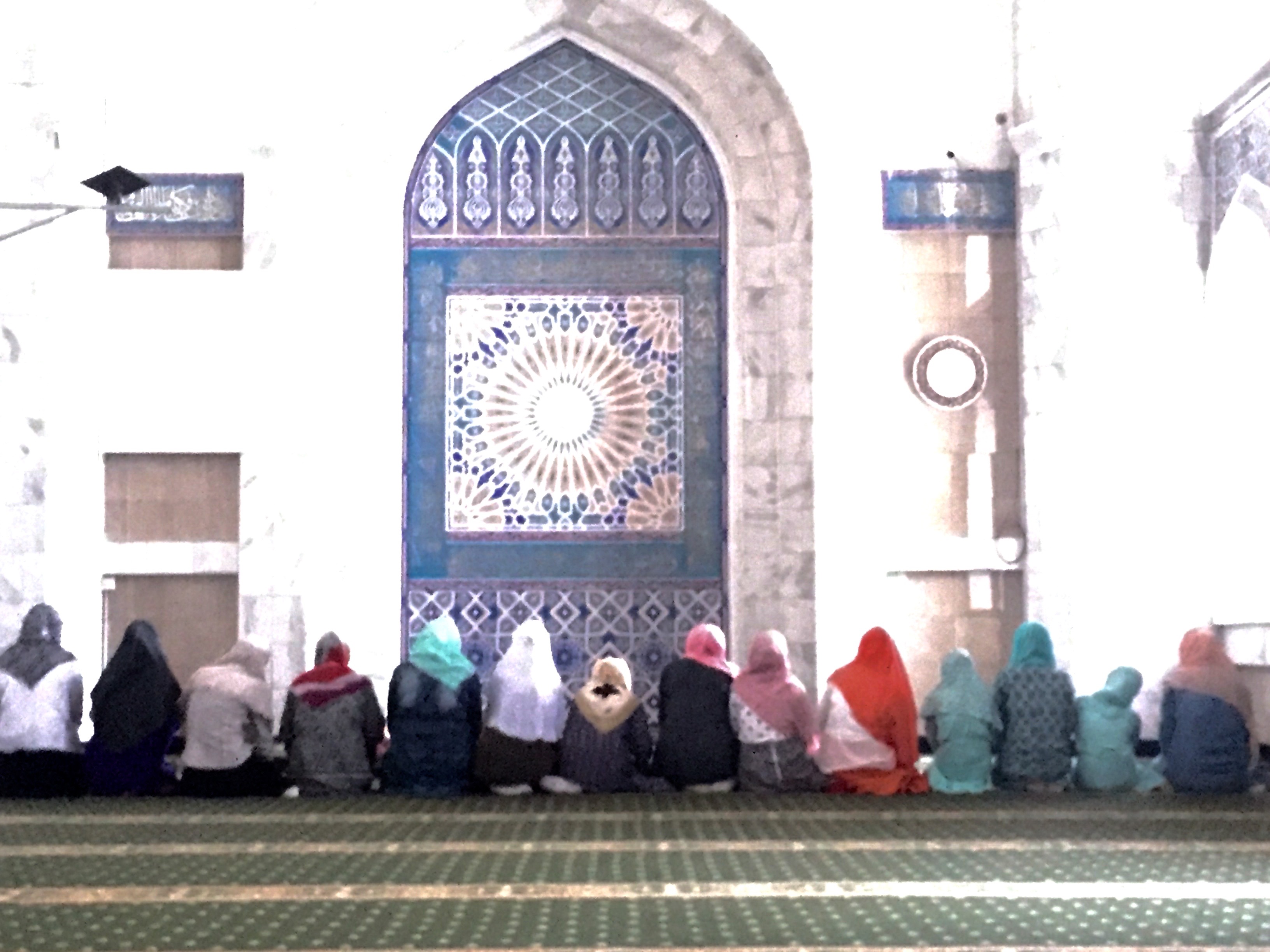
Maybe that’s why my favorite stop in Kazakhstan was the Central Mosque, which we visited just after the color and chaos of the Green Market. Before we went through the gates, I draped a sheer pink shawl over my head, and while Freeman entered the cavernous men’s side, I made my way around to the smaller women’s side. I removed my shoes and entered a hushed, carpeted room just as a row of women was moving through a series of prayers playing over a speaker.

Standing in the back, I was vaguely aware of myself, a white American Jew standing aside in a Kazakh mosque, a cultural transplant who seems to be at home everywhere and nowhere. I hope these women will forgive my vanity in sharing the over-exposed photo I snapped of their meditation, because at a time with so much violence outside the walls, it was such a soft and sanctified place.  The natural thing was to move to the center of the room and join in the late morning prayer, and it was easy to follow the succession of standing, bowing, kneeling, and bending to the floor. I’ve offered prayers in so many different kinds of temples and situations and settings, these fleeting spaces sometimes feel more like home than many other places where we live.


IMG_9683


I don’t speak Arabic, of course, and I’m no more Muslim than Hindu. But with the U.S. border emerging over the horizon, CNN flashing in my head, and the world marching under us, I heard words announce themselves in my ears as I put my forehead to the ground one time and then the next, the pink shawl falling comfortingly around my face.

Please humble our hearts.

Please bring solace to those in sorrow.

Please give wisdom to our leaders.

Please guide us to our better selves.

Please strengthen us through our differences.

Please make me an instrument of peace.

See you soon, USA.

*

IMG_9726

Nooks and a Little Sauce

IMG_0412

Over the course of 13 years in Nepal, I’ve spent almost all my time in villages. My whole understanding of Nepal, and all my friends, routines, the food I eat, the places I sleep, even the way I speak the language and therefore the way I think, have been organized around my adopted family and rural life, or its popular sister, the cramped and thankless circumstance of recent urban migration.

But this summer, I’m full-time supervising a city-based office with four people and a field staff of 16; getting a latte each morning; diving in to health care policy and human rights frameworks. I schedule coffee meetings and visit offices. All told, it’s only in the last 1-2 years that I’ve started getting to know some of the other long-term foreigners and NGO founders living in Pokhara, who all pretty much know each other, because they all live in the city, which for me has always been just a place to visit for work. And when I’m here, my non-work life is completely centered around my (recent urban migrant) Nepali family.

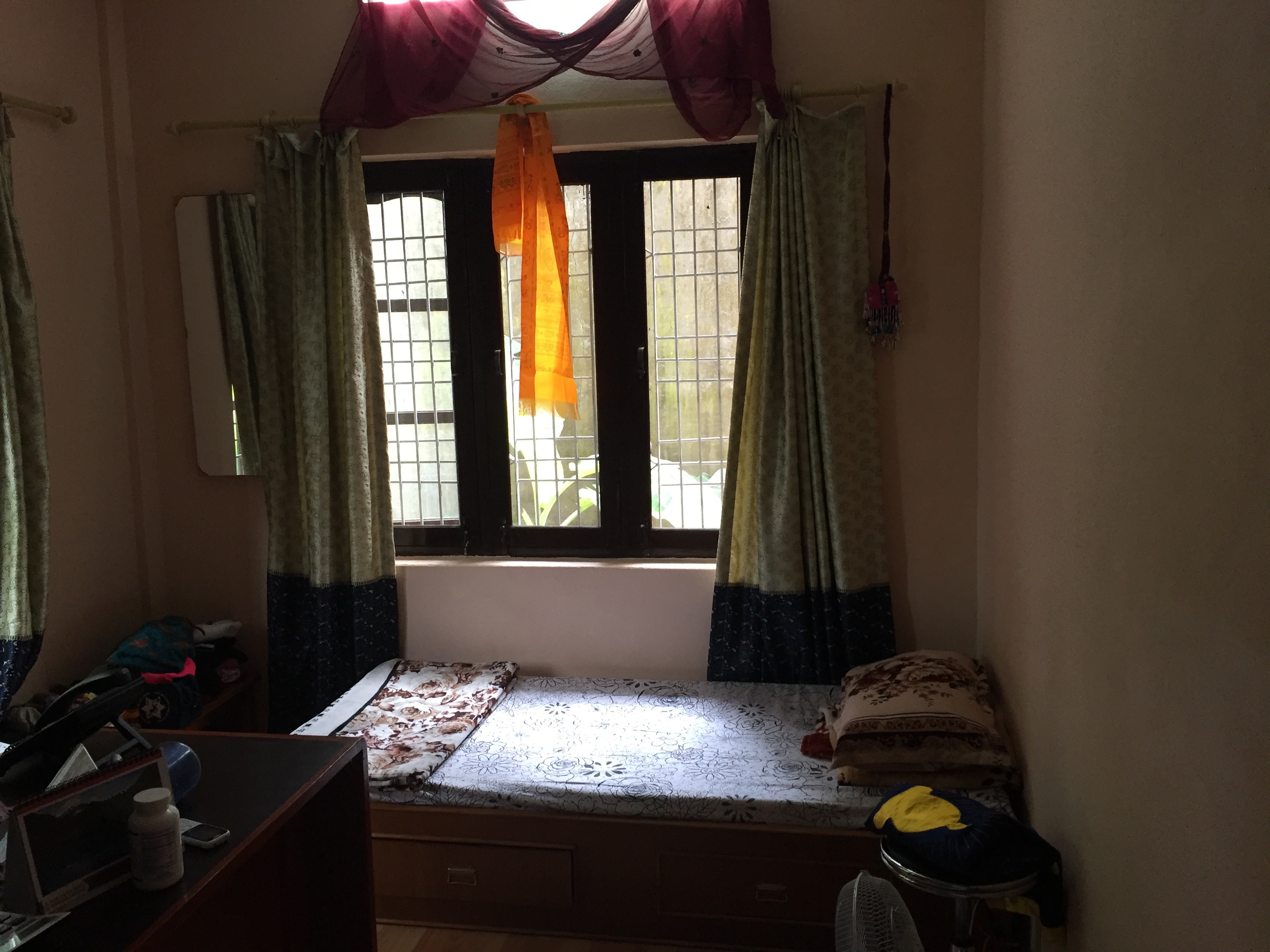
There’s a vague sense of discovery about this new routine. For example, I’ve been sleeping in a room in the office, and – this is going to sound weird, but – slowly realizing I can put things there to make the bed and little space around it mine. Like: a new blanket. Or: a hook on the wall. This is an especially weird feeling. In all the time I’ve lived in Nepal, the only space that’s been mine-ish is the small house in Kaski, with its two beds and one dresser that I share with the rest of the family. A single bed and little shelf of clothes for me alone, that I can modify to my liking, is a bizarre amount of freedom that I’m only even noticing bit by bit. (Mind you, we’re talking about a bed in the finance and admin room of our office.)

Obviously, I have no trouble with this in the rest of my life. But in Nepal, well, it’s just not the way I’ve learned exist here.

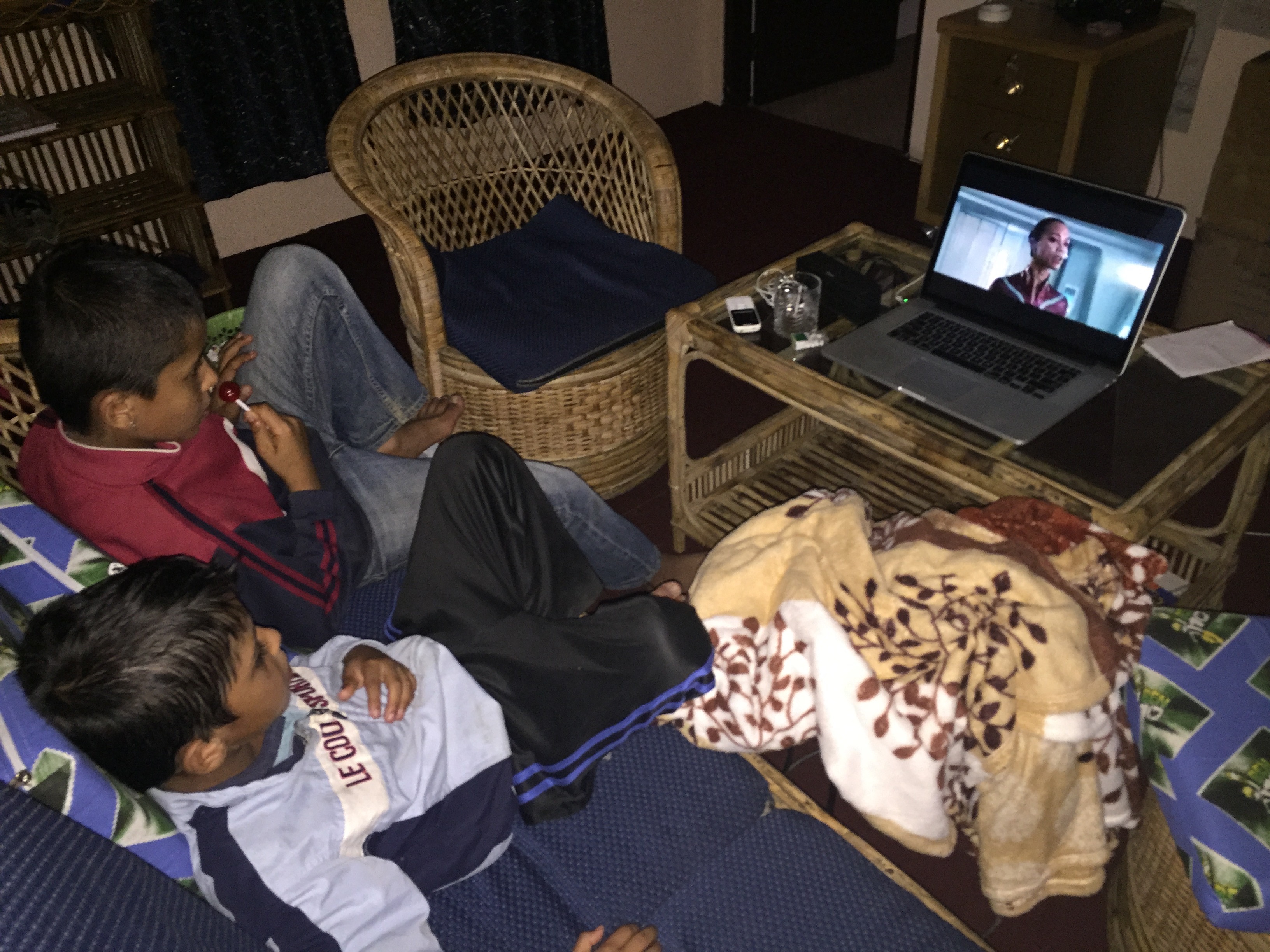
IMG_9195The other night, I had Pascal and Aidan for a sleepover at the office, with its main attraction, the Internet. We watched movies and ate treats. We’ve also been out for boating and out for dinner, because it’s fun, and we live in the city. And yet these are activities that have never remotely crossed my mind in the past, because they are more similar to how I live in the U.S. It actually never occurred to me I could do them here because the communities I spend my time with mostly don’t.

Today I went to a salon and got my hair done. A salon.

When I was a kid, I was literally the pickiest eater the world has ever seen. I know you think your kid is pickier, but trust me on this one. I was okay with a short list of simple foods, and I would gladly sit and watch everyone else eat rather than be forced to alter this known quantity. Once, I went to my best friend Katie Schultz’s house, and they made me pasta with butter while the rest of the family enjoyed a normal meal. It wasn’t till I put the pasta in my mouth and a terrifying and unfamiliar taste exploded on my tongue, that I found out that butter doesn’t taste like margarine, which is what we had in my house. The feeling of shame and fear sitting at the dinner table, hoping nobody would notice if I didn’t eat, is still with me almost 30 years later.

It wasn’t until eighth grade, on a school trip to Smith Island where I was stuck in an adolescent group eating situation, that I tried tomato sauce for the first time. For a few years – ok, until college – I’d put a little blob of tomato sauce on the side of my plate, and kind of dip my fork in it. Eventually I worked my way up to normal pasta, but to this very day, when I make my own meals, every component sits side by side so I can mix as I go. I’m no longer alarmed by new foods like I was as a child, but I don’t adventure much. I eat the same reliable items almost every day.

What, you ask, does this have to do with Nepal?

I’m not sure, but all I can say is it kind of feels the same. I’ve spent a long time in this environment adjusting to the absence of almost everything I was accustomed to before I came. I found my nook and I’m comfortable there. Rural life in particular, while not materially complex, runs miles deep, and each iteration, each day, each season and year, enriches and returns itself to the last one with a sense of familiarity and certainty: the next one will come too, even if we are not here to see it. I haven’t made a life of travel. I plopped down in one place and snuggled in. Altering its fundamentals even in small ways creates a whole orchestra of funny tastes on my tongue.

Also, FYI, we eat the exact same thing for every meal in this country. PHEW.

Mean time, I do like this blanket though. How do you like my office nook?

IMG_9255


The WorldEdge Restaurant


Now and then I realize I have a collection of items that are too good not to share but have been too random to include in other posts. I present you now with this summer’s collection, the Worldedge Restaurant.

1. An old lady tending to a street a cow.

As deities, cows freely wander the streets of Nepal, and there are a number of regulars on the stretch that runs between Jarebar and Lakeside. They rummage through the gutters and depend on the kindness of strangers. One day I noticed this old lady attentively grooming one of these gentle animals by the side of the road in the middle of the afternoon.

IMG_8764


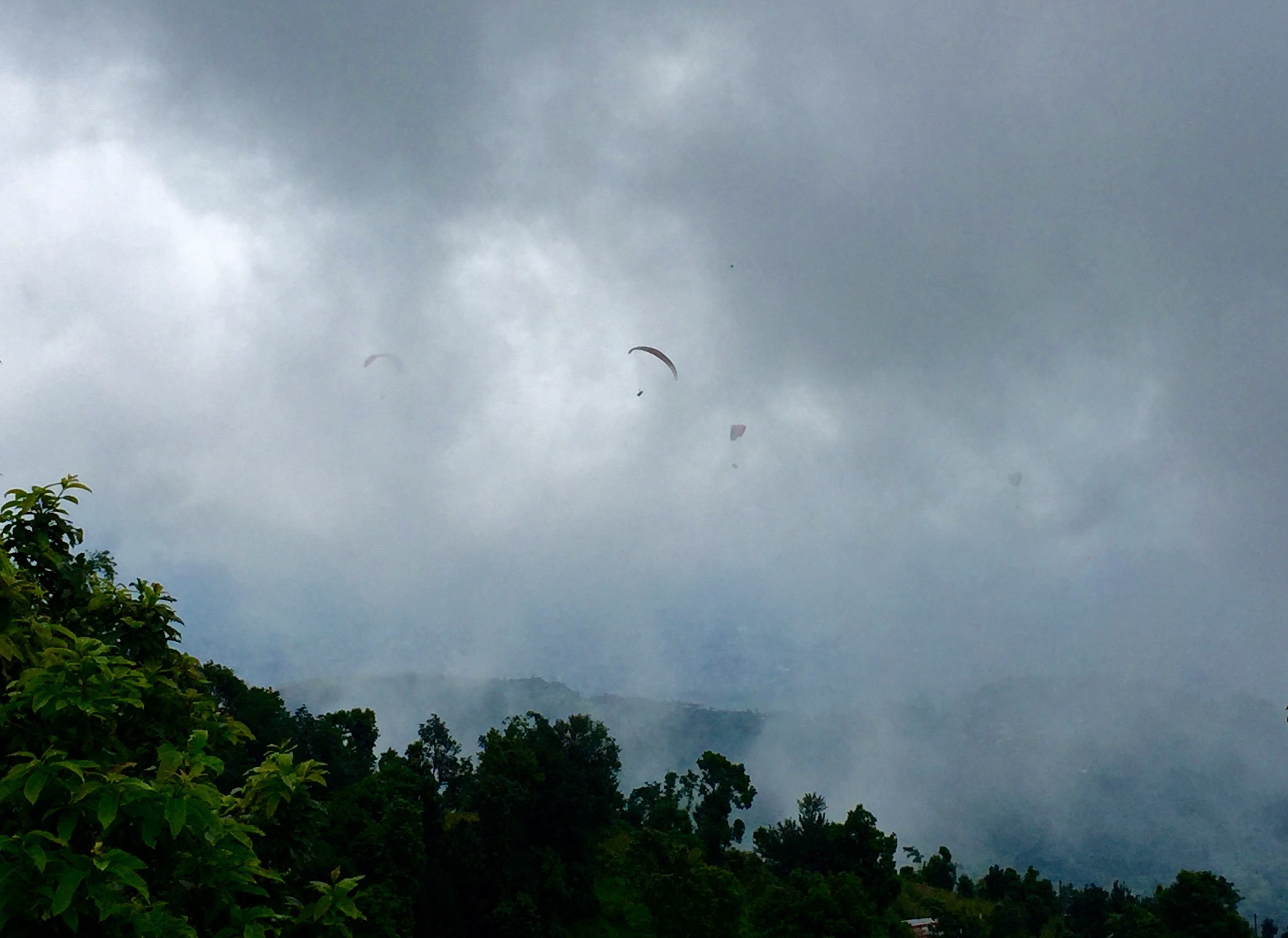
2. Paragliders sailing over the valley.

I snapped them one day on the bus ride home to Kaskikot.

IMG_8970


3. Hotel Touch Nepal Worldedge Restaurant

I walk past this establishment each night on my way home, and either nobody was able to reach consensus about which words to include in the business title so they went for everything, or they just have a bit of confusion regarding core mission. In any case, I’m thinking it’s probably best not to use Hotel Touch Nepal for lodging purposes.

IMG_9536


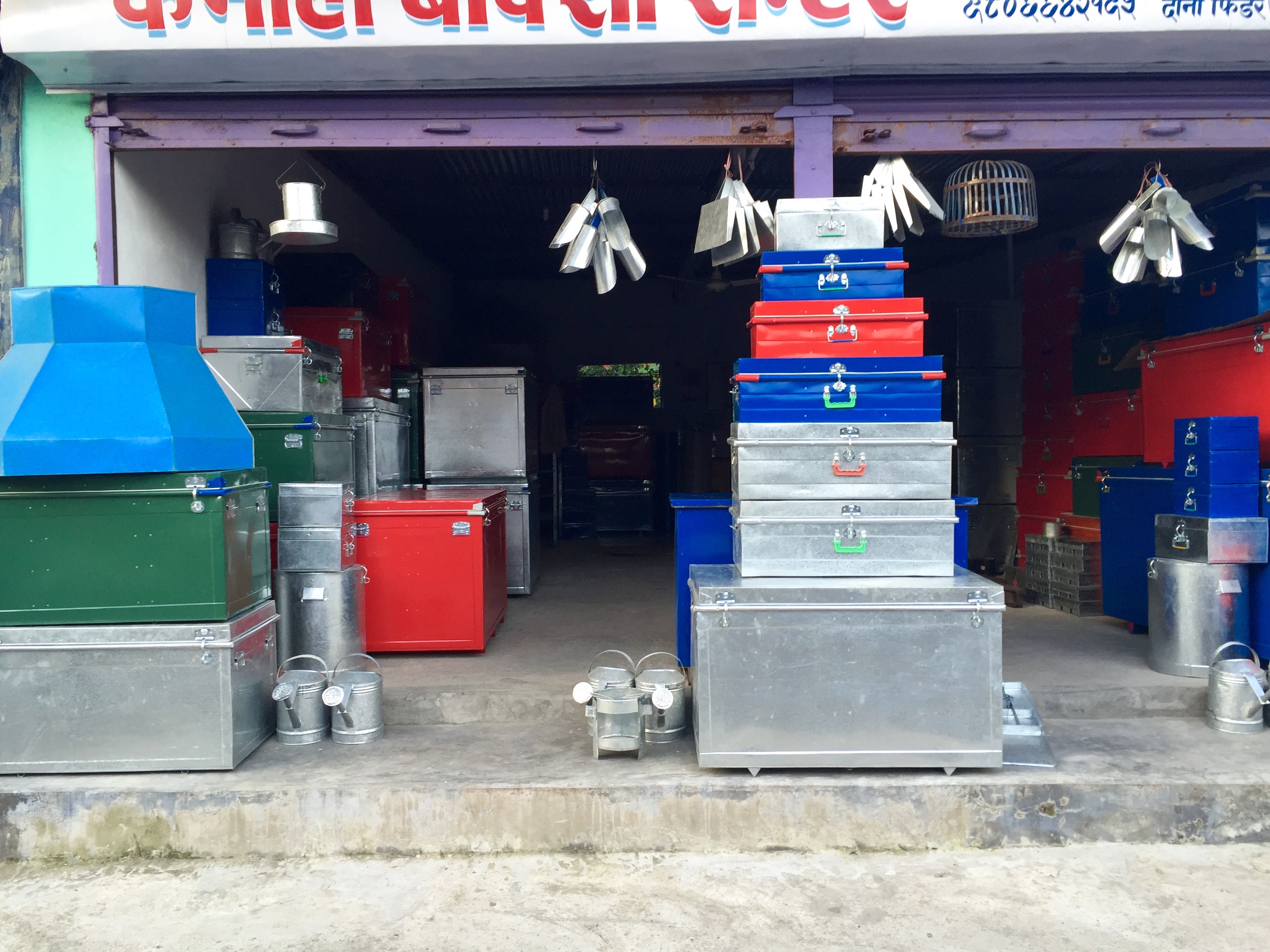
4. This shop of things made entirely out of tin.

Such as storage chests, chimneys, and watering pots.

IMG_9393


5. Pascal and Aidan entertaining themselves at home while the electricity is out.

Because you need power to charge things, but not to dance in the dark.


6. Aamod’s Shrek Bike

When Aamod puts this cover on his motorbike each day outside the office, it convincingly resembles Shrek. Unfortunately I failed to photo his actual motorbike every day for two months, so on the last day I tried to recreate Shrek on a bicycle, which is why he looks a little anorexic.

IMG_9549


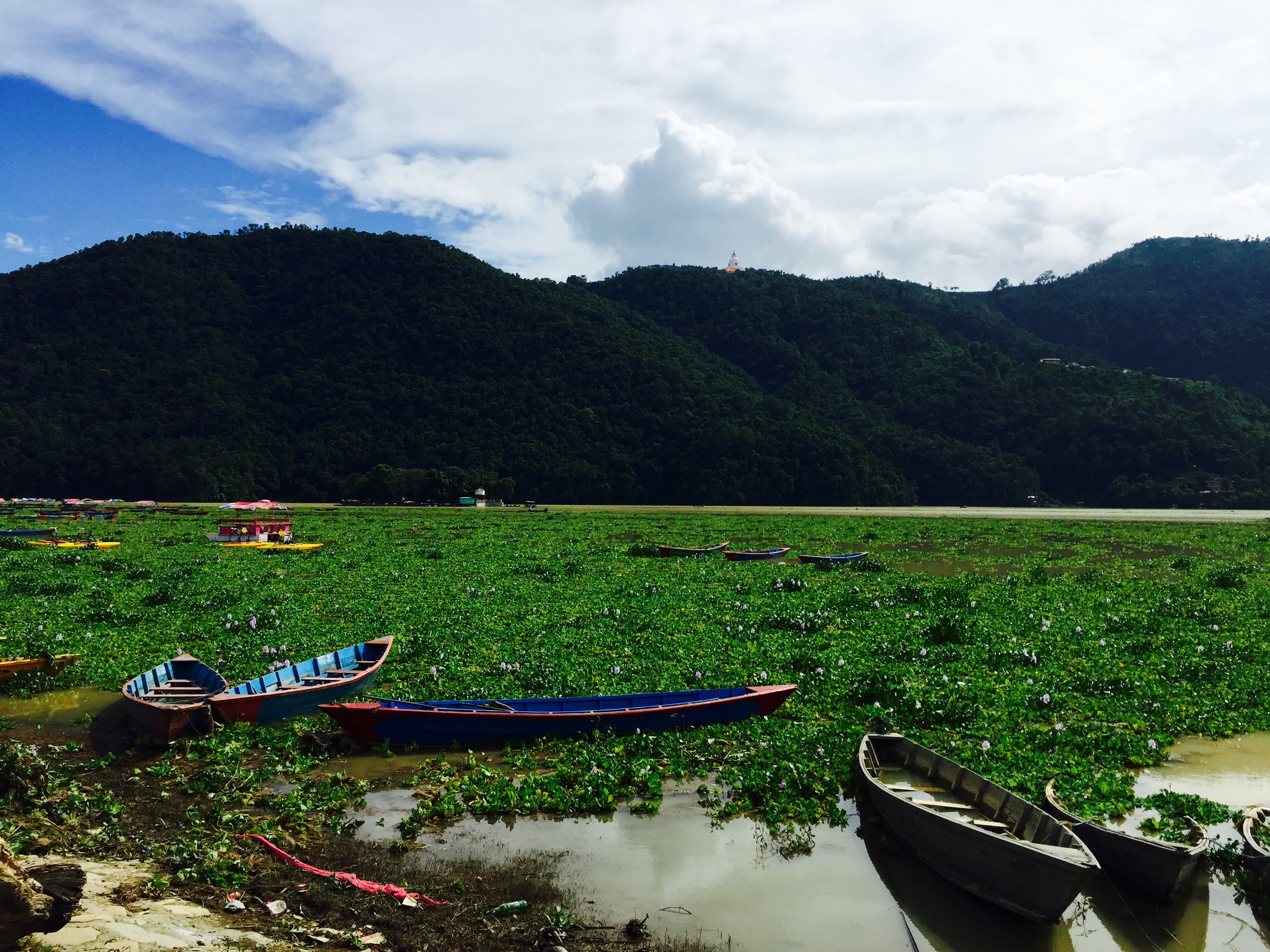
7. A plant lake

During the summer, Phewa Lake apparently becomes so sodden with greenery that it turns in to an enormous garden with boats in it.

IMG_9199 

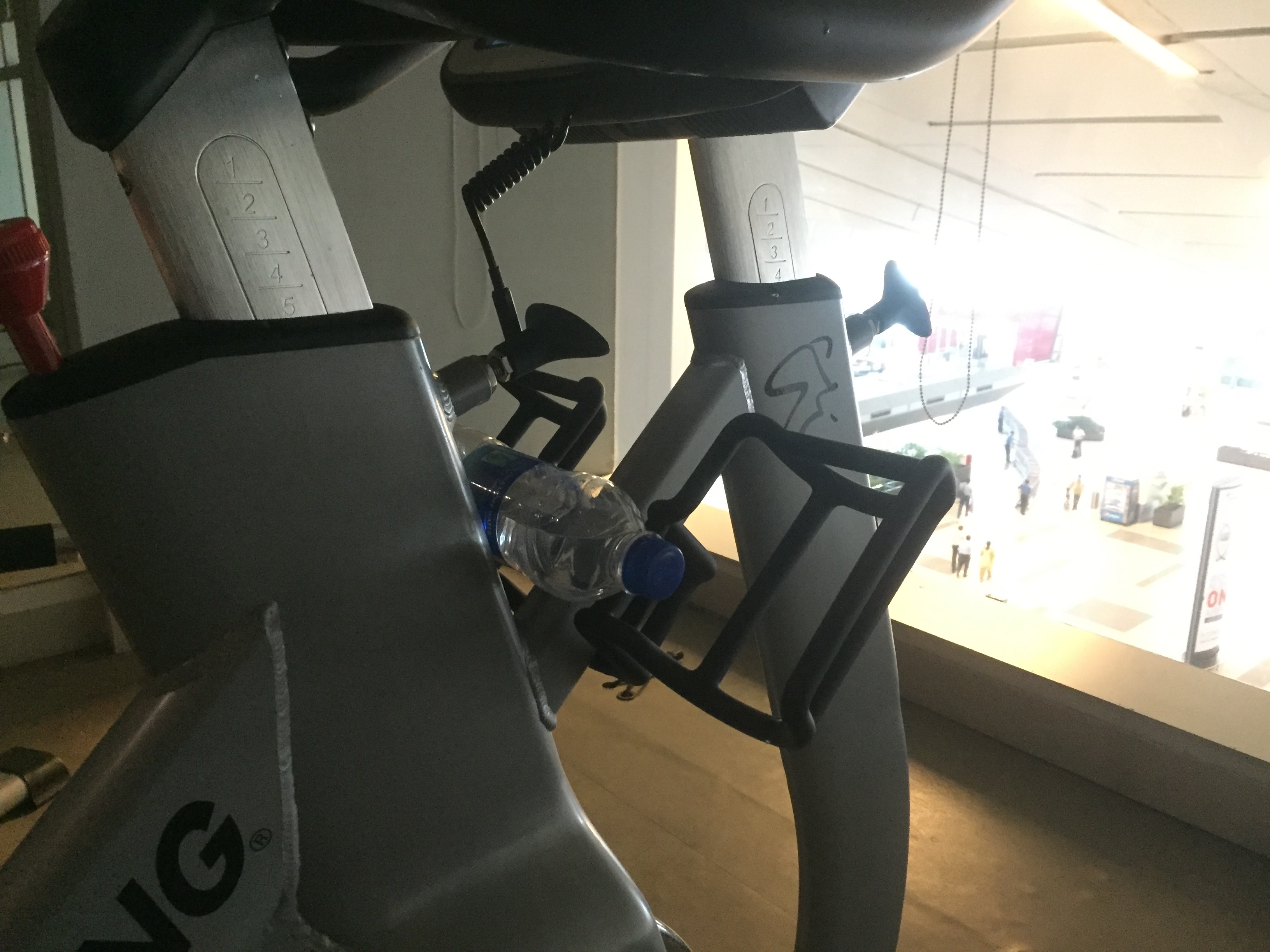
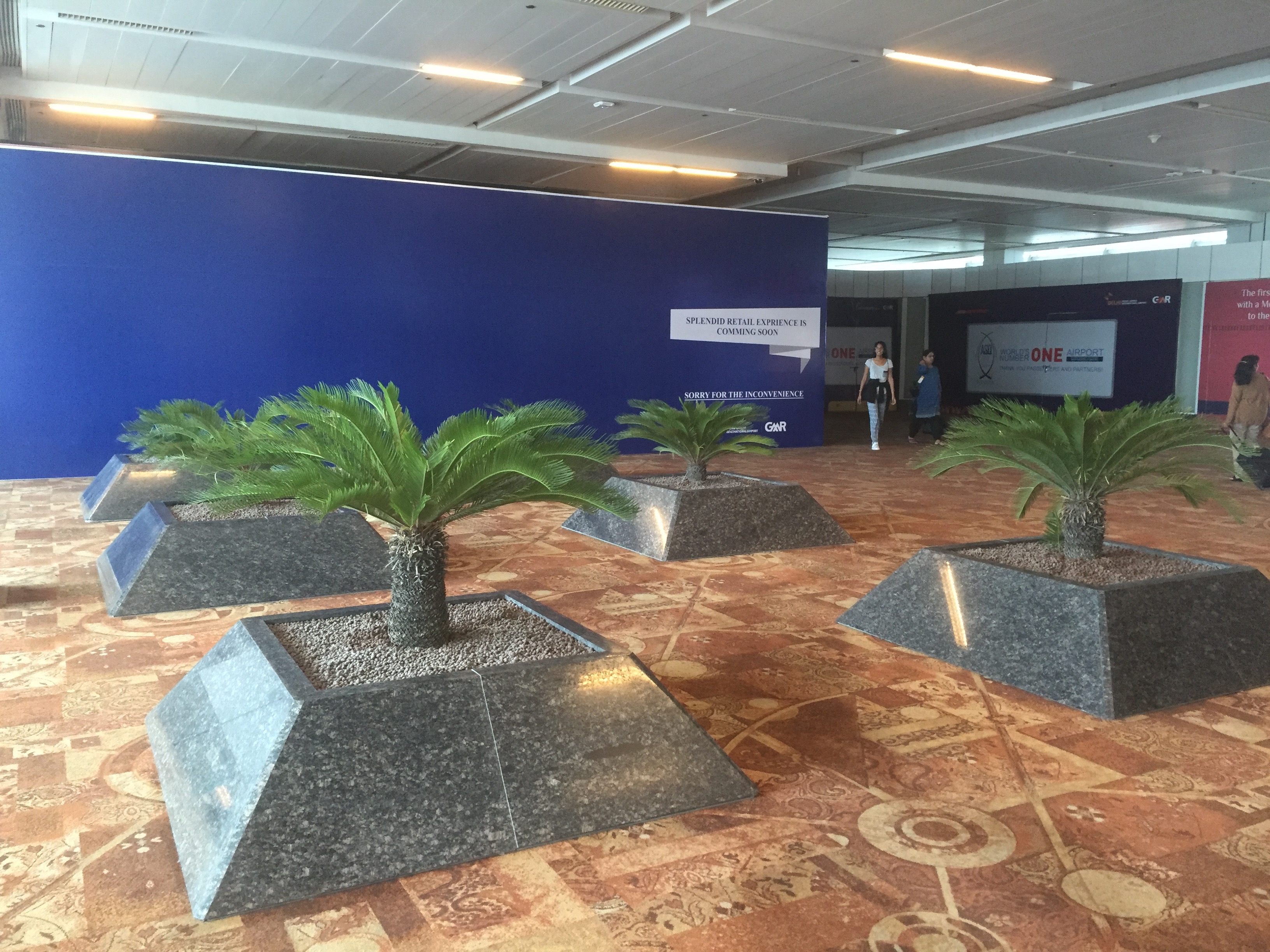
8. The Delhi Airport

Officially and unequivocally the most lavishly decorated circus of an airport on the globe, today’s edition of the Delhi airport brings us this buoyant use of indoor space, and these bottle holders – or something – in the airport hotel fitness center.

IMG_9596 IMG_9597


9. Aidan practicing his martial arts during a golden rainstorm.

Life is beautiful.


Waiting Out Rain


I’ve just arrived in Nepal, and the dust and diesel is shining on the streets of Kathmandu, stilled by summer rain.  Honestly for a whole decade I didn’t want to be here during the hot and buggy monsoon, but last summer I discovered that of course, like any season, the rainy time has a unique and indispensible magic.  The water clatters and pounds, washing everything and making us wait.  It comes down too hard to walk around or do anything.

Just wait.

It’s strange to re-enter this season which was so intense last year, when I arrived to a stunned and grieving city dotted with blue and yellow tents.  It seems that this country has basically just plugged on, absorbing the earthquake on to its pile of other messes, the unlucky people who lost the most – possessions, limbs, relatives – doing what people do: surviving.  The next day just keeps coming, and for anyone whose life wasn’t irreparably altered, that catastrophe isn’t the topic of conversation any more.

Things for me, however, have changed a lot.  When the earthquake threw us in to the ring with the big multinational agencies, it helped show our tiny staff the value of our community-level expertise.  This spring we launched our dental project in Lamjung district where we did earthquake relief.  

In the fall I also started a Master’s Degree in social work, and I’ve been able to incorporate a lot of what I’m learning in to our program right away.  Guys, seriously, a lot of this stuff I’ve been trying to explain has an entire body of theory and practice associated with it called human rights!  People are doing rights-based health care at the United Nations!  I found out I am basically an expert on rights-based dental health care in rural Nepal…WHO KNEW?!  (Who becomes an expert in that by accident?)

Ok, just wait.

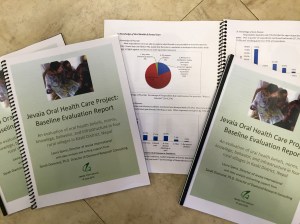
Also, a few years ago, we thought we should do some baseline surveys in our villages.  Not too focused on the concept of sample sets, we thought we’d survey ALL the households…3,374 of them distributed over various hills and more hills, actually.  Because as long as you’re doing it, do it, right?  I wrote a survey with input from various people, we trained some high school students as surveyors, and just last week – 2 years later – we completed a 58-page report on this survey (thanks, Sarah Diamond!).  Come to find out there’s very little current research of this kind in Nepal, and this report is a thing.  I am taking it around like my visiting cousin and introducing it to everyone.  Here is a picture of our report.  Let’s call her Cousin Mae.  She’s in color, with pie charts and clones and everything.
FullSizeRender-2
All this has come together in a very cool way.  Over the course of this year, three major U.S. Universities have developed a potential interest in partnering with us for research or medical collaboration.  It feels awesome!

So with all that in mind, this summer, I’ll be doing a few things:

  1. Visiting each of our ten clinic locations (past and present).
  2. Establishing a Rural Dentistry Coalition in Nepal to advocate for policy level recognition of our model, so that rural dental clinics can be established systemically for all villages through the national health care system (eventually).
  3. Laying groundwork for future research partnerships (hey, positive thinking!)
  4. Revisiting some of the places we did earthquake relief  (unforgettable)
  5. Planting rice with Aamaa and getting myself in to as many embarrassing situations as possible (inevitable, really).

IMG_6059 (1)

I am very ready for all of this following knee surgery in February.  At physical therapy, I do a warm-up each day where I put the treadmill on “maximum incline” of about 20 degrees and walk for 10 minutes.  Yay!  Now I am here and our newly launched Sindure Clinic is reached by a 5 hour hike.  That means physical therapy + dental clinic supervision at the same time.  This is not a deal you can find just anywhere, people.  Take note.  It’s not even a limited-time offer.

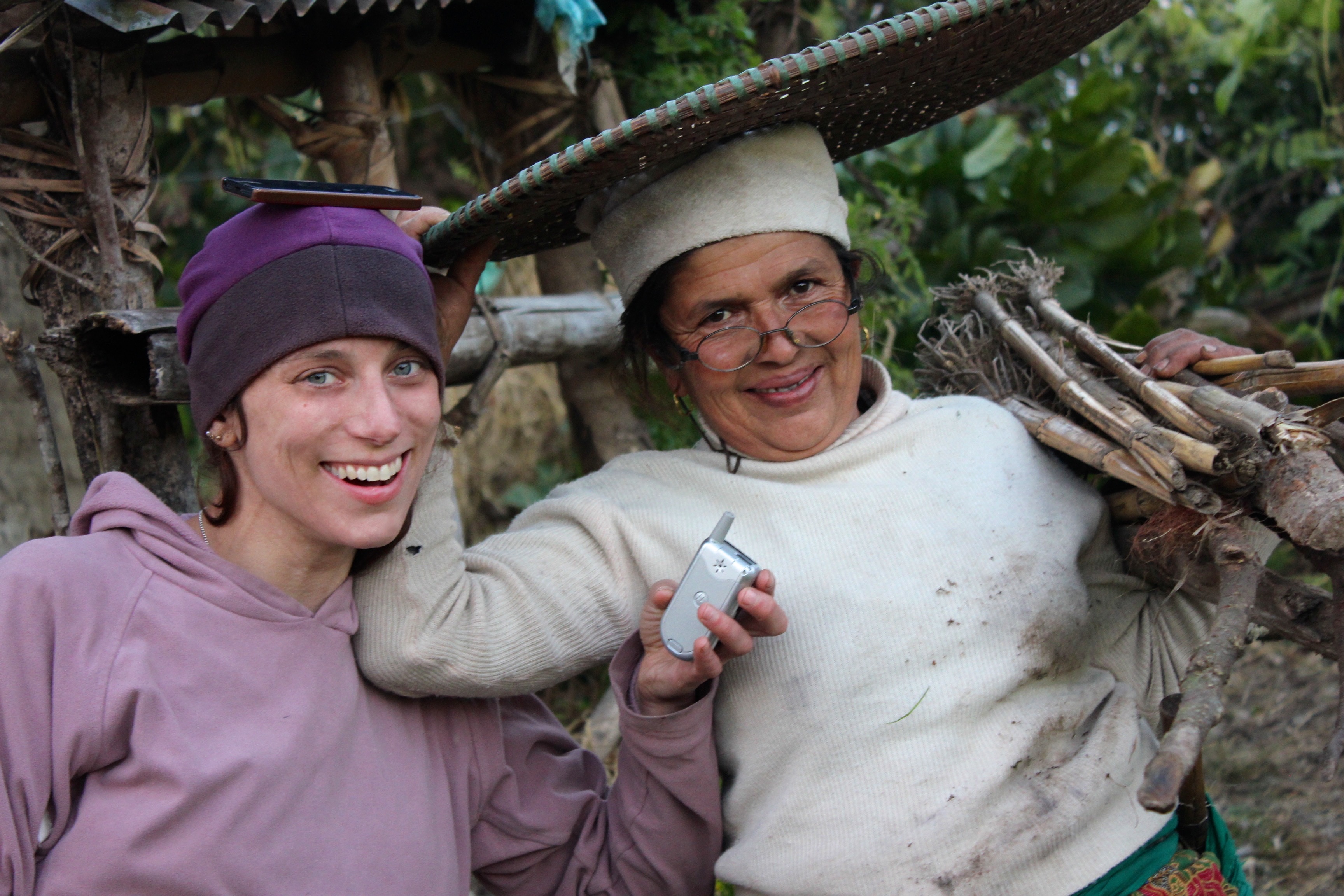
I’ll sign off with a few lines from a recent article in the Guardian that I really appreciated.  It can be very hard to stay motivated doing this this kind of thing, even though it’s true I sometimes get to pretend my iPhone is a grain-sifting woven pan and put it on my head, and we can reliably say it’s not a cubicle job.  But the pervasive story of the American (Social) Entrepreneur is hard to see past, with its celebration of saviorism, speed, and simplicity…as if there’s an equation to solve or a prize at the end.  But society doesn’t work that way, and often building things is just hard work.  You only stick out when you screw up; most of your ideas are 78% wrong the first 8 times, but there’s something good in there; when you disappear, that means it’s working.  If being humbled isn’t exalting, you’re in the wrong business.  I decided to tape this bit up on my door:

“I understand the attraction of working outside of the US. But don’t go because you’ve fallen in love with solvability. Go because you’ve fallen in love with complexity. Don’t go because you want to do something virtuous. Go because you want to do something difficult. Don’t go because you want to talk. Go because you want to listen.”

And then…just wait.

*

IMG_6334

Moving Still


An exciting week of office work led up to this year’s Maghe Sakranti, which always seems to coincide with some travel experience, astrological event or, in this case, Aidan’s 8th birthday, IMG_3858which, if you think about it, is the same thing.

The main topic of my conversation with Aidan and Pascal since I arrived two weeks ago has been black forest cake. Birthday cake came in vogue in Nepal about five or six years ago – as far as I can tell, it was discovered on TV, and has been translated in to an epic mashup of east-west-birthday-wedding-puja sort of candle-lighting experience that is not to be missed. Anyway, after a hectic week of office meetings and shopping for light fixtures, I caught the last bus up to Kaskikot on Thursday to head home for Maghe Sakranti with birthday cake for Aidan.

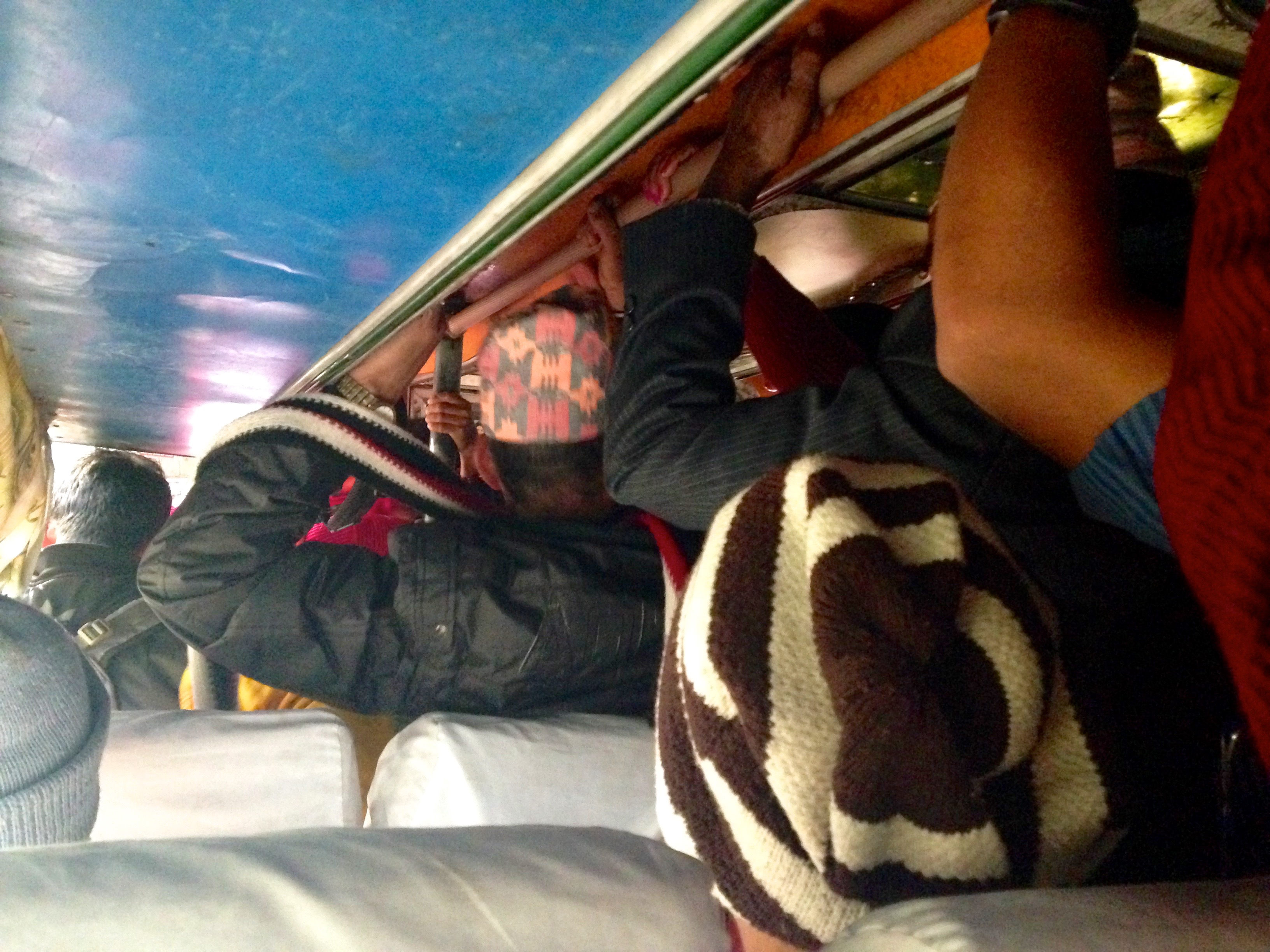
Because of Maghe Sakranti, the bus was packed with people heading home to Kaskikot. “Kaskikot packed” means that there is no standing room left inside the bus, and additionally, the people with poor tactical skills who’ve sat in aisle seats have someone’s butt in their ribs or armpit or smushed directly onto their faces. Most definitely, all people with seats are holding either a random package, bag of tomatoes, or someone else’s child on their lap.

As a master bus-rider, I possess a hierarchical mental catalogue of exactly which nooks and crannies make for a tolerable ride relative to a shifting set of variables. I approach “Kaskikot packed” with the focus of a honing pigeon.

IMG_4380It is immediately obvious that today is a top-of-the-bus day. Air is high on my list of prioritized variables, and all of the strategically located nooks and crannies inside the bus are taken or have been invaded by the limbs and odd angles of people who are technically not using these spaces. It’s a total free-for-all. For some reason, Nepalis have an awe-inspiring tolerance for this kind of physical disarray; I on the other hand, while happy to fit myself in to a pretty small nook, need it to be evenly balanced on all sides and protected from random entry, no matter how small my zone is.

Never fear, this is situation is accounted for. I hand Aidan’s cake to the Ticket Bro – all the guys who collect money on buses are Bros of the first degree, with wiry bodies and saggy pants – and clamber up a metal frame to the roof of the bus. The Ticket Bro, who knows me well (ok, I stick out, and besides I’ve provided many unreasonable entertainment opportunities for the general bus-riding public), hands Aidan’s black forest cake up to the top of the bus. I wedge it in flat between a box of beer bottles and a floppy sack of mystery items that’s soft enough to sit on. Soon I too am wedged in evenly on all sides by other passengers, which is exactly the way I want to be. I bend my knees protectively over the cake and we lurch away. The climb to Kaskikot isn’t a long distance in miles, but it’s all up, one switchback whipping around to the next.

The air begins to rush past and in settles a familiar, soothing reeling. The bus is climbing and honking, people are sticking out every which way, we are ducking the occasional branch – FWAP! – as the trees whoosh by. A wave of exhilarating calm envelops me, soft and malleable.

There have been three accidents on this bus route since in the thirteen years I have been riding it. Each time there is a bus accident, everyone including me swears off this road, these good-for-nothing-regulations, these drivers. The police crack down on the rules; buses are improved and added to reduce passenger load. The new bus I am on today looks like a greyhound, with upholstered reclining seats. But inevitably, the people turn this bus in to a wild beast. It’s inertia.

IMG_8687It just can’t be avoided.

Which, in a way that’s hard to explain, is why it’s so calming. Like in many poor countries, there is no illusory order here: everything is paint splatter all the time, and nobody’s pretending it’s something different. Everyone is hanging on to the spinning planet with one finger, and it is still working, at least until it’s not. Over time you realize that you too are paint splatter. You might think you aren’t now. But when order falls away, all of us are wilderness.

After the tragedies that have happened on this road, I know I shouldn’t admit it’s thrilling to catch the bus just in time, climb up to the roof, and duck branches while people talk on their phones and sway side to side eating peanuts like we are on Amtrak. But it isn’t a thrill because it’s dangerous (for the record, in purely statistical terms, driving on the beltway is just as dangerous)… it’s a thrill because it doesn’t feel dangerous. It makes sense. Because we are all flying through the trees together; because chaos and order have switched places, and everything fits despite the appearance of anarchy, and we are not dead yet.

In the mean time, some racing tiger inside of me catches the trees dashing by. I can feel the grumbling pavement even from up on the roof of the bus, and the Ticket Bro heedlessly climbs up and down the side of the bus like a chimpanzee while it is whirling around a corner. The valley below us recedes, and that wild thing in me, with a racing companion to match its speed, is still.

I’ve found this pocket of tranquility in other fast places.  When I catch a seat on the back of a motorbike and take off, zipping up my jacket. When I’m flying down a path in the trees with a sickle and rope in my hand, my flip flops smacking tap-tap-tap-tap on the rocks. Occasionally I have whirled into this thing when jumping on to the subway in New York, snagging a tread of some larger tapestry in the crush of a ten-million-person city with a trillion little shards of disorder that still fit in to something bigger.

In the subway, this is a private knowing. But on this bus, the miracle is out in the open for everyone to see: unruly, electric, FWAP! It’s still working.

IMG_8691

As we climb the lone road up through Sarangkot and closer to Kaski, people filter out at their homes, lugging their bags and boxes and children. The Ticket Bro clambers up and tosses bags off the top of the bus, and our resting props are gradually removed. My stop is the last stop. Soon all the other passengers decide to move down inside the bus, but because I am a honing pigeon I know that none of my approved nooks inside are available yet, and I stay on top of the bus, alone with Aidan’s black forest cake. I lie down so I don’t have to worry about oncoming branches, and crowd myself in with boxes and sacks to block the breeze, and float up the road on my back, watching the night sky roll by. My thoughts spiral in and out, moving still.

Of course, I can’t see where we’re going from this position. No problem. This road only leads to one place.

*

IMG_8702

The Walk Home


There’s nothing like my first visit to Kaskikot after having recently arrived in Nepal. Granted, sometimes there’s a year in between visits, and in this case I was here just last summer after a long winter stay. But still – today did not disappoint.

I woke up to the charming experience of Pascal throwing his arm on my head. Let’s face it: this room where Didi and Bhinaju live is too small for all of us now, but we are persevering while the house is being built. It is the nights when I share a bed with Aidan and Pascal that I question my judgment in teaching them taekwondo while they are awake.

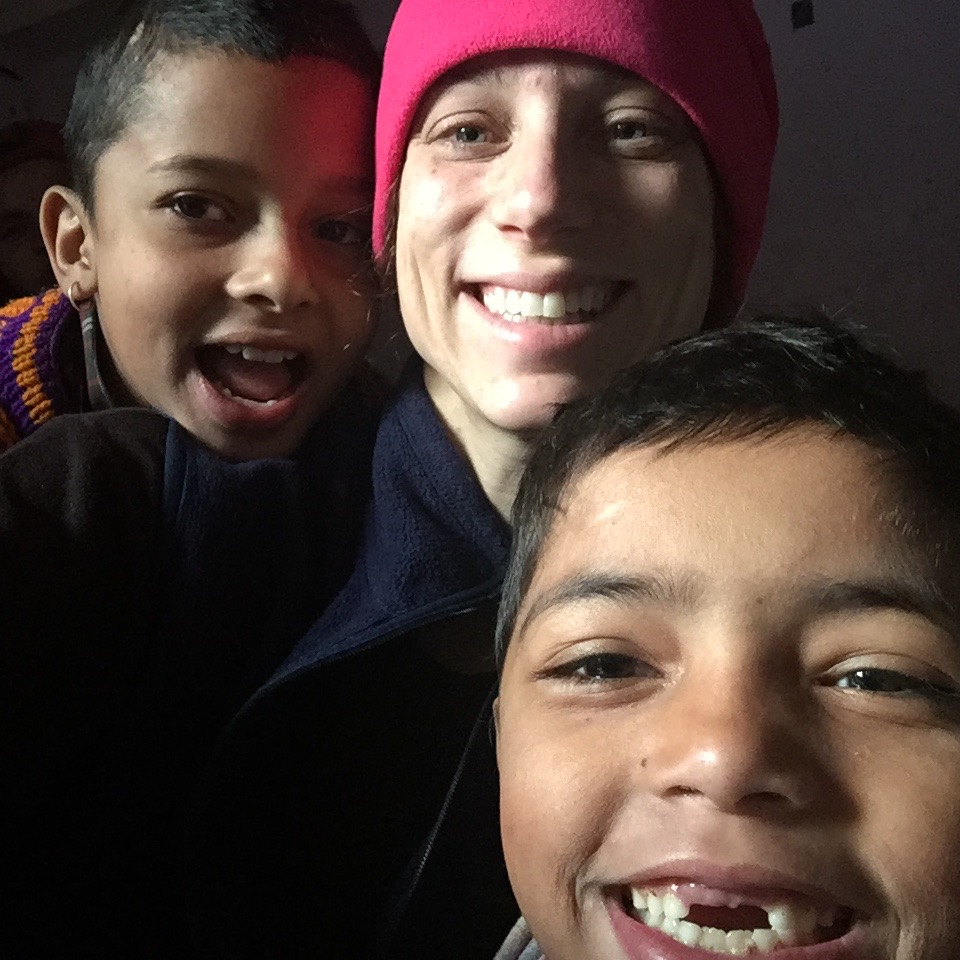
While Didi made tea, we all lay in bed debating whose fault it was that we’d all spent the night practicing kickball rather than sleeping. Then we documented our morning in selfies.

IMG_6095 IMG_6103IMG_6098


Late morning, I met up with some of our graduated Gaky’s Light Fellows for lunch. It was so great to see everyone and hear what they are doing. Sandip is marketing for an online news outlet. Ramesh is deciding where to apply for his bachelor’s in journalism. Nirajan is in Kathmandu, working for Teach for Nepal, and Nischal is entering his second year of bachelor’s. Umesh and Narayan have a solid paid gig singing traditional music each night, and Narayan has his own radio show. Bhagwan is a residential supervisor in a school hostel. When Puja and Asmita finally got there a few hours late, we all made plans to go boating later this week.

Next was getting up to Kaski. With the fuel shortages, this is more challenging than it’s been, as the bus is running infrequently. Not to worry!  I caught the back of a motorcycle ride and then secured a taxi to the bottom of “the jungle path” that climbs straight up from the valley to the house. Forget the bus, man.

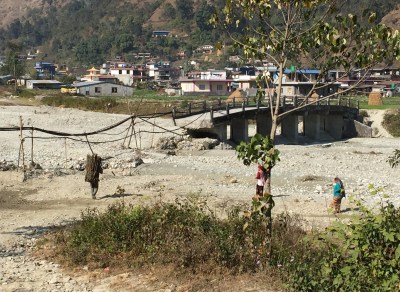
So first of all, at the beginning of this path you have to cross over the Gandaki river, which is usually dry at this time of year, but swells in the summer and fall. We used to wade through it, but a few years back it got this nice concrete bridge. So I’m crossing the bridge, and…it just stops in midair. The last half of the bridge is suddenly no longer there.

It takes me a few minutes to negotiate the drop over the ledge of the bridge with a torn ACL in my right knee that won’t let me jump down on to the rocky bed five or six feet below. I make my way over, progress to the bank a short way away, and there at the bottom of the path up to Kaskikot is this leathery guy resting next to a bundle of wood. He looks kind of resigned. I chat with him for a minute and then he asks for help lifting the bundle of wood.

“My son is really strong, he can carry this kind of load,” the man says woefully. “It’s just pretty heavy.”

Nevertheless, the bundle must be lifted, so we give it a try- fortunately I am more qualified than your average random American to hoist a bundle of wood on to someone’s back so it can be slung from their head and carried across a dry riverbed – but it is too heavy, he can’t get upright under the weight. He sets it back down, resumes his seat in the road, and looks resigned again.

“What’s with this bridge?” I ask. “Half of the bridge is missing.”

“I know!” He says. “The other night, I drank up a full belly and came here and fell right off of it.” He points to his forehead and says, “I got a bit of a bump right here.”

IMG_6126“I hear you,” I reply. “I’m not even drunk, and I nearly fell off the bridge too.”
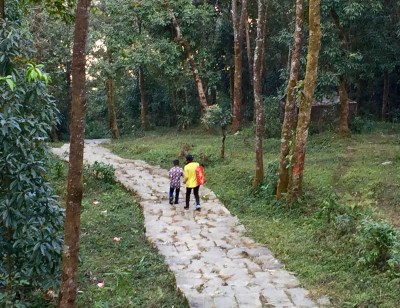
“Just went right over,” he recalls.

“Should we try this bundle of wood again?” I ask.

“Ok, but you have to come around the front and give me a hand.”

I heave the wood on to his back again and this time give him a hand to brace against as a counter balance, and he stands up.

“Thanks, bye,” he says, as if it makes sense that I appeared for this interaction.  Off he goes.

Partway up the jungle path I run in to two kids coming down.  They stop me.

“Where are you from?” they ask me in English.

“America. Where are you from?”

“Puranchaur,” the little boy answers.

“Oh, I’m going to Puranchaur on Tuesday,” I say. It’s one of the villages where we launched last year. I ask what grades they are in: four and eight. “So,” I say to the fourth grader, “do you brush your teeth at school?”

“Yep,” he answers.

“Huh. For about a year, right?”

“A little less than a year,” he says.

“Cool,” I answer, and down the path they go.

IMG_6128

Finally I come out the top of the jungle path and emerge at the water tap in Kaskikot.

“LAURIEEEE!” the ladies cry. “Here you are, just in time for wood cutting to start tomorrow! Last year you came to cut wood, and this year you’re here to cut wood!”

YES. This is the gold medal of the Welcome Olympics. And yes, when I go to cut wood, I understand that it is a memorable experience for all of us.

On my way to the house, a few other people – completely independently – express their approval that I have arrived just in time for wood chopping. I am winning at Nepal.

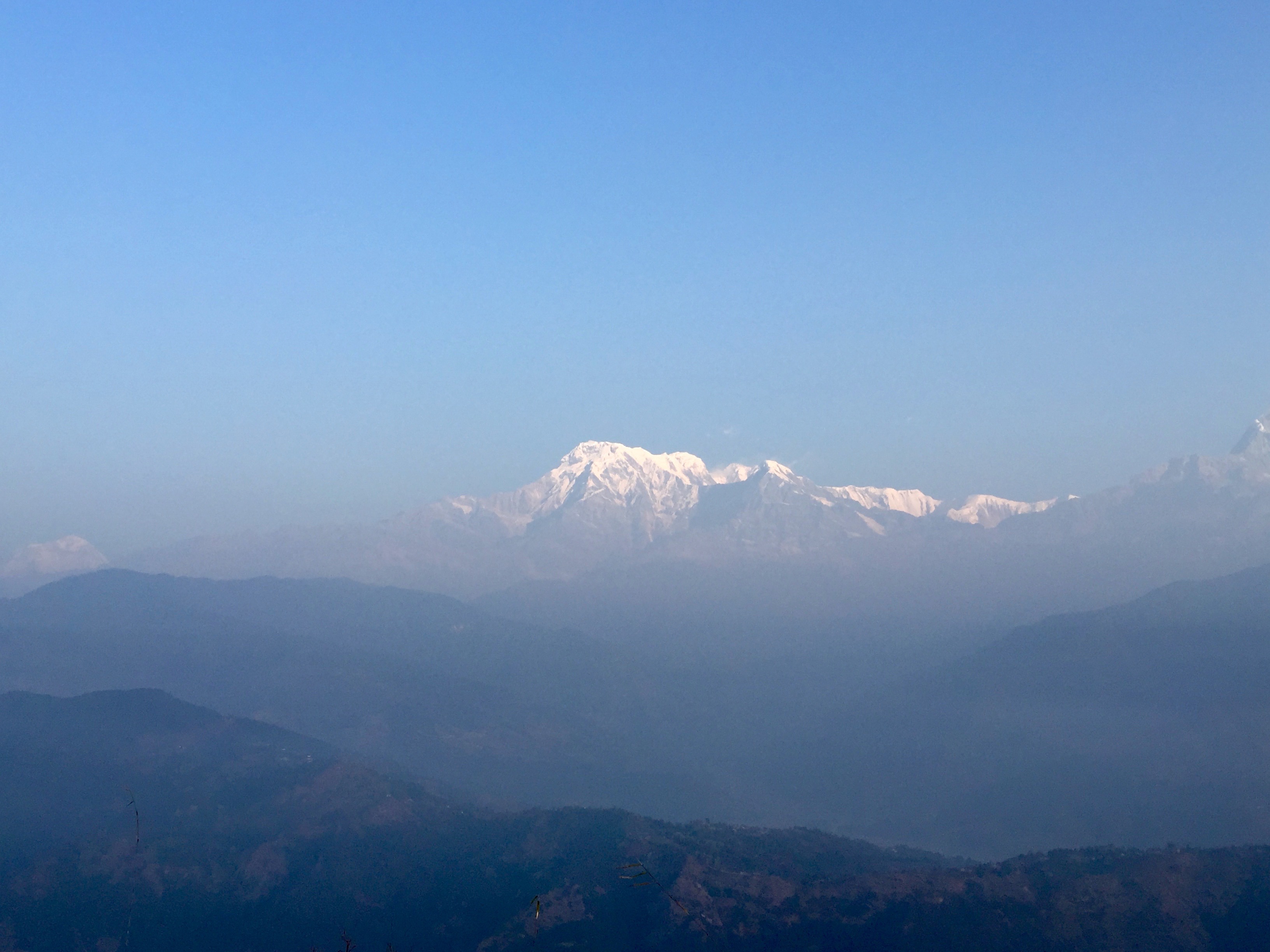
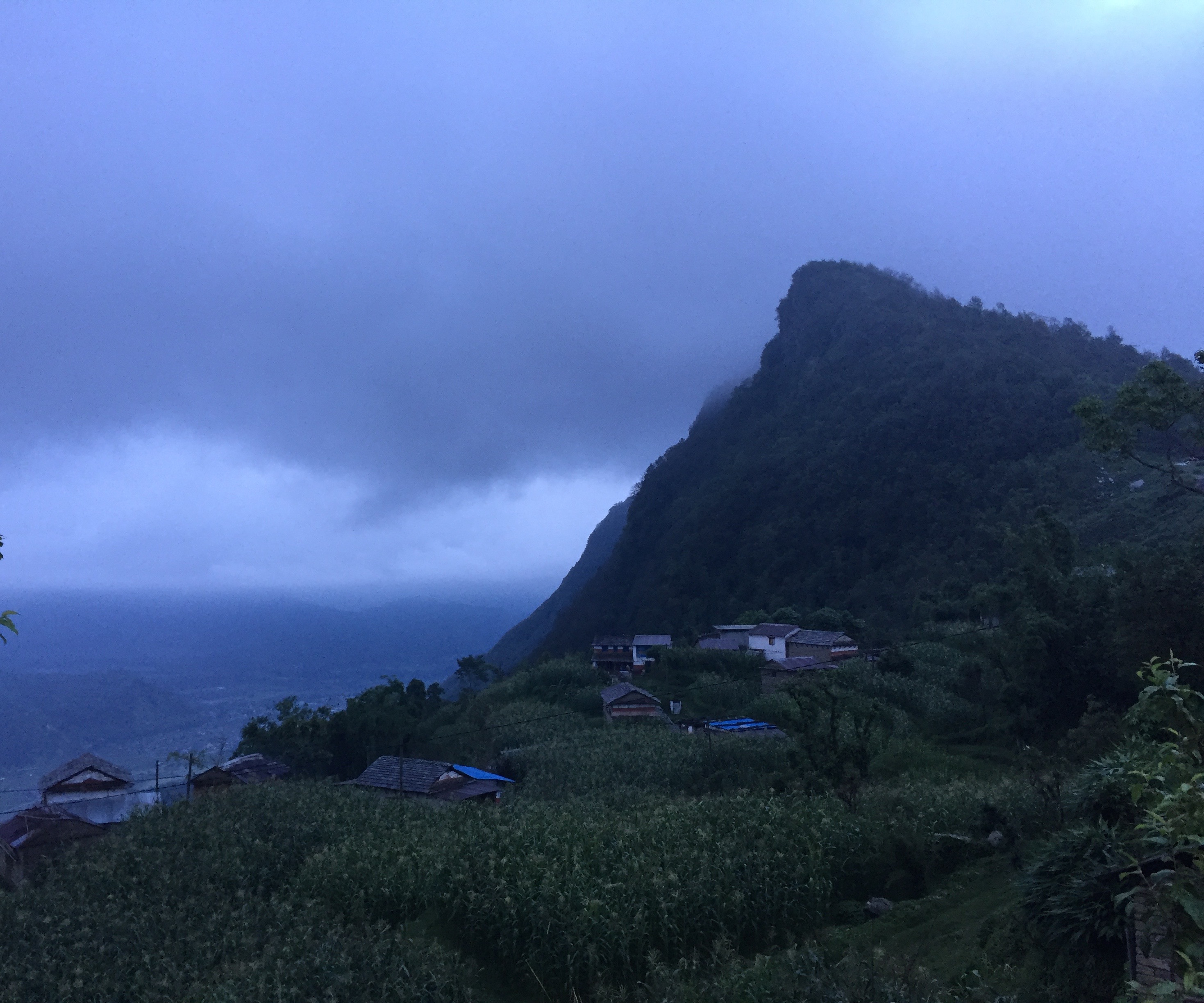
At last, I drop over the spine of the ridge and there is home. Baby O’Neil is tethered outside, her wet nose pointed quizzically my way; she has grown some brown fur.  The hillside is dotted with jubilant yellow mustard flowers.  There is the familiar line of the Annapurnas rising in to the dusky sky, distant and close. No matter the path that brings me to this piece of land, it always appears the same way, luminous and inevitable.

*

IMG_6148


The Obvious Practicalities


The other day I came across a dazzling, haunting article in the New York Times. The Lonely Death of George Bell opens with a chaotic photo of George Bell’s apartment. He was a hoarder, and until you look at the photo directly, it meets you more like a cubist painting than a photo of an apartment: an angular, colorful, dump.

Screen Shot 2015-12-30 at 10.30.57 PM

The story follows a public administrator in a bleak office in Queens as he searches for George Bell’s next of kin, distributes George Bell’s assets, makes arrangements for George Bell’s cremation and burial. These tasks unfold in unceremonious anonymity – in fact, a significant amount of procedure is devoted to proving George Bell’s body is George Bell. No friends or relatives come forward to identify him. He was discovered in his apartment only after neighbors called to report the stench of his lonely end. This is the story of thousands of deaths in New York City every year.

To me, the article itself serves to witness and exalt George Bell’s silent passing, as well as what might have been among the most authentic feature of his life: isolation. In a way it is a glorious tribute, nearly impossible to look away from.

As you will see from the letters at the bottom, not everyone agrees.  But I was taken with this rare and unapologetically voyeuristic look at the mechanics of death in its most cold and undignified form.  In Western culture, we rarely visit death undressed. Jobs that in other parts of the world – certainly in Nepal – fall to the community in an old and well-traced set of patterns fall for George Bell to the Queens County Public Administrator.

George Bell’s situation is extreme, but it in other ways it simply exposes a shared fear and denial of death in the West: how the body, sacred in many cultures, is foreign and terrifying to us once it is dead.  It must be managed by professionals, or at the very least, out of sight, and as a society we treat any honoring of the spirit as a bonus round after the paperwork has been completed. We take this for granted, as if it is obvious because it is practical.

When I happened upon The Lonely Death of George Bell this week, I was editing a radio story about young widows in Nepal. The piece is about how widowhood rituals are changing for young women, and features 21-year Bishnu Pande, whose young husband died while working in Qatar. He never met their six month old daughter.

This topic is close to my heart, because historically, young women who lost their husbands have been forced to live out lives of ritual mourning, and Aamaa is a direct result of these traditions. She hasn’t worn the color red in 35 years. There was never any question of remarrying. Her husband’s family didn’t entirely abandon her, but they’ve done little to help her. When I arrived in Aamaa’s life, her daughters were in their early twenties, and her identity as a widow had long since blended in to the larger idea of her. I have always known Aamaa just as who she is, not as a woman bereaved. She has good friends, and people to look out for her, and she goes to weddings and dances.

And yet, for all practical purposes, Aamaa has lived a life of ritual widowhood. She is alone. Dancing is on limits, but ritual celebration – wearing sindur powder, receiving celebratory tikka, red clothing – are forever out. Moving back to the home where she grew up is out. A new marriage is definitely out. Her role in society is that of a woman who lost her husband, and has been since she was a 23 year old girl.

That will not be Bishnu Pande’s story.  But something will be.

So today I come across George Bell while editing a piece about Bishnu, having spent over a decade as part of Aamaa’s life. And it’s clear that what is obvious is not just what is practical. And neither is the ritual discipline that Aamaa observes. The obvious is just what we’re used to. Our treatment of death seems inevitable because it stems directly from our collective, subconscious attitude toward life, toward the nature of existing. Which can span the range of possibilities from Aamaa to the Queens County Public Administrator.

I feel like these hours I am spending with Bishnu Pande in my ear come at a time when  she and I are both somewhere in the middle. We’ve approached this crossroads from opposite sides: I from New York, where George Bell died, and Bishnu from Kaskikot, where Aamaa’s husband died. Her culture is learning to shed ritual, and I feel that mine has lost something vital and is scrambling to get it back. It’s like we’ve bumped in to each other in the middle of some misty dreamscape, each of us missing someone and renegotiating the collective attitude we’ve been taught.

Some letters to the editor have already been posted the article on George Bell. One says:

At first I wondered why “The Lonely Death of George Bell” was on Sunday’s front page above the fold. As I got into the article, I couldn’t put it down…Mr. Bell’s sad experience reinforced for me the importance of reaching out to relatives, friends and all those in a situation similar to Mr. Bell’s so that they have dignity in their final days. He deserved better.

And then another:

What could possibly justify this callous violation of George Bell’s privacy?…Mr. Bell could not have made his wish for privacy any clearer if he had specified it in his will, and no decent purpose is served by inviting us all in to trespass on his home….With this article The New York Times inflicted on Mr. Bell a final indignity.

     *

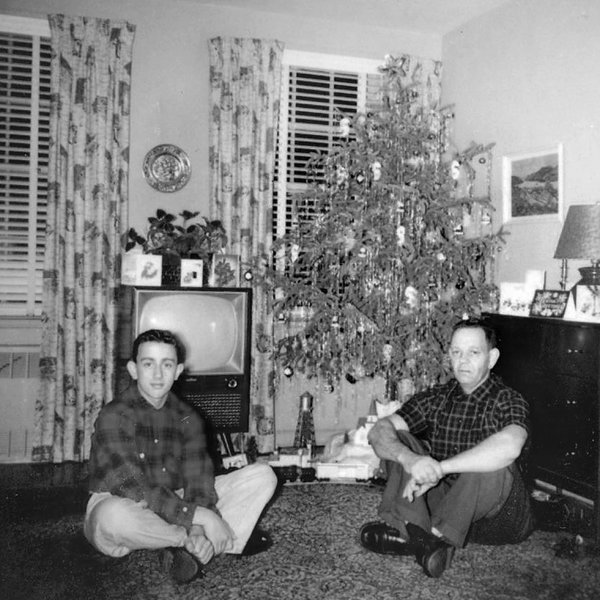
George Bell in 1956. / The New York Times

George Bell (L) in 1956. / The New York Times


Day Thirteen


Today is the thirteenth day after my friend Mary’s passing.  As I’ve written about before, this day marks the end of the initial kriya period, where the immediate family of the deceased observe two weeks of purification and austere ritual that instructs their food, bathing, clothing, sleeping, movement and prayer.  It is during this time that the spirit wanders in its new world, perhaps hovering about in this one, finding its way.  On the thirteenth day, a large meal is cooked, the family and community drink purifying bitter gaun, and life begins again.

I have decided to go back to Connecticut a week early for Mary’s memorial service.  But I wanted nothing more than to observe this thirteenth day in my own way, here in Nepal, where I feel close to the sky.

In addition, there’s the baby buffalo.

Two weeks ago, on friday morning, I woke up to a misty dawn with my phone near my head, and rolled over to see how my friend had fared since some bad news had arrived in my email the prior night. There was nothing yet – it was now night time in the U.S. – but I had a bad feeling.  And when I walked outside to wash my face, our very, very, very pregnant buffalo Lulu was shifting about uncomfortably in her shed.  She was due any moment.  Since I’ve arrived in Nepal this summer, I’ve been hoping to be at the house when Lulu has her baby – a phenomenon I’ve witnessed only once in twelve years, and will never forget.

For anyone who’s never seen a large animal like a buffalo very pregnant and approaching their moment, it’s hard to describe.  You can feel, like a physical entity, the pent up power of nature, the imminent violence and miracle of birth.  This animal that is normally so much bigger than you is so much smaller than what’s about to happen.

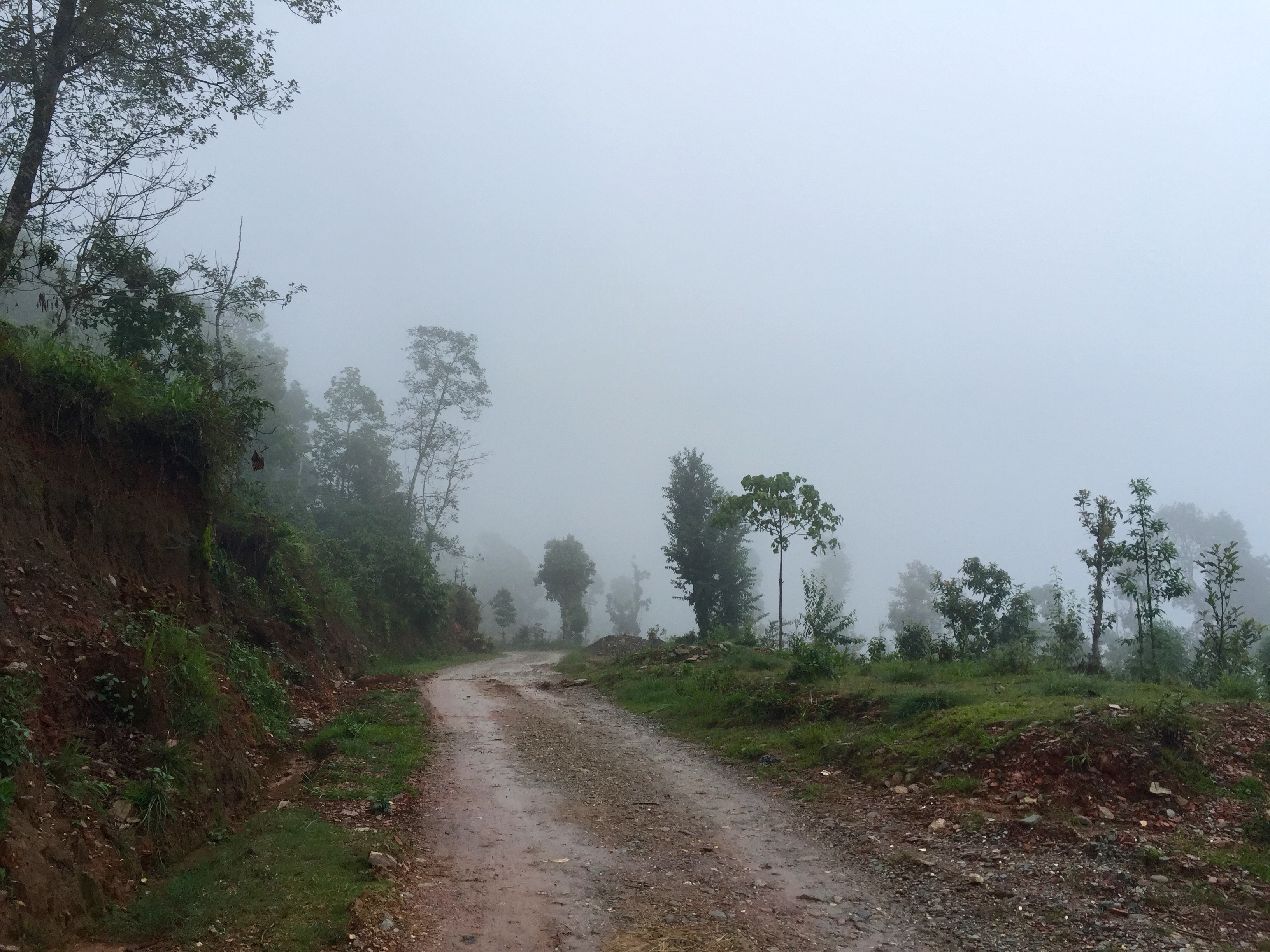
I left that morning for a meeting in Pokhara, already crying on the bus, where another little blue dot popped up on my phone – a new message saying things had not improved, that Mary was probably in her last hours back in New York.  And I was on this strange road in Nepal, on a mountain, the mist close and threatening rain, and the buffalo shifting around uncomfortably in her shed under Aamaa’s watchful gaze.

I spent a surreal day in Pokhara, and called Aamaa late in the afternoon.  The baby buffalo had been born and everyone was doing fine – the marvel of life.  Twenty minutes later, I got a message saying that Mary had died.

IMG_0450

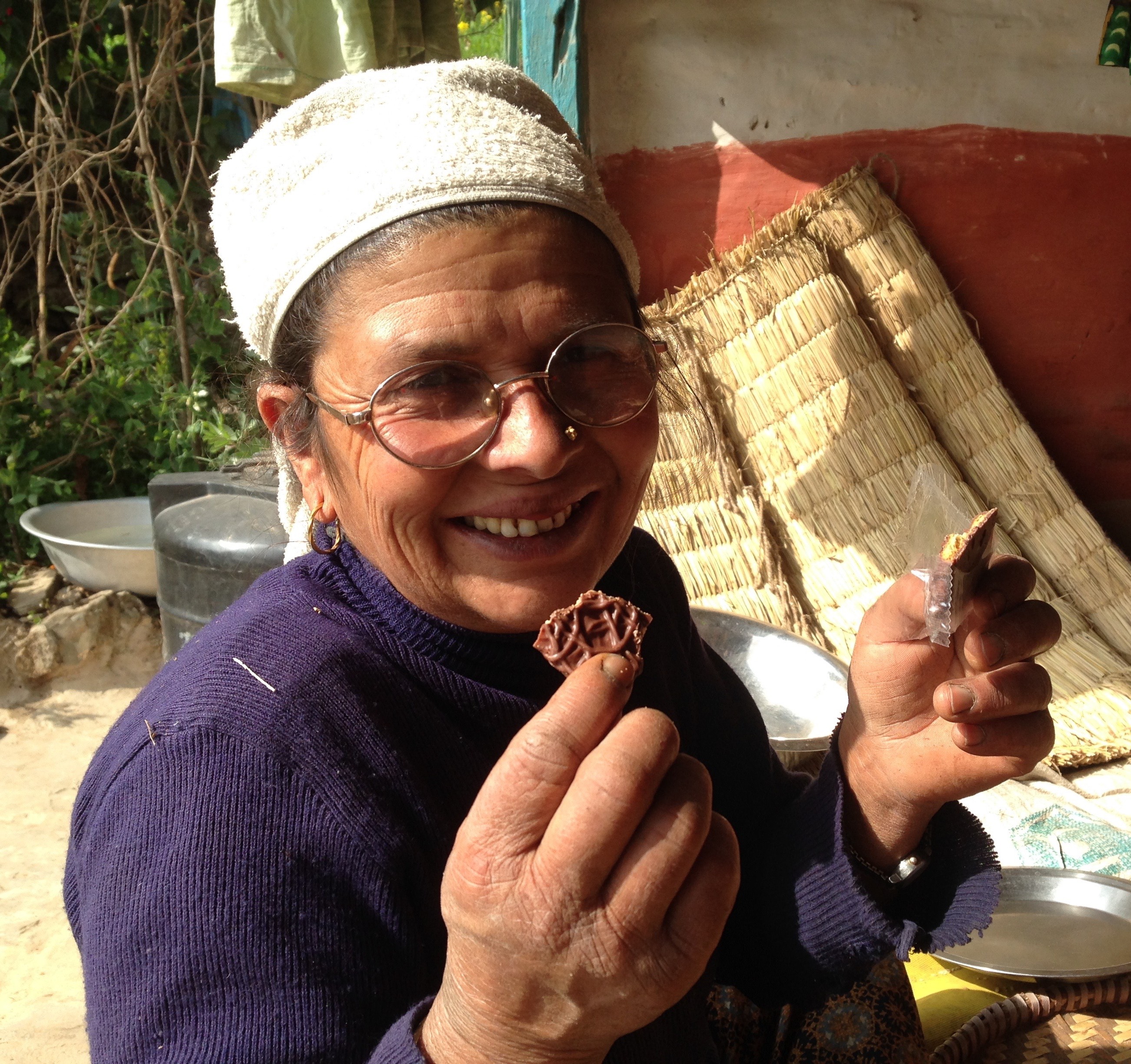
So this little baby buffalo has been a source of wonder and comfort to me.  I named named her O’Neil. When I came up to Kaski a few days later, Aamaa pumped me full of the nutrient-dense, sacred milk that the mother buffalo makes in the first few days after giving birth, because she wanted me to be nourished.

The birth of a buffalo is a ritualized affair that is, in some ways, the inverse of a death.  For eleven days, we are not to eat the milk with food, or wash cups and bowls used for the virgin milk in the same impure space as the rest of the dishes.  When I took a little burnt piece of something out of my milk one day and tossed it on the ground in the yard, Aamaa went and picked it up, lest it touch the bottom of someone’s foot.  It is, essentially, an eleven day observance of the fragility of life and the gift of the milk that our Lulu will provide to her baby, and to us.  Then on the eleventh day there is a puja, with a priest and everything, and on that day we cook rice pudding, putting the milk into our own “bread” and bodies.  And the cycle goes on.

P1020891

Kalika Hill

I had missed O’Neil’s birth puja because I was out in Dhading.  So today was the first chance that Aamaa had to make rice pudding for me with O’Neil’s milk.  And that’s how Day Thirteen began, with a rich and delicious celebration of the life of our little baby buffalo who was born almost the same hour that Mary died.

Then I climbed up to my favorite place in all of Nepal, a spot along the hilltop that leads to the Kalika Temple, for which Kaskikot is named.  First I went to the temple, with flowers and incense from our house.  I made my offering and rang the bell.  Before heading back to my favorite spot along the crest of the hill to do my qigong, something made me think I should look around for some sign, something that would make me feel like Mary was here with me, and I was here with her.  From the Kalika Temple, you can see everything, the valley on all sides, the lake to the southeast, the stretching falling foothills reaching to the horizon, and the soaring Annapurna range to the North, towering halfway up your field of vision.  It is spectacular.

But the direction I decided to look was up.

IMG_5176

I have taken hundreds – literally hundreds – of photos of rainbows in this village.  I know where they show up and in what kind of weather.  But I have never seen a rainbow like this anywhere on the whole planet.

I left the temple gates and ran through the grass in my flip flops, following the hilltop to my favorite rock.  I kept checking behind me to see if this amazing rainbow was still there, and it just kept getting brighter and more extraordinary.

When I found my favorite rock, I lit incense and placed more flowers I’d brought from our house.  I am so close to the clouds on this three feet of rock.  I can see my little house looking like a toy in the hillside.  Everything is far away and whole.  I closed my eyes.

When I opened them forty five minutes later, the rainbow was gone.

.      .      .

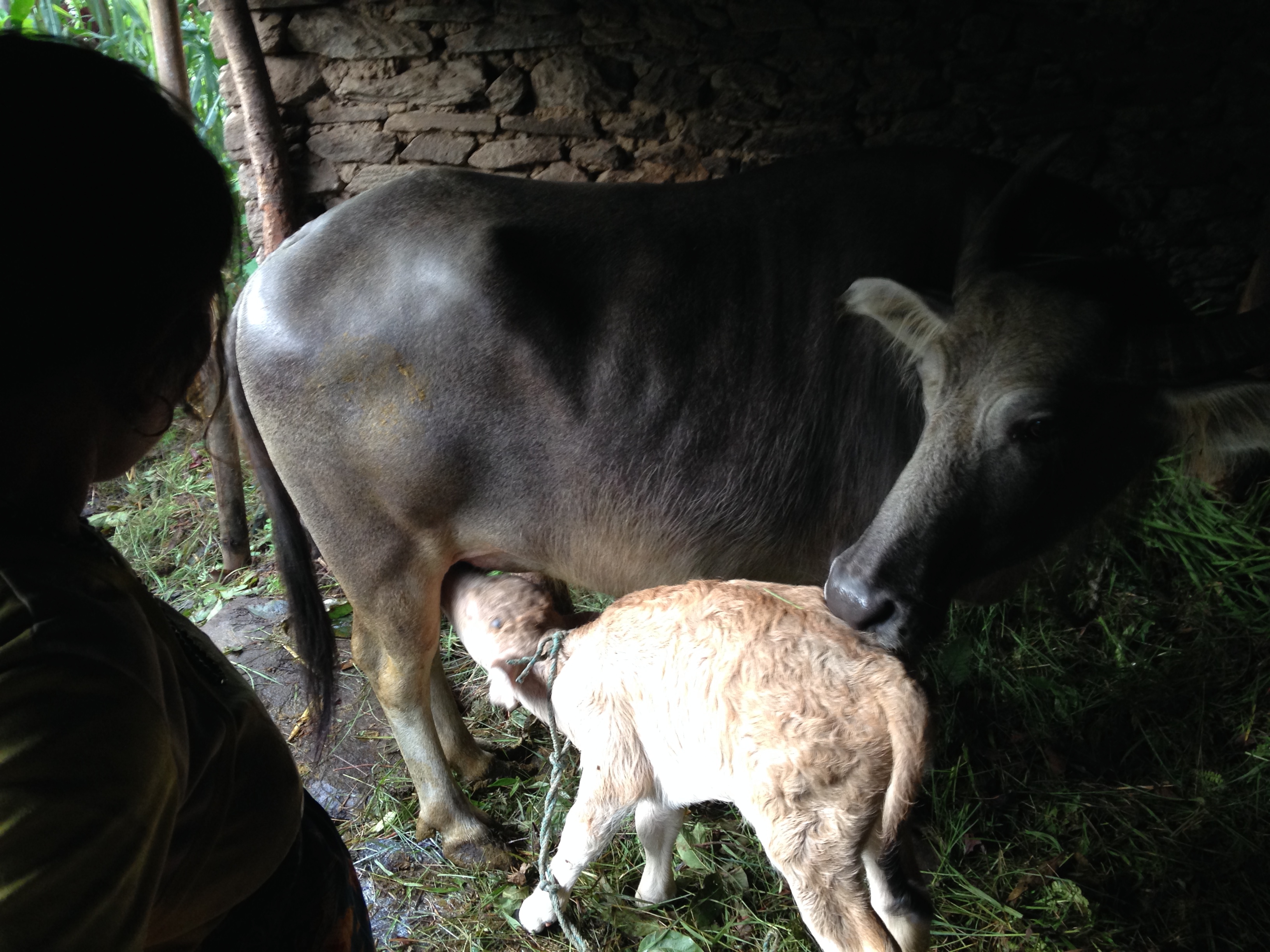
Mama Lulu and Baby O'Neil

Mama Lulu and Baby O’Neil under Aamaa’s watchful gaze