Keys and Threes


Thirteen days ago, Butu bouju’s father died. Out of all the possible things that might have been happening today, the whole community was gathered at Butu Bouju’s house for the last day of kriya. As the sound of the priest reading propagated over the arrival and bustle of visitors, Butu bouju’s house had that particular feeling of the world being unveiled after a deep and intense period of ritual mourning. Aamaa and Pascal and I pulled up plastic chairs in on the patio, where many relatives had come to pay respects. So the chance for us to be with family and community before our departure across the world was brought about by a death.
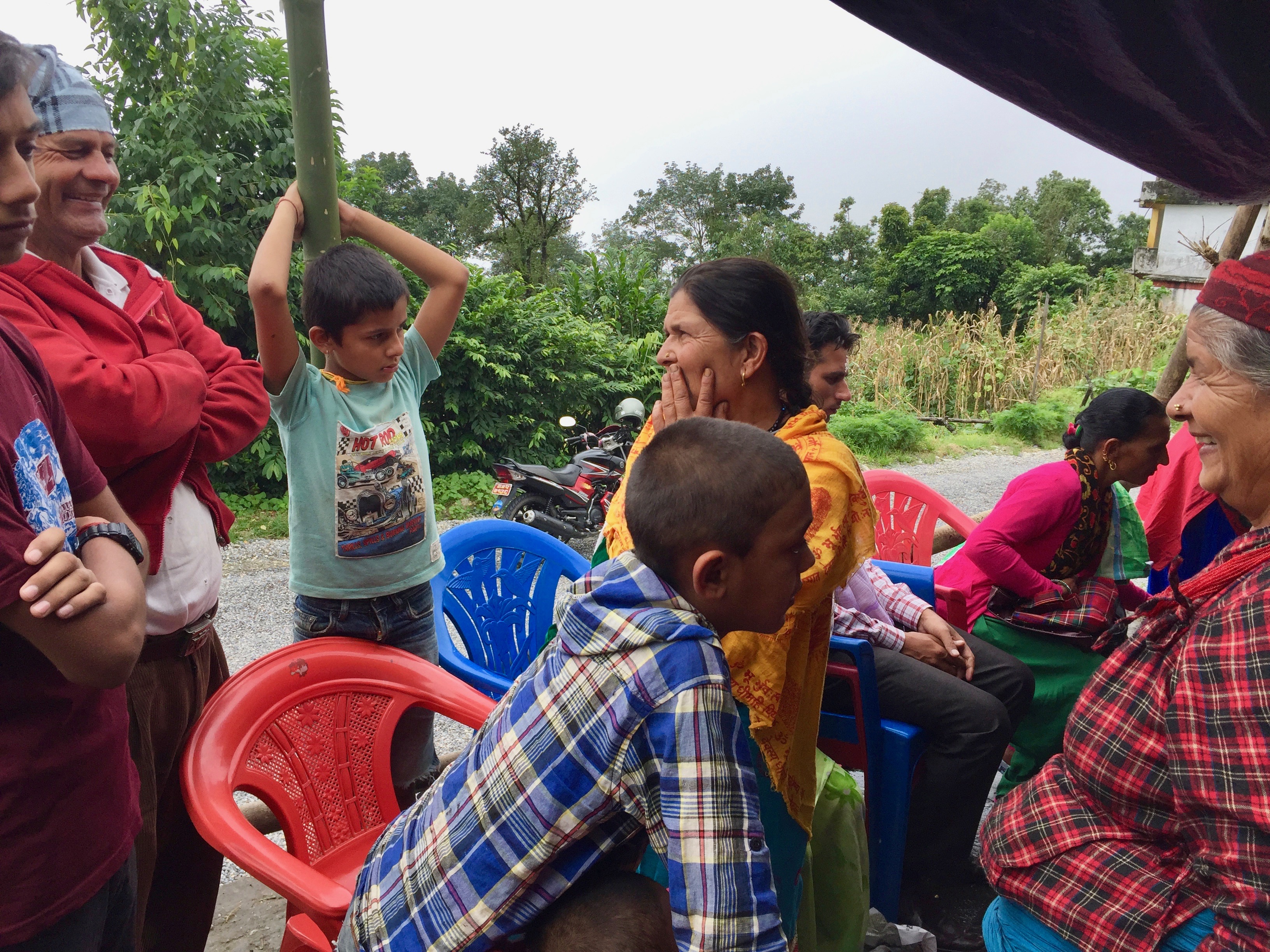
“How are you both? Laura, when did you arrive, when are you leaving?”

“We’re leaving for America today,” we told everyone. “We’re both going.”

Bhim arrived. We haven’t seen each other in probably three or four years. This November will make fifteen years since Bhim first brought me to a small house around the corner, where a widow and her daughters were living, and offered to have me move from his household to theirs.

“You’re taking Aamaa to America?” Bhim asked.

“Yep.”

“Today?”

“Yep.”

Bhim shook his head and smiled with that ironic twinkle he gets sometimes when I’m just not figure-outable. Which is a lot of the time.

“This has been a long story,” Bhim concluded.

“Yeah,” I laughed, “it has.”

“Tell Bishnu hello from me,” he said.

We left the kriya and went home to finish organizing. I’ve left this house nearly twenty times, and always the leaving is leaving Aamaa. After that, it’s just physically departing from Nepal. Bringing Aamaa along feels like bringing the house, and I’m not to sure how to pack.

Something else strange – the quiet. One of the things I remember from when Bishnu left in 2008 is how crowded the house was with people on the last night: neighbors, uncles, relatives I’d never met before and have rarely seen since, they were all crowded on to two beds, talking and laughing. In most households, when a family member is going abroad – “outside,” is the word people use – there is a great deal of activity. But Aamaa’s house is not a usual household. There’s nobody else in it.

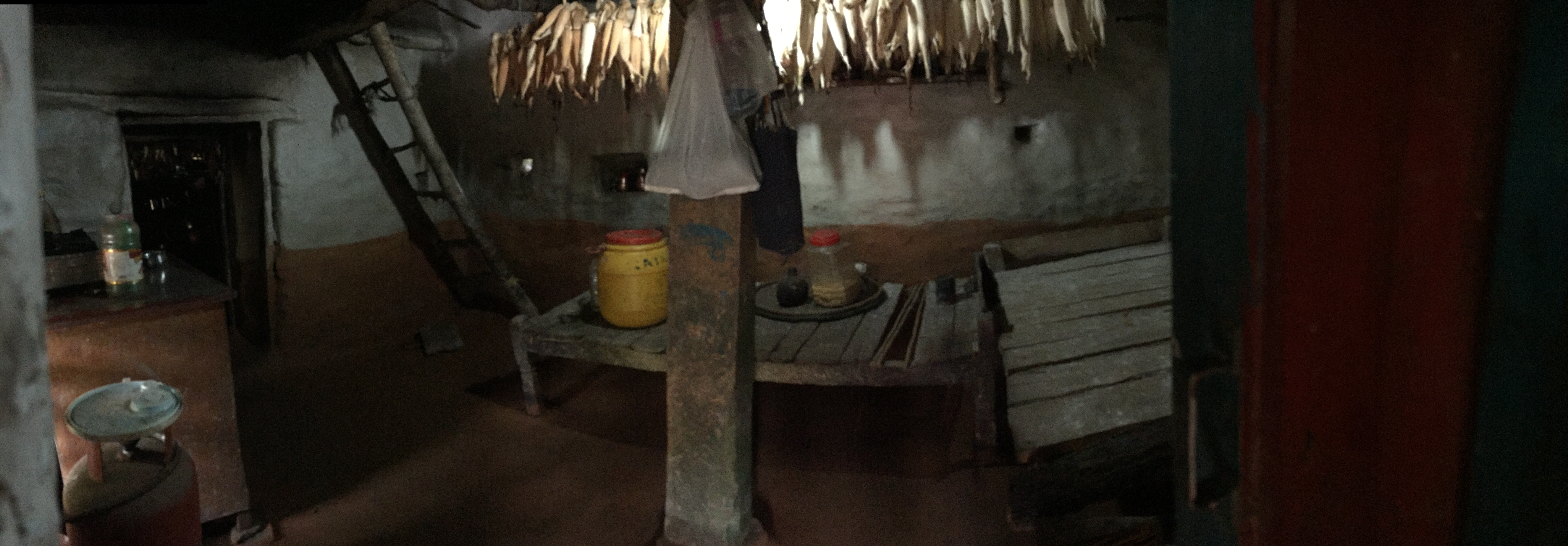
So as mid morning became afternoon, it was just us, wondering how to ready the house to be without its mother. I swept and Aamaa put the mattresses up. It was unclear what else to do; I just wanted it to look organized. Like we’d prepared something.
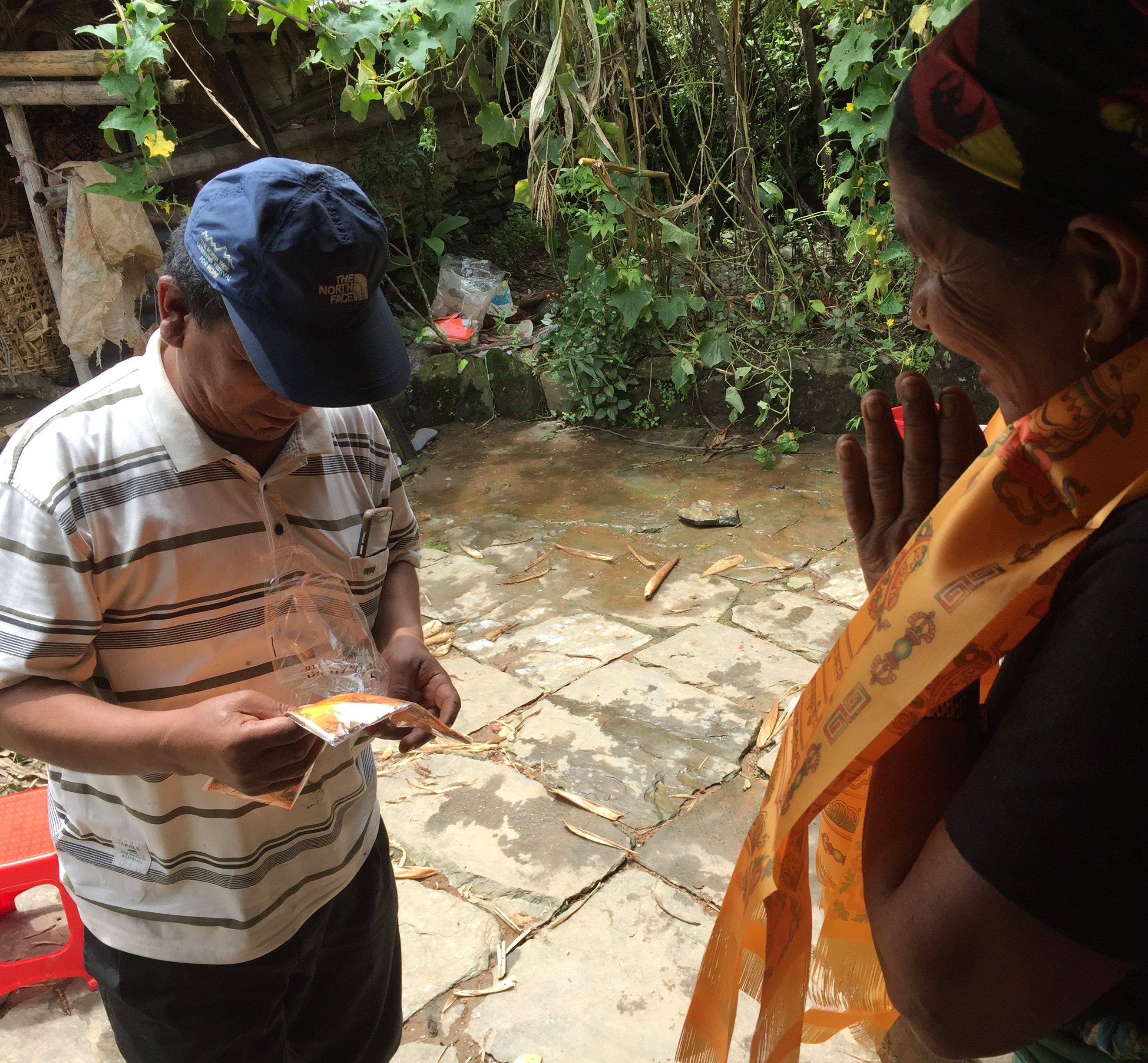
Sonom sir came down from the Resort. I’ve bought six packets of local tea that he grew in the resort gardens behind our house. I hang out at the Resort now and then, to jump rope or do qigong, to chat with Sonam sir and his wife and nephews. Many of my friends have stayed there over the years while visiting me. Sonam sir’s family is from Solukhumbu, and like me, they are outsiders who have their custom-made place in Kaskikot.

“Good journey,” Sonam sir said, giving Aamaa and I each a kata in the Sherpa tradition.
Throughout the prior evening and afternoon, there was one person who spent a good amount of time sitting with us: BAA!, Mahendra’s father. Our cranky, sarcastic, exhausted neighbor, the one whose missing teeth prompted my career in delivering rural dentistry to underserved people. From the time I first came to Kaskikot, BAA! seemed unapologetically resentful of my unearned privilege in the world. He and Saano didi’s husband often function as the men in our house, chopping branches or negotiating social matters that require representation by men. Over the years I’ve spent a lot of time with BAA! collecting branches or chasing the chicken while he watched me fumble or drinking tea and admitting that I don’t have any explanation for why the world is crap. That God gave me easy and he got dealt hard was never to be smoothed over or ignored. On some unspoken level, it wasn’t my fault, but I didn’t deserve any credit for being ahead, either. So we just collect branches and sip tea and that’s how it is. I took to calling him BAA! because he would point at himself and say, kind of demandingly, BAA!  Father. That’s how I was to address him, even though Bishnu and Didi call him “dai” or brother. At least he would be in charge of that.
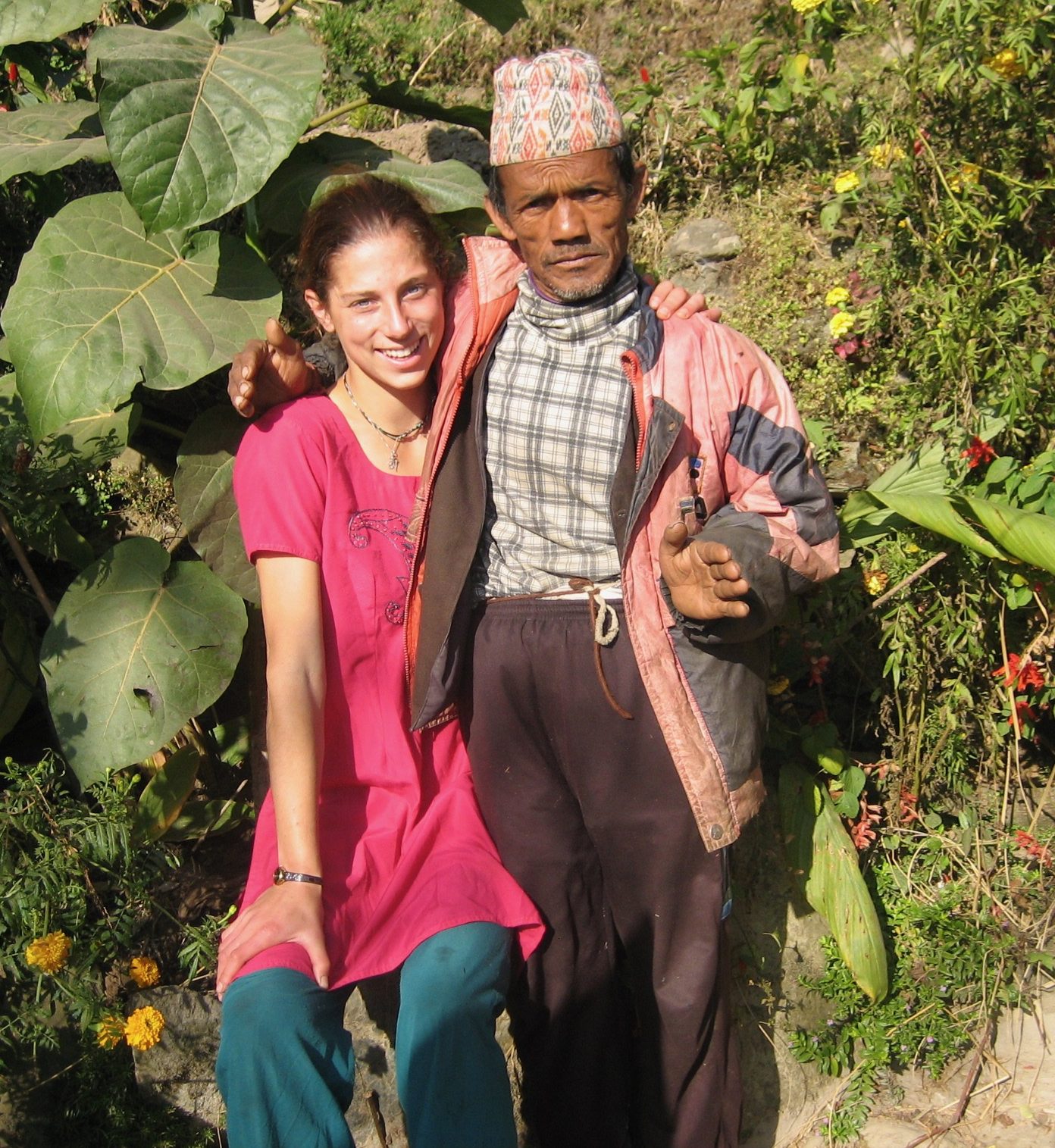
Often our closest neighbors simply wander off when I’m leaving Kaski, as goodbyes are uncomfortable and pretty pointless, anyway, and at some point in the afternoon BAA! had indeed wandered off, and that was that. So I was surprised when he reappeared holding two silky white katas. He gave one to each of us.   BAA! will probably never see America, or probably anywhere outside Nepal. All the tourists come and go from this village and he is getting old with fewer and fewer teeth that I could not save, either.

“Go well,” BAA! said. “Take good care of Aamaa. And bring me back a son-in-law.”
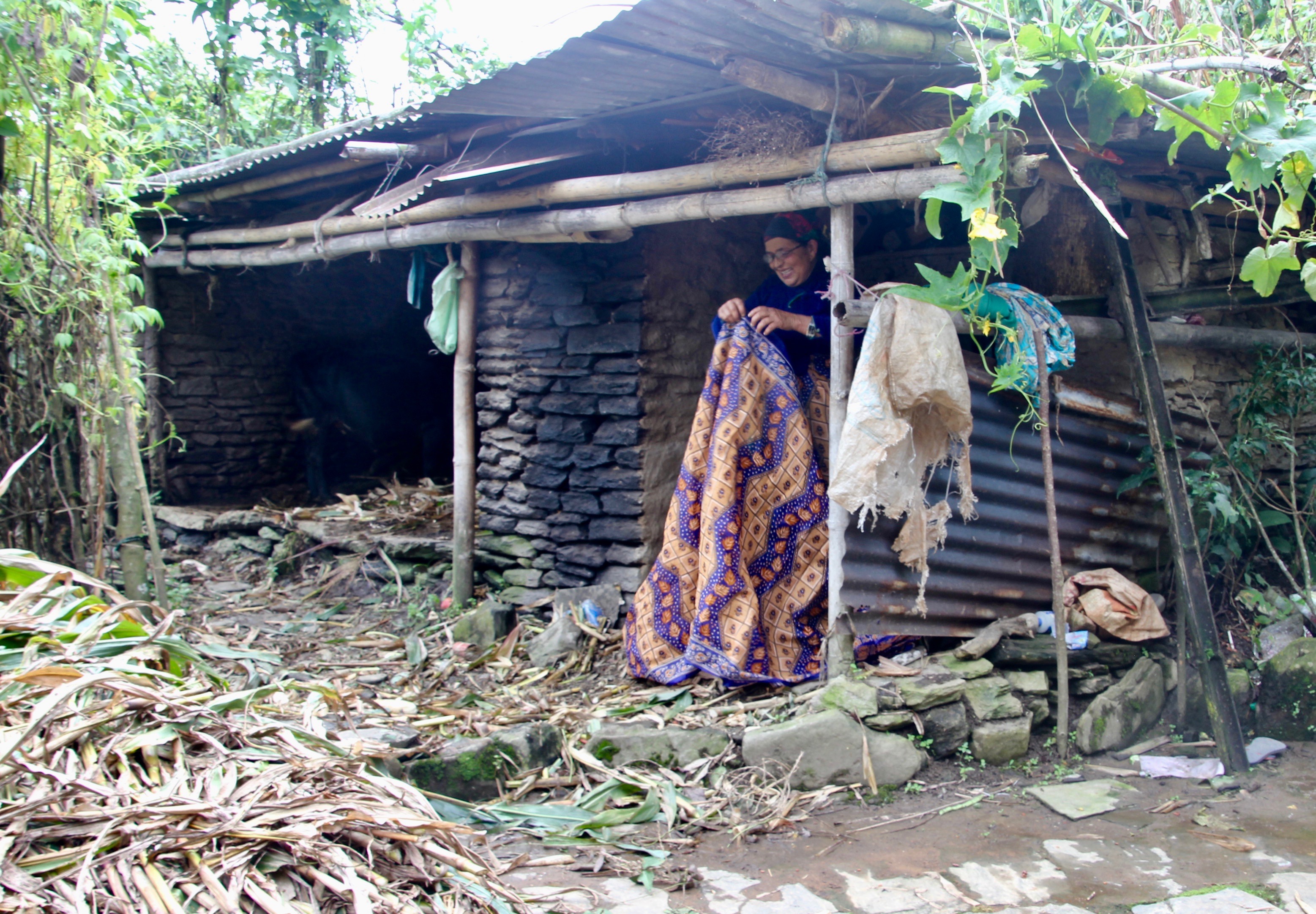
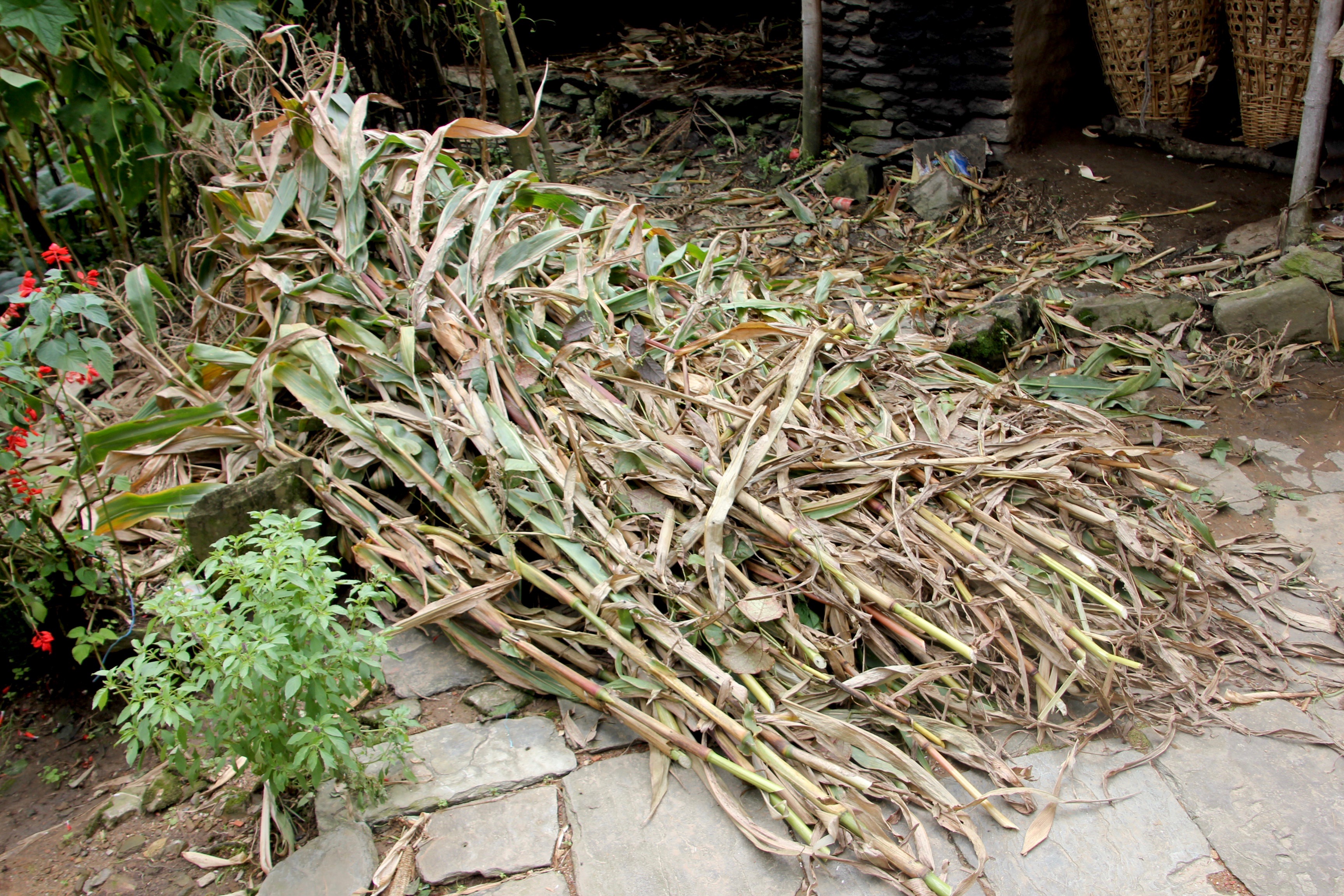
After we’d done whatever we could think of to do, Aamaa changed in to the clothes that she’d hung outside in the shed the night before. Once her travel clothes were on, she couldn’t go back inside.  It’s also inauspicious to leave the house for a long journey in threes, so Aamaa left first, her bag packed with cucumbers and ghee and the CDMA phone for Didi and almost nothing to take America. In one of the strangest moments of my adulthood, Aamaa walked out of the yard and around the garden of cut corn stalks while I stood on the porch with Pascal, watching her go.
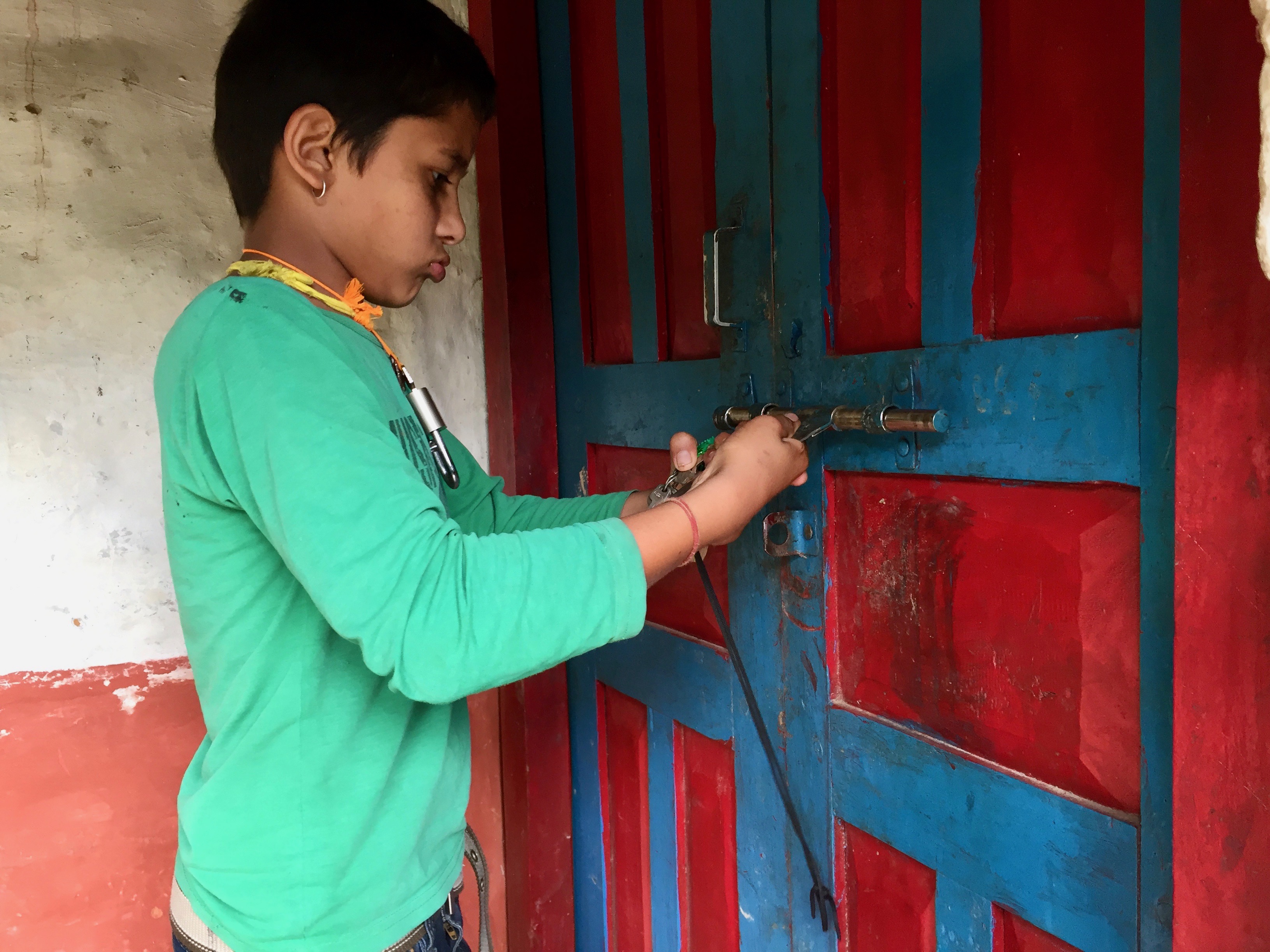
Then Pascal took a key out from around his neck and jammed it in to the wooden door. With that, he and I followed Aamaa up the little path, to the road, to the bus that will take us to the other side of the world.

*
Auspicious Leaving


Our flight to America was scheduled for a Monday night, but finding a day to leave the house in Kaski was a problem. Generally speaking, Saturdays and Tuesdays are inauspicious days to leave one’s house for a long journey (although on Tuesdays, you can get away with it, but ideally you shouldn’t stay at the house you are going to). Plus, Aamaa has a special restriction on Mondays that doesn’t necessarily apply to everyone: she is so much a part of her house, so rarely leaves it, that Mondays are off limits too when it comes to locking the door and saying goodbye. That left us with Sunday morning they day before our flight from Kathmandu as the only viable date for departure. And then it turned out that was ahmse ko chatujasi, a monthly position of the sun that is inauspicious for leaving one’s house. Sunday was a non-starter.

Problem.

The solution we came to was that Aamaa would put her packed bag outside the house in the early hours of Saturday morning, before it was fully Saturday.

I arrived back from Cambodia on Friday evening with Pascal in tow, and found the corn cut down. We did all the usual things – making dinner, playing with Amrit and Narayan from next door, chatting with neighbors passing through. Aamaa set to arranging things in a small shoulder bag. Two saris, two blouses and a petticoat to wear with them, and the two new kurta salwaars we had had made. What else should she bring? The bag looked disconcertingly empty. I show up in Nepal with two large duffel bags every time and most of my wardrobe lives here. What do I usually have in there? Can that give us any clues as to what Aamaa should add to her bag?

A sweater for the plane, I suggest. It is cold in the plane.

Mostly Aamaa was concerned with what items we would bring to Didi in Pokhara tomorrow. An enormous cucumber the size of a cricket bat. A bottle of heavy ghee (and a collection of smaller bottles for Bishnu, Mom and Dad, Ricky’s family, and me.). Aamaa’s CDMA telephone needs fixing, and besides, someone might call it while we are in America – we were to leave the telephone with Didi. Most of Aamaa’s bag was filled with things to be left in Pokhara.

“Laura, set your alarm for 3am.”

“I set it.”

The evening wore on, our last evening, the one where normally my bags sit threateningly zipped and ready, signaling the splitting of our worlds. Instead we just fell asleep, wondering what is going happen next.

“Did you set the alarm?”

“I set it.”

We drifted off. My dreams wove in and out, waiting for the alarm. Finally I opened my eyes. It was 4am.

“Aamaa, wake up.”

“Hadjur?”

“The alarm didn’t go off. It’s 4am, go quick.”

Aamaa took her hand bag and hung it outside in the shed. The phone and other belongings were allowed to finish the night in the house, but the clothes she would travel in needed to leave before daylight betrayed them.

I drifted off again, the feeling of uncharted territory hanging softly in the pre-dawn.

*

Animal Yoga

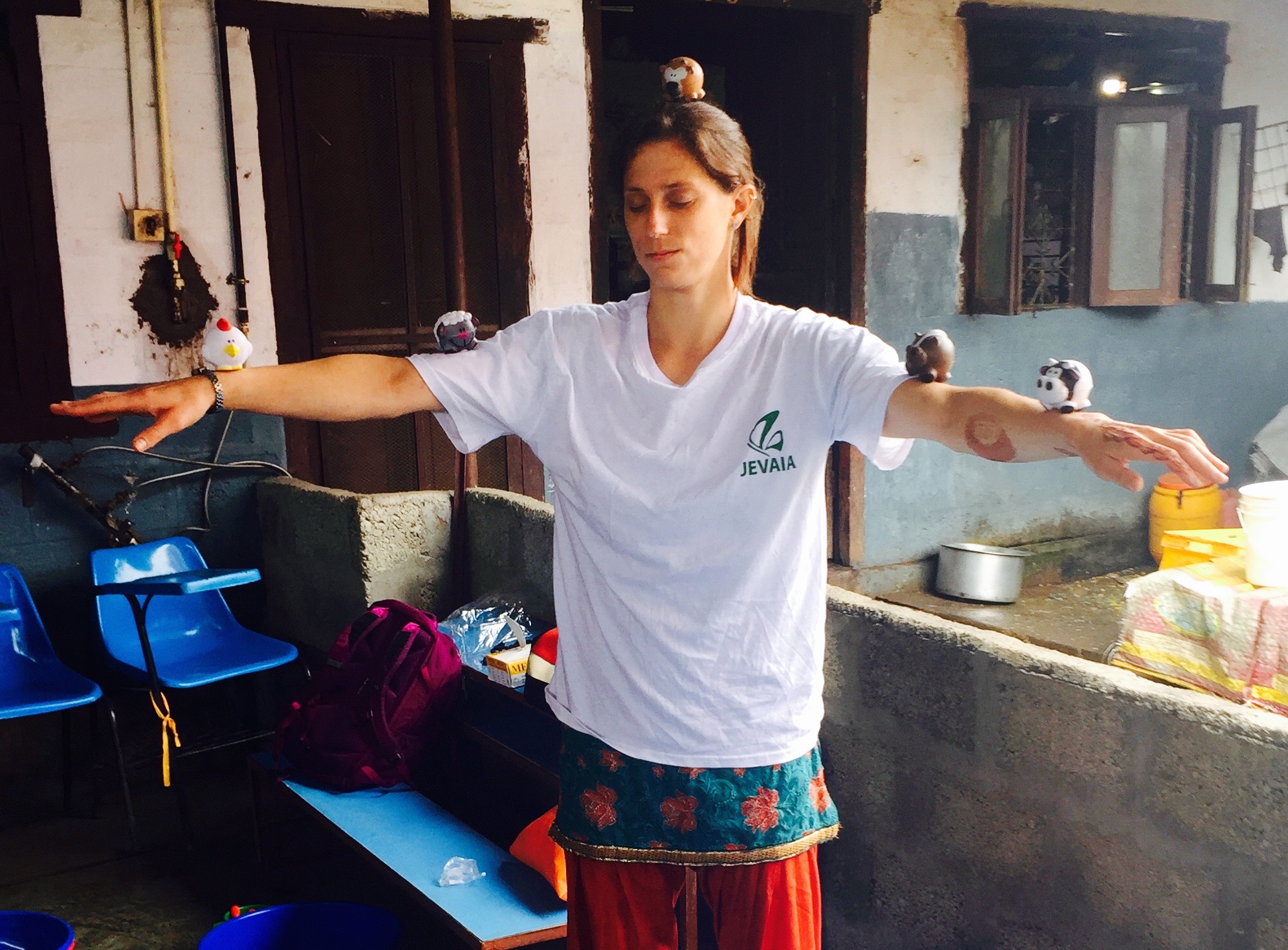
As the summer comes to an end, I want to share a special part of my spiritual practice with all of you out there – millions, even billions of you – in search of inner peace and the wisdom of the zodiac or whichever comes first.

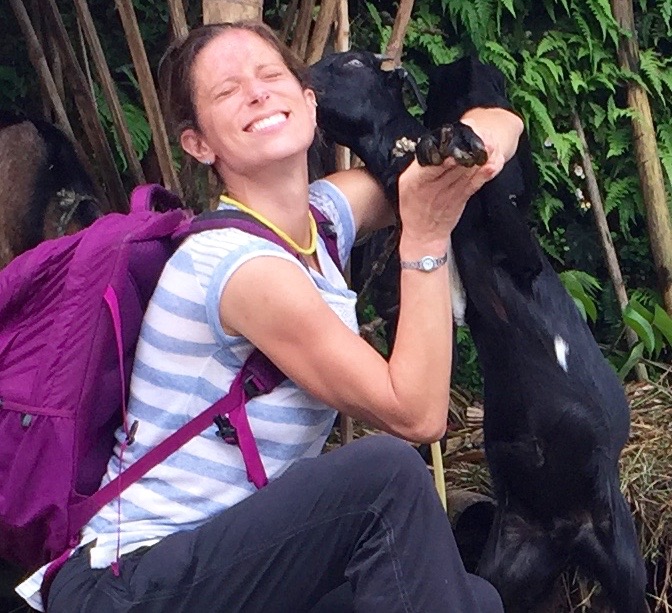
Just before I left for this summer in Nepal, I was at an end of season party with my soccer team in West Hartford and we got to talking about a new fad in Connecticut: goat yoga. This is a thing where you do yoga while baby goats run about jumping up on your back and snuggling your bum.

RIGHT????

That very weekend my friend Sam was planning to attend goat yoga, but I couldn’t go because, alas, I was headed instead to Nepal. But then, on the plane to Nepal, I got to thinking. Nepal lacks numerous amenities such as proper butter, a fully functional government, rural dental care, and Pandora. But goats are not a problem. So then I got to thinking more, and I what I thought was, let’s be open minded and work from a strengths perspective.

This proved to be fairly straightforward.  I started with a beginner practice:

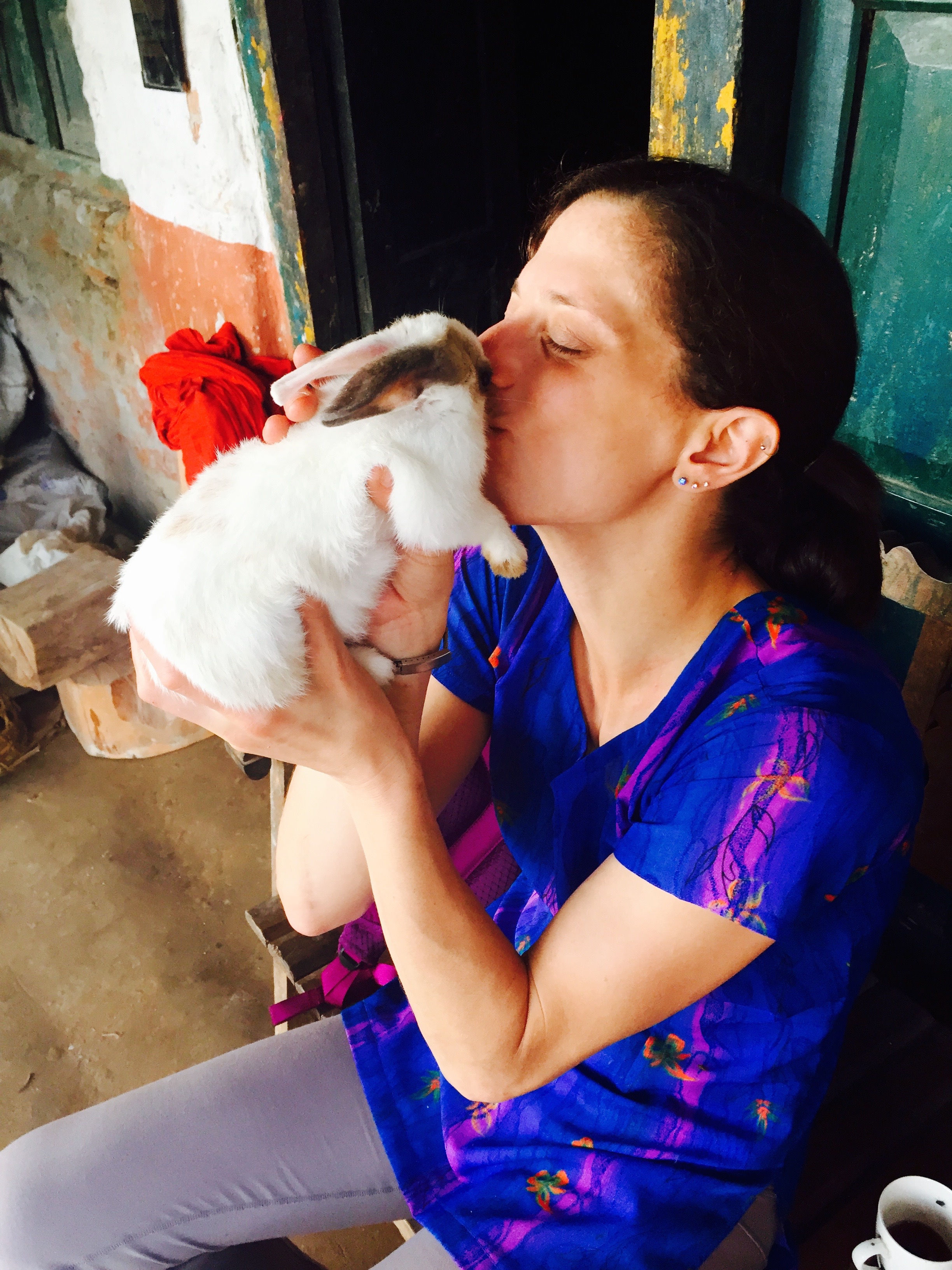
Adorable Bunny Yoga.

The fan response was prompt:


I proceeded without hesitation.  I am a very focused person when I need to be.

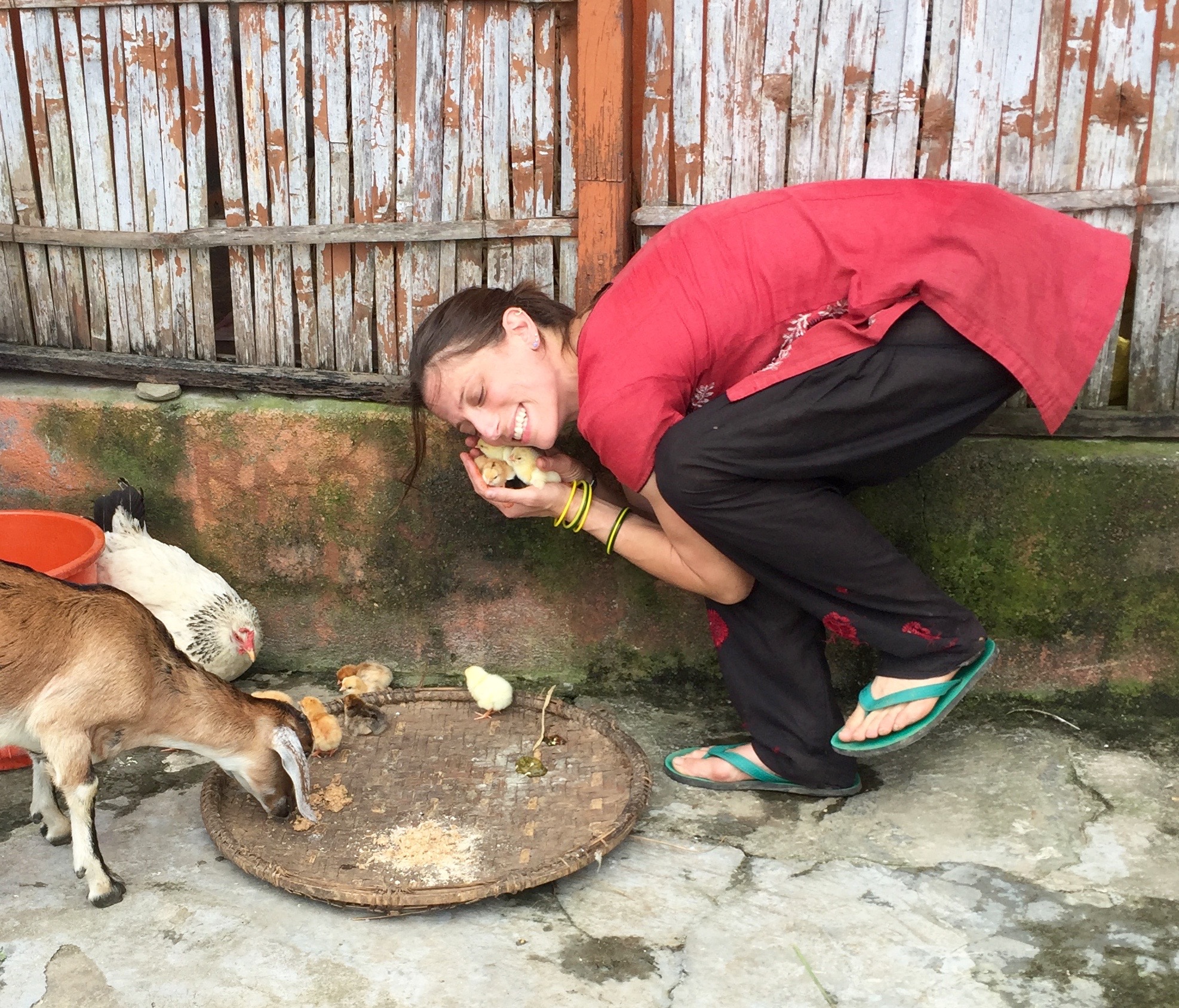
Baby Chick yoga


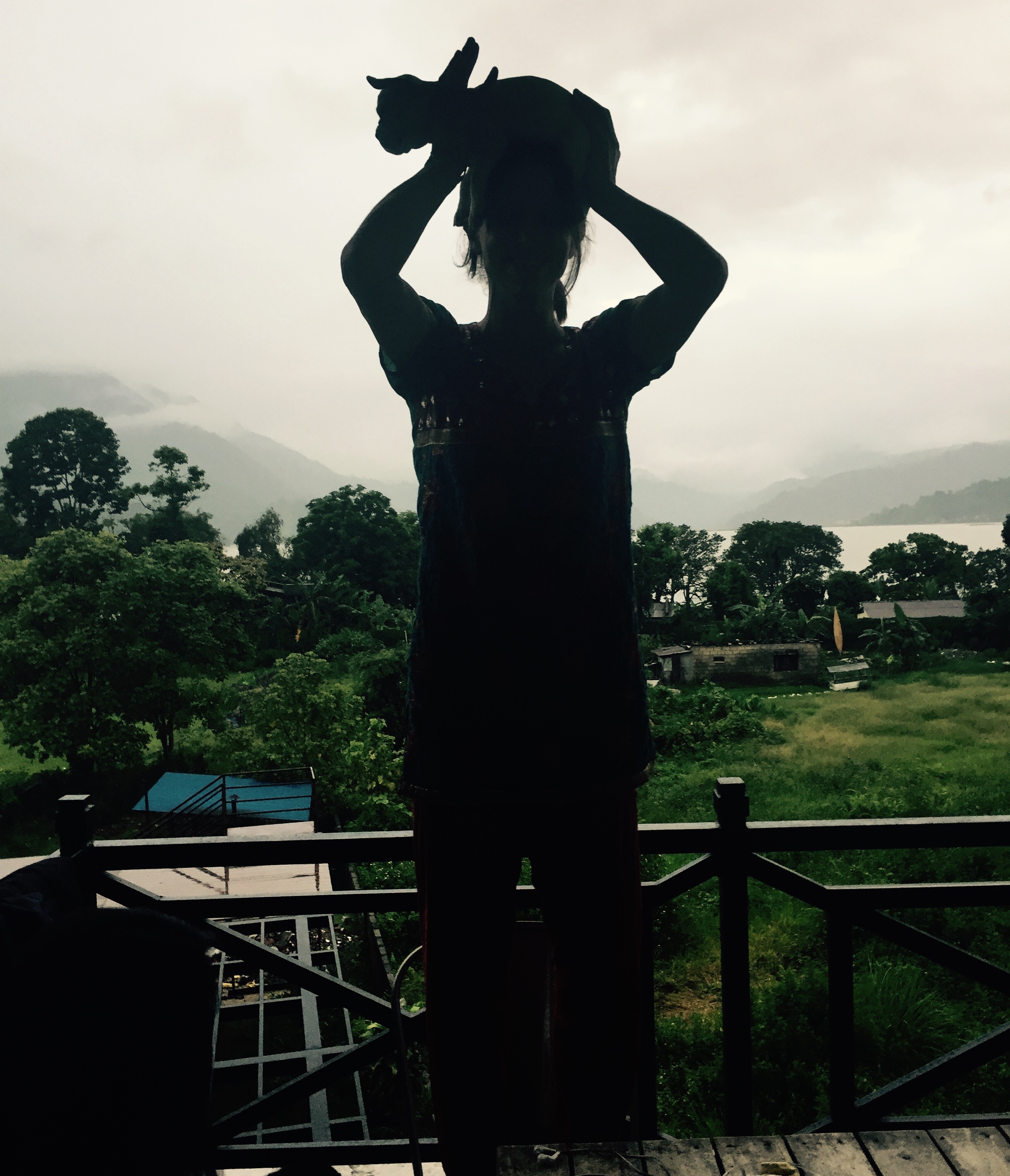
French Bulldog At Sunset


Pairs Kitten Yoga


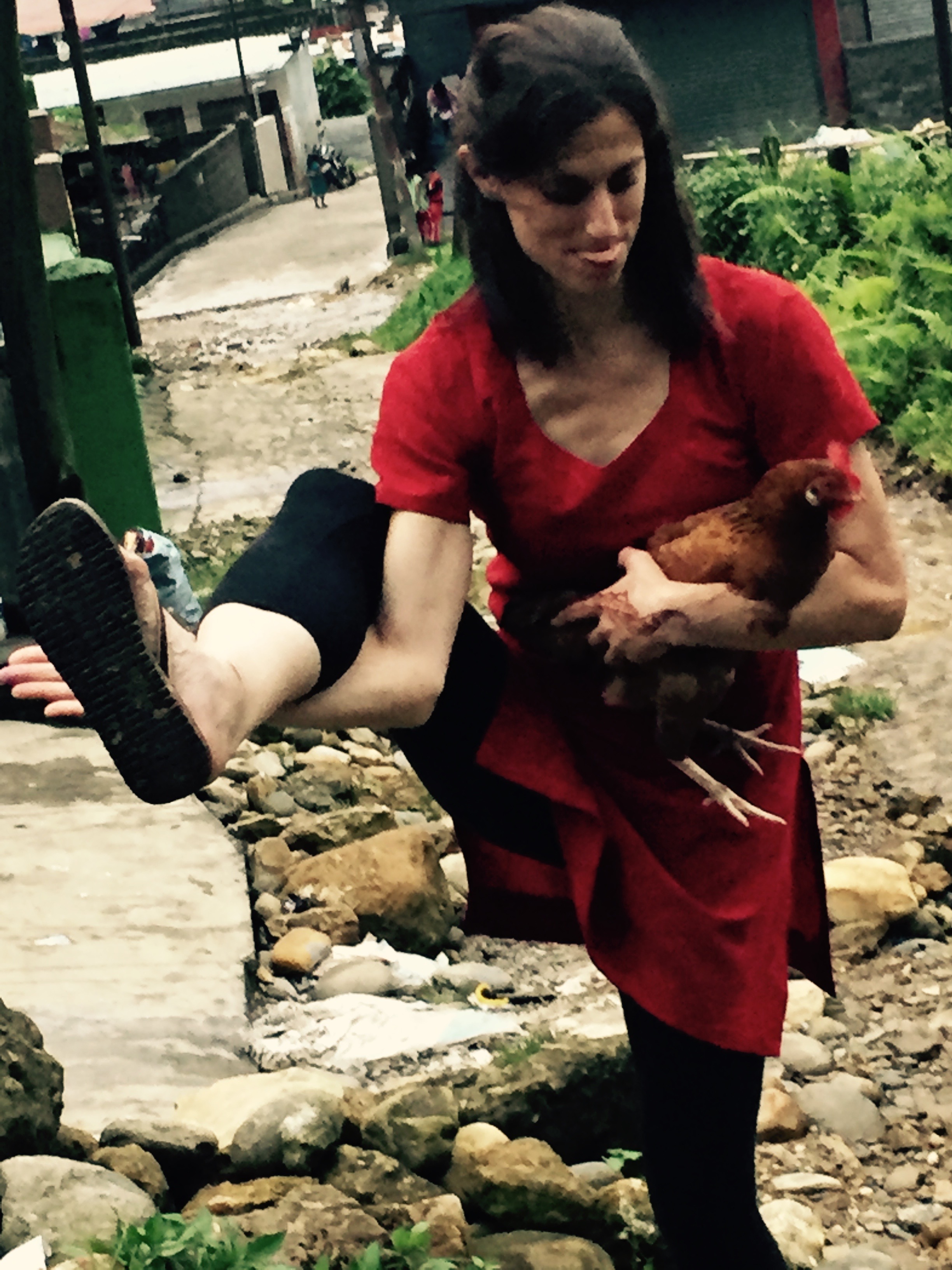
The Rooster

(this posture, which is excellent for improving the flexibility of the tongue to reach the tip of the nose, was immediately preceded by me trying to catch the rooster)

Preparation for Rooster Pose


A Herd Of Sheep Crossing a Road in Upper Mustang Yoga

Also, meditations on being very very still:

Farm Pose After Dental Camp

Pondering the impossible:

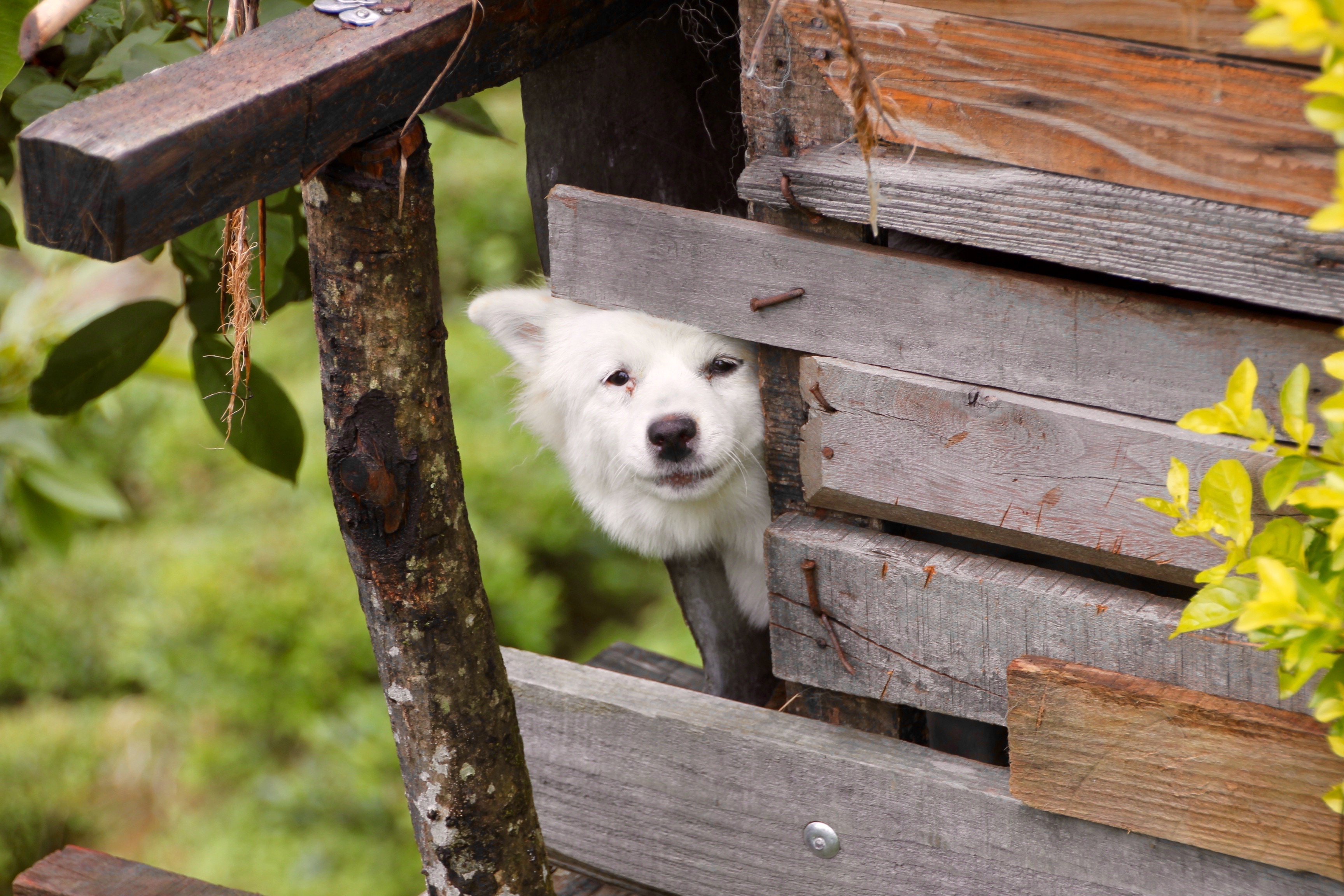
How is there a Dalmation in Nepal Pose

Ironic Yoga, very powerful in the Year of the Carrot:

I tire of you appropriating us in to your yoga names just because you’re humans withering stare dog


And finally,

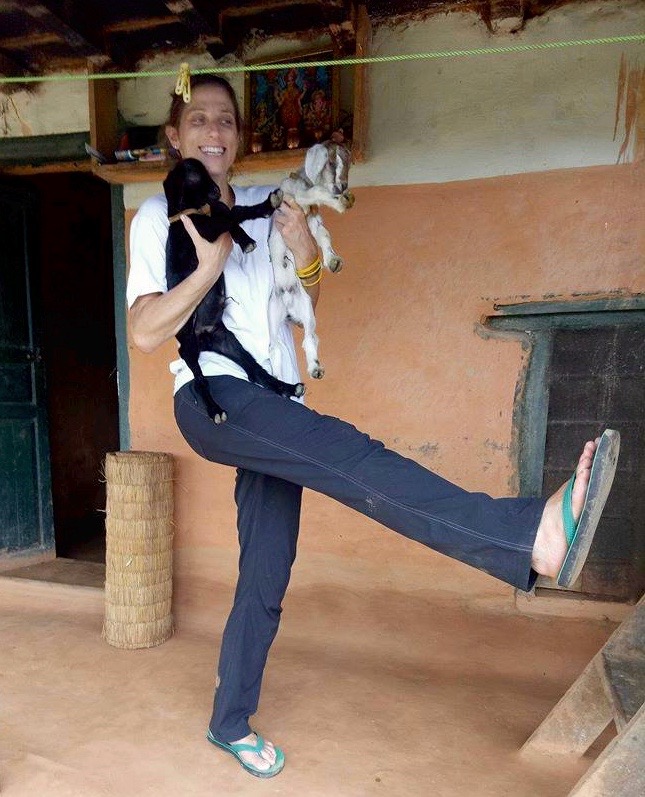
Goat Yoga

Goats Doing People Yoga


NAMASTE, HUMANS!!!

Another Room in Heaven

For someone who has spent 15 years in Nepal, I’ve travelled very little in the country, choosing instead to burrow further and further in to a single community, a single home, a place where now twelve year olds have always thought of me as a part of their world. It was only a few years ago that I suddenly thought: I’d like to explore. I’ve started stetting aside a few days every few years to go climb out on a spine of rock some place, in some location that percolates on a back burner in my mind until it bubbles over and asserts itself: this is the time, go here.  Then life adapts around it.

The Way to Muktinath

One way to travel is to go to see things that are new and unfamiliar and exciting or challenging – like that time I went to Murad Khane in Afghanistan, or when I floated in the Dead Sea, or the month I spent in New Orleans doing oral histories for StoryCorps after Hurricane Katrina.  But this is something else, a magnetic pull to a place that is already inside me, a dot on a primal map created a long time ago.  In 2013, Prem and I went to Mardi Himal by a little-traveled route comprised largely of goat trails snaking along a blade of snowy ridge that rims a basin of Annapurna giants. It was winter, everything wide and blinding, the sunrise spilling pomegranates and mandarins and pineapple juice all over the jaws of the cold earth. When I got there, it made sense.

Now it is summer. Muktinath sits north of Pokhara between Lower and Upper Mustang, a stone’s throw from the Tibetan border, and houses a famous complex of Buddhist and Hindu temples. For some time now I’ve been pulled north, toward the areas of Nepal influenced by Tibetan culture, and also where the landscape climbs up and stays high, where the trees fall away and leave a desert mountainscape that stretches off to the Tibetan plateau, a mystery, an uncrossable border. In the winter even local residents often come down from Mustang to the valley to escape the unforgiving snow and cold.

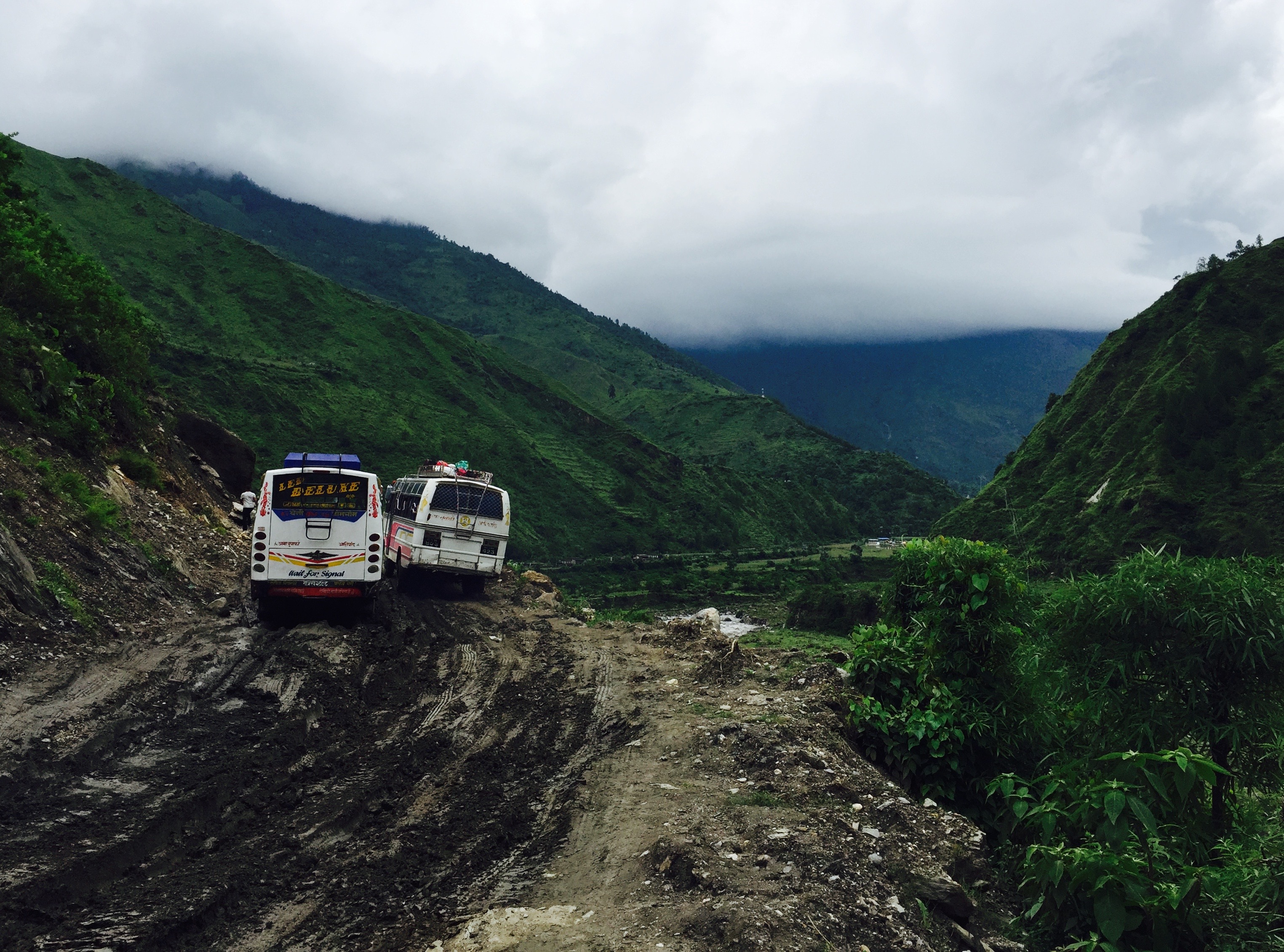
Prem Bhinaju and I met a bus by a curb in Lakeside early on Friday morning. It was headed to Jomsom, which is only a 15 minute flight from Pokhara, but unlike crystalline winter, the summer is dense and foggy and flights have not come or gone from Jomsom in a week. That leaves us with what should be a ten hour bus ride. You know where this is going.

There’s the obligatory 2.5 hour delay when a bearing that has to do with steering left needs fixing, and magically, the Bagloon Highway produces an auto shop strewn with hulking shells of buses and tractors and cars and unidentifiable transport components, so we pull over to fix the bearing. We set off again around noon under ten-ton heat, but I am relieved to be on the move with my day pack and with Prem, my most familiar travel companion. The road winds upward and the Kali Gandaki River drops below us, black and rumbling with coal-colored silt that will settle by the time the torrent gets to in Pokhara, where it is called the Seti Gandaki, or White River. The road becomes a road story that I can’t tell because my mom reads this blog, but even passengers local to Jomsom are praying and squeezing their eyes shut while we loll side to side on a road that, from afar, looks like a child dragged a pencil across triangles of high mountain forest and then got distracted with a sandwich. In the end, aside from knuckles white from clinging to the seat in front of me as if that can save me from a long descent in to the Kali Gandaki – one of the deepest gorges in the world – I come out fine. Prem and I arrive in Jomsom at 7:30pm.

I know I’m in Nepal, but Jomsom looks like a ski town and I have to keep reminding myself that this is Mustang. We clomp along a stone-laid main street with quaint local shops and hills rising up behind them. In the U.S. we’d call the hills mountains, but in Nepal, the mountains are the sheared white rocks twice as tall that are currently lost in monsoon cotton one row further back on the horizon.  It is hard to believe anything could tower over the already looming hills – I remember thinking the same thing at Ground Zero, knowing that Lower Manhattan’s massive skyscrapers had been dwarfed by the Twin Towers.  It is impossible to imagine land up in the middle of the sky, but I know Diligiri is there, behind the clouds, a thousand stories high.  We settle in at a hotel.  Local plum wine.

Our walk to Muktinath starts the next morning and takes two days, one long day up and one long day back. We walk along the Kali Gandaki in a landscape created contradictorily by the upward smashing of tectonic plates and the downward gouging of receding glaciers. The result is a desolate, heaving geometry, eons of history piled atop one another and laid bare straight from river to the sky. Dwellings impossibly carved out by people who once migrated southward from Tibet are clustered in the sweeping rock face, and the occasional modern village is a patch of irrigated greenery in a borderless expanse of brown. This should be the province of giants, but we are just tiny people, our feet sliding over bazillions of even tinier rocks, where fossils casually present themselves because nobody has owned them yet. They were once underwater and they have been here forever and ever and ever.

The climb starts. No houses, no villages, no ancient dwellings for hours. Prem Bhinaju finds a fossilized creature with gold flecks in it. Uncharacteristically , I haven’t exercised in weeks and my legs feel like playdough, but it’s cool. I have an actual fossil in my pocket.

We arrive in Muktinath around five, eat something, and rest for a while. Then, because tomorrow will be a long day and we’ll be pressed for time, we go out to explore the area around the outside of temple complex.  That will leave us time to go to the temple itself in the morning.  I leave most of my things behind except for my SLR camera and rain jacket. Now that it’s evening a slight mist is drifting downwards, uncommitted to getting us fully wet. Dusk turns dreamlike and enchanted.

Prem says we’ll walk up to the place where the path to Thorong-La pass starts. We would need a whole extra day to get to the 5,416m pass, but there is time, at least, to lay eyes on its direction. We circle the wall of the temple complex, and two nuns are just leaving, one wearing hot pink sneakers. I ask if the nuns if they were born here in Muktinath and they say yes, and even though that is a completely unremarkable fact, to me it seems incredible because I am so far away from the world I know. They bustle off to the nunnery.

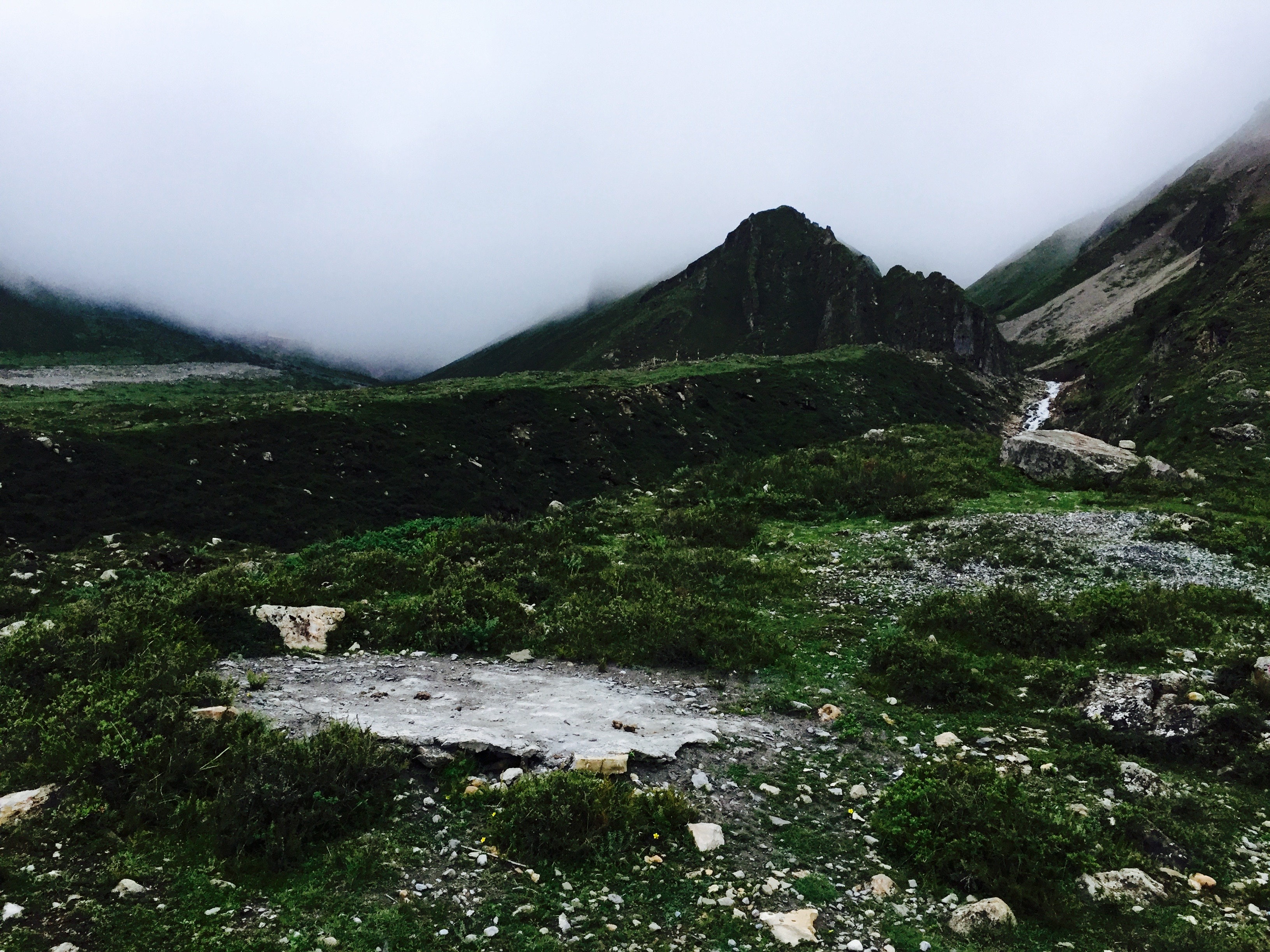
We climb quietly past parts of the complex wall that have cracked and broken in the earthquake two years ago, and emerge in a widening field that slopes upward and disappears in to a fog. “The way to Thorong-La,” Prem says. He says we are at 2800m. I say, obviously, we should walk up another 200m, so even though evening is turning denser, up we go in to the haze.

Some ways ahead, a walking bridge is slung across the gorge to our left and we climb until we reach the concrete block anchoring the bridge to the ground on our side of the river. Without any comment, Prem sits and I follow, and then I lie back and stare in to the unremitting white sky. No variations in density or color, no dragons or bears or wizard faces, just an endless, depthless white.   Further up the green rocky slope, on the other side of the embankment of fog, is the path to Thorong-La; below us is everything we’ve come from.

Quiet.  I am filled with a profound gratitude for Prem’s company, his silence, the easy way we can walk up to this concrete block and sit on it at dusk and do nothing at all.

After fifteen minutes, I decide to cross the bridge, for much the same reason we walked up 200 meters. We’re on one side of a bridge, so it should be crossed.  The first step out over the edge ofthe gorge sends a thrill through my nerves, and then out I plod out over the wires, which undulate a little with my steps, until I am standing directly over the water gushing down from the high mountains.  A thunderous cloud of sound rises up through my bones and engulfs my senses; I can barely hear my own breath. It feels like the river is running right through me, and when I shout or chant the water picks up the sound and rumbles away with it taking my voice down down down down to all the places we were.

The instant I step back on to the concrete block the mountain silence envelopes me again; magically, the roar of all that water is audible only between the walls of the gorge. Prem takes a turn on the suspension bridge, and then we head back down the green slope and circle around the other side of the giant temple complex.  Night is creeping in slowly, as if stalling a little to give us just enough time to see one more wonderful thing.

We come to an area of the hill I have been viewing from below in the mist: rows and rows and rows and rows of prayer flags strung behind small white structures scattered high up on a hill. I studied Tibetan Buddhist funerary rituals for a course I took this year, and throughout the evening, my sights have been trained here. When we passed the nun in the hot pink shoes, I pointed this way and asked if it was okay to pay a visit. She said yes. Prem and I make our way over the hill toward the fluttering prayer flags.  He walks down toward the road, and with barely a word, I go up.

I’m expecting to see signs of sky burial, but I realize quickly that this is a land burial site. Everything feels unified and still, but also light and high. There are small cairns everywhere, placed for passed spirits to find refuge to heaven, and as I walk between the grave sites, it suddenly occurs to me to ask Prem, still at an audible distance, if he thinks I could build a cairn. Why not, he says, and sits down on a rock facing out over the endless prehistoric topography while I climb higher up and find a patch of ground abutting the faded squares of color calling tut-tut-tut as the wind tugs them from their strings.

Prem never asks why. He just waits.  And when I have built it, a stack of stones among all the stones and fossils, another room in heaven, and when I have sat over it and cried for some minutes, I walk down the hill and we leave.

Night falls at last.


*


Between the Corn and the Millet

I try to imagine Aamaa’s life as it was back then, when the water springs in Kaskikot weren’t concrete taps but delicate pools that stirred up silt if you took from them too quickly. As a girl and young wife of 13, she sometimes had to sleep overnight in line while other women had their turns gently lifting the water jug by jug. By the time Aamaa was 22, she was a widow with two young girls of her own, and it would still be years before a bus came to Kaskikot, or a door was put on the entrance to her one-room house.

There have been many impossibles in Aamaa’s life. She raised two educated daughters who could split wood and carry twice their weight by grade school. The civil war started, but it was elsewhere, in other villages. The electric mill came; the bus came; the tourists came; other people converted their houses to homestays and restaurants. Aamaa’s house is off the road in a cul-de-sac of mountainside that nobody wanders past by accident. Even after some foreigners bought the patch of land on the hill behind the house and built a fancy hotel there, passers-by from Korea and Israel and Japan and Australia hiked past with their eyes straight ahead on the sprawling white peaks, rarely looking down to notice Aamaa and Didi and Bishnu there in the sunny yard, drying grain.

The likelihood that I would wander through the door one day has always seemed both insane and inevitable.  And over the last fifteen years, I’ve mostly thought of my life opposite Bishnu’s.  We were the two girls born at the polar ends of the universe, the ones who looked at each other and thought, what if I were her?  She’s been in the U.S. for eight and a half years now, while I spend significantly more time in Nepal than she does.

Aamaa was always more like the soil: everywhere, earthy, constant, essential.  She has all the nutrients and produces all the food and water and shelter.  Aamaa keeps the house alive, the field and gardens fertile from cycle to cycle, the fire crackling.  No matter how many people show up, Aamaa feeds us all. And no matter how many people go away, no matter how empty this house gets or how many of her birthdays pass, she keeps the water jugs full and the seeds sorted in dusty bottles. Aamaa has spent five decades in this village.

I had no idea Bishnu had applied for Aamaa to get a tourist visa to the U.S. to see Bishnu graduate from her Master’s program in information technology. Nobody told me that Prem and Didi took Aamaa to Kathmandu for the very first time last May to go to the U.S. Embassy, or that on the way there, Aamaa didn’t eat any cooked food because she couldn’t be sure who had prepared it. A few weeks later, I answered my cell phone in the parking lot at Walmart, and Bishnu announced that Aamaa had been given a five-year multiple entry tourist visa to America.

“What?” I said.

“For my graduation!” Bishnu explained ecstatically. She hasn’t seen her mom since 2013.

This explanation failed to explain all the questions I couldn’t think of.  Obviously the idea of having Aamaa make this trip has floated through my brain millions of times, but it was the ultimate what if ever.  The craziest version of everything.  Part of me thought that maybe this was all kind of a whim – a thing that might happen next year, or something. But Aamaa had sold the buffalo within a week.

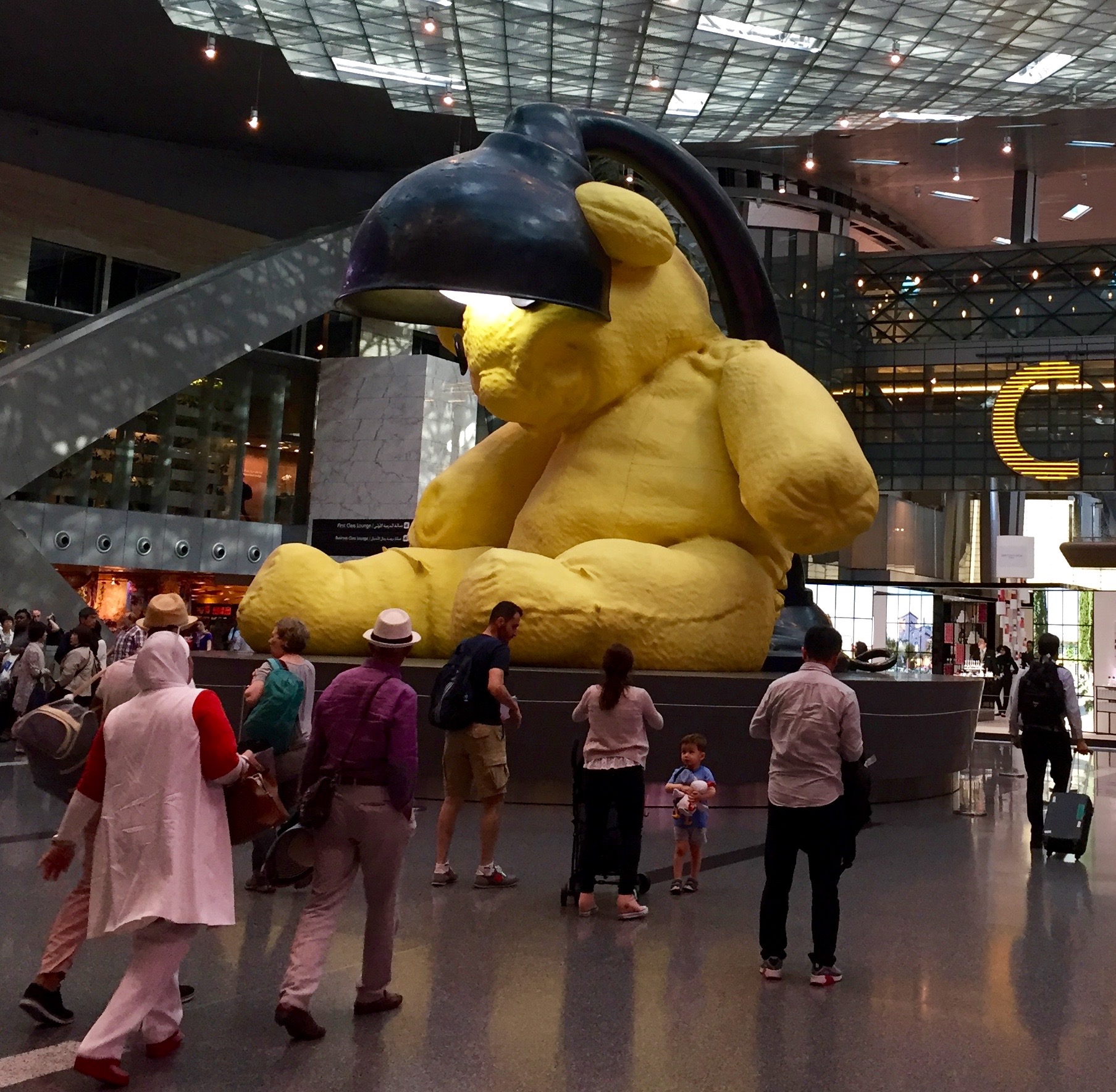
On my way to Nepal in June, I tried to imagine having Aamaa with me on the way back. First I tried to digest the most obvious and superficial matters. For example, how would I explain the enormous statue of a teddy bear bent over with an apparent stomachache dramatically bottom lit in the Doha airport?

I can’t even explain that to you.

When I arrived in Kaski, everybody’s greetings had adjusted to the most up-to-the-minute state of affairs. “Laura! You’re here! How long are you staying? So, you’re taking Aamaa back with you, eh?”

Only Aamaa and I seemed cautious and uncertain with our excitement. The whole thing is so surreal that even the discussion feels like an entirely new and foreign continent. For fifteen years Aamaa and I have had what is now a very well established routine: I come to Kaskikot, we eat together in the kitchen, we go plant things with neighbors and churn milk and carry water from the tap, I fix up some things that need fixing in the house, we gossip about family here in Nepal and all the far away people not in Nepal. Aamaa knows them all – my whole extended family and a good number of my friends who have been to visit – largely through stories. But she’s the stable point, not just for us, but for herself also.

“So we’re going to America, huh?” Aamaa says as we are sitting on the porch, as if testing out the statement.

“Sure seems like it, right?”

We stare out at the tall curly corn stalks, crowding out the grassy millet that’s planted between them.

“What is the name of your District?”

“Pascal, do you know how many states there are in the U.S.?” I ask, and he doesn’t know, so I explain again about Virginia and Maryland and Connecticut and North Carolina.

We discuss departure dates because I have to change plane tickets that currently have me going home from Cambodia, where I’m visiting Bethy in August; Amaa knows Dr. Bethy, because she’s been here too. We mull over how long Aamaa’s trip to America should be. A month would probably be good – she might be bored after a month?

“I’ll go after cutting down the corn, and I’ll come back to cut down the millet,” Aamaa suggests with sudden firmness.

That seems good, I agree.  That is more orderly – maybe because we can see the corn.

Long silences. What, exactly, should we should be planning?

“Bishnu suggested I should get some kurta salwaars made,” Aamaa says. “I guess you aren’t really allowed to wear a sari in the U.S.”

“You’re allowed Aamaa. But a kurta salwaar might be more comfortable.”

“Ok we’ll plan a day to do that in Pokhara,” Aamaa states. “I guess we have to leave time to have it stitched and everything, right? We should go soon.”

“It only takes a couple days, but we can go soon.”

“Nah, you should just pick something out and I’ll meet you at the tailor,” Aamaa adjusts. “I don’t know anything about picking fabric.” Honestly, in sixty years, Aamaa has never walked in to one of Nepal’s fabric shops and picked out material for an outfit, which is how literally everybody in Nepal gets their clothes.

“No no no,” I insist, “I think you should definitely get to do the fabric choosing. Pick your own color, something you like.” I have to talk her in to it.

A few weeks later Aamaa takes the bus to Pokhara and waits for Pascal and I to come meet her at a chautara in Chiple Dunga. She can find her way to Didi’s house, but for the most part she prefers assistance to get around the city. Between the three of us, Pascal is the only one who can properly read in Nepali. We set off up the road to go to the fabric shop.

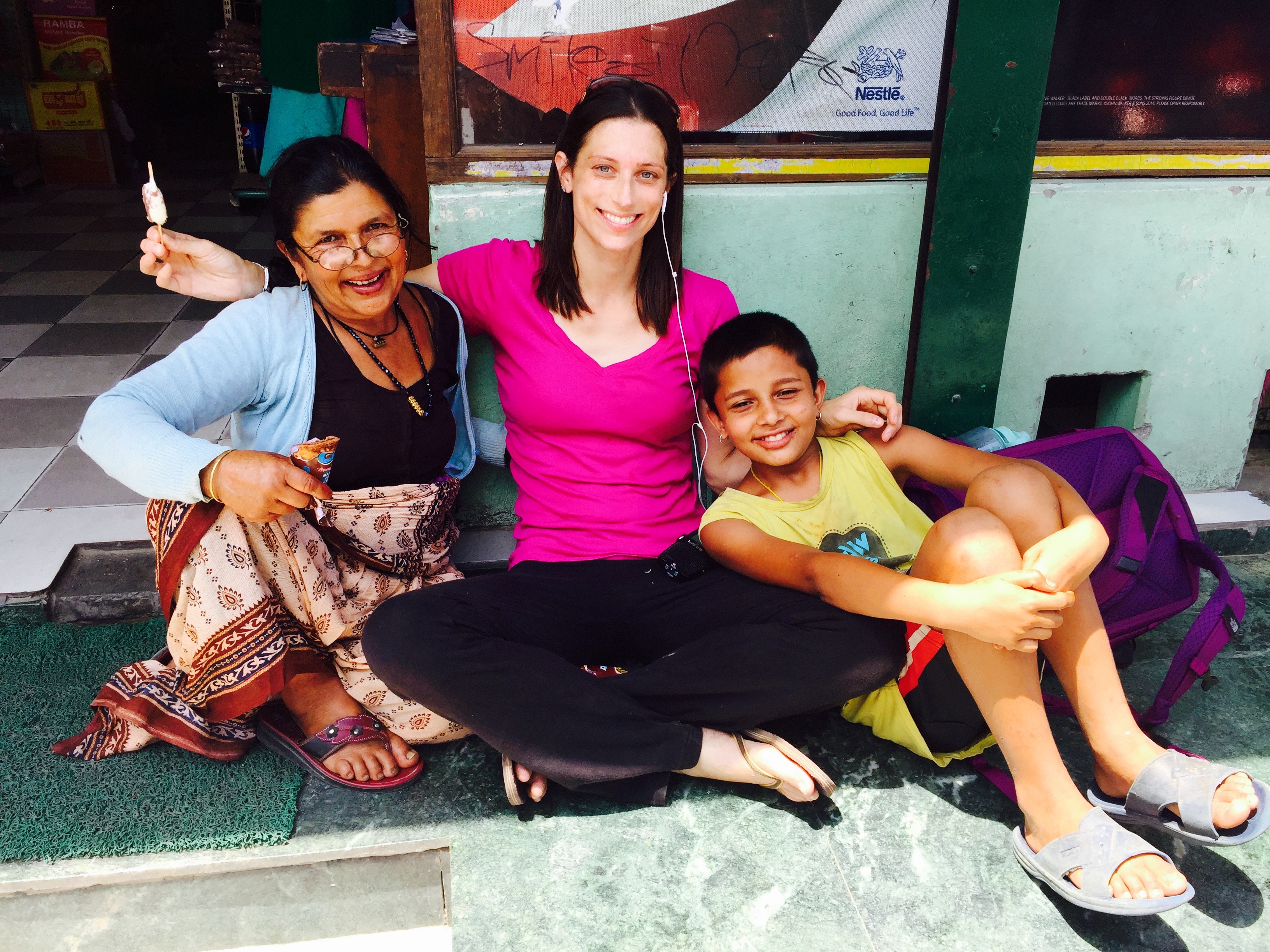
Laura chiama, let’s have some ice cream,” Pascal suggests wisely, because I am the sucker who will pretty reliably buy us all ice cream. As we pay, Aamaa has sat down on the low wall at the foot of the store, which is not a seating area, and Pascal and I go with it. I hand Aamaa her first ice cream cone.

“Do I eat this bottom part, the biscuit?” Aamaa asks.

“Yes, but don’t eat the paper,” Pascal instructs.

“I’m not going to eat the paper,” Aamaa says.

I can’t even remotely transpose any of this to Connecticut. I ask a passer-by to take our picture, and as you can imagine, she looks at the three of us – the Aamaa who has very obviously just beamed in from the village, the entirely incongruous American, and this regular Nepali boy being raised in the city – and gets a huge grin as she takes our picture. What could our story possibly be?

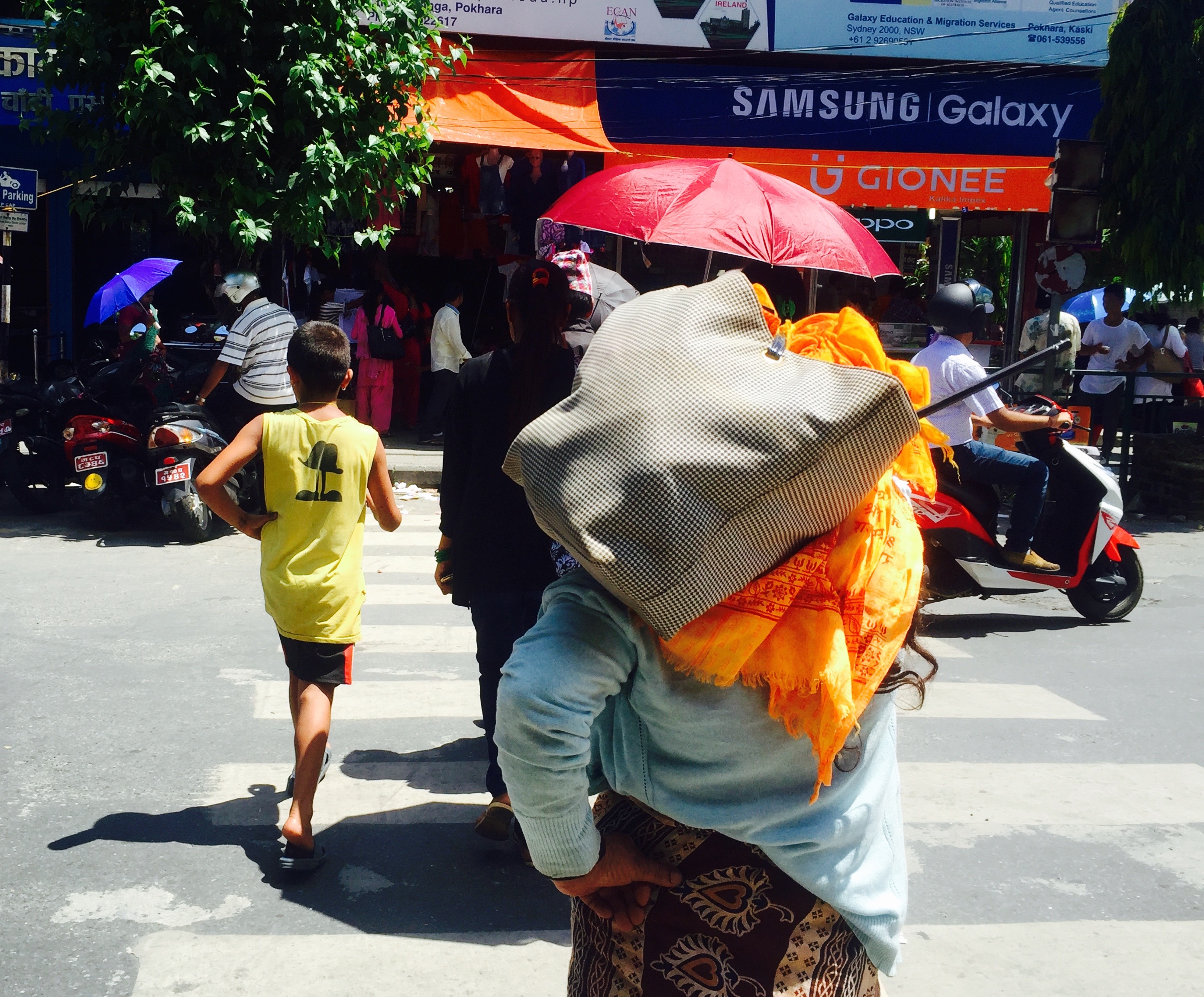
We set off again. Aamaa has brought along a broken umbrella from the house. “Laura, where’s a place that we can fix this umbrella?” she asks. I blink, there must be an answer to that, but I’ve never thought about an umbrella-fixing place.

“We should probably just replace it,” I say, feeling guilty for my wastefulness and mental laziness. I don’t have the energy to try to figure out where the umbrella fixer might be and there’s really no excuse for it.

As we wander to the center of town I’m distracted and disoriented because everything is inside out. When I first came here I couldn’t say a word or do a single thing for myself, and in Kaski, Aamaa runs everything.  We get a few kilometers off her turf and suddenly she is the foreigner and I’m the one who knows what we’re doing. She has also brought with her a heavy bag of cucumbers and other items for Didi and Bhinaju and the boys, and she’s carrying it on her shoulder, the way people do in the village where nothing is flat.  Pascal is twelve and he goes sprinting out in to traffic as we cross the street and I pay him no heed whatsoever because I’m dodging people to keep eye on Aamaa, having no calibration for how much I do or don’t need to hover over her in traffic. We probably haven’t walked through the city together more than two or three times in a decade and a half, and never just us – not once.

We arrive at the fabric shop.

There are hundreds of colors and textures of cloth to choose from. Aamaa looks hopeful that I will take over. As a young man begins removing options from the shelf she bends over them. He throws one on top of another and another and another and another. Her hands settle on a jubilant orange outfit.

“I like this one,” she suggests. She looks at me as though asking if that one is a good one to like.

Within ten minutes, Aamaa and Pascal and I are pawing through dozens of kurta salwaars, trading opinions on what Aamaa should wear in America. She picks two, and we take them to the tailor, who takes out his tape measure. He’s going to make something just for her, in her size and shape, to wear between the corn and the millet.

“I think you should do short sleeves,” I say. “Definitely short sleeves.”

“I don’t know – I think they should be a bit longer. To the elbow,” Aamaa says. The tailor agrees – maybe longer sleeves for an Aamaa. No way, I say, short sleeves look best on a kurta and it will still be hot in September. Aamaa studies her arms for a minute, apparently imagining them in a very standard piece of clothing she’s never had.

“Yeah. That’s how I want them,” she concludes. “To the elbow.”

*

Lifts


The bus to kaski is very hectic right now: in addition to the heat, and the rain, the road has been sporadically damaged by flooding and landslides.  After last week’s sweltering ride with Aidan and Pascal, I decided that this afternoon I would try getting a ride with Nabin who lives up in Parapani and drives a taxi.  He’s always willing to drive me home at the end of the day for a pretty good price, rather than drive his car back up to Kaski empty.

I called Nabin on Tuesday to fix our plan, and then rang him up again as we were leaving the office at 5pm on Wednesday. He picked up, but the connection was bad and I couldn’t catch what he was saying.  I decided it was “I’ll call you right back,” and then I hung up.  I texted to say I’d be ready at 5:30, and went back to my room to putter around on the internet for a while.

I called Nabin at intervals but he didn’t answer.  The clock drifted past 5:15, then 5:30, when the last bus leaves from the bus park for Kaski.  At 5:45 I thought, I better move out if I’m going to get to Kaski today.  If I couldn’t get a hold of Nabin, I was already stuck making the hour long walk from Naudanda – potentially in a downpour, in the dark – because the last direct bus had left already.  I put on my backpack and walked out to the main thoroughfare running to Lakeside.

One advantage of being a foreigner is that you can do things like stop a random guy on a scooter and say, “Hey, would you mind just taking me up to the next intersection?”  I stopped a random guy on a scooter and asked him to take me up to the next intersection.  I hopped on the back of his bike and as we approached the intersection, I shouted over the wind, “So where are you headed?”  The guy was headed straight on to Pirthivichowk, and the bus park was up a road to the left, so I thanked him and said I’d hop off there.

“Oh what the heck, I can take you to the bus park,” the guy said, and turned left.

I’ve never tried this strategy for lift-getting before, ever.

As we drove up the road to the bus park, the guy said he’d served with the US Navy in Bahrain for eight years.  I didn’t even know that was a thing – is there water in Bahrain? – how to Nepalis end up in the US Navy? – and he told me more about it, but I couldn’t hear him over the wind in my ears and the honking traffic, so all these things remained mysteries.  Back in Nepal, he wasn’t doing much at the moment, he said.

“So where are you headed?” the US Navy guy asked.  I explained about Nabin, and about getting to Kaskikot tonight, and that I supposed I’d walk from Naudanda.

“Oh what the heck, I’ll put some gas in the bike and take you up to Kaskikot.”

“What?”

“Why not, I’m not busy.”

“But that’s really far!  It’s probably 45 minutes on the bike.”

“No problem.  I’ll just get some gas first.”

“How much will it cost?” I asked, wondering if that was the least of the confusion.

“No cost.”

“But – but – but……”

The guy pulled over to get gas.  I pondered the situation.  The next bus to Naudanda might not leave for another 30 or 45 minutes.  It would be dusk, if not night, by the time I arrived in Naudanda, and then it might rain, and I’d have another 60 minute walk.  It seemed like I should be worried about why this stranger wanted to take me up in to the hills at dusk to a place he doesn’t live, but I wasn’t.  I tried to get worried and instead I thought, “Wow, it would be pretty great to get a scooter ride up to Kaskikot right now.”

“Ok, let’s go,” I said.  I determined to give him some gas money, at least.  Also, I have a black belt in taekwondo.

For the next half our or so, we rode up the switchbacks, watching the valley recede in to the hazy, rose-tipped blue of evening.  The day fell away below as we climbed up in to the hills.  I cinched the hood on my rain jacket to provide a little wind protection, but the guy was a reasonable driver and the breeze from the movement felt good. Occasionally I stuck my arm out in the direction of the beautiful scenery, as if it was some kind of compensation I could offer for this inexplicable act of generosity.

We came upon a sloshy patch of suspicious looking mud and disembarked.  The two of us regarded the scene: a pit of soft mud with the gash of a thick tire through it, left by something much larger and heavier than the scooter, and surrounded by pools of brown water.

“I can walk from here,” I said.  I was feeling kind of guilty.  “It’s only about half an hour or so. I’d have had to make an hour walk from Naudanda.”

“Still half an hour of walking?”

“I’ve walked from here many times,” I insisted.  “It will be a real mess if your bike gets stuck.”

The guy looked concerned, partly with the matter of my walking, and partly with the oppression of humans by an inert patch of mud.

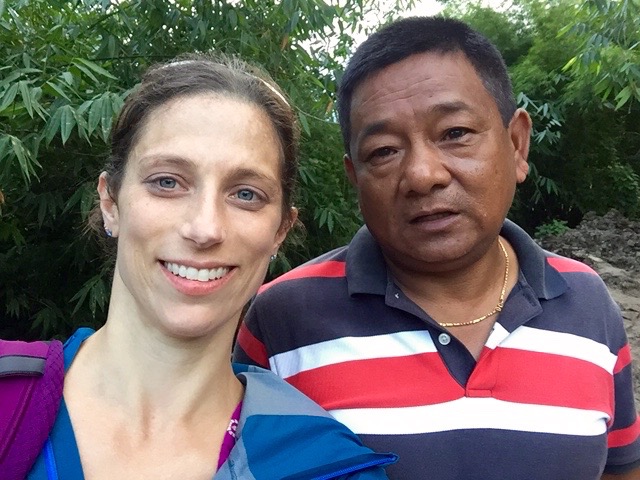
“Please let me contribute something for gas,” I offered.  He declined.  He had time on his hands and it was a pleasant trip.  I thanked him, asked his name, and we took a selfie.  Raj Kumar Gurung.

A motorbike came up behind us with two young dudes on it.  They sped over the mud pit.  Raj Kumar Gurung looked from them back to his scooter.

“Let me just give it a try,” he said.

“But if–”

“I’ll just try it.”

Raj Kumar Gurung, US Navy, revved the scooter and launched it in to the mud pit.  It rolled through to the other side.

“I’m coming!” I said, and stepped directly in to sucking mud-slosh the consistency of hummus up to my ankle.  “Be right there!” I cried, rinsing off some of the brown hummus in a puddle, and then in a clear stream that had had developed across the road on the other side of the mud pit.

Raj Kumar Gurung said that instead of returning back to Pokhara the way we’d come up, he’d continue straight on past Deurali and meet the road in Naudanda.  At this point, he was going to drive past my stop regardless.  I decided to get off a half mile or so early to stop in and say hi to Thakur sir, one of our founding oral health program members, and I insisted that Raj Kumar Gurung at least have some tea before continuing on, but he demurred again.  Off he sped, having lifted me directly from Lakeside to Kaskikot just as night was falling.

*


The Art of Not Knowing


(Re-posted from my June Newsletter – thanks for bearing with me if you are on my mailing list and are receiving this twice!)

Welcome to the Summer 2017 edition of American in Nepal Doing Dental Care and Other Impossible Pursuits.  This season will feature a number of high profile guests, including my cousin Sara and a return to the set by Dr. Keri the Pediatric Dentist from UConn.

Additionally, we have a nail-biting plot lined up for you.  First of all, last month Nepal held its first local elections in about 20 years.  Why are you biting your nails over this?  Because in working to change the health care system in rural villages in Nepal, the posse of bandits that is Jevaia Foundation spends a great deal of time building relationships with local government leaders, a quest peppered with uncertainty, adventure and drama. Presently, in addition to a fleet of newly elected politicians all over the country, there has been some government restructuring, and now nobody is totally sure about things such as who is in charge of distributing funds that were allocated last fall for stuff like, oh I don’t know…let’s just say rural dental clinics.  So, we literally have no idea what government we’re dealing with on day by day basis, and that’s about 75% of the reason we exist.

On that theme, two weeks ago I gave a short talk at my Williams College Reunion called The Art of Not Knowing (beginning at 29:45).  The other women on this panel were powerful ladies pioneering in the fields of journalism and feminism and are well worth a few minutes of time to listen to.  In my ten minutes, I talked about being a restless college student coming from privilege, women as athletes, and the impact of 9/11 happening my senior year of college as these things relate to my work in Nepal.

Back to other coming attractions.  In July Dr. Keri will be leading a second training for our technicians and clinic assistants, along with – TADA! – our new Medical Coordination Officer, hygienist Rajendra Sapkota.  With Rajendra’s help, we’re going to be strengthening our referral system with city hospitals.  We’re preparing for the launch of just one new clinic this year, in Hansapur, and the rest of 2017-18 will be devoted to revisiting our 8 established clinics, upgrading technician skills and equipment, and going back over the community and school programs in all of those villages.

Keri teaching, winter '16

Keri working with technician Megnath Adhikari last winter

And now it’s time for…a plot twist!  Three weeks ago, I’m in the car when Bishnu calls and tells me that she applied for a visa for Aamaa to come see her graduate from her Master’s program in Information Technology (that’s our Bishnu!).  And somehow, in some inexplicable alignment of cosmic unlikeliness getting turned around and coming out possible instead, Aamaa has scored a five year multiple-entry visa to the United States.  She now has the best visa in the family, and it appears that I when I land back in the US in two months, I will have Aamaa in tow.

[Insert sounds of Laura sitting in her car in the parking lot of Walmart, picturing Aamaa in her apartment in Hartford, yelling, “WHAT IN THE – HOW IS – HOW CAN – TH – WH – I – ” (etc.).]

I can comfortably say that there is not one step of that journey that I can visualize once we get on the bus that leaves Kaski.  Aamaa has never even been to Kathmandu.  The furthest reaches of my mind cannot conjure what she will think of JFK airport.

At my Williams talk, an audience member asked if it is “lonely” to live in the ambiguous territory between two incongruous worlds.  My answer was yes.  But also that I was in that between place before I ever left home: uncomfortable, questioning. This bridging is a rare gift I didn’t earn, but each year, I gain more perspective on the importance of staying uncomfortable, especially if you don’t have to.  Bridging keeps you malleable.  When you have to reconcile competing

worlds, you see how quickly things become stuck, how easily even small power becomes narrow-mindedness and false complacency disguised as expertise or experience.  I have been thinking about this a lot.

In my final blog entry last summer, I wrote about visiting a mosque in Kazakhstan, having been mostly isolated from the news for two months, and how I wondered that the most urgent fixations in one place are completely irrelevant someplace else.  I have the same feeling now as I shift back in to the part of my life where my own obsessions in the U.S. are passing trivialities.  If I stayed in one location, they would become deeper and more rigid.  But I have been given this lucky between.  It is rice-planting season, and we hope the rains will be full.  But we won’t know until the sky breaks, so all we can do is prepare seedlings and roll up our trousers.

Ready for action, y’all.

*

P.S. School teachers starting dental programs? Fo’ shizzle.  I would love to hear what all of you out there think about the presentation I gave at UCSF’s Global Oral Health Symposium last March (beginning here at 54:30). It focuses on human rights and uprooting academy-based (*cough, elitist*) approaches to solving health care disparities in developing countries.

Wanderlust, with “Trespassing!”


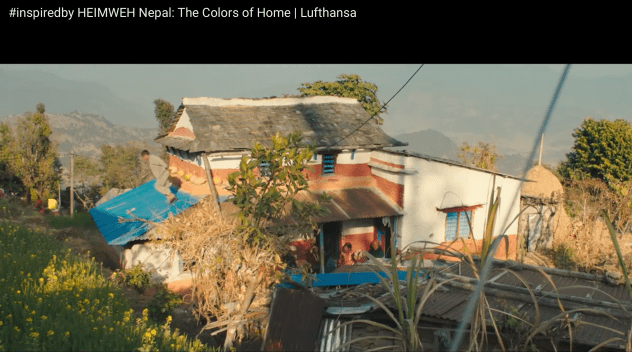
So the other day, a friend posted a Luftansa ad on Facebook with the caption, “this is the Nepal I love!” The post popped up in my feed, although it had nothing to do with me.

I clicked on it. The ad follows a Nepali fashion designer from New York back to Nepal as part of a “wanderlust” ad series by the airline. She goes to familiar places in Kathmandu, and then poses in front of the Annapurna mountains. And then, she eats a meal with some women who start to look very familiar – so familiar that I don’t recognize them in this context. And then, a teenage boy runs off of the roof of a house. His feet patter over the corrugated tin over our kitchen, which I had installed last summer to fix a leak over our cooking fire.

THAT’S MY HOUSE!!!! I start yelling. Luftansa decided to make an ad about wanderlust, and out of the ENTIRE GLOBE, they picked MY HOUSE IN NEPAL!!! I watch again. You can see Aamaa sitting right there on the porch with a white towel on her head. Have a look for yourself:

The colors of home – LUFTHANSA?!  I don’t think so!  Aamaa and Bishnu and I painted those colors!!  As my friend Bess says…trespassing!  You guys, this video has well over 3 million views.  Now, next question: who has a friend at Luftansa?  I think we should look in to a new corporate partner, no?

Go ahead and send your ideas my way…laura@jevaia.org.

The Ritual of Goodbye


I decided to take the jungle path up to Kaski, which I normally travel multiple times during any visit, but haven’t been up or down yet during this hectic winter. I set off late and as I climbed up, the scramble of things fell away and I was alone on the stone path.  Where there is time to climb and think.

It’s been a few years since the forest was cut here (for grass, firewood) so the way is lush and clustered with greenery.  I always wear flip flops and the contours of the rocks feel close under my feet, even in winter.  At intervals, I came upon dustings of red powder laying bright on the rocks, a trail I suspected had been left by a recent funeral procession headed in the other direction down to the river.  Midway up the path there is a natural spring that has been organized with laid stones, and one large flat rock with a groove in the middle serves as a ledge channeling a steady stream of water for drinking. When I come this way with the kids, they cup their hands under the trickle and funnel the water between their lips, like something out of the Secret Garden. The spring always feels like a sacred place, a steady tributary of water that started who knows where, up high in the mountains, probably, and falls there at our feet as we pass.

As I made my way up from the valley to the ridge, I had that granular awareness of time passing behind me, and it seemed so strange that at any moment I was on one stone, and then I would be on the next one, and just that way the whole path would be behind me and I would be up in Kaski, the secret water tap and everything far below where I’d just been.

img_1031By the time I climbed up the last step to the ridge top, I was a combination of chilly and sweaty in the January dusk. I walked the spine of the ridge, which curves along our cubby of village as if along the top row of a stadium. Little Narayan caught sight of me up along the ridgetop, and yelled out from way down in the first row where he was visiting a neighbor, LAURA DIDIIIIIIIIIIIIIIIIIII!!!!! before launching in to a sprint and leaping up over terraces to come walk the last bit of the way by my side. We made a right turn at our row in the top section of the stadium, and strolled out to the house sitting in the wings, where the fire was lit and Aamaa and Hadjur Aamaa were waiting.

We had some popcorn and hot tea as sunset approached. Narayan’s brother Amrit came over and in the yard we practiced taekwondo and played chungi, which is basically Nepali hackey sack using a ball of rubber bands, while Aamaa cried out at us to calm it down and I riled everyone up. Govinda dai came over and we sat with Aamaa in the kitchen while she made anadi paste, a rice dough with ghee that is healing for sore muscles and bones, and then we ate it and it made our hands sticky with ghee. Saano didi came over, and then Mahendra’s mother came over. We transferred to the big room with all the beds, and while our visitors took seats around the room to hang out, I jumped under the blankets with Hadjur Aamaa, and with us both lying down, my long limbs rested against the soft jumbled folds of her sari.

Aside from ritualized procedures and ceremonies – tikka-giving, astrology-reading, mala-making — goodbyes are wholly unfashionable around here. So what usually happens on my last day or last morning in Kaski is our closest neighbors come over to chat, but nobody talks about the fact that I am leaving, going to another world, and won’t be back for a long time. If we do, it is in the form of asking about the trajectory of my flight, how long I’ll be in the air, what they give us to eat during such a long journey, and whether or not it is colder where I’m going than where we are. We discuss what season it will be when I come back (summer), and what fieldwork we’ll all do together (millet planting and rice planting), and this leads us to reminisce about what a klutz I was when I first arrived, and how many things I know how to do now. At some point, people wander out mid-conversation. Because the course of events is set, both the leaving and the returning, and since there is nothing to be done, there is no point in becoming uncomfortable. I understand this ritual of goodbye, and have become grateful for it.

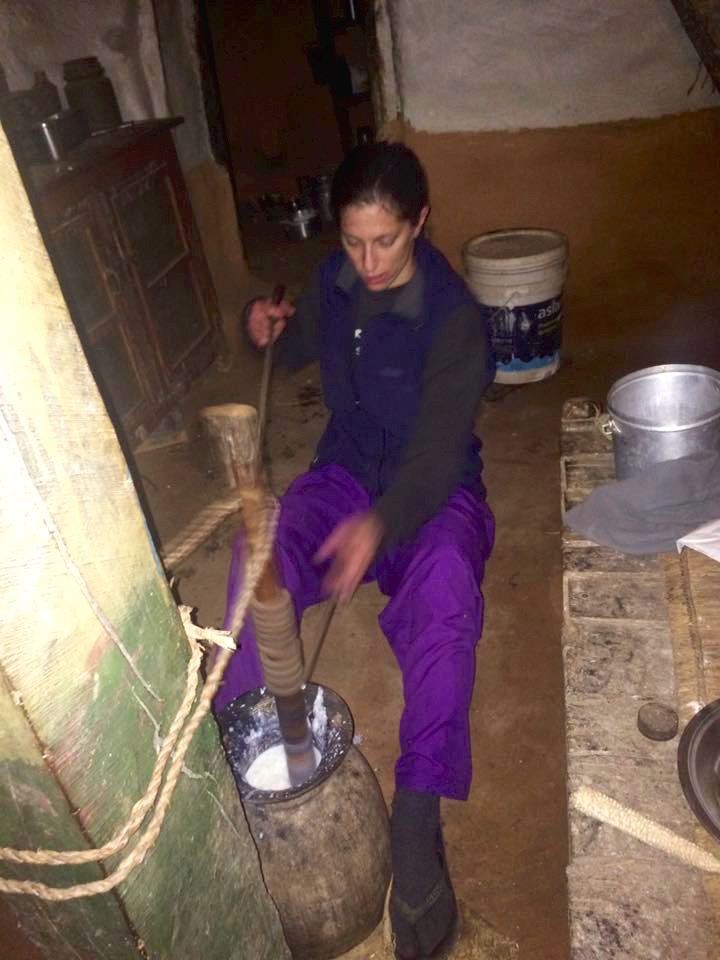
churning milkAfter most people had left, Govinda stayed while I churned milk so I could bring buttermilk to Pokhara tomorrow for the family. Govinda took photos of me, which is kind of nice because I don’t have many photos of myself since I’m always the one taking them – but then, people, he posted them on Facebook and two days later I would discover that this photo album is wildly more popular than anything I’ve ever posted of myself trying to be useful or worthy. What does it all mean?

When the milk was churned, Govinda dai left to go home and Aamaa and Hadjur Aamaa and I got ready for bed. It’s always been a nightly habit of mine to go out after everything is quiet and look at the stars, across the village stadium at Kali with her arms stretched out under her cloak, and study the positions of the constellations amassed around her. I usually walk out along the garden, and sometimes I climb halfway up the hill to the ridge and look back at the house with its golden porch light, a warm square in the broad, cold darkness. Even when I am far away from Kaski, I often feel my self located there, outside in the silence, looking back at the still, lit house in its expansive darkness. That spot is a place of gratitude and wonder, of tiny-ness and huge-ness at the same time: my little self, with coordinates in the galaxy.

It was another January night, clear and chilly, the stars laid out overhead like dust. I went out to the yard to brush my teeth, and for whatever reason, instead of going out along the terrace, I stood in the square of light cast off the porch and looked out in to the dark. In the summer, the yard is hemmed in by towering corn stalks, but in January, there are no walls against the yawning night.  I stared out in to the blackness, past the edge of the yard, and all I could see was the outline of trees under the stars, and an opening in the blackness at the top of the hill where the path gives way to the ridge.

It occurred to me that in all this time, I’ve never looked at it this way. I studied the inscrutable night, brushed my teeth, and threw my eyes up to the sky for a moment to make sure Orien was where I expected him.  Then I went back in to the house, placed the wooden bar across the inside of the door, got under the warm covers, and drifted off to sleep, safe against the morning.

*

img_7051