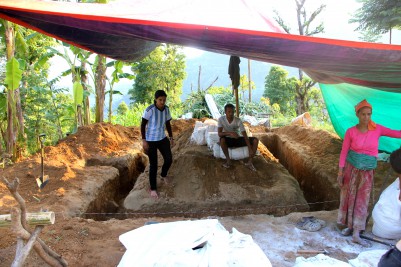
Well the earth bag house was coming along pretty well, but this week the rain started, which means planting season has begun. Colin has been working incredibly hard for hours a day in the heat, along with Moriah, an American volunteer who found out about the project on the facebook page that’s being used to coordinate earth bag building projects in Nepal. But completing an earth bag house in a week requires 8-10 people working all day, and we’ve had trouble getting consistent manpower from Archalbot.
I also have to confess that my part in the collaboration with the earth bag project went differently than I expected. After our experience in Parbat, I thought our main housing challenge was motivating people to gather bamboo (or other natural materials from the environment or their damaged homes) and build good quality shelters for us to provide tin roofing for. I expected, at the start of this week, that the earth bag project would be leverage for other local building projects, starting with Uttam’s bamboo house – in other words, that people’s interest in seeing the earth bag home completed would motivate them to fulfill our requirement that they also build a bamboo home for another especially needy family. I also expected that not everyone in Archalbot needed or wanted to move out of their cracked homes and live in bamboo houses. We thought we’d end up with be two high-quality sample homes in Archalbot – one earth bag, one bamboo – and residents would choose to one or the other them if they desired.
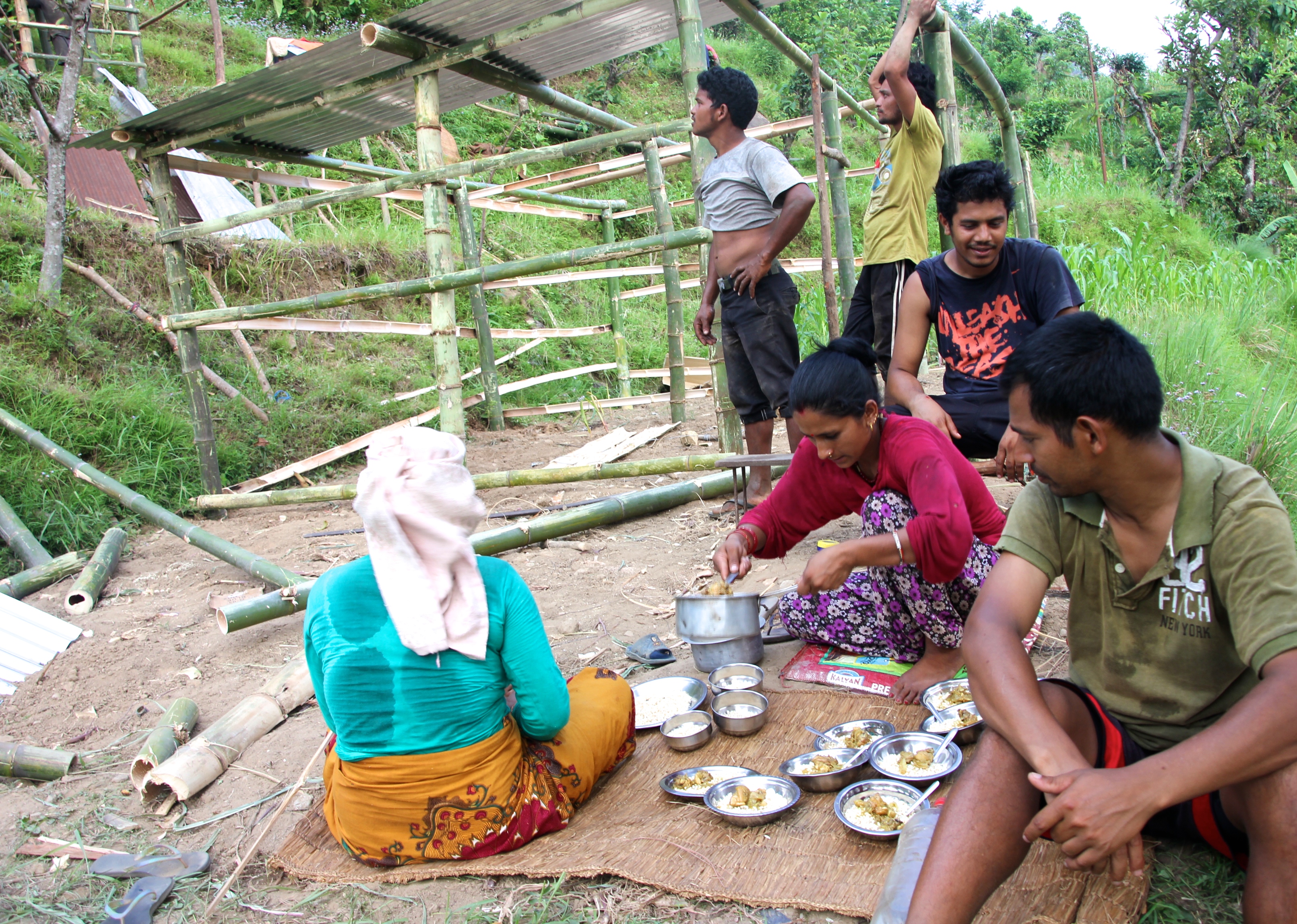
Instead, what happened is that once Uttam’s bamboo house started getting built, everyone became extremely motivated to go cut bamboo and make similar homes. It was much more successful than I ever imagined. And the earth bag house, while a brilliant long-term building solution, is extremely labor and resource intensive compared to familiar local building methods such as bamboo. With time and money scarce, everyone quickly became pre-occupied with the solution that met their needs and existing skills most efficiently. By mid-week, the strategy had reversed: we were pushing people to finish the earth bag home as a requirement for further tin distribution for bamboo houses.

Uttam’s family’s two bamboo houses under construction
I realize maybe this is starting to sound a little weird – us putting these conditions in place for aid distribution, leveraging one community project against another. But that’s often the best way to collaborate as well as introduce new concepts or infrastructure in a place where people are used to doing things a certain way, and where the hierarchy of priorities is a well-entrenched survival system. We use this principle all the time when we do dental care. We have to put conditions in place that wedge new priorities in to this hierarchy: providing treatment only at the clinic and requiring people to go there to access it; charging nominal fees; making sure local shopkeepers sell toothpaste, but not giving the toothpaste out for free, so that people have to buy it themselves from the same place they buy sugar and soap. The reason for this isn’t for our benefit, it’s that the goal of our dental project is not to distribute toothpaste or provide one-off treatments, but to elevate the overall level of long term, sustainable oral health care in the places we work. That only happens when people reorder their own priorities and behaviors, no matter what country or situation they live in.
Similarly, the purpose of the earth bag house is to train people in an earthquake-safe, affordable building method. But at first, it’s just a weird performance using rice sacks and dirt, so you can’t blame  people for wondering if it’s really worth their time. It’s important to leverage the attractive elements of the project: the creation of a new structure, the intrigue of a new idea brought by foreigners, the incentive that we’ll provide materials to trainees for building one of these houses themselves. If we can capture participation based on these points, we can hopefully keep people’s attention long enough to teach the skills we want to transfer. Like our dental clinics, the point is to see people absorb this safe-building technique over the long term because they realize it has value.
So leveraging earth bags and bamboo against each other was a great idea, but the thing I didn’t anticipate was that the time of year and the urgent need for shelter would make the one of the two so much more attractive. So for anyone out there doing earth bag building, my suggestion is, wait until about late September, just before the harvest time. Better yet, the best time of year would be December or January, the only season when there’s any semblance of a real break from field work. While earth bagging is a fast, democratic construction method compared to a block or large mud and stone house, it does require a lot of city-based resources and labor compared to other readily available options. There are almost no families that have 8-10 people in their household who can work intensively for 8 hours a day for a week, and definitely not during rice planting season. That means that families will have to hire labor, and that means other people need to have time.
 In the end, Colin and Robin decided to have Archalbot build a bamboo shelter around the half-finished earth bag home, with the goal of returning to finish it up in the fall. So here is a photo of our nepal’s first earth-bag-bamboo-tarp home. Tarp soon to be replaced by bamboo.
In the evening, the community had another meeting about why the earth bag house hadn’t been completed. There was quite a bit of contrition – people hadn’t fulfilled their promises to help out. But there was still confusion over the concept that the earth bag house was a training opportunity, not a private building project. No matter how many times we explained this – and I speak pretty fluent Nepali, and Dilmaya is Nepali – the tendancy has been for people to think of the earth bag project as “Mahendra’s house.”
In any case, there was this slightly downer of a meeting, and everyone vowed that when Robin returns in the fall they will all be totally ready to devote time to completing the training. Then we went home to eat dinner, and I got a phone call from little Kushal.
A speaker system had been set up in the yard, and we had a rocking dance party. And why not, man. You win some, you delay some wins. When I left in the morning, there was cut bamboo lying around all over the place, ready for construction.
. . .
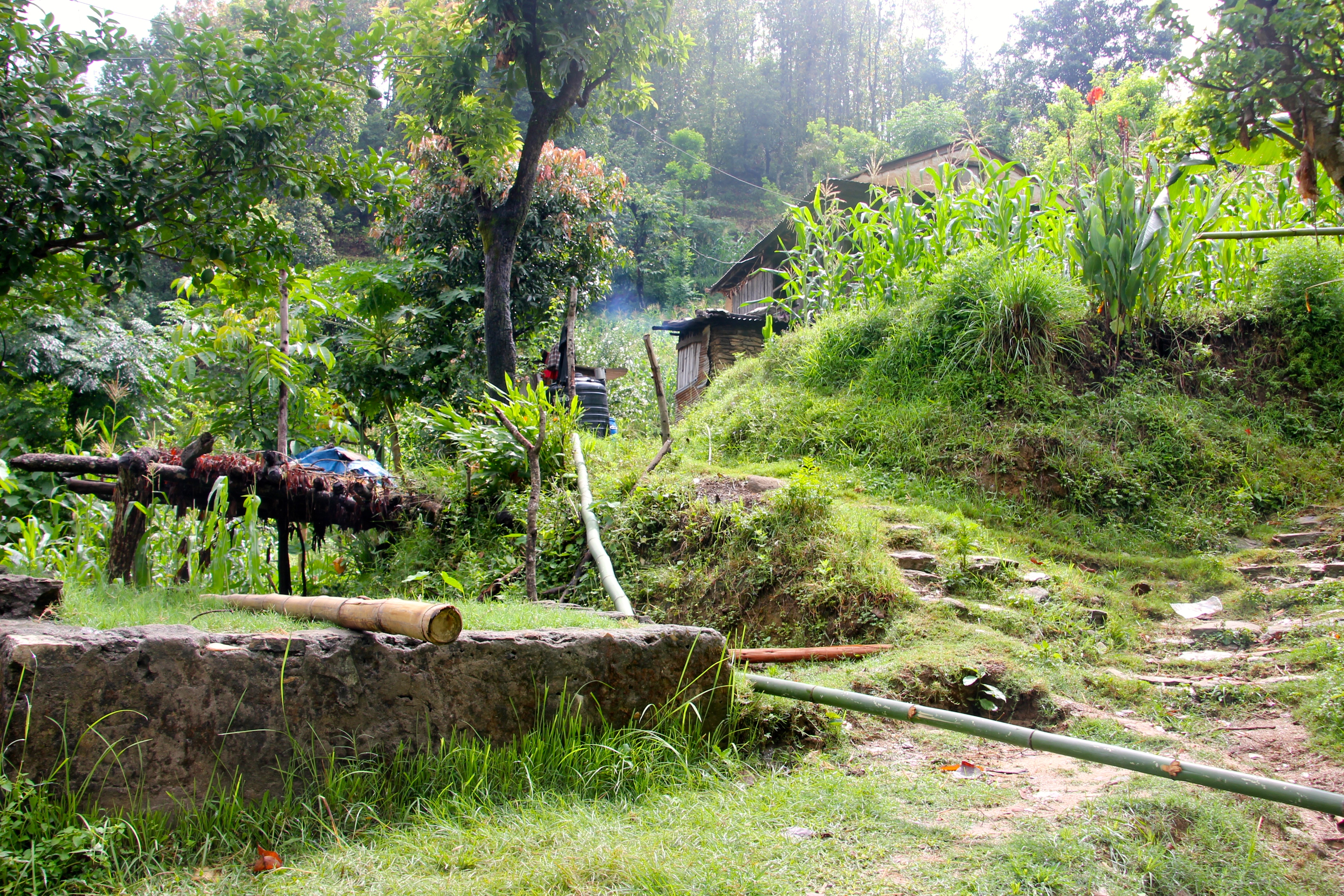


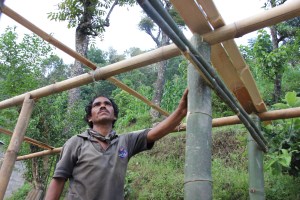 smaller upper house, to explain what each area of the inside would be when it was done. He and his wife had clearly thought about this. He pointed to the place where the kitchen fire would be, and the sleeping area (there weren’t exactly a lot of rooms, but that’s not the point). I motioned to a spot at the edge of the house that was a few feet wide. From the frame it was clear that the roof would slope down over it.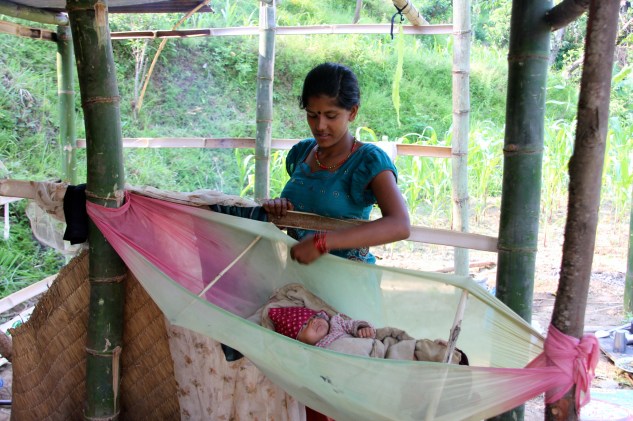

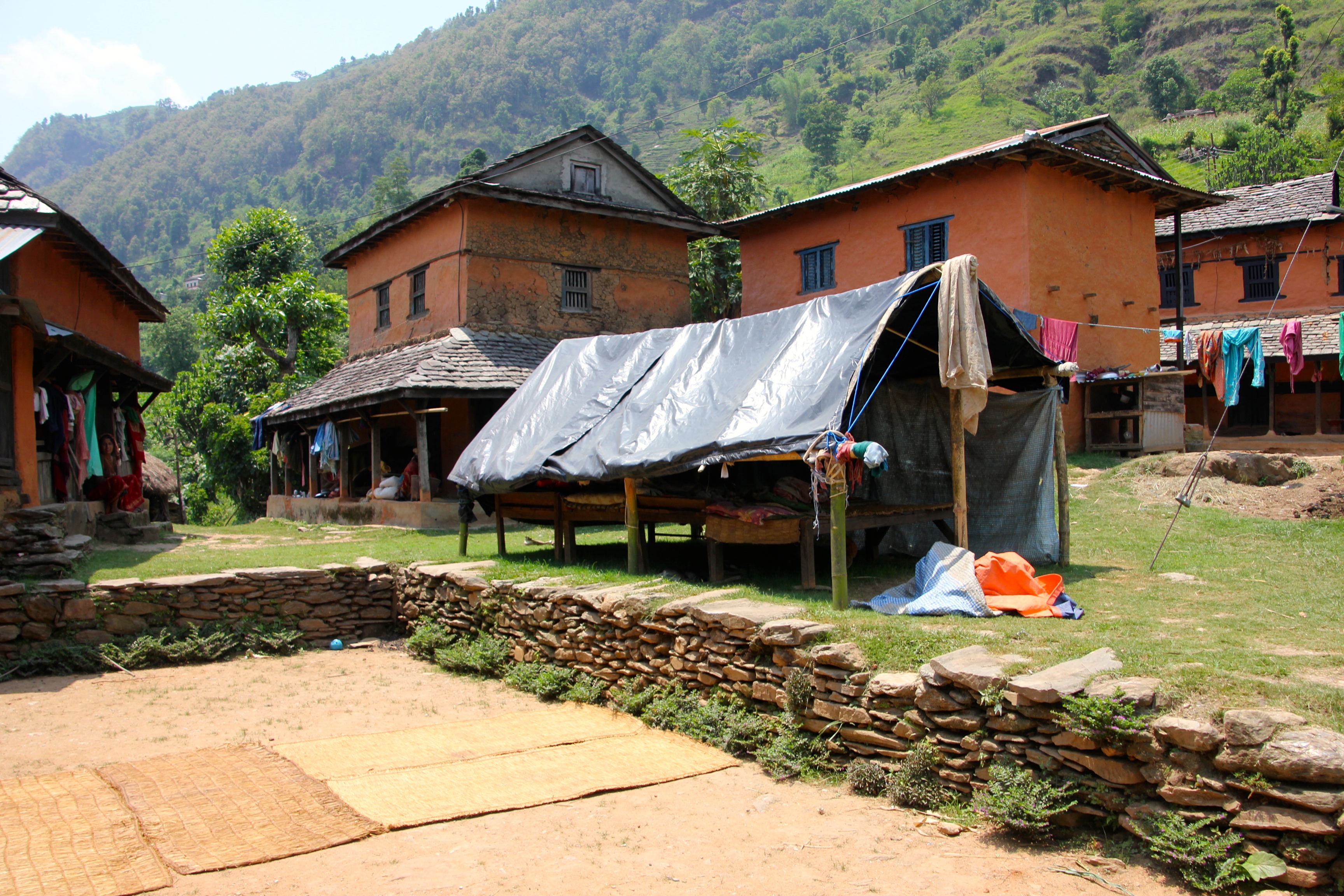
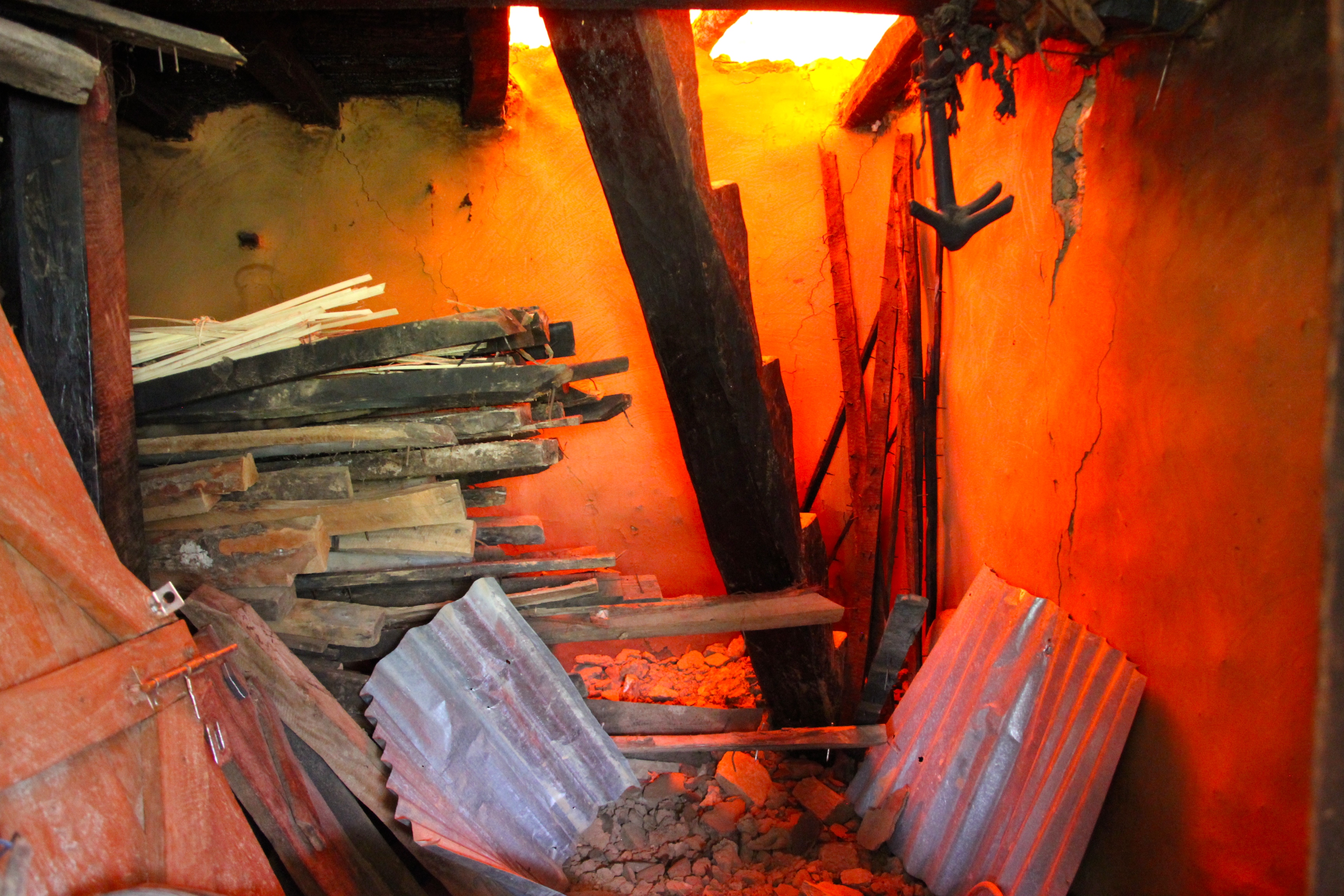
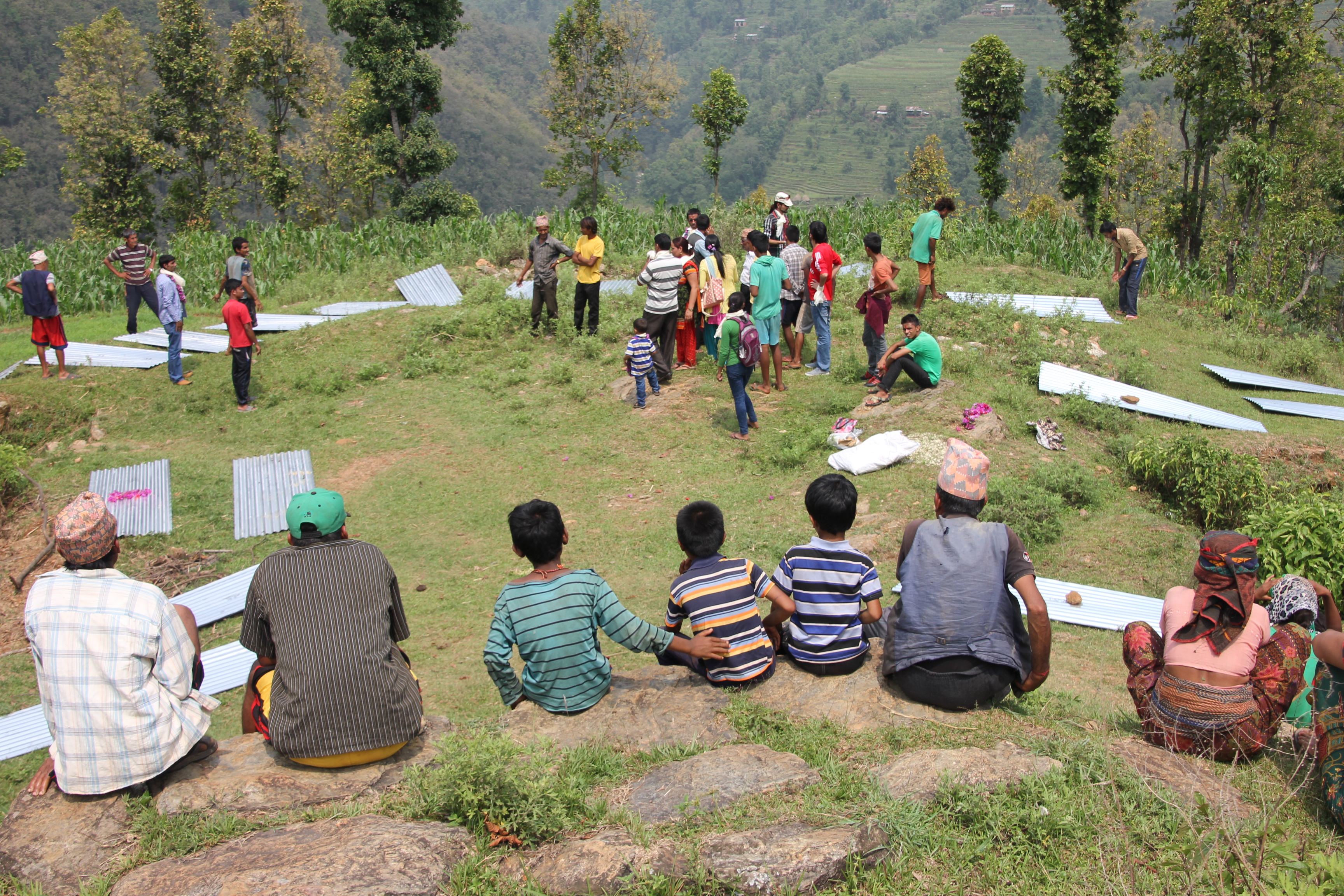
 Other members of this community had cut and woven bamboo, or spent hours collecting and bundling grass for their roofs. I know the pundits talk about the resilience of the Nepali people so much it is becoming a cliché. But it is very moving to see this courage and persistence concretely, as stones and walls and laboriously crafted grass roofing. The only aid they’ve received here is some rice, oil, salt, and tarps.
 eventually learned to drive a bulldozer there – a fairly lucrative skill – but the company never raised his salary. In Nepal, he can’t drive a bulldozer without a license, and he says it costs a lot of money to obtain a license. So for now he’s got a job working in Chitwan.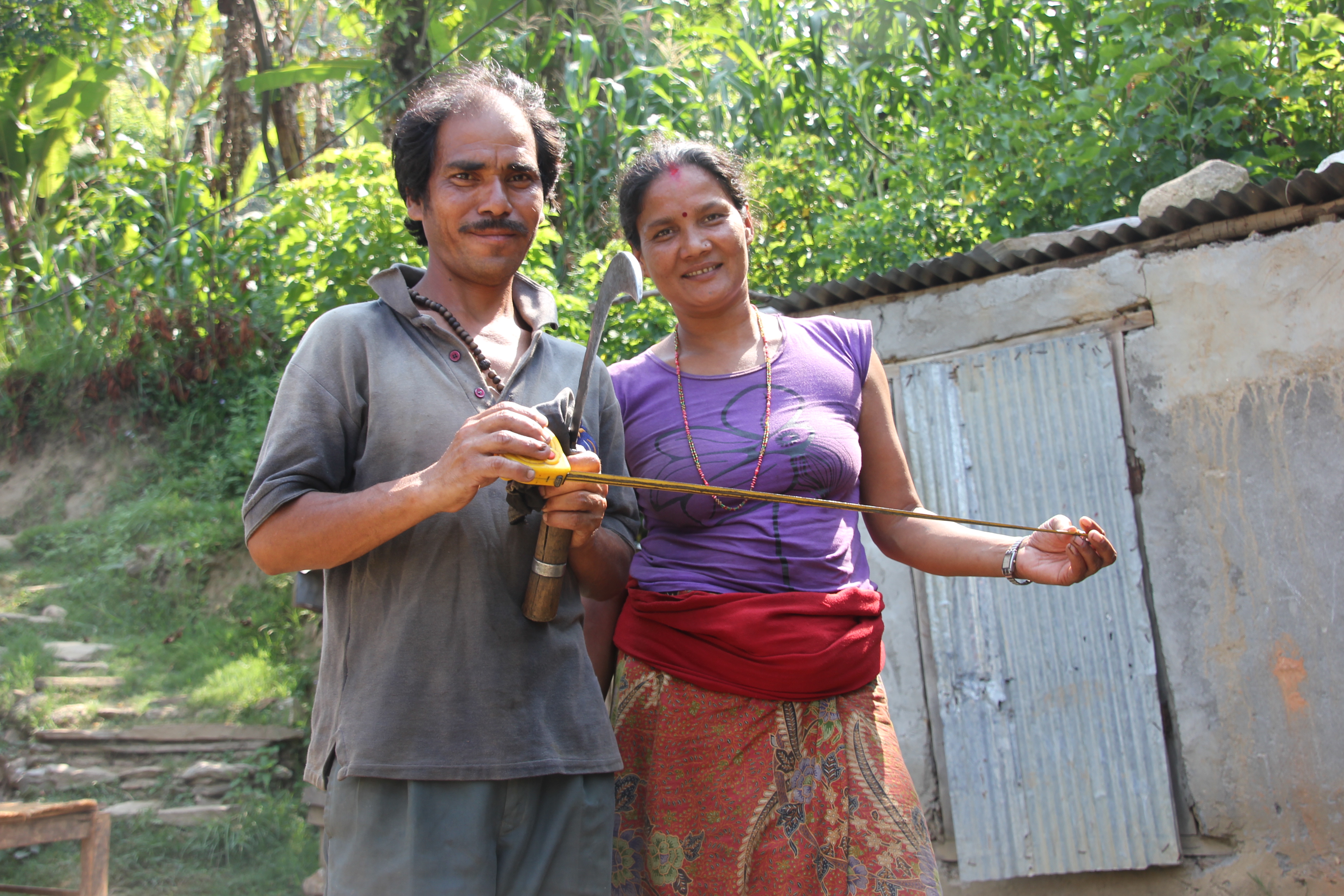
 they weren’t going to do that until they saw us standing there for real. Kushal, the twelve year old boy we met during
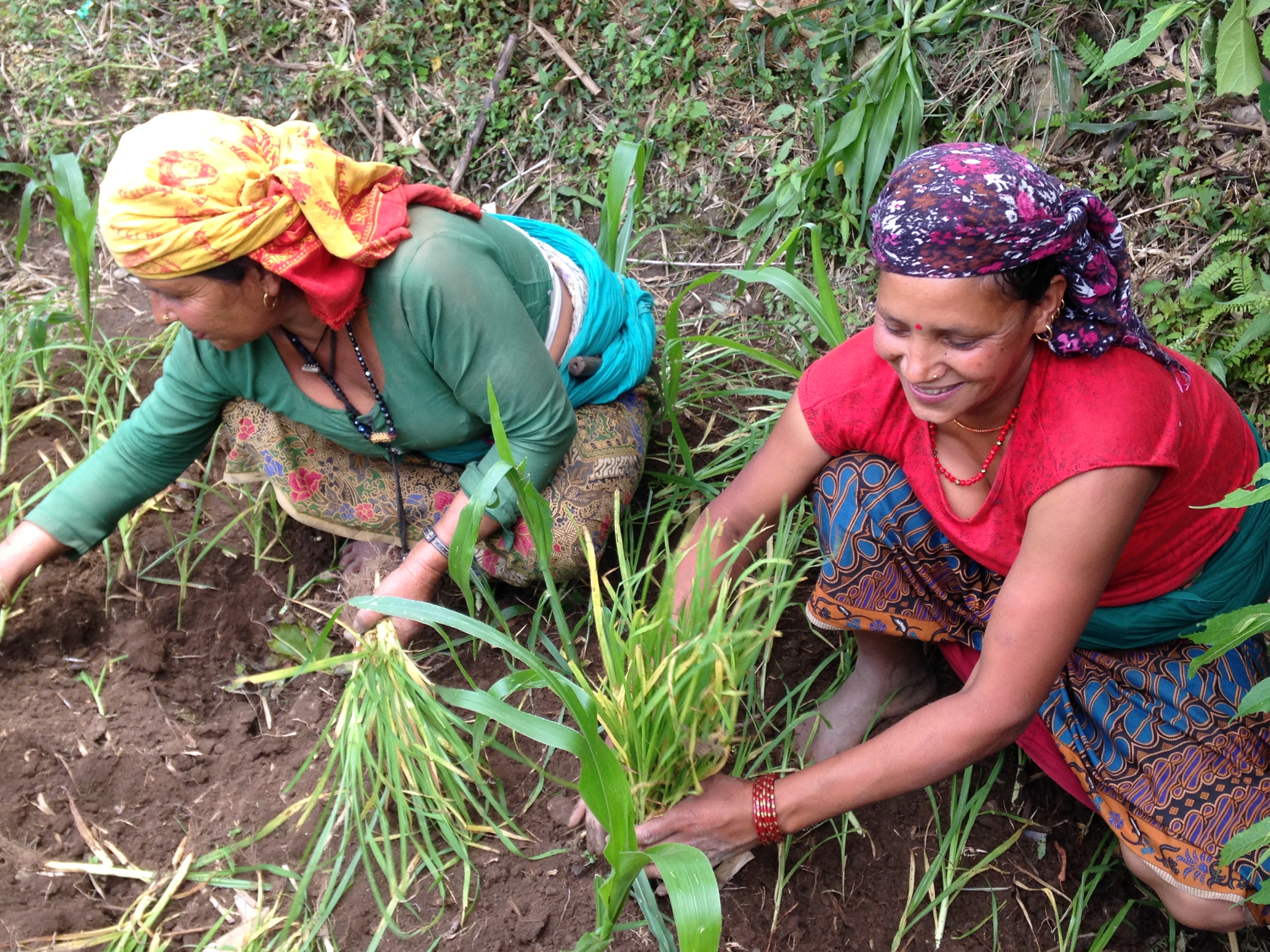
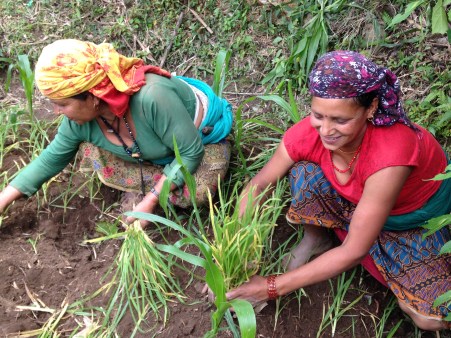 I’ve been here three and a half weeks and I haven’t spent a single day in Kaski. Wednesday is millet planting day, so I promised Aamaa that I would take a day off from coordinating housing outreach and tooth brushing programs to come churn up dirt between the corn stalks and shove little millet seedlings in to it. I spent the rest of Tuesday running around, planning for a day in Kaskikot away from internet like it was year on Mars. Finally I ran to the bus park at 5:30pm, just as a downpour began.
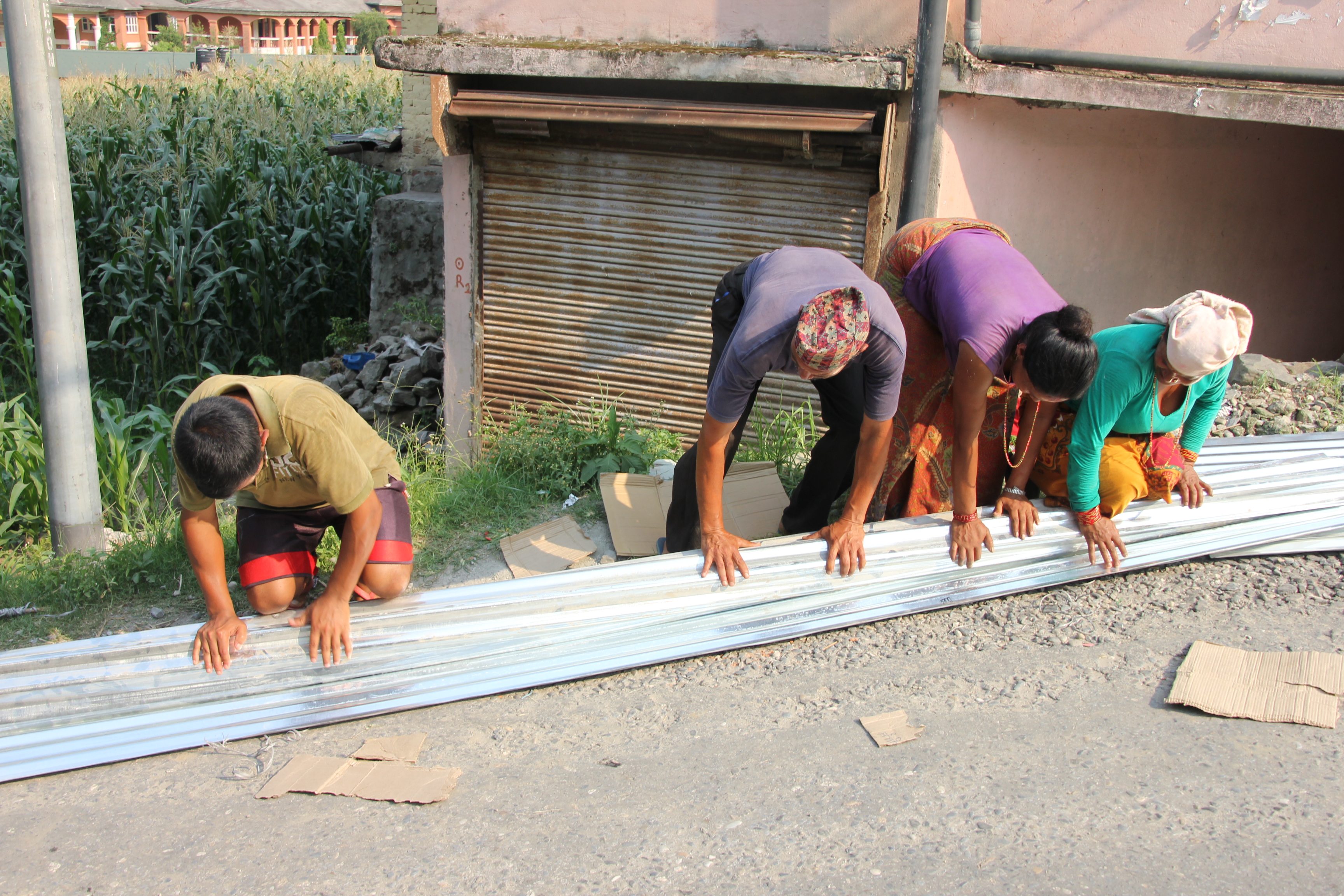
 whatever else we can come up with. Anyone who completes a shelter will get tin to cover it. Basically, it’s the reverse of the housing strategy being used by the government and large INGOs.
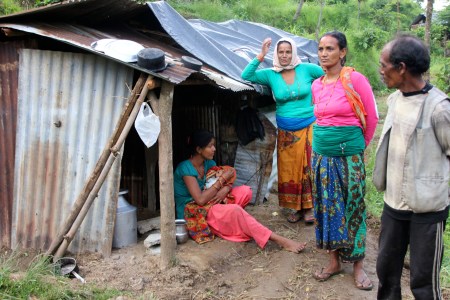 of repurposed tin, blankets and tarps. Sitting at the edge of the dark space inside, which was lower than my height, was a seventeen year old mother with her two month old baby. A listless looking elderly couple sat outside.

 All The Pieces