Coordination Tactics

On Tuesday, the first thing I woke up to was a call from an unknown number at 6:45am. I silenced my phone but got three more calls from the same number, so I picked it up.

“Hello?”

“Hello.”

“Who is this?” I could already tell who it was.

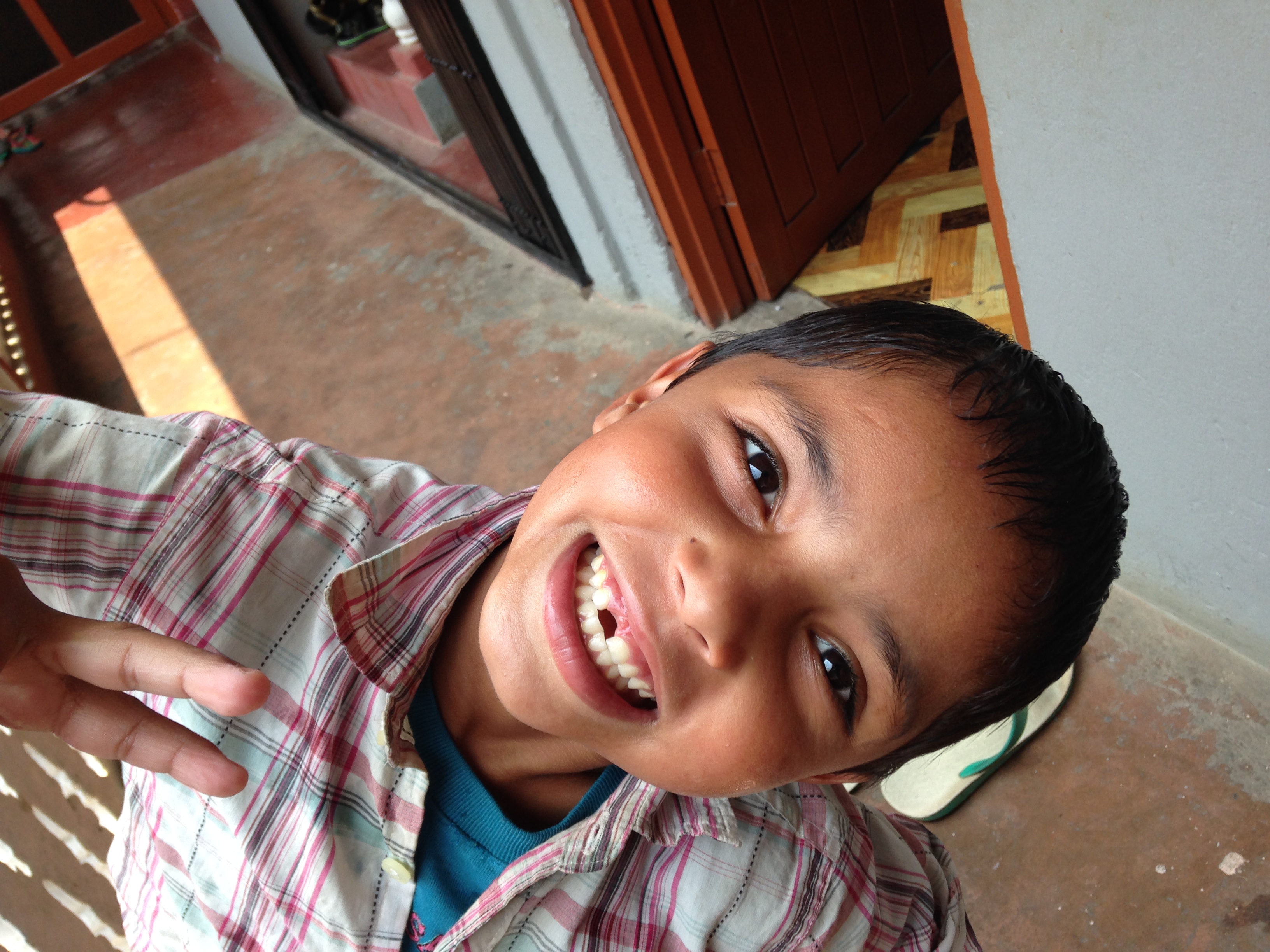
“Archalbot.” It was the little boy, Kushal, from our visit to Archalbot yesterday.

“Hello Archalbot,” I said. “How are you?

“Fine.”

I waited. “Ok….Well….I’m fine too.”

“Ok.”

“All right then, talk to you later?”

“Ok.”

“Bye, Archalbot,” I said.

“Bye!”

Later in the morning, Dilmaya and I debriefed with Robin and Colin over coffee. We reconfirmed the plan we’d come up with yesterday. Dilmaya was to call our main contact, Kripa, and I’d coordinate with the government. If everything was organized, we’d start Thursday.

IMG_5049I’ve been here three and a half weeks and I haven’t spent a single day in Kaski. Wednesday is millet planting day, so I promised Aamaa that I would take a day off from coordinating housing outreach and tooth brushing programs to come churn up dirt between the corn stalks and shove little millet seedlings in to it. I spent the rest of Tuesday running around, planning for a day in Kaskikot away from internet like it was year on Mars. Finally I ran to the bus park at 5:30pm, just as a downpour began.

The bus left an hour late, at 6:30pm. That’s where I was when I realized that I was supposed to submit my enrollment for graduate school classes in September at exactly 6:45pm my time, 9am EST. If you don’t do this right when registration opens, it’s likely that the classes or sections you want will fill up within an hour or two.

I tried to log in from my phone, but not surprisingly, the cell connection wasn’t strong enough. So I called my parents to see if they could log in to my account from in Maryland and click “submit.” I got my dad on the phone, but in order to log in he needed a password. And the meticulously written document I’d made before I left for Nepal with all my logins and passwords in it had evaporated from my computer. I searched and searched and it was nowhere to be found.

So I hung up and waited a precious 45 minutes until I got to Kaski, where there’s one hotel that sometimes has internet, and my password is saved in my browser so I can log in without the missing document. I got to the Kaski hotel and the internet wasn’t working. I called my dad back while the hotel owner tried to restart the internet, which took about 15 minutes. Then the UConn registration site let me take every step except for actually hitting “submit,” because the site itself was having technical problems, which I now knew because my dad was on the phone with the registrar.

Which is to say that by this point my dad was holding the phone up between the registrar in Hartford and me in Kaskikot, while we discussed options for resetting my password, which required me explaining to my dad that the registrar was saying she was going to send him an email with a reset link; now I’m walking home from the hotel to the house so Aamaa doesn’t think I’ve fallen off a mountain, and the registrar needs to get someone else on the phone so she adds yet another person to this phone chain. Then my iphone won’t download the new password, and then when it does, and I read it over the phone from our house in Kaski to the person four phones away in Hartford, it gets rejected.

It’s like the Nepal jeep travel version of online class registration.

In the end, the registrar’s office took pity on us and just overrode their system to register me for my classes. It was 9:30pm here. Aamaa and finally sit down for dinner. Bring it on, millet planting season.

.      .      .


Dreaming of Safe Boxes


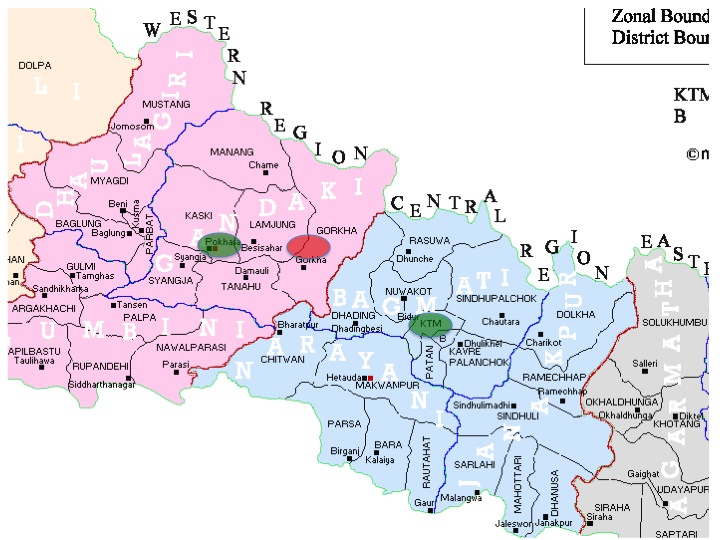
With a lot of thought going in to our current Kaski Oral Health working areas, we’ve also had quite a bit of discussion about whether, how, and why to get involved in a village closer to the center of the damage, where a higher percentage of houses – in some cases up to 90% – have been destroyed.  Lamjung, the next district over, shares its eastern border with Gorkha and this border was the epicenter of the earthquake.

Slide24

With all this going on, I’m gradually appreciating how much experience we’ve developed in community-centered design that incorporates multiple systems and people to address even a very specific issue like dental care.  I think that if we can work in one of these districts, we should because we can.  I also feel it’s important to have local, grassroots organizations involved and setting examples in the places where large agencies are doing a lot of work.

As I ponder how we can turn this expertise in to something useful for earthquake-relief (and I think we should have a moment of appreciation for the activity of pondering about turning expertise in rural South-Asian dental care in to earthquake relief), it seems the first step is to be working with a single community in a defined area.

I am hoping that if we can locate a community that’s a manageable size for our capacity and funds, we can at least do a really good job of using a community-centered approach to set up transitional housing in one Lamjung village, with the goal of creating an example to be copied by agencies with more resources. Once we see how that goes, we can decide if it makes sense to bring in another layer in the same community, such as the counseling element that Dr. Aung from the WHO suggested.

I’ve looked at four types of housing so far: Kiran’s tunnel, a simple tin tunnel, something called earthbag building that uses sacks of dirt and can be made to look very much like a traditional home – and then there’s the option of simply providing people with a corrugated tin and some other materials and letting them have at it.

All this was kicking around in my head the other night when I was in Kaski with Aamaa. While we were having dinner a crazy lightening storm started—the kind that’s more like a constant flickering than separate strikes of lightening. There is a lingering sense of nature’s awfulness in the air and everything feels foreboding, even the normal, dramatic patters of weather typical to this season. As we turned in for the night, it began to pour.

P1070133Lying in bed between the sturdy earth walls of our house, listening to rain clang on the tin roof, is one of my places of greatest serenity. This is my favorite way in the world to fall asleep, and my favorite way to wake up. You can hear the entire the distance from the ground under you up to the sky, but all the noise and space are close and balanced and soft like a blanket.

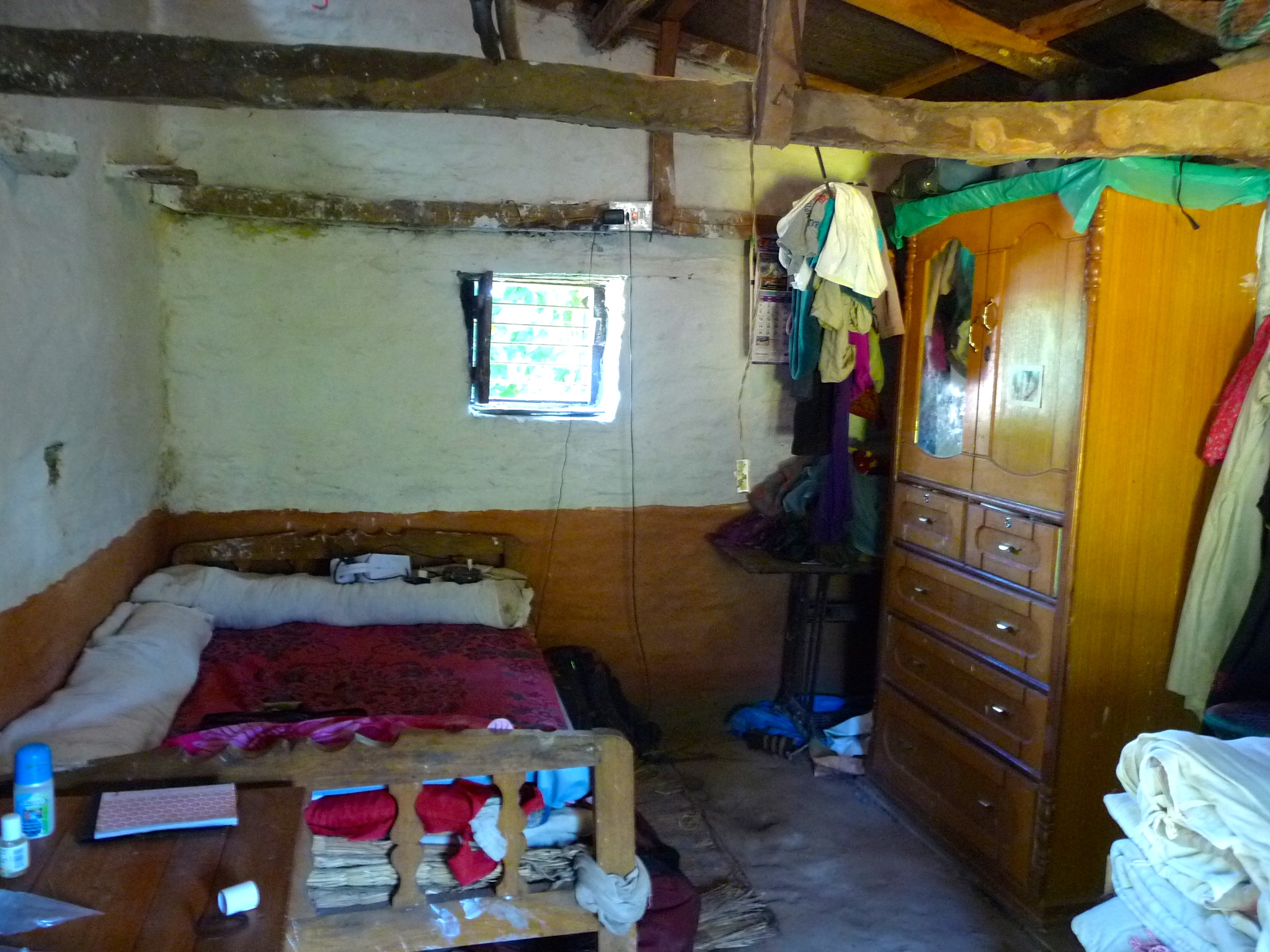
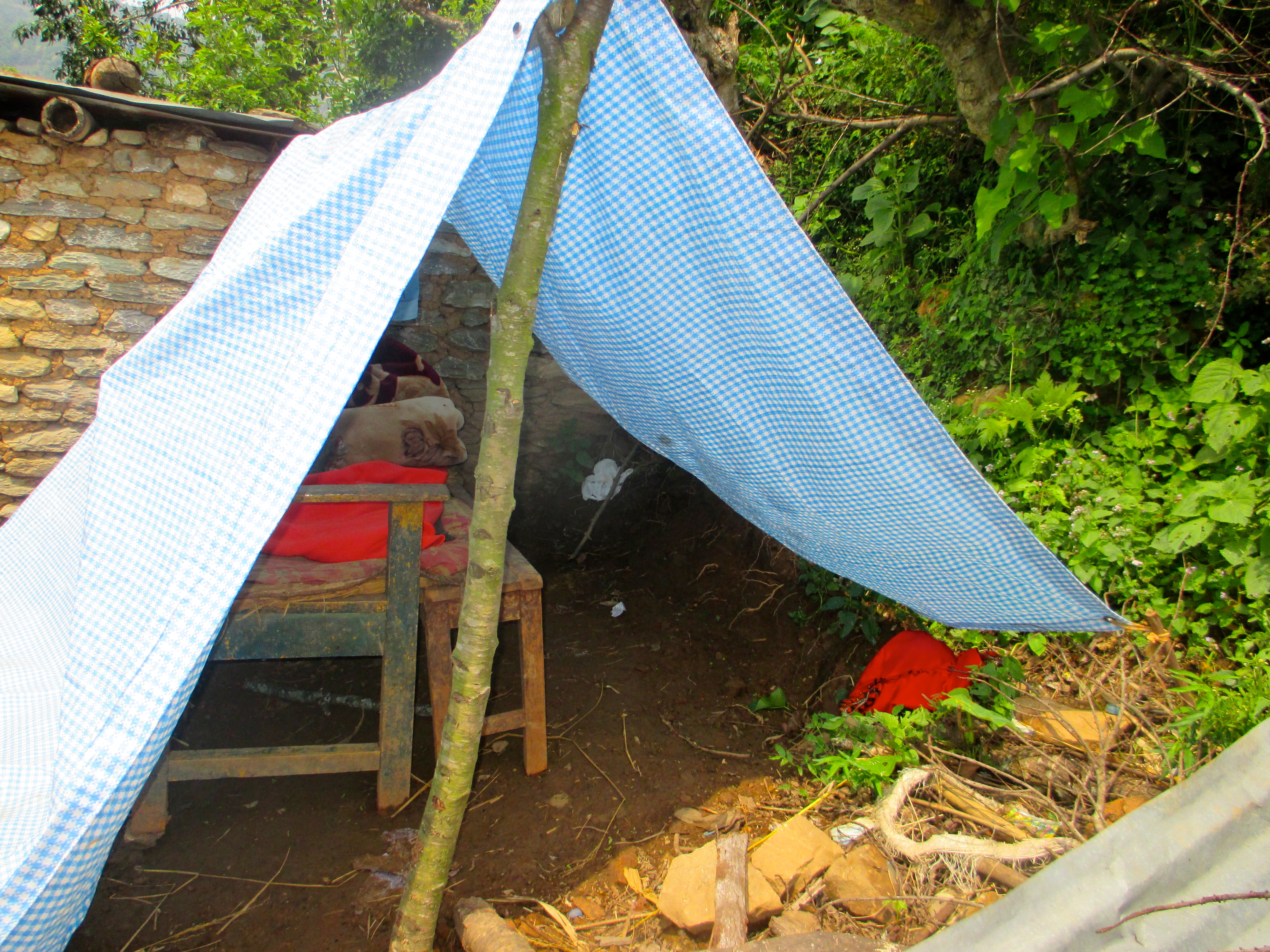
In my half-dream state, I found myself thinking about people lying in their makeshift shelters, with doors of plastic sheets or thin bamboo or synthetic, brightly-colored things, easily torn down or penetrated. Aamaa walks around all day with a key to this house hanging around her neck. She even sleeps with it.  It suddenly seemed like a great indignity to have no door to close, nothing to lock up, no single space to block out the rest of the unknown and uncaring world.

Not to mention the practicalities. Where are people storing any precious photos of grandparents extracted from the rubble? The few pieces of jewelry or any cash they are lucky enough to still possess? You’d have to walk around with all of this stuff on you all the time.

IMG_1719My mind reached about, searching for something that people could shut tightly, a safe box that can’t be stolen when there are no bolts or securities anywhere. Into my head floated a picture of a locked metal container with a pipe welded perpendicularly to the bottom, and a wide plate attached to the other end, like an upside down T. You could dig a hole, place the box in the ground so that the top of the T rests on the bottom of the hole, and then fill the hole in so only about half the box is above ground with the top accessible. There would be no way to lift this locked, anchored box, so if someone wanted to steal it they’d have to surreptitiously dig up the entire affair inside your tarp-house and then sneak out with a large metal T sticking out from under their shirt. Which, if they could pull it off, AND get your lock undone, then hats off to them.  Because the key would be on a string around your neck.

I fell asleep to the sound of the rain, wondering if we could produce a safe like that.

.      .      .

Dental Care Anyway

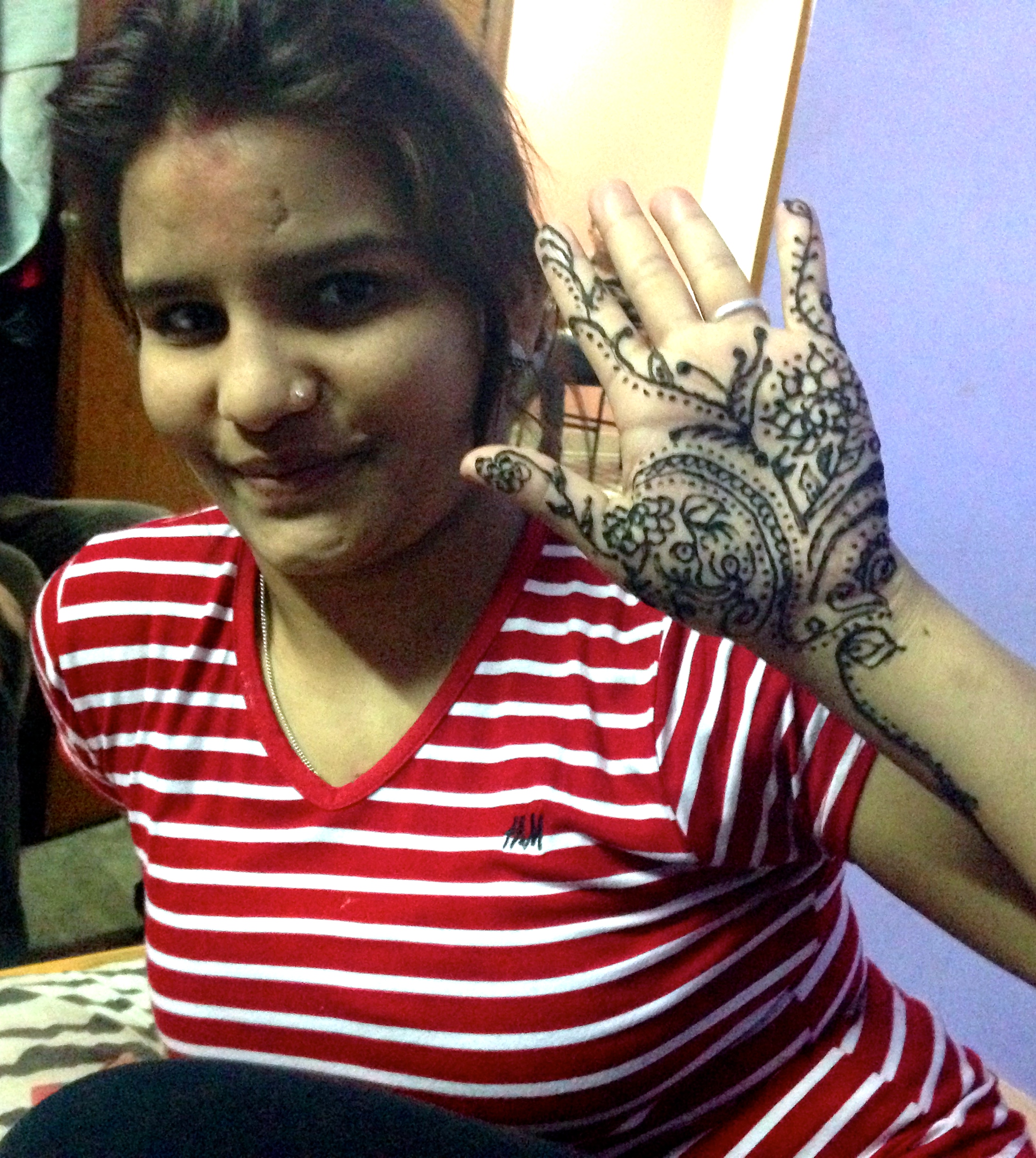
IMG_4898I’ve been in Pokhara for about five days now. All the usual activities – Saturday workshop with our Gaky’s Light Fellows and Asmita’s 18th birthday party at the community house, where I continued practicing my henna tattooing skills on all the girls…

Last week Kaski Oral Health completed this year’s teacher trainings in each of the three villages that launched over the winter. This is where one teacher from each school, who is called an Oral Health Coordinator, learns to conduct a daily brushing program and also do oral health education throughout the school year. We had to postpone our OHC trainings because the earthquake hit right when they were originally scheduled, and when we did hold them, we had to think about how to keep oral health care relevant in the context that teachers are now facing.

IMG_0525There are approximately 129 damaged homes in our working areas, some of which are unlivable, and just outside of a village where we work in Parbat, a nearby area has experienced even more extensive damage and our dental technician has asked us to help. So we’ve made one trip out there, and we’re considering how to approach another. About 13 schools need some or total rebuilding in our 10 villages. All these realities must be acknowledged as we continue trying to advance the work we’ve been doing in oral healthcare over the last eight years.

One widespread issue is that shelter aid has been largely limited to people whose houses were totally destroyed. For thousands and thousands of people whose homes are standing but too dangerous to live in, significantly less help has been available – by not receiving tent distribution, for example, and that’s where organizations like ours filled in. Going forward, the government is compensating only $250 per damaged house, compared to the $1000 that will go to families whose houses are flattened. Then again, everybody will need to rebuild from scratch, and even a simple village home costs closer to $3000.

All of this is why I want to start pulling back from using our limited relief funds for tents and start focusing on transitional housing that will last people for the length of time needed to rebuild.

On a tangential topic, we’ve outgrown our one-room office, and leased a new space that is currently totally empty, which is both exciting and intimidating. So in between scouring the internet and Facebook for examples of tunnel shelters and super-adobe shelters and shelters that reuse tarps, I am also turning over possible arrangements of the sunny new rooms of our office, which have yet to be set up as our home.

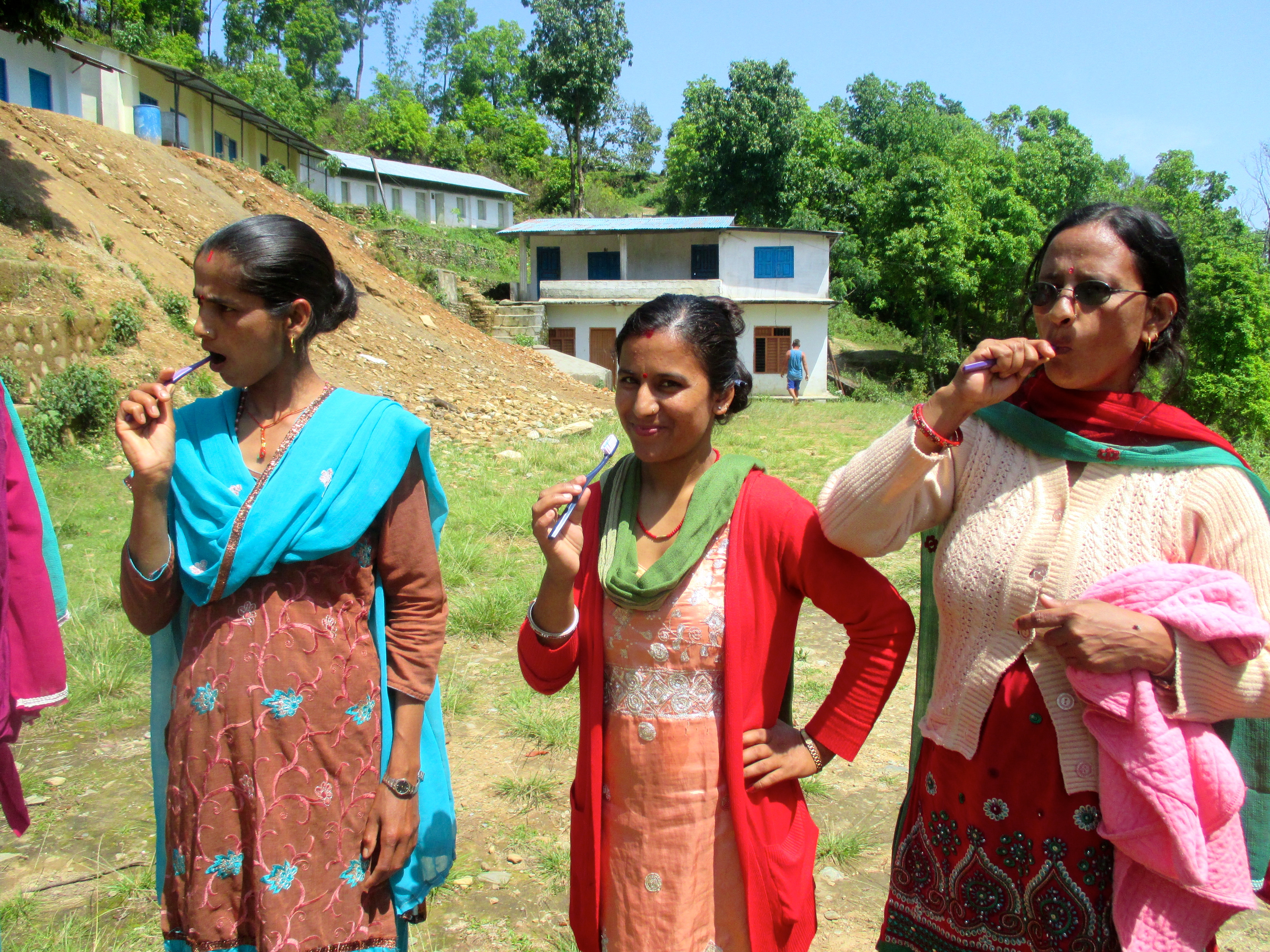
I took a detour from dreams of shelters and offices yesterday to spend the morning with our field officer, Dilmaya, at Deurali Primary School in Kaskikot. This school is just five minutes from my house, and it is where Didi and Bishnu attended grades 1-5. I have known the teachers there for twelve years. For about 4-5 years, Deurali school ran a daily brushing program we’d helped them start, but it eventually petered out. Their Oral Health Coordinator, a really sweet young woman named Chandra, had asked me last winter to help them restart it.

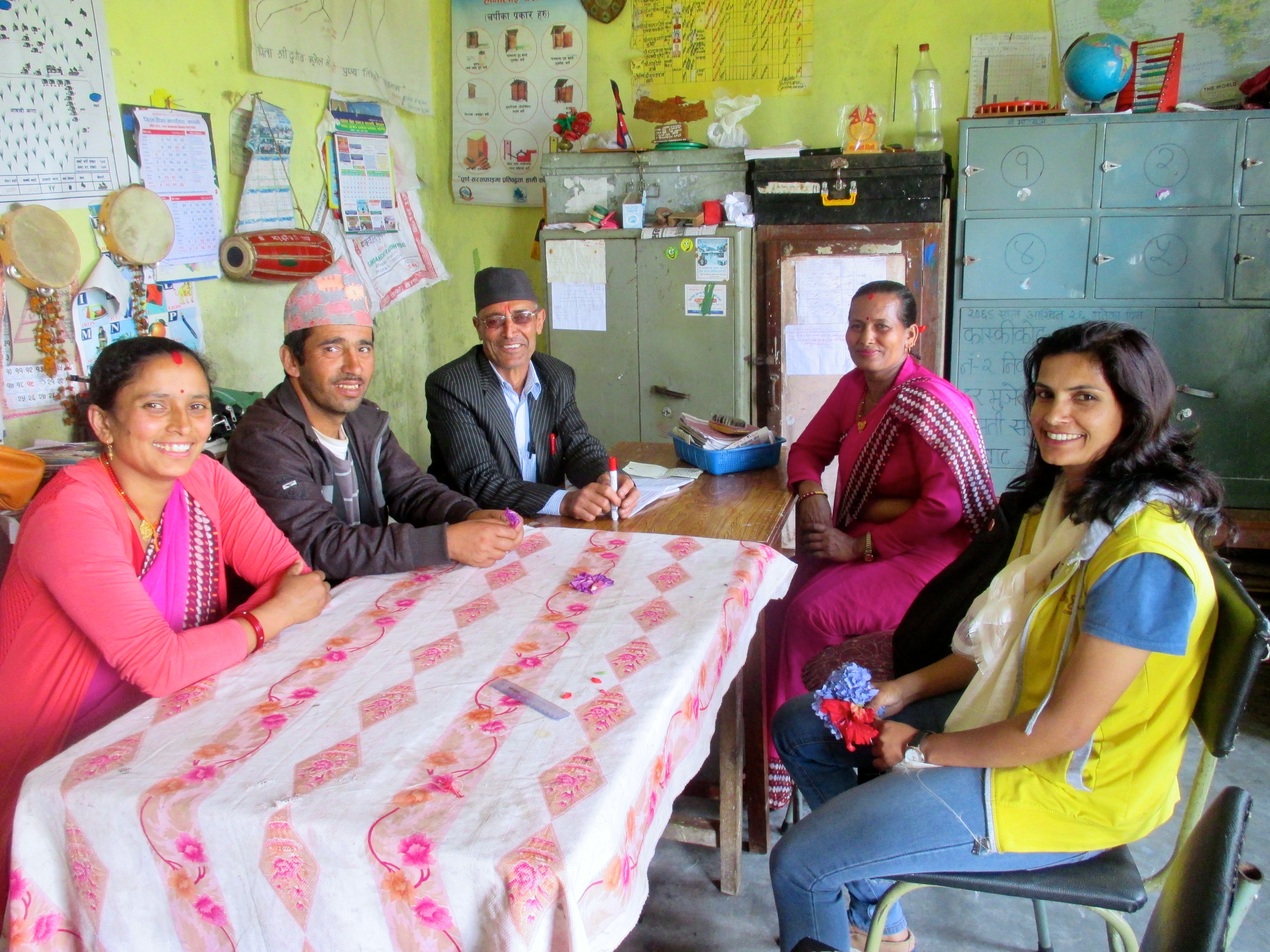
So Dilmaya came up to Kaskikot with her backpack full of brushes and paste, had lunch with me and Aamaa at home, and then we went to Deurali school and sat down with all the teachers in the office. Govinda also joined us – he is one of the founders of KOHCP and was the team leader in Kaskikot for the six years the program ran there.

IMG_0577I was amazed when the headmaster pulled a notebook out of the cabinet. He had kept a log, which started in 2011, of each purchase or donation of brushes and paste, each poetry project or dance performance the school had held to advocate for oral health care. We discussed the school’s plans for future sustainability as our contribution declines next year, a plan we require. The teachers presented each of us with kata scarves, a traditional way to welcome and honor guests.

You all may or may not remember that when we tried to hand-over Kaskikot’s KOHCP programs and clinic in 2012, the project collapsed due to personal interests among government officials (a soap opera that, for better or worse, was covered in a 2013 Washington Post story). So it’s a bitter pill I live with that in order to keep this program growing and developing elsewhere, I had to be willing to watch it fail in my home village. And since then, we have since expanded to 7 clinics in 10 other villages that cover an area of about 50,000 people.

Nevertheless, sitting in this tiny school in my back yard, which has no more than 35 young students, and seeing the enthusiasm and sincerity of the teachers to restart their brushing program, was just awesome. We were all so happy with each other that it was basically one big appreciation fest.

Now that we have field officers, we offered to have Dilmaya come back and run a workshop for the teachers on oral health education, where she can teach the art, math and game activities we do with OHCs now to help them promote oral health care in addition to doing the brushing program.  Their teacher took the new brushes and paste and ran the day’s brushing program.

So that was a nice little pick-me up. Now, back to Pokhara to look at earthbag building.

Looking for Shelter


I woke up tired today. Partly because I stayed up so late writing, and partly because we’re all sleeping on the floor of the living room by the front door.

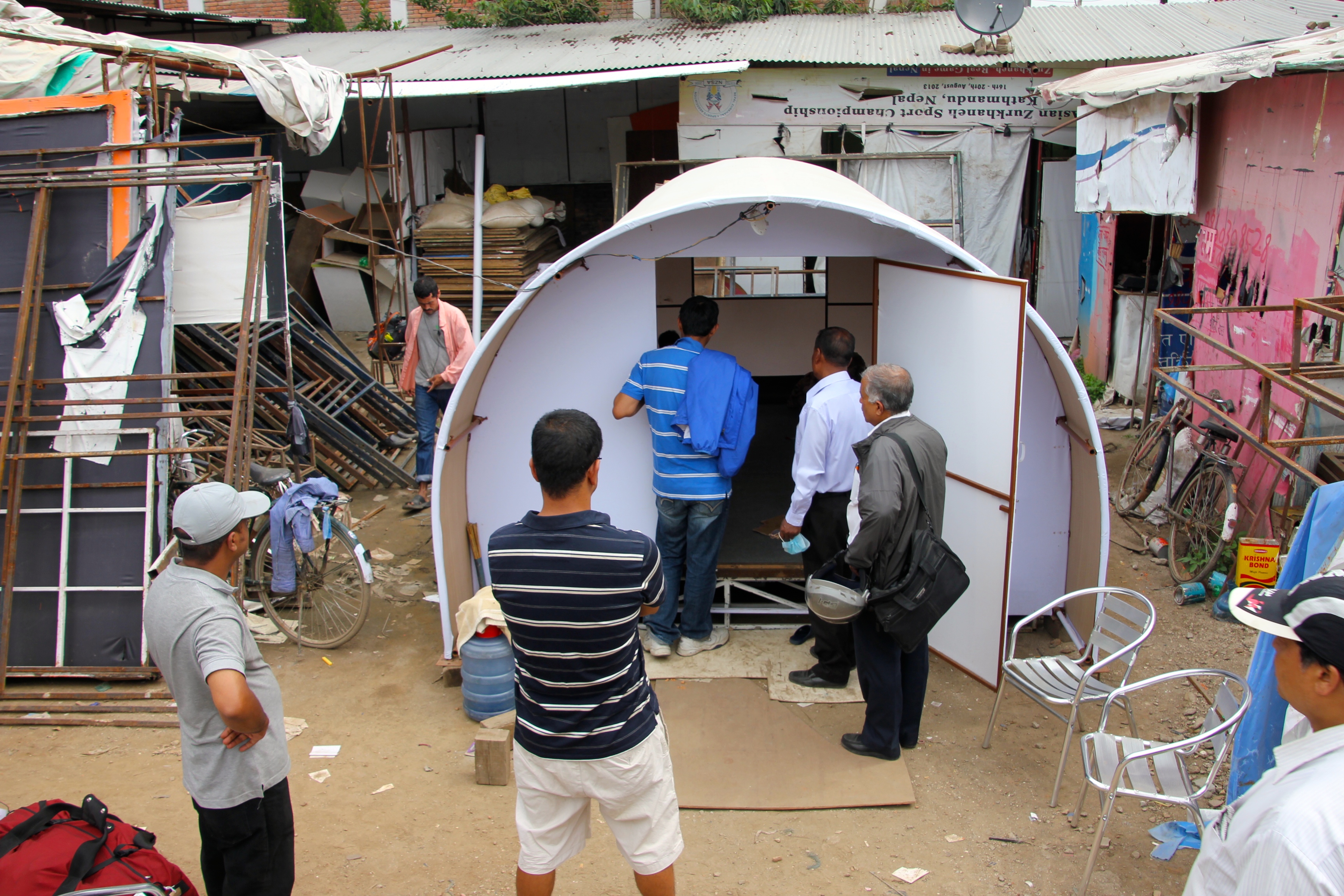
But I had an interesting morning. I made my way to an outdoor lot full of incomprehensible discarded piles of things, where Dr. Kiran’s group, SXJ-95, was meeting about their transitional housing unit, a clean white bubble sitting in the middle of the mess. It was really fascinating to hear how they’d developed this design by researching other units, most notably the post-earthquake shelters used in Pakistan. I’m going to save the details, because I hope to produce a quick audio slideshow about it.

IMG_8773While I was there watching, two government officials came to inspect the prototype, and discuss minor modifications so that it could be used to replace a destroyed Health Post in rural Lalitpur. By the time we left, the builders were getting back to work on the second unit, with a plan to drive the pieces to Lalitpur and set up a shelter within two days.

This has really got me thinking about transitional housing as a possible use for our relief fund. I plan to either donate it to a group doing really valuable work in rural areas, or finding a project that we can do well. It has been such a chore to procure and deliver tents – which are getting more and more expensive – and it’s frustrating to know that, while obviously better for people than no tent, this is such a short-term improvement. Plus, each time a transitional shelter is placed in the field, it’s an opportunity to get feedback and improve the design, so if we can collaborate with a group like Kiran’s, perhaps we could contribute to the larger good in terms of research and design.

SXJ 95’s unit costs about $500, but they put a lot of thought in to user feel and aesthetics. On one hand, this means we could potentially offer rural families upgraded transitional housing; on the other, we couldn’t afford very many. I plan to keep in touch with Kiran about their test in Lalitpur and maybe see if this design could be used for another health post or school classroom. Here’s a recent article by Gordon Brown, former Prime Minister of the UK, on the importance of reinstating schooling for basic child safety and welfare (sorry for the sensationalist title).

I left the crazy stuff lot with its shelter bubble, and my next stop was the Ministry of Health and Population. The World Health Organization holds bi-weekly meetings in collaboration with the Nepali government, where all of the major players in town for recovery – large iNGOs, foreign medical teams, etc. – come to share information. These meetings are divided in to clusters, such as Health, Communications, Shelter, Security etc. I went to the Health Cluster meeting.

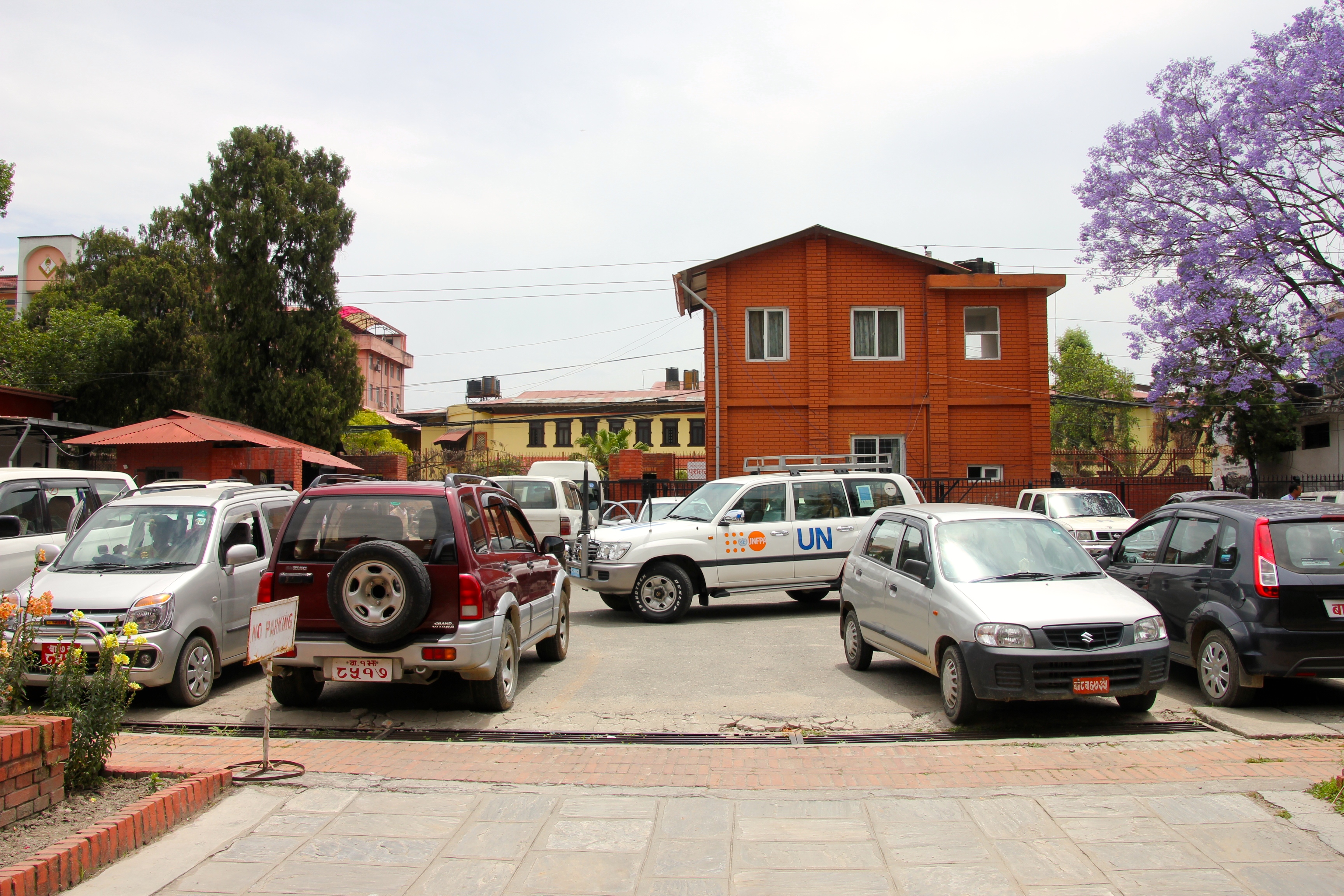
This is the opposite end of the spectrum from the WHR’s and SXJ-95’s of the relief effort. Kiran dropped me off, and I hopped out of his car into a parking lot full of oversized, logo’ed SUVs. I made my way to a packed meeting hall – probably close to 100 people of various nationalities. I sat in the back of the room and scanned the emblazoned vests in front of me: World Vision, Save the Children, AmeriCares, International Medical Corps. Japan, Switzerland, Canada…and then in the back, some straggling foreigners like me, probably there to get the lay of the land.
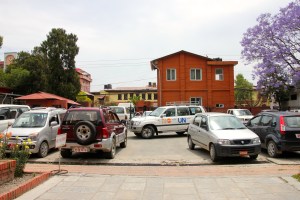
IMG_8789The meeting was led by the WHO rep to Nepal, Dr. Lin Aung, with government representatives in attendance. I had missed the first 20 minutes or so, but listened to some updated figures, and then attendees were invited to share what they’d been doing. That part seemed a little odd. They would announce the name of an area – “Sindhupalchowk?” and then various groups would stand up and say what they had been doing in Sindhupalchowk since the last meeting. It was more information-sharing than strategizing – but maybe these groups have other methods that they are using for truly coordinating their efforts.

After the meeting, I went to go talk to Dr. Aung. Ironically, I was trying to meet him all winter because I thought he’d be a good person to know for Kaski Oral Health, and I was never able to get in touch since I’m rarely in Kathmandu. But when I introduced myself, he turned out to be a very friendly and genuine guy. He gave me five minutes of undivided attention, even though another half dozen people were waiting to talk with him.

I asked what he thought a small organization like mine in Pokhara could do to pitch in to the relief effort. Like others, he said we should be thinking medium and long-term, which is where multilateral agencies aren’t nearly as agile or embedded. He said that with our community ties, we should focus on counseling and psycho-emotional support.

I said, “We don’t know anything about post-disaster counseling.”

He said that the psycho-social cluster is developing protocols for this kind of thing and gave me an email address where I could access this info.

All of which tells me that, for better or worse, coordination is almost completely at the discretion of aid providers. I think – and you could argue that this makes sense under the circumstances –things are really set up such that, in order to find the best way to participate, organizations large and small have to make a point of reaching out.

I’m not sure why I’m a little hung up on this. But I suppose we’d like to think in a humanitarian crisis of this nature, somebody has the answers and can tell us all what to do – and maybe somebody should know. But the basic fact remains that everybody is winging it to some degree, and I can’t argue this is exactly anyone’s fault. It seems like it’s really one of the cruelties of the whole situation.  The real blame lies in the injustices of the past that led to poverty and bad planning and lack of security, not in the present where nature took over. In any case, it seems like coordinated strategic planning is largely a matter of self-discipline.

Before I left for Pokhara, I went to visit a friend who is the CEO of Teach for Nepal. Most of their teaching fellows were there for a day of counseling with social workers from Israel, experienced at working with disaster trauma. I learned that one of TFN’s young teachers perished in Sindhupalchowk. The day of the earthquake, my friend and her husband were unable to call a helicopter to Sindhupalchowk, so they drove 5 hours to get there and dig through rubble themselves.  It was out there that they realized they’d actually lost her.  Now they are left with continued aftershocks and their other 89 fellows to send back out to their schools.

Everyone is spinning.

By the time I got on the plane to Pokhara I admit I felt pretty down. I had also spoken with my friend’s husband who has worked on a shelter that costs just $100 and might be a good option – we could potentially provide an entire community of about 100 -200 families with safer housing while they rebuild. But everyone is so hurt, psychologically and otherwise. The scale of rebuilding that’s needed is really hard for me to wrap my head around. I really just wanted all of it to go away.

At the airport in Pokhara, Prem was waiting for me. And as we crossed the road, Aidan was on the other side sticking his head out the taxi window, shiny as a stamp, his cheeky toothless grin lighting up the whole city. Pascal insisted on sitting in my lap for the seven-minute car ride. I gave them some super-sized squirt guns and unloaded the rest of a bag of Reese’s Pieces.

We went out into the late afternoon Pokhara sun, and walked to a plot of land up on a hill, where leveling strings are stretched across deep foundation holes in the ground. Prem and Didi are building their first house.

*      *      *

IMG_4905

For anyone wishing to support Dr. Kiran’s group, SXJ-95, you can do so here: http://bit.ly/1ReQ8gj.

Teach for Nepal is providing relief in their working areas, and will have a special focus on rebuilding schools. You can support them at http://nepalrelief.teachfornepal.org.
Our Future After the Earthquake

IMG_3282 - Version 2


Dear friends and family,
First, thank you with all my heart for the flood of emails, texts, calls, posts, and chats that have blown up my phone and computer in the last 72 hours.  It’s true that the darkest moments show us the brightest things – the world has never felt smaller to me than it did this weekend, chatting with people I love in Nepal with one hand while answering emails about them with the other.  Everybody is okay, and I was/am in Connecticut for six weeks.  Everybody’s been sleeping outdoors for fear of aftershocks, one of our students lost his house, and there is some damage in our working areas–but we were mostly spared because the earthquake moved east.  Had it moved west, Pokhara and Kaskikot would be rubble, as we were just 50 miles from the epicenter.
Tons of people have asked how they can help.  After days of looking into this, it’s clear there are a million conflicting answers amid widespread caution; disasters of this nature cause huge sums of money to be suddenly poured in to a poor country with corrupt public systems and an overzealous, wealthy international aid machine. Terrible precedents in Haiti and other places, strong opinions that the punditry is already debating on the news….
We have to start someplace, so here’s the advice I’ve settled on.  There are two types of donating: a large relief agency, and something more closely related to your area of interest or personal connection to a place or organization. These roughly correlate to massive crisis relief vs. community recovery, as well.
1. MASSIVE AID: If you are most comfortable giving to a large, well-recognized agency, there are recommendations in the links below. The up side is these organizations play an essential role in crisis relief, and their financial pluses and minuses are known.  The down side is that they get saturated with more donations than they can spend on the specific crisis in question, and these agencies are not good mechanisms for long-term recovery.  That said, Nepal couldn’t possibly deal with the immediate disaster on its hands without their involvement, and the same will be true of the next disaster, if that’s where your dollar technically lands.  I’d also suggest the Nepal Red Cross Society as these funds will at least stay in Nepal (http://www.nrcs.org – this link doesn’t work in Safari, that’s Nepal for you), or Doctors Without Borders (http://bit.ly/1pf6vN4) in the hope they’ll be quicker to get out to neglected rural areas.
Top recommended by PRI: http://bit.ly/1GjrqTm
2. COMMUNITY-BASED RECOVERY: It is going to take many years to rebuild, and smaller, local organizations with experience in grassroots organizing and sustainable community work will play an essential role because of their nuanced knowledge, experience, and granular infrastructure. The challenge here – and I will be the bad guy who says this now – is that nobody knows exactly what will be required of them yet. I’ve been in contact with many of my friends who have long standing connections and expertise in Nepal, and we’re all grappling with the same problem, trying to figure out where we can best apply our efforts.  But the truth is that everything is unknown.  It has only been three days and people are currently sleeping in the rain with dwindling food supplies.
Here is a short, poignant article that talks about how hard-to-reach areas have already been widely neglected by both aid and the media – because, well, they are harder to reach – but how badly they will be needed to avoid another Haiti fiasco. I wish this could be on the cover of every major newspaper.
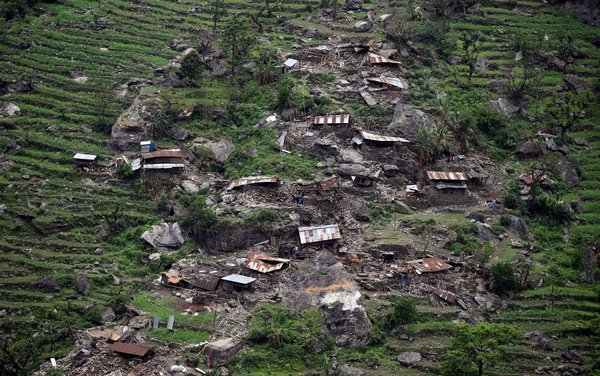
Therefore after much deliberation, I’ve decided the best thing I can do is create a relief fund that will be used intelligently as things clarify. I will be arriving in Nepal in 2 weeks, and working with others to find something unreachable by “big aid” that needs doing and figure out who is the best person or agency to do it. I may donate this whole fund to a nimble community organization or individual doing critical work, or we may set up something ourselves. There may be a water source that needs repairing for a whole village, or a single family or child whose life has been forever altered where we can intervene with a surgery or other aid – I just don’t know yet.  But Pokhara is fifty miles from Gorkha, which looks like this:
Courtesy of the New York Times

Courtesy of the New York Times

As my friend Prashant said, “Laura, I can’t see with my fingers or eat with my knees.  We each have to do the thing we’re suited for.”  So in that vein, please don’t take this as pressure to contribute to Eva Nepal’s recovery fund specifically – the point is to choose something and pitch in.  Since I find myself among a tiny minority of Americans with a long-standing personal connection to this country and its people, that’s what I’m going to start with.  I simply know my area and its ecosystem better than I know other things about this colossal situation.
Here is the link. Please write RELIEF in the indicated space:
https://evanepal.secure.nonprofitsoapbox.com/earthquake-donateObviously, I would be extremely grateful if you would share this with people asking you where to donate.
If something else calls you, go for it.  The only real DONT’s are:
  • send stuff (google “send money not stuff”)
  • go running to Nepal (unless you have an expertise to offer – but I don’t think most of you were considering it?)
  • do nothing. The scale of devastation in Nepal is staggering. When I think about being in New Orleans eight months after Hurricane Katrina and the inside-out buildings that were still piled up on the streets, I can’t even fathom how Nepal with its underlying poverty and challenging terrain is going to rebuild without a lot of help.  Please pick something and pitch in.
I will leave you with a thought from the article I linked above, that helped me put the storm of the last few days in to perspective as they relate to me, one person with a tiny mud and stone home in Nepal that I love dearly.
Far away from Mt. Everest’s glamorous peak…villagers are reeling from injuries, death and the destruction of already precarious livelihoods on a massive scale. One villager told us that although his family and many others were unharmed, his home of mud and stone, like the entire village, was a pile of rubble. For many of the rural poor, a two-story home is a most prized asset. While their plight may not make the international headlines, rural Nepalis across the country will need long-term support to rebuild their lives. 
With much love and gratitude for all of your inquiries and prayers,
Laura and all of us.

Base Camp

Stone Paths


Yesterday, I went with Aamaa and Neru and Didi to carry 40 kg of cauliflower up the mountain from Pokhara, because, as we know, that’s the kind of thing I do to relax.  Why, you ask? Fair question. At Milan Chowk people are selling cauliflower and potatoes at seasonal wholesale rates, and because our relatives are there, we got an even sweeter deal.  Tell me you’ve ever purchased cauliflower for less than 6 cents per kilogram, baby.

What are we going to do with 40 kilograms of cauliflower? Ah, I thought you’d want to know. First, we’re going to schlep it up to Kaskikot. Then we can chop it in to thin pieces and dry it in the sun to eat later in the fall. And that brings us to yet another day of long steep stone paths, ropes, and heavy loads.

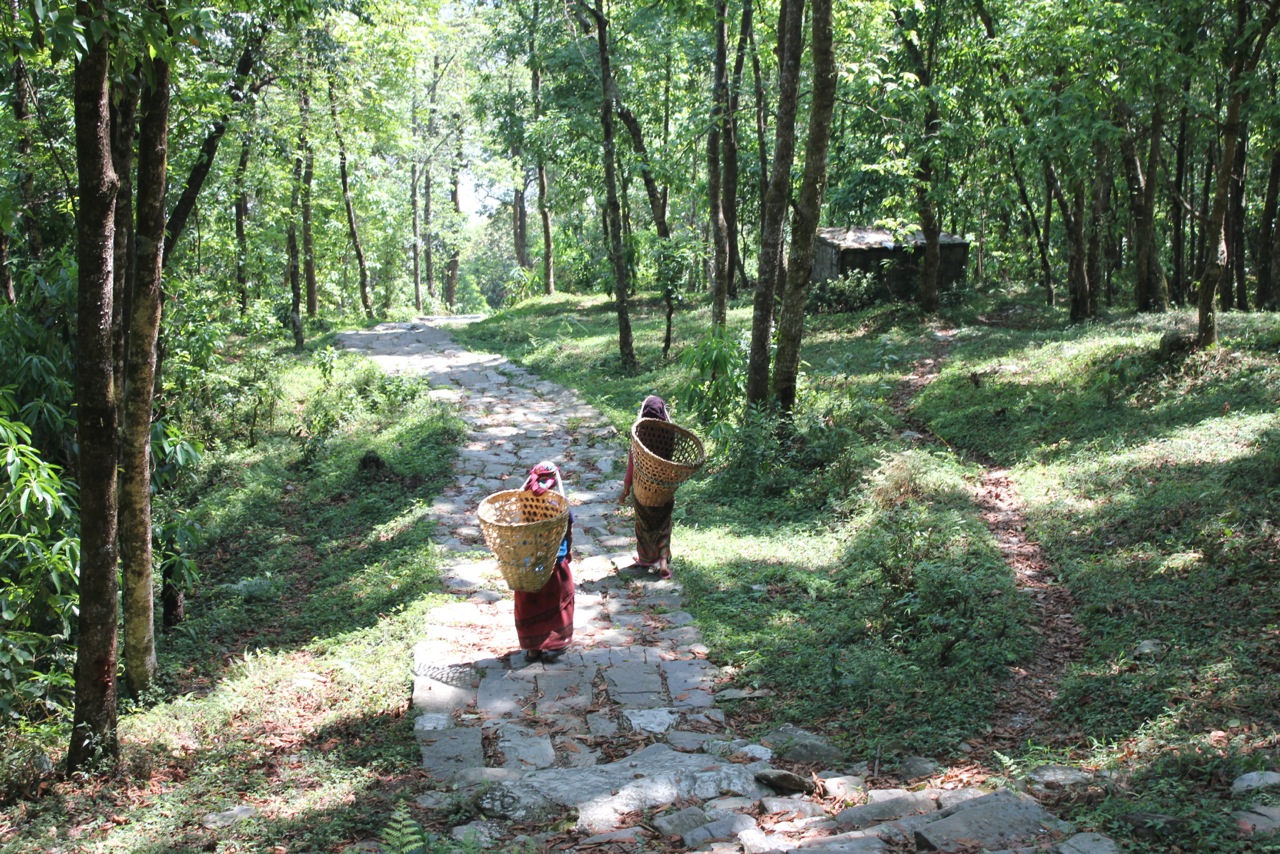
We took the forested footpath on north side, a walk I regularly make in about 35 minutes going down and one hour going up. It leaps (or drops, depending on which direction you’re going in) directly from the flat valley to the spiny ridge top.

IMG_2858

As we neared the bottom of the trail, Didi was walking a short way ahead when Aamaa pointed to a lone man in an empty rice paddy on the valley floor.

“That’s the field where Didi was born,” she said.

I’ve always known that Didi was born during rice planting season, when Aamaa went to work and returned home instead with her first baby.  But I didn’t realize the field was so far away from the house. It belongs to a relative, and I’ve never been to it.

“That one?” I squinted and pointed like I was on safari in Zimbabwe.

“Yes.  And then we walked up this path that afternoon.”

“…What?”

“I came here the night before to plant rice, but I had Didi at 8am the next morning.  And at 4pm we walked back up this same way with the baby.”

“…THIS one?! How is that possible?”

“I know.  Can you believe it? I couldn’t do it now.”

I might as well insert here that my brother and sister-in-law welcomed my niece Eliza Jane Spero in to the world just a few days ago, on March 6, in Chapel Hill, North Carolina. Running around here in Nepal, my mind has been largely preoccupied with thoughts of soft blankets and white linens and wrinkled baby feet at home. So maybe it was just the way the moment came together. But I looked at Didi chasing Aidan and Pascal down the stones in front of us, and all of a sudden it seemed impossible all over again that all of us were there together.

IMG_7151Aamaa was 20 years old when she had Didi, and she endured many hardships after she hiked up this long, unforgiving path later that same afternoon.  I can only imagine how birthing a child must have been then, when medical facilities, telephones, basic shops, and decent roads—to the extent any of these existed at all—were at least a day’s walk away.

Now, 35 later, here we were walking on the same stones. Standing on them, it’s hard to comprehend that millions of people in the world still live in that kind of poverty today, when it seems like an unbearable situation for one single individual. Every once and a while, all those millions are suddenly the one person in front of me, and today, it was Didi. She seemed like a miracle. And the path – which I’ve skipped down and climbed up hundreds of times – just stays there while people go up and down it, carrying their stories from one decade to the next.

It was 6pm by the time Aamaa and I got home with our 20kg loads of cauliflower. We have a lot of slicing to do.

*


IMG_7454

Another Relaxing Day Off

Yesterday I did what I usually do to relax on my day off: go with Aamaa and about thirty neighbors to chop and haul firewood for six hours.  As Aamaa and I were headed down the hillside in the morning, carrying our ropes and sickles, a buffalo was baying loudly in the distance.  Aamaa stopped for a second and listened.
“…Oh, it’s a buffalo,” she said.
“Of course it’s a buffalo,” I said.
“For a minute I thought it was a cell phone.”
“You thought cell phone before you thought buffalo?”
“Sometimes cell phones make that noise…bzzzt, bzzzt.”
Cultural moment.
Woodcutting is highly regulated and occurs en masse, and it is a brilliant example of the chaos and color of rural Nepali life.  Today there are about 35 people in the steep, unruly forest shouting and singing and chopping with axes and saws and sickles.  Every now and then there is a loud whoop and a huge tree falls over.  Then you have the random American running around in the middle of this scene.  I am wearing one of my old “work” outfits – a hot pink and green kurta sulwaar from 8 years ago that’s got a rip here or there.  I am ready for action, baby.
I get assigned to a group of women bundling wood and carrying loads uphill to a clearing.  I would like to say that, after twelve years of voluntarily putting myself in these situations, I’ve actually earned a fair amount of respect – I do pretty well for a foreigner.  But there’s just a baseline level of awe that comes along with having a 5’8” white girl waving a sickle around in the woods a tuesday afternoon in the hills of Nepal.  Also, it’s the obvious topic of conversation.
IMG_7056For one thing, “Laura” is, exactly, the Nepali word for “stick.”  This is an endlessly entertaining point.  I look like a stick and I’m carrying sticks and my name means stick.  Unfortunately for me there is also a lot of discussion about actual sticks (after all we are in the forest chopping wood) and I am constantly answering “Yes?” in response to people saying things like, “Hey, give me that stick.”


After a few hauling trips, we’re resting in the clearing when the ladies get to talking about how nobody should submit to pressure from the choppers to carry too much at once.  Loads should be adjusted to the size and strength of each person – after all, it’s really hard work and we have people of all ages and levels of health among us.
Lady one: “I mean look at this foreigner here from Japan.”
Lady two: “It’s America.”
Lady one: “Whatever.”
On most trips I get paired up with Saraswoti or Aamaa, who I follow around like a baby cub. And I appreciate that all the wives look out for me.  However I do get a little fed up with being babied on tasks I’ve sweated significantly to master, such as carrying stacks of wood slung from a rope on my head.  So late in the day, when fatigue and disorder have evolved to a stage where I find myself momentarily separated from the group as everyone is bundling their loads, I find a huge log and wonder if I can lift it.  I manage to get it upright but can’t sling from my head because it keeps falling over.
“PUT DOWN THE HUGE LOG!” yells a guy from across a ravine.  I call this guy Michael Jackson, but that’s another story.  Michael Jackson makes the mistake of shouting across an entire forest that the log is too heavy for me to lift.
I set the log up again.  Michael Jackson abandons his first strategy and calls to Barat to come hold the log so that at least it doesn’t roll away while I’m making a bad decision.  I manage to stand up in the steep underbrush with this huge chunk of tree slung from my forehead.  It’s added at least 75 lbs to my bodyweight.
For future reference, putting DOWN a 75 lb log slung from your head is almost as hard as picking it up.  So I just start walking up the hill with it.  I have no idea whether I can carry this thing all the way up to the clearing, which requires climbing over terraced fields on narrow footholds.  But so far, Michael Jackson is losing, even with my Japanese disadvantage, and that is all that matters.
I plod along until a line of women with their own bundles of wood catch up behind me.  They begin scolding me to put down the gigantic log, and to be fair I kept thinking that, over the next ledge, I would give it up.  But everyone was moving forward as a group, and it was never exactly the right moment to stop, and each time I hit a ledge I would think I’m putting this stupid log down on the other side, but then the other side would be flat enough to take a few steps and I’d find myself at the next ledge.  So we just kept moving up the hill one ledge at a time.
We get to a particularly difficult terrace that has a narrow foothold and a large height difference.  With the added weight, these high steps are treacherous because I literally can’t lift myself.  So instead of stepping up over the edge of the terrace, I put my knee over the top and get myself over on all fours.
For the record, this is a fair tactic.  I watched Sandrakali didi do it earlier in the day.  But it is super awkward, and leaves you waving your butt over the edge of the field at all the people behind you.  Which is really okay in most circumstances, but as it happens, my work pants from eight years ago are ripped right at the butt crack.  So I am waving my underwear at a line of women behind me carrying bundles of wood, while I am crouched under a 75 lb log that is attached to my head by a rope.
This actually happened in my life.  Yesterday.
“Laura, PUT DOWN THE LOG,” all the women are chastising me.  Out of love of course.  What would my Japanese mother think?
“I’ve got it guys, I’ve got it,” I reply, from under the log.
With a burst of leg strength I stand up and make my way up to the clearing, which is now close at hand.  As I approach, Michael Jackson has his cell phone out and is taking a video.
I put the log down and throw my hands up in the air in triumph.  For the rest of the afternoon, everyone is talking about my wood carrying prowess, while simultaneously scolding me for my poor judgement.  THAT log, everyone says, pointing to it.
Also, Srijana tells me to take Aamaa’s shawl and wrap it around my butt.  My pants are ripped and the entire world knows.
We’re off for the next load.  I’ll be ready for the office again tomorrow.
.     .     .

Shooting Lights at the Sky


Didi, Pascal and Aidan and I left for the New Year’s street festival right around dusk. It was already jammed with people and food stalls, a challenge for us because, while Pascal carefully soberly dodges people’s legs and ponders over his food options, Aidan absolutely doesn’t care where he’s going, and he’s only about 3.5 feet tall, and he wants to eat everything he sees, and he can’t take his eyes off anything.  We got some ice cream, and some hot dogs, and some cotton candy.

At 9pm the Gaky’s Light Fellows showed up with arms locked in a blob. It was such a fantastic moment – they were all dressed up and so excited to be there together, and then they practically mowed me down in the street in a mob of happiness.  On the corner a crowd of people was dancing to some impromptu devotional drumming and singing.  So that’s how I ended up on New Years spinning around with Aidan on my shoulders and Pascal on my leg and our fellows clinging to my hands while we all danced in the street to a bajan.

The street crowd grew so thick that it became river.  I left Didi and the boys and waded in with our fellows – we were literally all holding on to each other and being carried down the street by a massive crowd.  Every once and a while someone would pick the person right in front of them and, just for fun, shout: “SANDIP IS LOST!” or “SOMEONE HOLD ON TO PABITRA, SHE’S SMALL AND WILL GET LOST!”  Samundra, our program director, had a scarf wrapped tightly around his neck.  “SAMUNDRA’S NECK IS LOST!” I cried.

Eventually, we got lost.  There were just too many people, our group was cleaved, and I ended up swimming along with Sabina and Asmita and Anju.  All the phone networks were jammed and we couldn’t get through to any of the others.  We were finally catapulted through a gate to the fair – I mean washed over the threshold while clutching each others jackets, past a wall of police trying to look for tickets. We came tumbling out next to a ferris wheel like Alice in Wonderland.

We dusted our selves off and looked around.  It was 10:30pm.  There were lights and huge objects everywhere, surreal and dizzying.  The four of us stood locked together so we wouldn’t be separated in the hectic sea of people, until we boarded a boat that swings back and forth on a pendulum.  We let people in line pass us until we could get a spot all the way at the tip of the boat, where we had the highest view, where all the strange fair lights streak across the sky and the top of the ferris wheel is right there, and you can’t ignore the moment the boat reverses direction and you’re suspended for an instant in mid-air with nothing under you.

By this morning, Pokhara looked like the day after the worst frat party you’ve ever seen.  Trash, tables askew, dejected looking tents, all kinds of equipment and decorative paraphernalia sagging with a January 1st hangover.  Even the sunrise seemed weary.  But it was pretty worth it while it was happening.  Welcome to 2015, World.

Which reminds me of something.  When we’d left for the street festival, Aidan had been begging for a new light.  Throughout the festival they’ve been selling slingshot lights with wings that sail way up in the air and then slowly float down, so the night was full of beautiful falling blue lights.  Pascal, like me, is enthralled with the light but cautious of losing it, and kept his slingshot safe in his pocket most of the time.  Aidan on the other hand is completely reckless.  He’s too excited about shooting the light up in to the air to worry about what happens to it, and we had rescued his flying toy from more than one rooftop on tuesday night.  Each time it got lost he was utterly dejected, and then we’d retrieve it, and he would go right back to catapulting it at the night with unbridled enthusiasm.

“Laura auntie,” Aidan explained to me as we walked in to the street again on New Year’s Eve, “when you shoot the light, it goes up toward the sky like this.”  His put his hands over his head and pointed his little fingers toward his palm, in an angled T-shape, to show the way a light sails toward the sky.  “But then just when it’s about to touch the sky…” his eyes got big and his palm drifted up “…the sky MOVES, Laura auntie!  The sky MOVES!”

.      .      .

IMG_4160


If I Can’t Say Namaste


Last Saturday evening I came home with a fresh bundle of vegetables from the market, but Aamaa said we’d be cooking without salt. A man at the house near the water tap in Rotepani passed away yesterday. Aamaa and I ate plain rice with ghee for dinner.

It wasn’t until the next day that I realized I knew the one of the bereaved daughters. “Malika,” Aamaa said, “Don’t you know Malika?” Of course. I remember her hanging around with Didi and Bishnu back when we were all in our early 20s, before anyone was married. “The really skinny one?” I asked. Yes, that Malika. Her father, in his sixties, had been ill for about a month.

This has given me an opportunity to pay respects during a traditional period of kriya, when a man with grown children has lived an honorable life and passed away at an age that, in these parts, is considered decent.

On the sixth evening of kriya, after Aamaa and I had eaten dinner, I rounded up Neru and Kanchaa from next door. Lighting our way with flashlights down the stone path toward Rotepani, we left for Malika’s house.

As we approached the house, a warm mist of voices bubbled up in the cold black night. We found a tarp stretched out over the yard from the edge of the roof, to shelter the stream of visitors from sun during the day and provide some warmth at night.

Three men were sitting on the mud-smoothed porch, leaning against the wall of the house. I recognized Krishna dai, who I’ve known since the first week I came to Kaskikot twelve years ago.

“Namaste,” I said, raising my hands.

“We don’t say Namaste now,” Krishna dai said.

“Sorry.” I looked down.  I had trouble figuring out where to replace my hands.  Lesson one, of many.

Malika’s brothers were peering through the door of an attached room on the small house – I’m guessing that at some point it was used for goats – sitting on the ground with white blankets wrapped around them, like bowling pins. Until the thirteenth day they will only wear new white clothes with no seams, and they’ll wash these clothes daily.

We talked quietly with Krishna dai and the other men outside for about ten minutes. They are all friends and relatives of the deceased. Their role is to sleep on mats on the porch and guard the door of the house, because the sons are not to touch anyone or anything during kriya.

“For example, if a chicken comes by,” Krishna dai said, “we shoo it away. So it won’t touch them.”  This seemed awful and gorgeous.

Krishna dai asked about our mourning traditions in the United States. I said they vary a lot according to religion and habit, but that I am Jewish, and our rules mandate a quick burial – strictly speaking, we don’t cremate. I explained how we have a gathering where people stand up and tell stories about the life of the person who has died, so that everyone can share and honor these memories in one place. The sons leaned in closely by the door of the goat room to listen to me. I said we bury our dead in a special place that’s marked with a stone, where we can return to do puja and be with our loved one. That we return from the cemetery and wash our hands and fill our stomachs with food, and people stream through our houses with flowers and food while we sit shiva – a mourning period when we keep our homes full of life, because we must keep living. By contrast, kriya imposes strict and challenging rules on almost every movement of the bereaved: fasting, washing, praying, isolation, burning. In some ways, everyone has died.

It occurs to me now how little I know about the orthodox dictates of Judiasm and mourning. Is there a period of purification? I have no idea. I could look it up easily for this post. But it’s more interesting that I have no idea.  So I’ll look it up afterwards.

As we were talking, a slight woman with her uncombed hair falling over her shoulders came out of the house. Malika and I haven’t seen each other in about eight years, but she heard my voice from inside the house. Despite the circumstances, it was a really lovely moment. There wasn’t a lot that needed saying, other than, “I heard.”

We entered the small house. Malika’s widowed mother was sleeping by herself on a bed of straw – she too must observe kriya for thirteen days. “Say ‘Aamaa,’” Malika said.

“But what do I say if I can’t say Namaste?” I asked.

“Just say ‘Aamaa,'” Malika said.  So I softly said, “Aamaa,” and her mother sat up.  There wasn’t really much more to add after that.

But just on the other side of a low wall, a crowd of women was gathered around a fire, where a kettle of tea was brewing for all the visitors. Mourning customs for daughters are lighter than for sons and wives: Malika and her two sisters observed kriya for four days, and on the fifth day, they added salt to their food and were allowed to touch other people.  Their straw beds, upgraded now to straw mats, are still arranged on the floor of the house. They’ll sleep there together and continue cooking their own food and eating only once a day for thirteen days. Their hair will stay uncombed until then.

Neru and I sat by the fire for about an hour. Between other chatter, the huddle of women asked me all kinds of things about death rites in the U.S., and also about my family and what I’ve been up to. There was lots of quiet laughing. We spent a long time on the topic of marriage, which, in these parts, is almost always arranged by parents. People here are endlessly enthralled by the concept that I am tasked with finding my own spouse.

“Love marriage,” I said by way of explanation.  Here the phrase has an illicit undertone, like eloping. “That’s our culture.”

An old lady next to me was having trouble following. The expectation she’s always known is that you are paired with a spouse who is astrologically compatible with you and socially compatible with your family, and then you sign up for a life together, and then you go from there. A younger auntie jumped in to help out.

“Love,” the auntie said, looking up at us from her seat by the fire. “When two people make things work between them—that’s love, right?”

.      .      .

IMG_6015