Discovery of Shelter Kids


Slide24Lamjung district borders Kaski immediately to the East, and shares its other border with the district of Gorkha. The Lamjung/Gorkha border was the epicenter of the April 25 earthquake.

At 7:30pm last night, Aamod and I made a plan to drive out to Lamjung today and meet with the district government. We wanted to find out what plans the government has for transitional housing and who else is working on it.

As per Nepal style this plan was finalized only late yesterday evening. My job was to type up two official letters for the two government offices we’d be visiting. So got that done by 11pm, and I was planning to print the letters out in the morning, but at 6:15am my phone rang. Aamod had realized the letters should be in Nepali, and I can’t read or write in Nepali. So I emailed the English version to him and went back to sleep. Aamod translated the letter and emailed it to Neha, who was home sick, but nevertheless braved out to her office, but the electricity wasn’t working at her office, so she texted to say I should meet her at a cyber on my way out of town. But when I arrived at the cyber Neha was only just opening up Aamod’s translation, and there were problems with the computer and network and printer and….1.5 hours later, we printed two copies of the letter.

By the time we finally left Pokhara it was 1:45 instead of 11:30. We picked up Aamod in Damauli, and in Dhumre, turned off the east-west road between Kathmandu and Pokhara, and headed northward toward Lamjung. It began to rain.

As soon as we started toward Lamjung we found ourselves trundling along behind a line of relief trucks covered in orange tarps. Once we passed them, I watched the blooming green hills rolling by on the other side of a lush valley and was soothed at being on the road, moving toward some kind of answer, however small, after weeks of anxiety. The flying scenery seemed to catch some speeding thing in my mind and race alongside it, leaving me momentarily still.

IMG_4928

The road went on and on. It began to feel very late. And in the front seat, Aamod was sifting through the letters Neha and I had printed out in the morning. There were some mistakes.

Yep. Mistakes. Not kidding.

Now I personally felt that if we had letters with stamps on them, they would surely fulfill procedure. But one must remember that I couldn’t read these letters, so I might have been biased.   On the other hand, it was starting to feel like we were never actually going to arrive at our meeting with the District Health Office, and government offices aren’t known for staying open past working hours.

We pulled in to Besishar no earlier than 3:45pm. And Aamod, God bless him, had become committed to finding a place to reprint these blasted letters. We curbed up at a cyber, shoved my pen drive in the computer, Aamod hastily typed in some changes, the cyber owner went to click print…and the power promptly went out.

No reason. This wasn’t a scheduled outage for load shedding. Just good luck.

We wait for a minute to see if the power will come back on. It doesn’t. We leave and look for another cyber. Eventually we find a one and now I am running between the cyber and the taxi with Aamod’s bag while people in the street in Besishar are looking at the tall foreigner sprinting down the road in flip flops with Aamod’s backpack. The revised letters are finally delivered like manna from a printer in to Aamod’s hands. He gently tri-folds them, slides them in to some envelopes, and stamps our organization logo on the front. We jump back in the cab and drive to the District Health Office in Besishar.

Now it’s well after 4:15. As we pull in, the sun comes out, and suddenly it seems early in the day again and things are possible.

We sat down on a couch, and Aamod reached in to his backpack, pulled out an envelope, and handed it formally across the desk to the District Health Officer. This immediately made me want to start giggling like a six year old, because the letter had just gone IN the envelope about five minutes earlier.

Next, we waited quietly and watched the officer read the letter. This is the protocol. The District Health Officer was an affable guy and he took us to the office of the Chief District Officer, the head official of Lamjung. Where, of course, Aamod placed the second letter on the second desk, to be read in silence while we watched.

Just as we began talking at long last, with the late afternoon sun getting lower in the window, we were interrupted by the entrance of an animated employee, who strode in with a huge file and thunked it on the CDO’s desk. He then launched in to a torrential briefing for the Chief District Officer on housing.

He turned out to be the guy in charge of shelter coordination in Lamjung.

And this is how Aamod and I got an up-to-the-minute report on transitional housing in Lamjung District. It was PURE LUCK. If it hadn’t taken us 2.5 hours longer than planned to get to Lamjung, we would have missed this entire interaction. The man’s name was Pradeep Khanal, and we are going to be best friends.

Pradeep (and indeed, much of our afternoon in Lamjung) countered all the negative stereotypes of Nepal’s apathetic, dysfunctional bureaucracy.  He provided us a list of the six big agencies doing shelter in Lamjung, updated at a meeting just that morning, and directed us to villages not yet adopted by the large iNGOs doing housing. We looked at drawings of government shelter models and I was surprised to realize I could quickly tell which had advantages and why; which were too resource-heavy or laborious to construct except as a permanent house.

This surprised me as much as when I watched a Hindi film with the boys last winter, and discovered I understand a good bit of Hindi.  With no background in construction, the only reason I could interpret all this information from housing drawings is because I’ve lived in a rural house for 12 years, and done things like wood collecting and carrying heavy loads up long distances. Looking at these models, I had a pretty realistic sense of how the proposed spaces would be used daily, of what would be involved in constructing them, and how the result and effort required would compare to a permanent house.

See, you just never know when your niche specialty is going to turn out to be JUST THE THING, right?

We also learned that just that day the government had finalized shelter kits (or Shelter Kids, as the documents charmingly call them) which include tin, nails etc., for each family that needs to rebuild. The government will provide the raw materials, and let people figure out how to use them.

I asked if the government will still provide these kits in places where NGOs had taken on housing projects. They said no – no reason to duplicate money and materials.

Aamod and I scoured a list of districts, numbers of damaged houses, and a huge map on the wall of Lamjung district. We can only afford 100 – 200 housing structures; was there any place where that was the right number? The CDO asked us to please consider offering at least 300 houses, to properly cover a single village.

Suddenly something occurred to me. It was actually completely obvious.

When we do dental care, one of the most difficult parts of our job is motivating the government to collaborate on investment. But this government is already investing. Why would we steal their thunder?  If we can simply fill in around the government, we can use our resources to supplement and improve their plan instead of replicating it. What’s more, one of the major lessons from Haiti was that the NGO industry that usurped the government was a giant debacle, essentially displacing governance to outsiders and leaving public systems powerless.

“Sir,” I asked the District Health Officer, “how are you going to deliver these rebuilding kits?”

IMG_4968He said the district government would bring housing kits to the village governments for distribution. I can tell you right now that we’ll be reading stories about how housing kits didn’t reach people who needed them. You know how easy it is to carry hundreds of bundles of tin and nails around in the hills of Lamjung and Gorkha?  And what’s more, the government is under pressure to show transparency, so distribution of government aid is already being hampered by a requirement that people have identity cards.  Which obviously, have mostly been buried under rubble.

“I was wondering,” I said, “If we were to provide manpower for distribution and building, would the government still be able to provide materials?”

The DHO turned to the CDO sitting behind the desk.

“She’s wondering if we can provide materials in their working areas, if they help with distribution and building.” Is it possible nobody else has asked this question?

“Sure, of course,” said the CDO.  As if this wasn’t a miracle. If it was that easy with dental clinics…

Aamod and I practically bounced back out to the taxi. There are countless advantages to channeling the resources of the government to an efficient, people-centered result, over acting independently. One is supporting the government, which, for all its problems, is in charge of the welfare of its people. And instead of buying tin sheets and nails, we can use our relief fund to think about quality of life. Instead of roofs, we can think about walls. Instead of crisis shelter, we can learn about design that can be transferred over time to permanent housing.

Also, we have communities in our own working areas in Kaski and Parbat, where the government currently has no plans to offer housing kits, asking for tents. Instead of using funds on tents, we can reallocate the money saved in Lamjung to mimic the housing kits in our villages, see how people use them, and learn how to supplement supplies and design ideas.

On the way home we talked for 3 hours nonstop about ideas that seemed accessible now: creating day-labor employment, paired-village building, little things that could be easily discounted or added to make all the difference. Out the window, the hills rolled by in reverse, and night fell.

“I was thinking,” I said from the back seat, “about this idea of a safe box for valuables. What do you think?”

.      .      .

IMG_4916

Dental Care Anyway

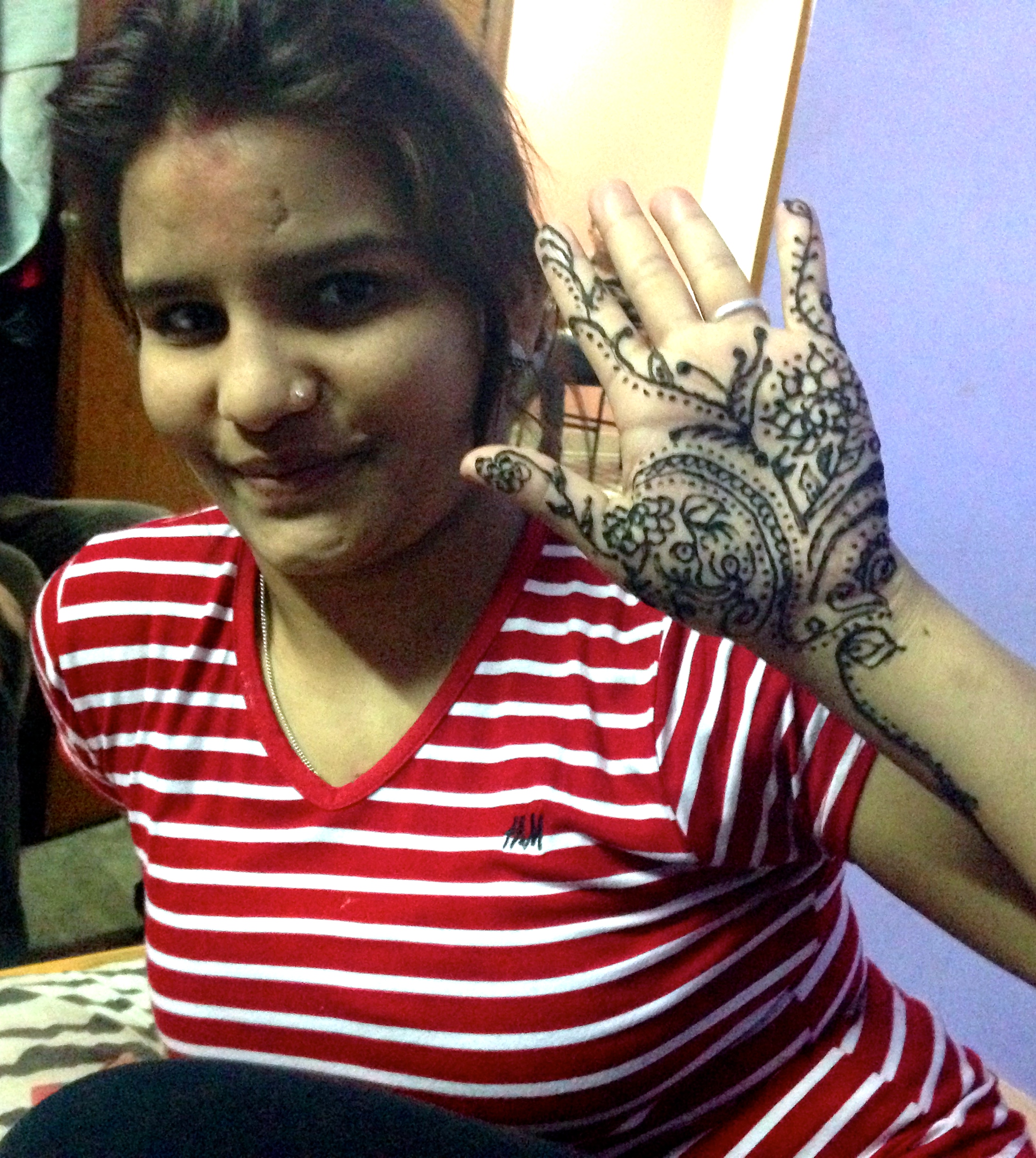
IMG_4898I’ve been in Pokhara for about five days now. All the usual activities – Saturday workshop with our Gaky’s Light Fellows and Asmita’s 18th birthday party at the community house, where I continued practicing my henna tattooing skills on all the girls…

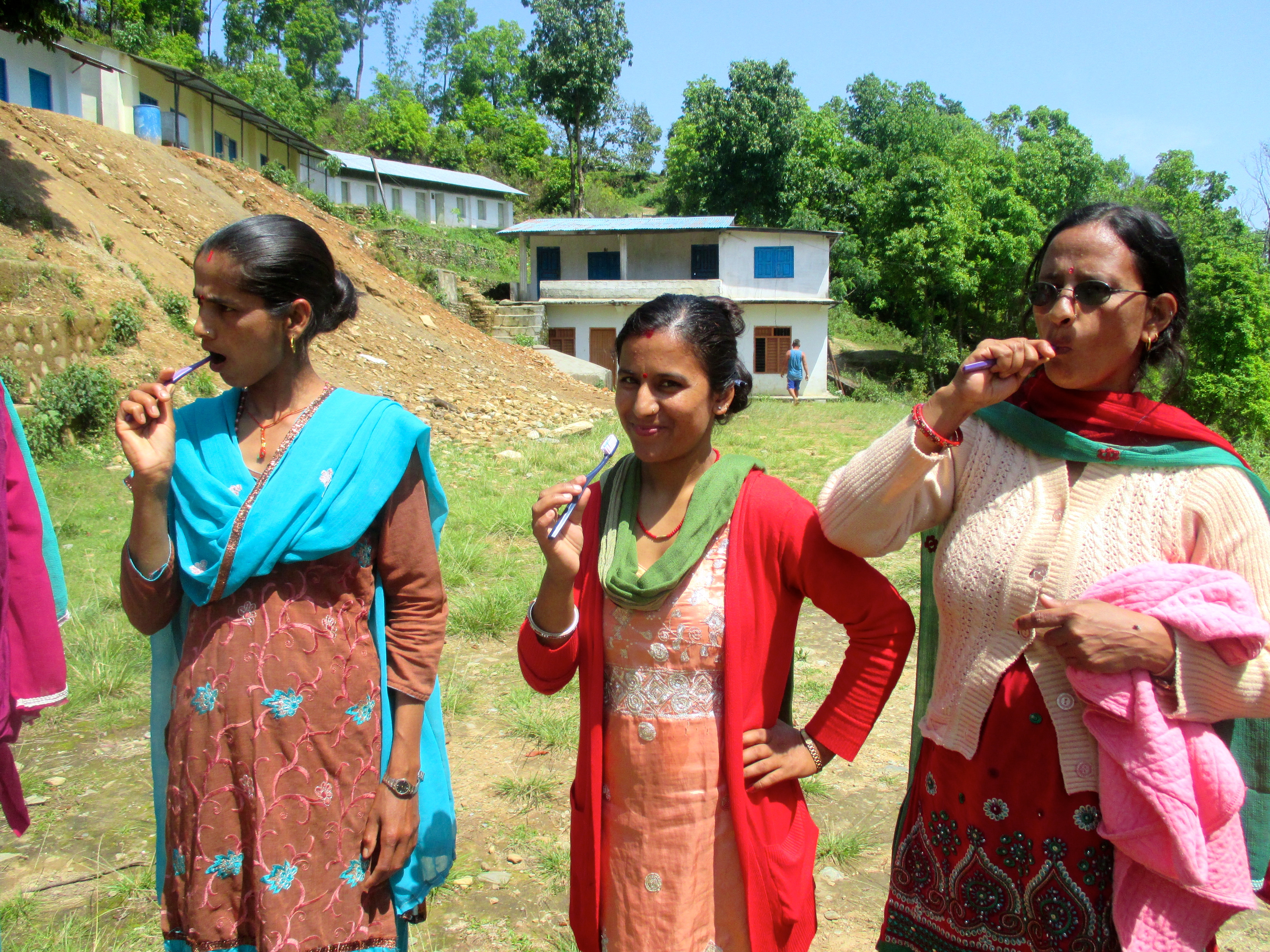
Last week Kaski Oral Health completed this year’s teacher trainings in each of the three villages that launched over the winter. This is where one teacher from each school, who is called an Oral Health Coordinator, learns to conduct a daily brushing program and also do oral health education throughout the school year. We had to postpone our OHC trainings because the earthquake hit right when they were originally scheduled, and when we did hold them, we had to think about how to keep oral health care relevant in the context that teachers are now facing.

IMG_0525There are approximately 129 damaged homes in our working areas, some of which are unlivable, and just outside of a village where we work in Parbat, a nearby area has experienced even more extensive damage and our dental technician has asked us to help. So we’ve made one trip out there, and we’re considering how to approach another. About 13 schools need some or total rebuilding in our 10 villages. All these realities must be acknowledged as we continue trying to advance the work we’ve been doing in oral healthcare over the last eight years.

One widespread issue is that shelter aid has been largely limited to people whose houses were totally destroyed. For thousands and thousands of people whose homes are standing but too dangerous to live in, significantly less help has been available – by not receiving tent distribution, for example, and that’s where organizations like ours filled in. Going forward, the government is compensating only $250 per damaged house, compared to the $1000 that will go to families whose houses are flattened. Then again, everybody will need to rebuild from scratch, and even a simple village home costs closer to $3000.

All of this is why I want to start pulling back from using our limited relief funds for tents and start focusing on transitional housing that will last people for the length of time needed to rebuild.

On a tangential topic, we’ve outgrown our one-room office, and leased a new space that is currently totally empty, which is both exciting and intimidating. So in between scouring the internet and Facebook for examples of tunnel shelters and super-adobe shelters and shelters that reuse tarps, I am also turning over possible arrangements of the sunny new rooms of our office, which have yet to be set up as our home.

I took a detour from dreams of shelters and offices yesterday to spend the morning with our field officer, Dilmaya, at Deurali Primary School in Kaskikot. This school is just five minutes from my house, and it is where Didi and Bishnu attended grades 1-5. I have known the teachers there for twelve years. For about 4-5 years, Deurali school ran a daily brushing program we’d helped them start, but it eventually petered out. Their Oral Health Coordinator, a really sweet young woman named Chandra, had asked me last winter to help them restart it.

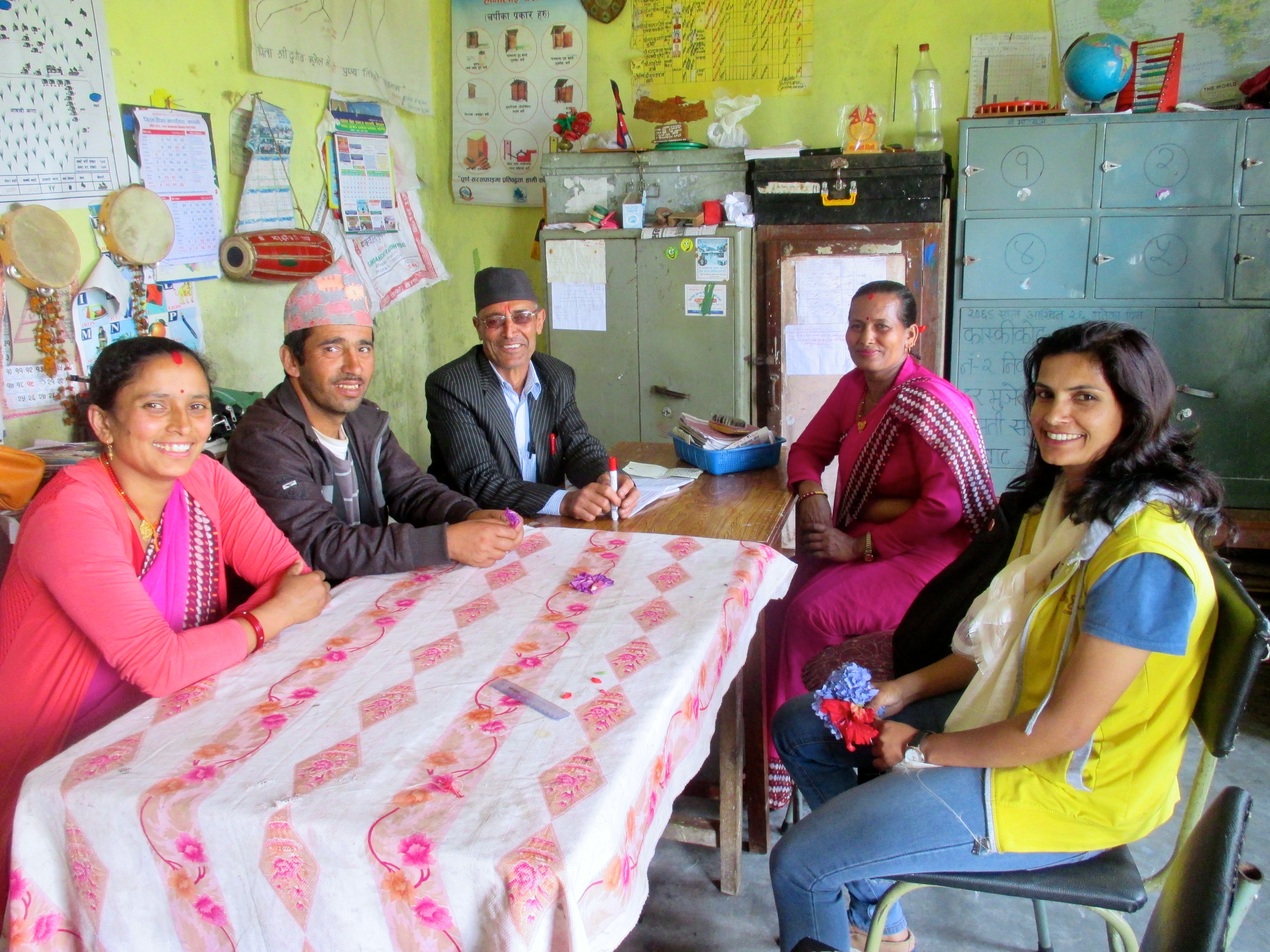
So Dilmaya came up to Kaskikot with her backpack full of brushes and paste, had lunch with me and Aamaa at home, and then we went to Deurali school and sat down with all the teachers in the office. Govinda also joined us – he is one of the founders of KOHCP and was the team leader in Kaskikot for the six years the program ran there.

IMG_0577I was amazed when the headmaster pulled a notebook out of the cabinet. He had kept a log, which started in 2011, of each purchase or donation of brushes and paste, each poetry project or dance performance the school had held to advocate for oral health care. We discussed the school’s plans for future sustainability as our contribution declines next year, a plan we require. The teachers presented each of us with kata scarves, a traditional way to welcome and honor guests.

You all may or may not remember that when we tried to hand-over Kaskikot’s KOHCP programs and clinic in 2012, the project collapsed due to personal interests among government officials (a soap opera that, for better or worse, was covered in a 2013 Washington Post story). So it’s a bitter pill I live with that in order to keep this program growing and developing elsewhere, I had to be willing to watch it fail in my home village. And since then, we have since expanded to 7 clinics in 10 other villages that cover an area of about 50,000 people.

Nevertheless, sitting in this tiny school in my back yard, which has no more than 35 young students, and seeing the enthusiasm and sincerity of the teachers to restart their brushing program, was just awesome. We were all so happy with each other that it was basically one big appreciation fest.

Now that we have field officers, we offered to have Dilmaya come back and run a workshop for the teachers on oral health education, where she can teach the art, math and game activities we do with OHCs now to help them promote oral health care in addition to doing the brushing program.  Their teacher took the new brushes and paste and ran the day’s brushing program.

So that was a nice little pick-me up. Now, back to Pokhara to look at earthbag building.

Looking for Shelter


I woke up tired today. Partly because I stayed up so late writing, and partly because we’re all sleeping on the floor of the living room by the front door.

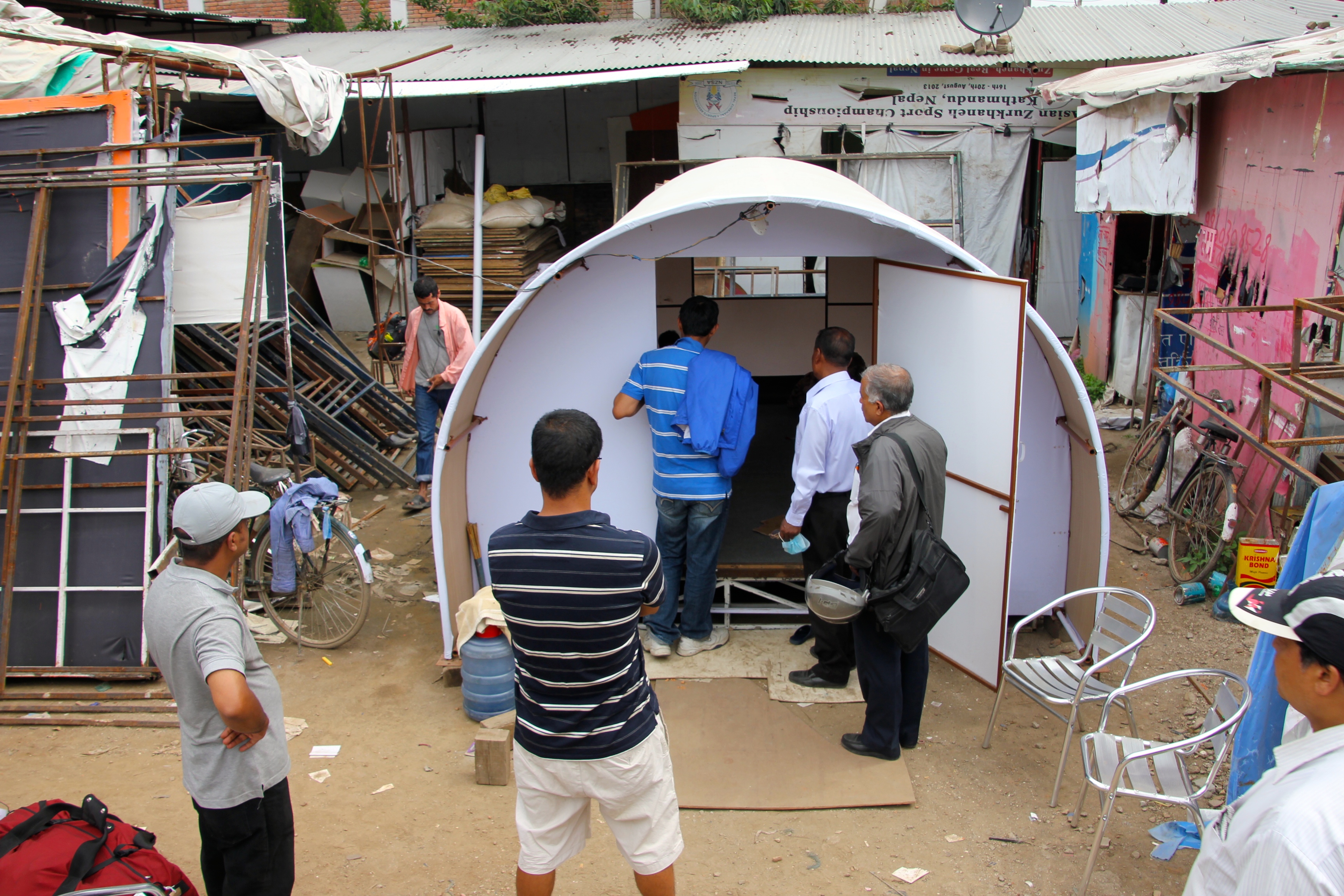
But I had an interesting morning. I made my way to an outdoor lot full of incomprehensible discarded piles of things, where Dr. Kiran’s group, SXJ-95, was meeting about their transitional housing unit, a clean white bubble sitting in the middle of the mess. It was really fascinating to hear how they’d developed this design by researching other units, most notably the post-earthquake shelters used in Pakistan. I’m going to save the details, because I hope to produce a quick audio slideshow about it.

IMG_8773While I was there watching, two government officials came to inspect the prototype, and discuss minor modifications so that it could be used to replace a destroyed Health Post in rural Lalitpur. By the time we left, the builders were getting back to work on the second unit, with a plan to drive the pieces to Lalitpur and set up a shelter within two days.

This has really got me thinking about transitional housing as a possible use for our relief fund. I plan to either donate it to a group doing really valuable work in rural areas, or finding a project that we can do well. It has been such a chore to procure and deliver tents – which are getting more and more expensive – and it’s frustrating to know that, while obviously better for people than no tent, this is such a short-term improvement. Plus, each time a transitional shelter is placed in the field, it’s an opportunity to get feedback and improve the design, so if we can collaborate with a group like Kiran’s, perhaps we could contribute to the larger good in terms of research and design.

SXJ 95’s unit costs about $500, but they put a lot of thought in to user feel and aesthetics. On one hand, this means we could potentially offer rural families upgraded transitional housing; on the other, we couldn’t afford very many. I plan to keep in touch with Kiran about their test in Lalitpur and maybe see if this design could be used for another health post or school classroom. Here’s a recent article by Gordon Brown, former Prime Minister of the UK, on the importance of reinstating schooling for basic child safety and welfare (sorry for the sensationalist title).

I left the crazy stuff lot with its shelter bubble, and my next stop was the Ministry of Health and Population. The World Health Organization holds bi-weekly meetings in collaboration with the Nepali government, where all of the major players in town for recovery – large iNGOs, foreign medical teams, etc. – come to share information. These meetings are divided in to clusters, such as Health, Communications, Shelter, Security etc. I went to the Health Cluster meeting.

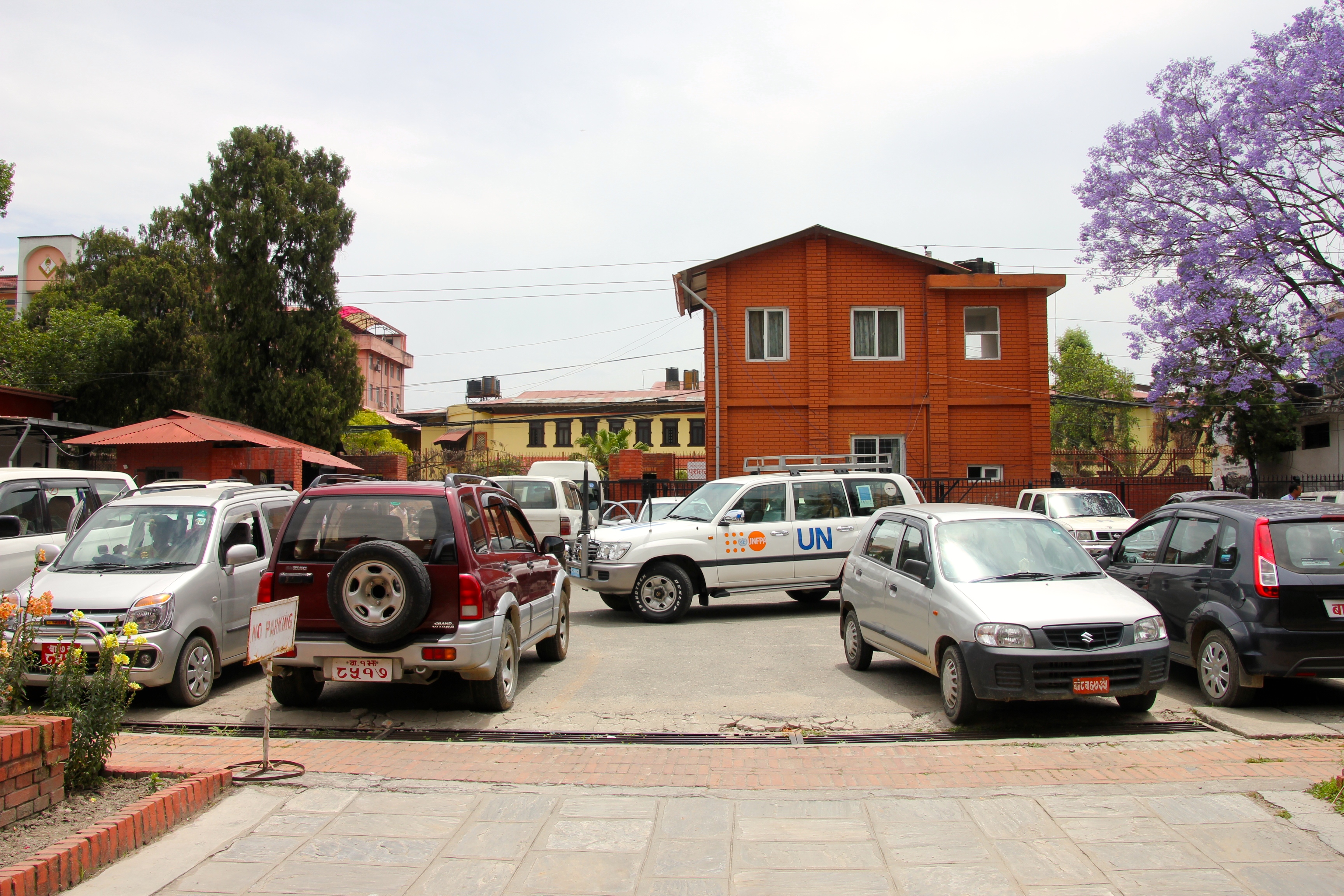
This is the opposite end of the spectrum from the WHR’s and SXJ-95’s of the relief effort. Kiran dropped me off, and I hopped out of his car into a parking lot full of oversized, logo’ed SUVs. I made my way to a packed meeting hall – probably close to 100 people of various nationalities. I sat in the back of the room and scanned the emblazoned vests in front of me: World Vision, Save the Children, AmeriCares, International Medical Corps. Japan, Switzerland, Canada…and then in the back, some straggling foreigners like me, probably there to get the lay of the land.

IMG_8789The meeting was led by the WHO rep to Nepal, Dr. Lin Aung, with government representatives in attendance. I had missed the first 20 minutes or so, but listened to some updated figures, and then attendees were invited to share what they’d been doing. That part seemed a little odd. They would announce the name of an area – “Sindhupalchowk?” and then various groups would stand up and say what they had been doing in Sindhupalchowk since the last meeting. It was more information-sharing than strategizing – but maybe these groups have other methods that they are using for truly coordinating their efforts.

After the meeting, I went to go talk to Dr. Aung. Ironically, I was trying to meet him all winter because I thought he’d be a good person to know for Kaski Oral Health, and I was never able to get in touch since I’m rarely in Kathmandu. But when I introduced myself, he turned out to be a very friendly and genuine guy. He gave me five minutes of undivided attention, even though another half dozen people were waiting to talk with him.

I asked what he thought a small organization like mine in Pokhara could do to pitch in to the relief effort. Like others, he said we should be thinking medium and long-term, which is where multilateral agencies aren’t nearly as agile or embedded. He said that with our community ties, we should focus on counseling and psycho-emotional support.

I said, “We don’t know anything about post-disaster counseling.”

He said that the psycho-social cluster is developing protocols for this kind of thing and gave me an email address where I could access this info.

All of which tells me that, for better or worse, coordination is almost completely at the discretion of aid providers. I think – and you could argue that this makes sense under the circumstances –things are really set up such that, in order to find the best way to participate, organizations large and small have to make a point of reaching out.

I’m not sure why I’m a little hung up on this. But I suppose we’d like to think in a humanitarian crisis of this nature, somebody has the answers and can tell us all what to do – and maybe somebody should know. But the basic fact remains that everybody is winging it to some degree, and I can’t argue this is exactly anyone’s fault. It seems like it’s really one of the cruelties of the whole situation.  The real blame lies in the injustices of the past that led to poverty and bad planning and lack of security, not in the present where nature took over. In any case, it seems like coordinated strategic planning is largely a matter of self-discipline.

Before I left for Pokhara, I went to visit a friend who is the CEO of Teach for Nepal. Most of their teaching fellows were there for a day of counseling with social workers from Israel, experienced at working with disaster trauma. I learned that one of TFN’s young teachers perished in Sindhupalchowk. The day of the earthquake, my friend and her husband were unable to call a helicopter to Sindhupalchowk, so they drove 5 hours to get there and dig through rubble themselves.  It was out there that they realized they’d actually lost her.  Now they are left with continued aftershocks and their other 89 fellows to send back out to their schools.

Everyone is spinning.

By the time I got on the plane to Pokhara I admit I felt pretty down. I had also spoken with my friend’s husband who has worked on a shelter that costs just $100 and might be a good option – we could potentially provide an entire community of about 100 -200 families with safer housing while they rebuild. But everyone is so hurt, psychologically and otherwise. The scale of rebuilding that’s needed is really hard for me to wrap my head around. I really just wanted all of it to go away.

At the airport in Pokhara, Prem was waiting for me. And as we crossed the road, Aidan was on the other side sticking his head out the taxi window, shiny as a stamp, his cheeky toothless grin lighting up the whole city. Pascal insisted on sitting in my lap for the seven-minute car ride. I gave them some super-sized squirt guns and unloaded the rest of a bag of Reese’s Pieces.

We went out into the late afternoon Pokhara sun, and walked to a plot of land up on a hill, where leveling strings are stretched across deep foundation holes in the ground. Prem and Didi are building their first house.

*      *      *

IMG_4905

For anyone wishing to support Dr. Kiran’s group, SXJ-95, you can do so here: http://bit.ly/1ReQ8gj.

Teach for Nepal is providing relief in their working areas, and will have a special focus on rebuilding schools. You can support them at http://nepalrelief.teachfornepal.org.

A Start

Dear friends,

I wanted to provide an update on our progress in Nepal.  Each day of the past week has felt like a lifetime, thoughts racing so fast, then slowing down to a halt, then picking up again like a twirl of spinning leaves.  Some days just when I’m too sleepy to stay up, someone in Nepal or California or India comes on Skype and we talk till 2am, and then I dream about it and wake up in Hartford.

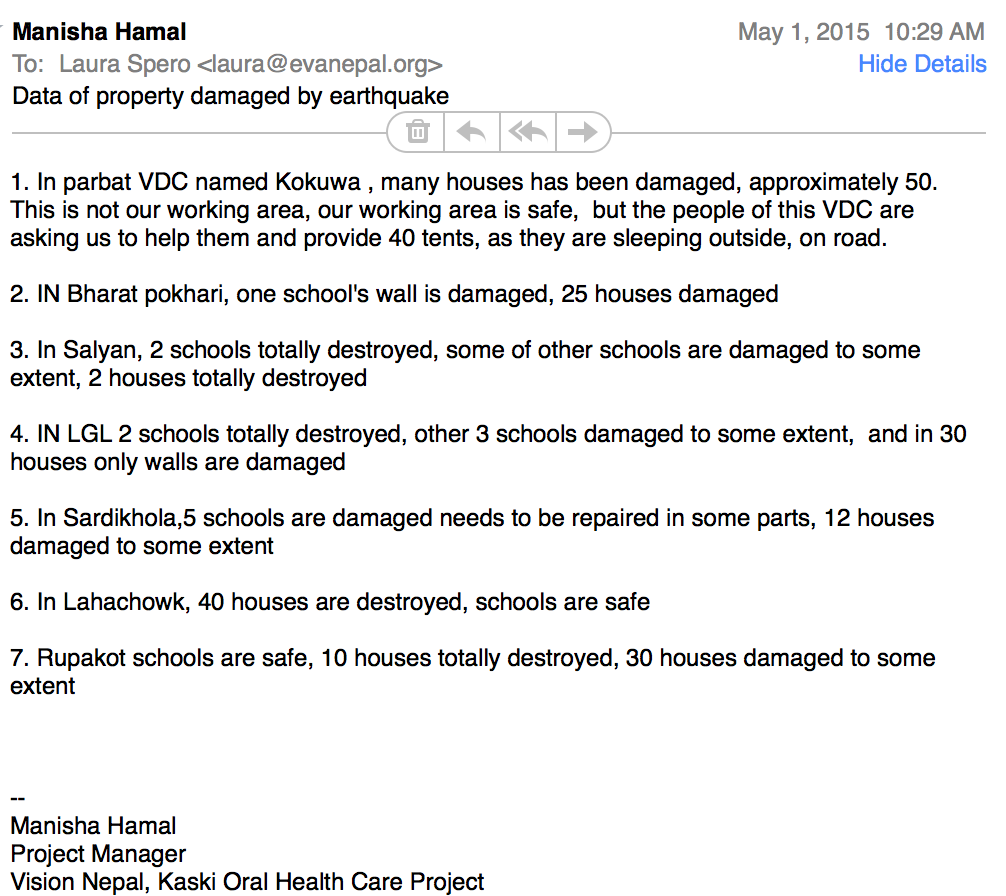
Screen Shot 2015-05-13 at 11.47.03 PMOur Kaski Oral Health Care working areas have sustained property damage to homes and schools, but no human loss of life as far as I know.  But we have been able to work with our dental teams (the three locals that run each village clinic) and use our relationships with local governments in these areas to quickly find out what’s going on there and offer help.  Earlier this week, thanks to funding from another donor (thank you, GNE)! our board members worked with KOHCP’s dental teams to distribute tents for about 42 families sleeping outside in their respective villages.  In the district of Parbat, our dental technician called seeking help for a neighboring village where another 40 families are sleeping outside their destroyed homes.

Since I launched our relief fund on monday, it has been amazing – $5200 poured in from people on both continents in less than a week.  This morning, we agreed to spend $3500 of it on tents for the 40 homeless families in Parbat.  It’s a start.

We’ve all agreed that order to get back to our goal of building dental care, we have to do our part to help stabilize the immediate trauma in the places we work.  In fact, I’m realizing that with our localized knowledge of these villages, we’re as well set up to do so as anyone is.  And that’s been the really incredible lesson of this week: for locally-based organizations like mine, nobody else is coming while we wait.  There are just too many places to get to, and the aid that’s available to the people we work with is us.  Luckily, Eva Nepal’s working areas did not suffer on nearly the scale of many other places.

I’m also talking with friends making trips out to the epicenter in Gorkha, where the devastation is incomprehensible, and all hands are needed.  I know this is hard to really believe – by believe I mean, to really picture what this would be like – but some of these remote places have not been reached yet. People have been stranded for a week with injuries and no belongings or shelter or food. So everybody is needed throw in their shoulder the best way they can, or invent a way, and the Red Cross seems to have stepped in to provide coordination, wisely making use of the tremendous energy being delivered by locals.  In the upcoming week, I will try to get a better understanding how we can help out there as well.

As for me, I have reconnected with a wonderful network of people in this country who also consider Nepal a second home – in many cases researchers who spent years devoted to specific communities or issues on Nepal.  People who I met at conferences at some other time, followed generally on Facebook, and are suddenly my go-to clergy for all the pressing questions and worries in my life.  We end up chatting late at night on Facebook about the longing to be nearby to help vs. the unhelpfulness of it, sharing articles and tips, asking for contacts and help moving information around.  Many of the articles being passed around online are written or commented on by people within this tight, quirky circle of people whose hearts have roots in this country and culture.

There is one moment from this week that will always stick with me.  The morning after the earthquake, I was Facebook chatting with our graduated fellow, 18-year old Santosh, who just this spring moved to Kathmandu to get his Bachelor’s degree.  It was a big deal, coming to the capital from little Pokhara, and we helped him find a cool internship at a software development company to pay for his living expenses.  He was describing the scene, the event – “Oh my god, what is that, so scaring” – where he slept, what he’d been doing, and I was trying to get him to take photos to publish in Youth Journalism International.  We were getting ready to sign off when Santosh typed in to the little blank white screen…


is this earthquake in america also??


Love,
Laura

To donate to Eva Nepal’s Earthquake Relief Fund, click here.

Boxes and Glass Cases

It’s been a tough arrival.  The monsoon is still clinging to the hills, thick and cloistering, and each afternoon it dumps an unremitting rain that I swear to God follows everybody inside.  The air itself is full of water; there’s no place to be dry.

And the truth is, I am also a drop suspended in mid air.  I’ve moved out of my apartment in New York, but I haven’t moved in to a new apartment in Connecticut, so all my things are in boxes in my parents’ basement.  The plan is that when I get back in two months I’m going to be working in a manual therapy clinic in Hartford…but it hasn’t actually happened yet.  It’s an idea, hovering in good faith around some boxes in a basement, waiting to be taken out and used.

That feeling has trailed me all the way to Pokhara–the hint that my life is full of theories.  Even IMG_2479though my contact with my projects in Nepal has increased a great deal in the past year through Skype and regular written reporting, and I have files and files of documents proving to me that these creations are real, they still feel like experiments when I re-encounter them on the ground.  Plus, there’s a big disappointment right off the bat: our first program director has left unexpectedly, after growing the Kaski Oral Health Care Project much less than we’d hoped since last fall.  I’m tired and frustrated and it’s enough with the freelancing.  I am ready to feel like I know what I’m doing, and some of this fits together, and it’s leading somewhere that matters.

Today it led back up the road to Kaski.  I went to Vindivasini Temple this morning to catch the bus on its way down, so I could save a seat before the bus arrived at the park, where a crowd  gathers around the door and starts pushing in to secure real estate for the ride up before people can even get out.  As I waited, I sat on a stoop with my duffel by my feet, watching a man selling vegetables across the road.  And I wondered again if this is all some kind of act.  I’m just doing the same thing over and over.  I can’t keep my grasp on what it’s about.

Other than a story.  The word comes to me again, and then again: Story.  Right out of the blue, at nine in the morning, I’m sitting on a stoop waiting for a bus, watching a man weigh a cauliflower, and the next thing I know I’m watching a story, and my identity is divorced from my soul.  Poof!  I am a character.

It must be natural that when you go through enough repetitions of something, even something incredible, it becomes unmoored from any particular episode.  And with that goes its singular miraculousness, because it’s just what it is: a cycle.  How profound would the sunset be if you only saw it once in your life?

Sometimes the sense that everything is just a series of events, with nothing transcendent to tie them together, seems like the most awful thing possible.  Even the leaves clinging to the trees look worthless.  But in certain moments, that same arbitrariness erases the perpetual burden of discerning the purpose of each passing instant, and my role in things is set free from an anchor that, in truth, may never have been there.  What a relief.

This morning I watched the vegetable vendor.  The story settled around me, like snow in its glass case, shaken from the sky.  I waited, again, for the bus to take me up to Kaski, where I knew Aamaa would be waiting.  Again.  For me.

IMG_2638