Meticulous Serendipity

I’m already in the last week of my visit, and as usual things have flown by too fast.  This monsoon has been more spirited than last year’s, blanketing us in torrential downpours every night and through each morning.  Finally this week the weather seems to have calmed down, but I’m missing the cool and comforting feeling of the rain closing us in with its clattering and clanging.

The main focus of our summer has been a new foray into the world of health care advocacy.  We have a model for rural dental medicine, and we want Nepal’s government to fund dental clinics in all of its village Health Posts.  Our idea is that if the government would set a standard at which it will finance rural dental services in the national health care system, then the global development industry will start doing what we’ve doing: training, mentoring, supervising and auditing rural dental technicians so they meet the standard (which we can help define).  As far as I know, we’re the only organization in Nepal working on this particular topic in this way.

IMG_3269

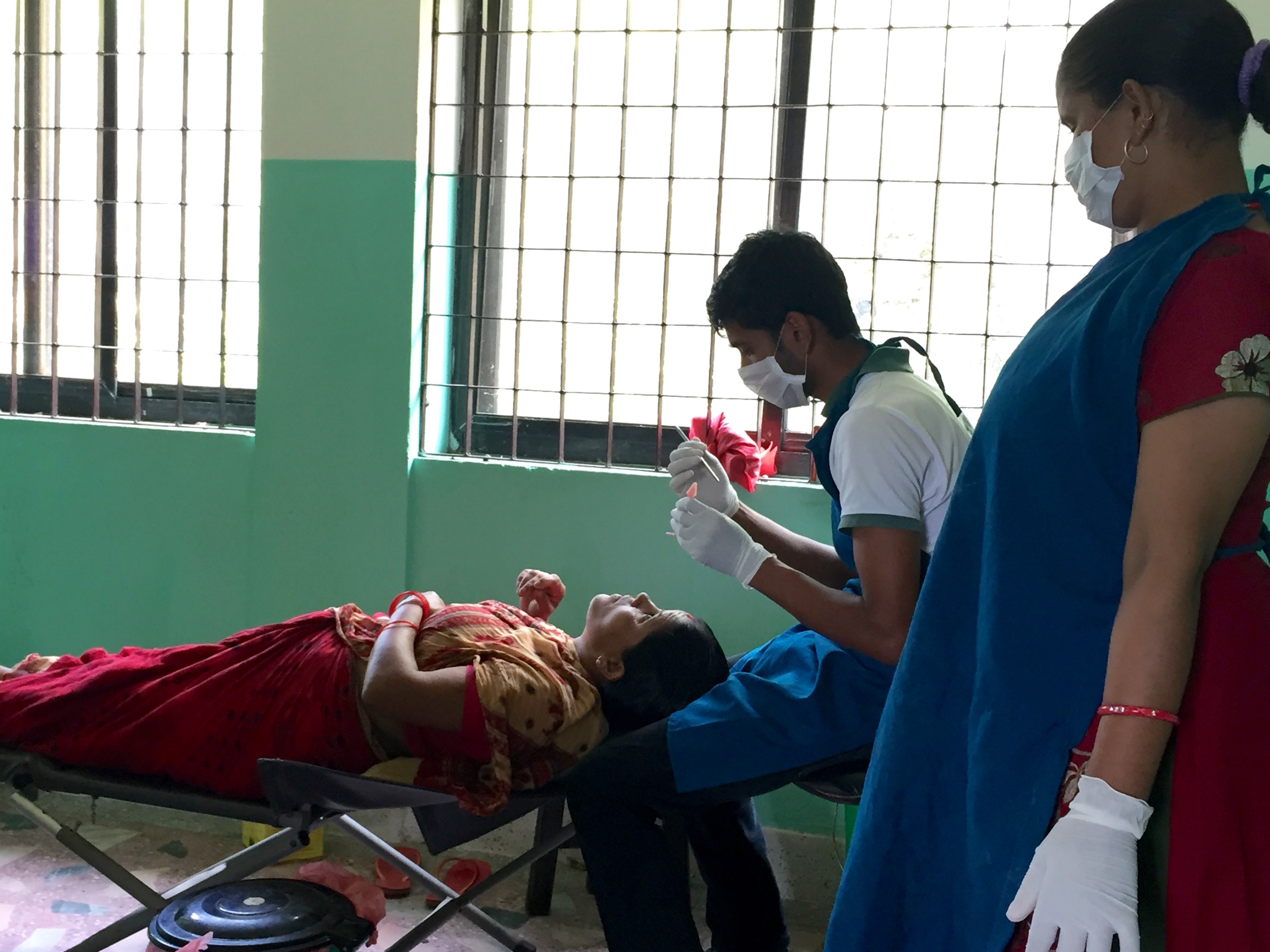
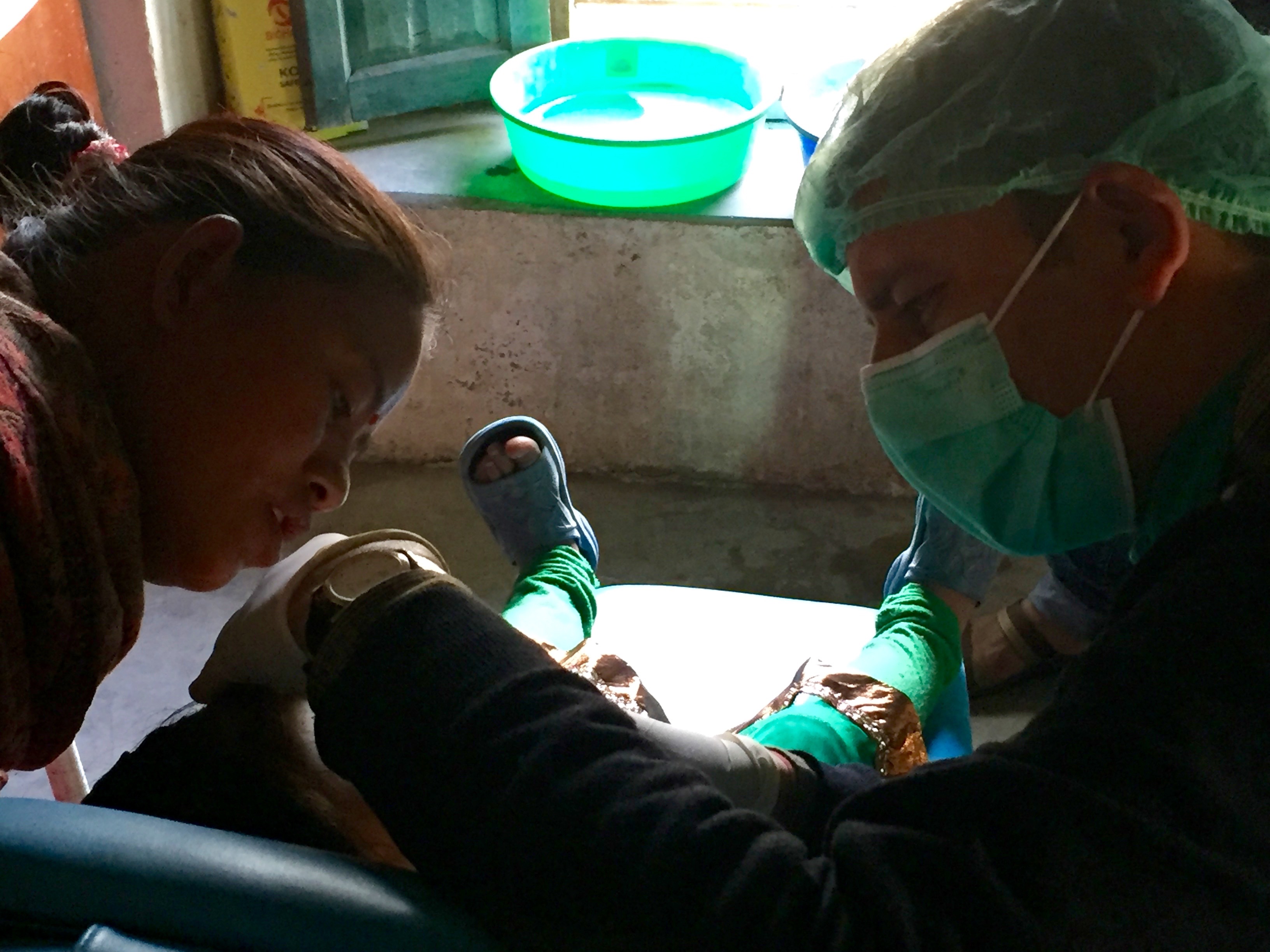
Salyan Dental Clinic at the Salyan Health Post

Like many developing world countries, there’s a complicated and often mutually distrustful relationship between the aid sector and the government of Nepal.  This largely results in aid agencies privatizing their projects as much as possible; I’ve done this myself, because it’s easier to just do something right yourself than manage a hassle of hectic and sometimes exploitative bureaucracy.  Mean time, weak governments spin out more and more self-serving regulations against a flood of foreign funding that is trying to silo itself.  Ultimately, it’s development itself that suffers, as decades-old aid industries, still chasing down base level poverty, make apparent.  So something that excites me about what we’re doing now is that, setting aside dental medicine itself, I see the process we’re in, if it works, as a strong example of effective collaboration between the private sector, which is great at risk-taking, innovation, and raising money, and a developing-world government, which, at least in Nepal, is by far the best option for scale and stability. I like to think this is a version of life where we all do what we’re good at, with respect for the reality that we need everybody if we’re going to think big and get somewhere.

Now then.  Should you choose to work on rights-based health care policy in the developing world, which you might have been considering, here is your primer on how to get started (after refining your particular service of choice for 10 years).

Our advocacy happens at three levels, beginning with the village level, where we’ve been pushing for permanent local government funding.  This is not for the faint of heart and best suited for people with a good sense of humor.  You’d better be down for a ride that’s 90% culture and 10% policy, and heavily focused on navigating relationships, social dynamics, and weather.  The village level is where we’ve focused most in the past, so we’re reasonably adept at this…except that the reality is that institutional services just aren’t very stable at this level.

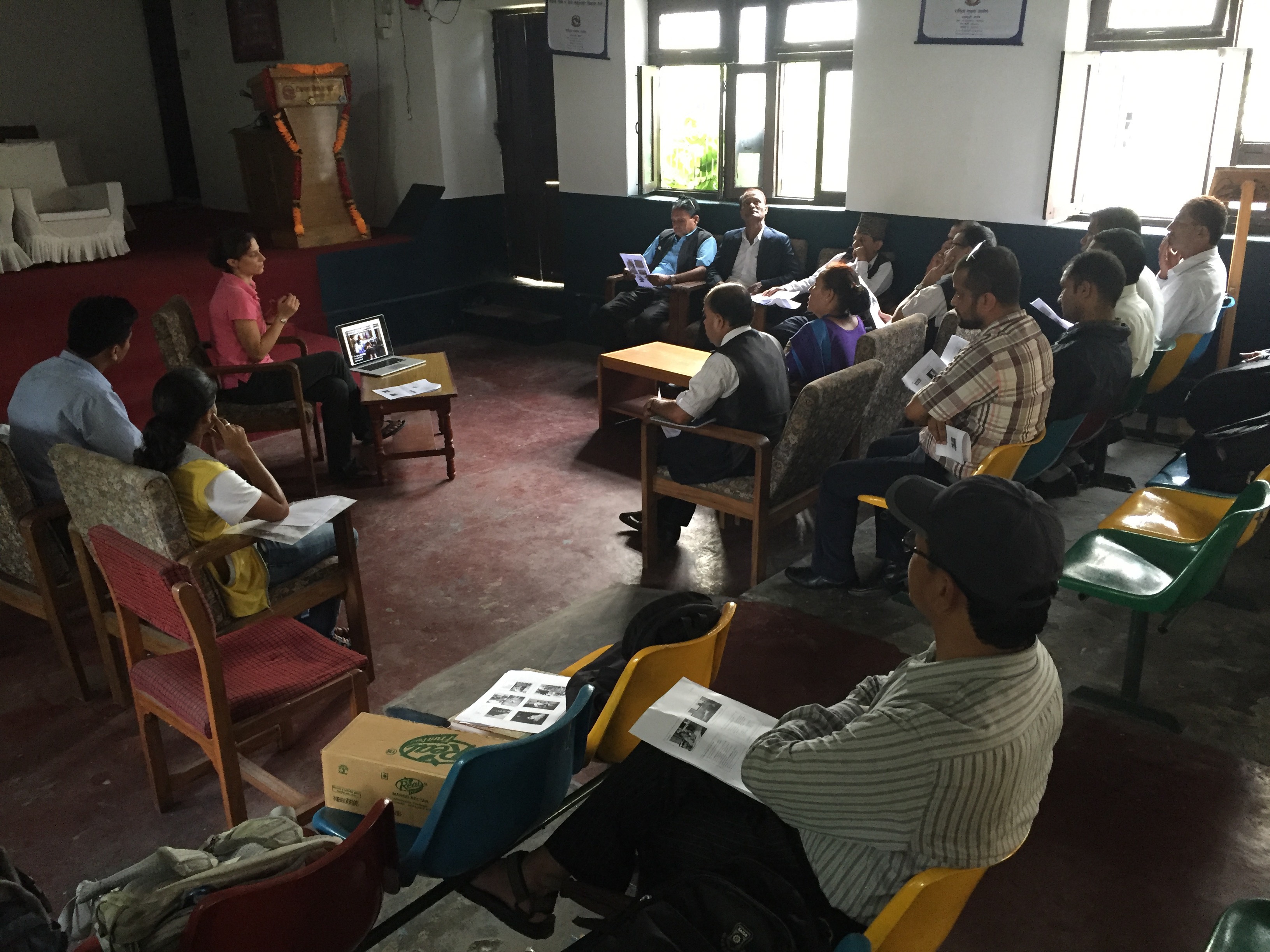
Next is the district government, where we’ve previously had only very simplistic coordination, such as required letters to required people.  But it’s the district government that sanctions and distributes village budgets, so without support here, it’s a lot harder to get anywhere at the local level. The other day we had a District Coordination Meeting where our program director and I presented (in Nepali!) on the role of the government in extending our oral health care model to its predominately rural population, filling a gaping hole in the primary health care system. This meeting exceeded our expectations – we received a lot of positive feedback and useful criticism.  I was lavishly complemented, of course, on my village accent.
IMG_9327

Lastly, the day before I leave Nepal, we’ll have our first workshop at the central level in Kathmandu, and with this, we’re leaping in to completely new territory.  But this is ultimately where it’s at: it’s the central government that fixes funding priorities and distributes earmarked budgets through the national health care system.  Recognition of our model at this level would set up a standardized place for rural technicians in Health Posts, providing a framework for agencies with a lot more money to invest in creating rural dental technicians who can then be permanently staffed by Nepal’s own government.

We’re feeling emboldened and encouraged after learning a lot from each and every meeting we’ve had so far.  Despite my own resistance in the past to clunky public systems, at this stage of the game, I’m finding some of the cumbersome government procedures to be oddly reassuring.  They give us steps to take.  We’ve met some very decent and hardworking public officials over the summer, even if they receive us with skepticism and give us some hard knocks. I think this has actually grown our confidence.  We can wait for the meetings, answer the questions, submit the documents, do all the things, because we have confidence in our product.  There’s also the humbling reality that the government has plenty of reasons to be cynical of the social work sector, so if we have to prove ourselves, that’s fair.  It’s forcing us to be both meticulous and more adaptable…eventually, we’re responsible for creating our own good luck.

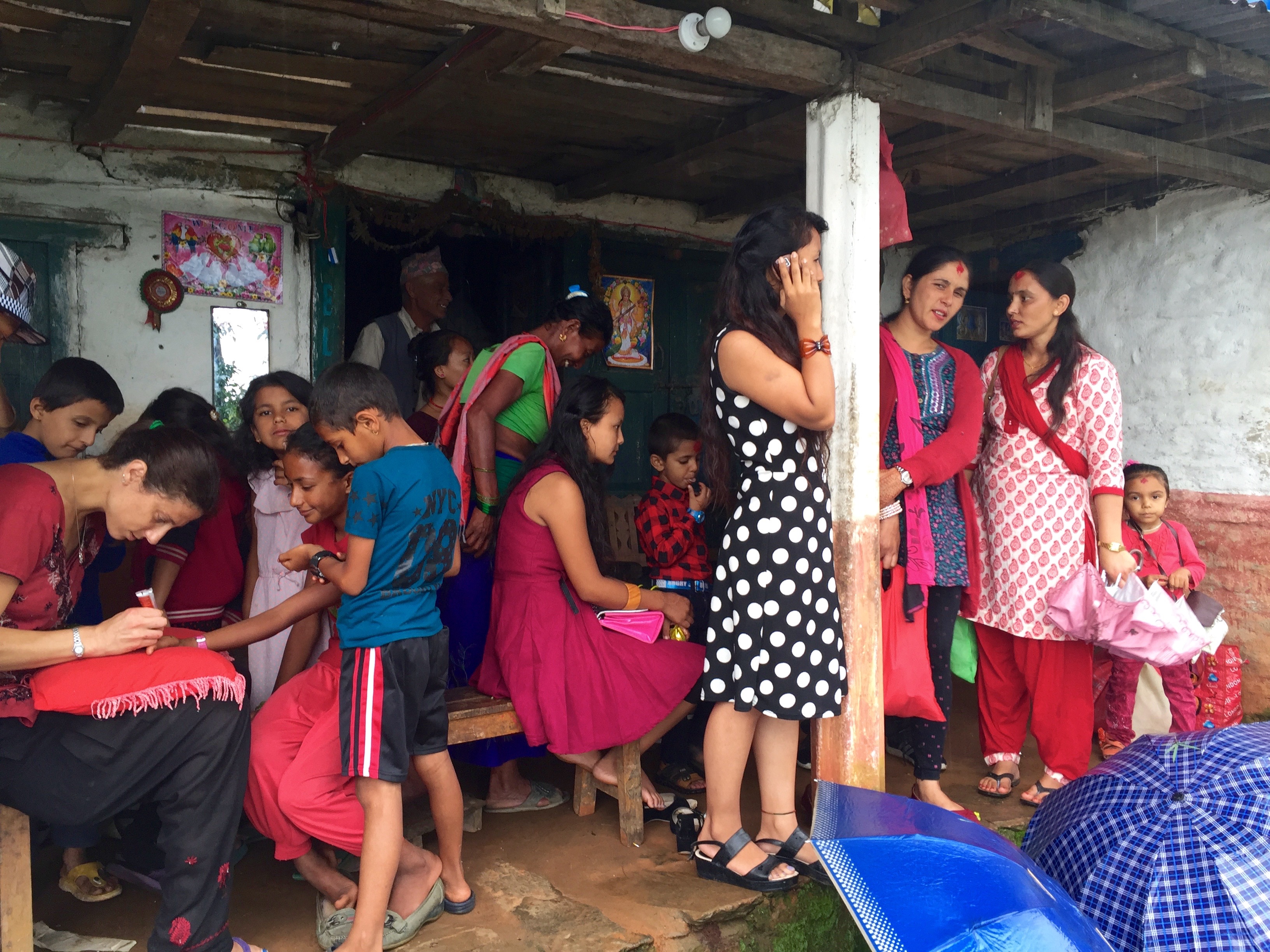
Besides that, rice planting season concludes with a wonderful festival where everyone puts on green bangles and paints their hands with henna.  Kaskikot’s premier henna-drawer has become none other than yours truly.  What did you expect with an activity where people let you doodle on them with temporarily-staining plants?!  Govinda’s porch had an hour long wait for these skillz on Saun 1.

IMG_8891 IMG_8905


The best thing about the henna designs is that you start with an idea, and then it becomes a meditation that designs itself, following a pattern in the creases and borders of someone’s palm, incorporating smudges and wayward marks in to unexpected flowers and vines.  You just can’t say before you start exactly what you’re gonna make.

Doodle doodle doodle…

*

 IMG_9420

In the Trenches


This summer I’ve been spending a lot of time sitting at a computer, in our lovely bright office, which is definitely a first.  Last summer, for example I was hiking for 10-12 hours a day in the hot sun visiting earthquake-affected homes in Lamjung, and in general, my time in Nepal is spent covering ground, carrying things, and changing elevations.  Well finally, today was a more typical day in the trenches.

We had scheduled our advocacy meeting with the Health Post committee in Bharat Pokhari.  We’re holding these meetings to push for local funding like we did in Sarangkot.

I woke up at home in Kaskikot.  I had to meet Dilmaya at the bus station in Pokhara at 8:30am, and the local bus from Kaski leaves too late and goes too slow to get me there on time, so I’d cleverly arranged a ride with a neighbor in Kaski who drives a taxi.  However, the road between where he lives and our house is totally washed out with the monsoon, so I woke up at 6am – POINTS FOR ME, THAT’S THE MIDDLE OF THE NIGHT IN MY WORLD – and walked 20 minutes to the other side of the muddy section to meet him at 7:05.  Naturally, I discovered at this point that we were still waiting for another passenger, an ill lady slowly making her way to us.  While I got nervous and then annoyed that I’d be late, there wasn’t much to do.  This is why you don’t stay in your village instead of in Pokhara the night before catching an 8:30am bus for an important meeting.

Naturally, we made it to the bus station on time despite all signs to the contrary.  Dilmaya and I took 1.5 hr very, very bumpy ride out to Bharat Pokhari, cutting over some intervening foothills.

After another 20 minute walk up the road to the Health Post, and we had arrived by 10am for a 12:00 meeting.  No sweat – two walks and two vehicles later, all before breakfast.  Aamod came bouncing up the road on his motorbike and, with plenty of time to pass before the meeting, we went in to visit Bharat Pokhari’s weekly clinic.

IMG_8999

Bharat Pokhari was handed over just this past spring, which means that its protocols are up to date, subject only to how well they’re being observed.  But funding wise, things are in limbo.  The clinical team has been showing up and working without pay, trusting that between us and their local government, someone is going to come through.  In all transparency, we signed a funding agreement with Bharat Pokhari before we launched the clinic, as we do everywhere.  But seeing these through is challenging in every single place, so realistically, we’re in basically in negotiation with Bharat Pokhari’s leaders about it anyway.

We’ve already met with both the Health Post Chairman, a young and ambitious Public Health graduate, and the Village Chairman, who is older and more traditional; these two hold the main influence, technically speaking, over how funds get budgeted.  We’ve briefed both of them extensively over coffee in Pokhara.  The Health Post Chair was very much down with the idea of piloting a new health service in Nepal’s rural system, and as a public health specialist was easily oriented to the larger vision about what this would mean; but, like many Health Post leaders, he’s an appointed transplant who will be moved to a new location within the year.  By contrast, the Village Chairman is very, very local, with social clout and a more complex set of competing interests.  Any meeting is functionally meaningless without both of them present.

At 12, nobody had arrived yet to meet us.  We used the time to mill about Bharat Pokhari’s Health Post, an impressive, hefty hospital-like building constructed with foreign funds, in which many rooms appear to be empty or minimally used.  At 1, we were still waiting in a spacious meeting room with one very talkative local leader who discussed with us, at length, how difficult it is to get everyone together for a meeting.  We agreed.

Around 1:30, this wonderful looking man came in, and it turns out that in addition to being on the Bharat Pokhari government committee, he is our dental technician’s 86 year old grandfather – a magnificently venerable age for these parts.

IMG_9013 (1)

1:45pm, we were still waiting for the Village Chairman, who, in theory, had called the meeting.  But then he had apparently been summoned urgently to the municipality in Pokhara.

By 2pm we decided to go for tea with anyone who would come with us, and there we finally got in to a vibrant conversation with some of the health post staff, local leaders, and passers-by about the permanence of the dental clinic.  It dawned on me as we talked “informally” over tea that we weren’t even ready for a meeting of 10 or 15 social leaders in Bharat Pokhari, and that in Sarankgot we were lucky with how quickly things got organized.  Here, we’re still lobbying individual people.  It was probably advantageous that we ended up in a public space, chatting in a tea shop with locals sitting around about how the village should be using its public funds.

IMG_9017

Bharat Pokhari Health Post

We returned to the towering Health Post with our precarious baby clinic inside.  It sits across from a similarly built community center that the same international agency is building; when I asked for what, I was told, “community things.”  I sighed and, knowing it was a bit too simplistic – but nevertheless, true at this moment – said to Dilmaya, “It’s so easy to build something one time and go, isn’t it?”

By 3:15 we decided we had made the most of our day, and climbed on to bikes to head home: me with Aamod, and Dilmaya with the Health Post Chairman, because, we’re in Nepal.

At 3:30, as we were literally rolling down to the road, the Village Chairman showed up.

We got off the bikes.

All of the positive talk from our earlier coffee with the Village Chairman seemed to have dissipated. Tired, we began again at the beginning, making the same case we’d made just a week ago.  We’re realizing that’s just part of how it works.

Finally, around 4pm, Aamod and I left Bharat Pokhari on his motorbike, which is 9 years old and regularly stalls out.

“Should we take the short road?” he asked.  I know this is a trick question that translates to, “I am planning to take this steeper, bumpier short cut, and I am letting you know that we will not be going the other way, which is only for sissies.”

The bike stalls out.

“Well, why take the long road if there’s a short road?” I oblige. “I don’t really know any of these roads.”  Actually, those things are all true.

The bike starts.  We take the short road.

About ten jostling minutes down the short road, just as we are yelling loudly over the bike about how our day of meeting-hazing in Bharat Pokhari was a necessary step in which we feel we put the time to good use, a bike comes up in the other direction.

“The road is closed below!” says the Guy Going Up the Hill.

“What do you mean ‘closed?'” Aamod asks.

“No road,” the Guy Going Up the Hill explains.

I mentally sigh; now we will have to ride 10 minutes back up the bumpy short road, and then down the long road.  We still have a coffee scheduled at 5:30pm with the Village Chairman from Lwang Ghalel.

“I think we should see it,” Aamod says.  “I mean, how closed can it be? I came up this road this morning.”  I know this is a trick question that means, “I don’t want the road to be closed, so I’m going to ignore the obvious and keep going.”

“Well, if you came up the road this morning, what does ‘no road,’ really mean, anyway?” I oblige.

We pass another bike coming in the opposite direction.

“THERE’S NO ROAD BELOOOOOOOOOOOoooooooooooo…w!” he zooms by.

“Maybe there’s no road,” I suggest traitorously.

“Let’s just see,” Aamod replies.

We pull up to some construction workers – the ones turning around all the bikes.  Presumably the same people responsible for the missing road.

“No road below!” the construction workers inform us.

“None at all?” Aamod asks, because, we should be sure.  “Can a bike cross?”

“Absolutely nothing,” they confirm.  Finally.

“Let’s just have a look,” Aamod says.

“I think it’s going to be closed,” I confess.  “Maybe we should just turn around here, we’re wasting time.”

“How closed can it be?” Aamod asks.

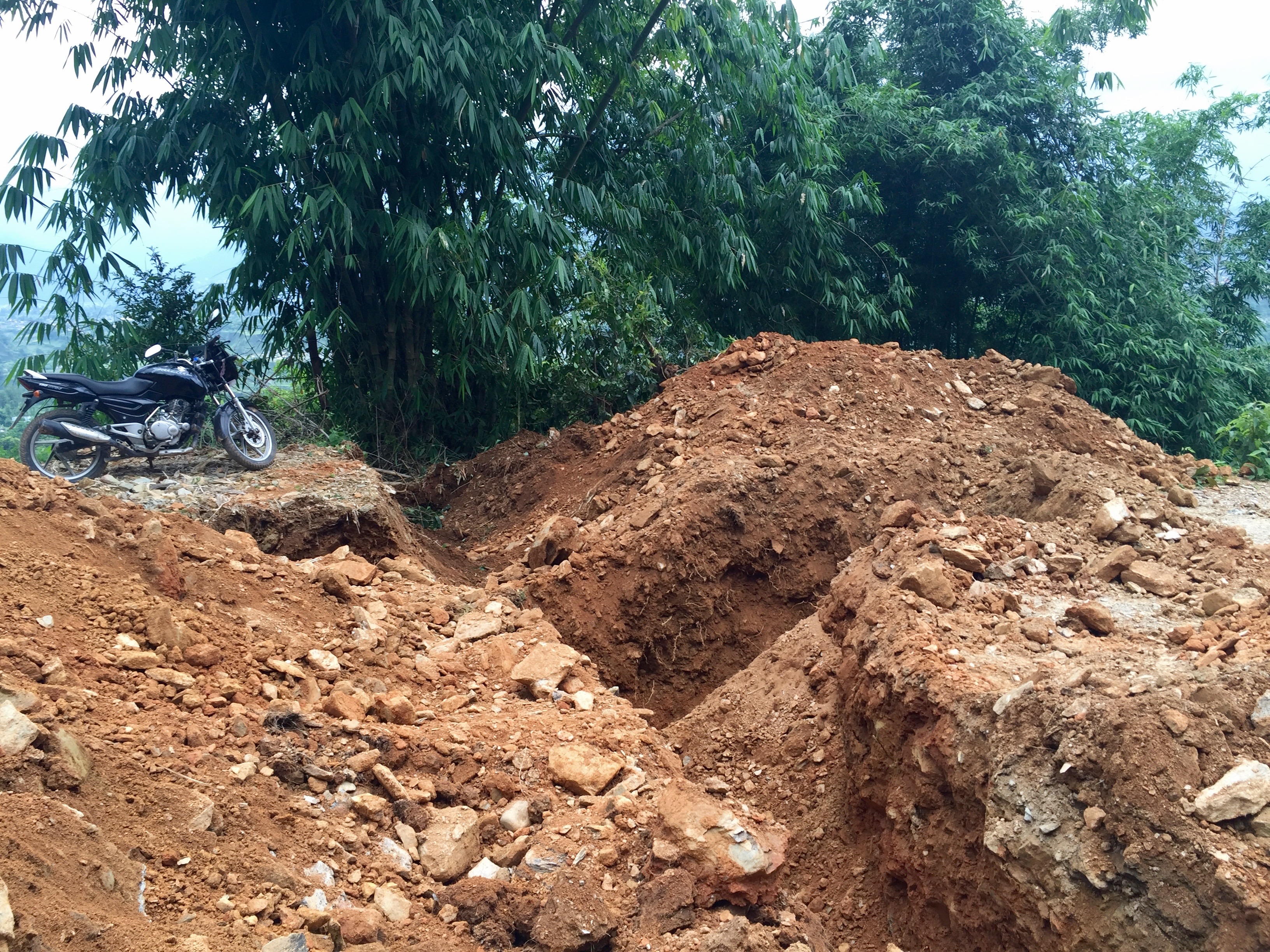
So it takes us about 30 minutes to drop Aamod’s extremely heavy bike down this seven foot trench, maybe cut for concrete piping, roll it across the uneven loose dirt and rocks at the bottom, and get it back up the other side.  I now have a lot of dirt and exhaust up my nose.  But, we have won the road.

“That was definitely faster than going back up to the long road,” Aamod points out as we set off again.  I know this is code for “I never suggested we wouldn’t get drenched in sweat and that rolling this five ton bike out of a ditch wouldn’t be part of the process, and it was still worth it because we have won the road.”  He calculates the amount of time each stage of the going up would have wasted, and, indeed the total is longer than the half hour we have spent in the trench.

“Yes, that’s true,” I agree, mildly confused about my final evaluation of having won the road.  “It would have taken way too much time to go back up.”

“You know, the thing is in Bharat Pokhari,” Aamod shouts over the wind, “is that if they just give us a fixed challenge, we can solve it.  But if the challenge keeps changing, it’s gonna be really hard.”

He’s definitely right about that, and we discuss it as we zoom down the short road.  If there’s a real and defined obstacle to overcome to sustain our clinic, we can strategize through it, but if the landscape keeps changing and people aren’t really working with us, we’re pretty much doomed.

“What’s wrong with these people?”

“Yeah,” I shout over the wind.  Politics in Nepal is a whole special level of screwed up, I think.

“They just dig a trench across the road and leave it like that.  They at least need to lay a walkway across before they go.”

“Oh that,” I call out.  “I thought you meant—”

And then my sentence trails off.  The short road presents us with:

Trench Number Two

Trench Number Two

Now we’re between two trenches.

“Well, we have no choice but to cut across this one too,” Aamod states.

“That does seem to be the case,” I agree with happiness and enthusiasm.  It’s either this one, or the first one again.

A bike comes up the road on the other side of the trench and, peering over the opposite side, turns around in dismay. We, however, roll Aamod’s heavy bike in to the trench – for a second time – and lay stones, gun the motor, push the thing from behind, the hot exhaust huffing hot on to our ankles.  I eat a lot more dirt.  I am not very effective at this, so Aamod is doing most of the work, although I get exertion points for lifting a heavy bike at the wrong time and pushing it in the wrong direction, and also for laying stones behind a cloud of exhaust.  And then we are through.

We set off again.

“It’s cause you said that thing about the obstacles,” I offer.

“We should stop for a snack,” Aamod says.

As we finally get near town, we stop for pakora and knockoff Redbull.  We deserve it.  I rinse the dust out of my mouth and wash my arms and shins.  Our 5:30 meeting!  Aamod calls the Lwang Ghalel Chairman.

No answer.

It starts to rain.

We sit for forty five minutes, talking strategy, thinking about new clinic launches, considering how to adjust the initial setup and benchmarks along the way, based on what we’re rapidly learning now.  We still have three other post-handover sites and four mid-term sites to manage.

Aamod calls the Lwang Ghalel Chairman again.  No answer.

More rain.

“Can we call it a day?”

“He’s not coming.”  That was a day all right.

We get back on the bike.  It stalls out.  We restart it.  Aamod drops me off in Pokhara.

Good night.

*


Getting Schooled in Vendor Outreach


The only question I get asked more often than if we need dentists (answer: YES! as mentors and teachers for Nepali technicians) is if we need donations of toothbrushes or paste. While that’s a conservative yes, because we provide a limited number of those supplies to schools, most of the time, the answer is, not really, unless they are donations of something purchasable in Nepal. Because, if you think about it for a second, it’s pretty obvious that going to some village and handing out a bunch of disposable hygiene products once might make for good photos, but it doesn’t do much for anyone who needs to use these items every day forever.

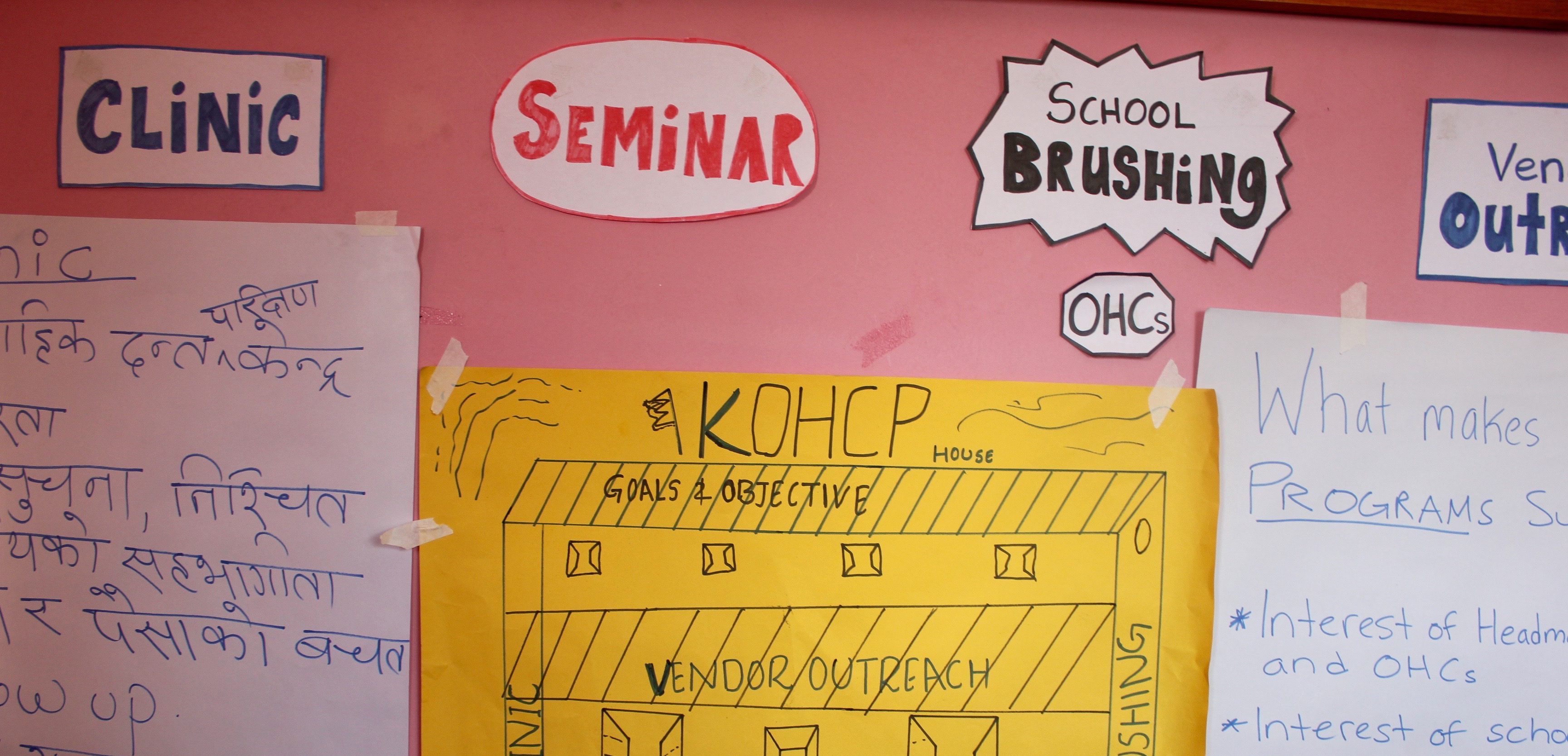
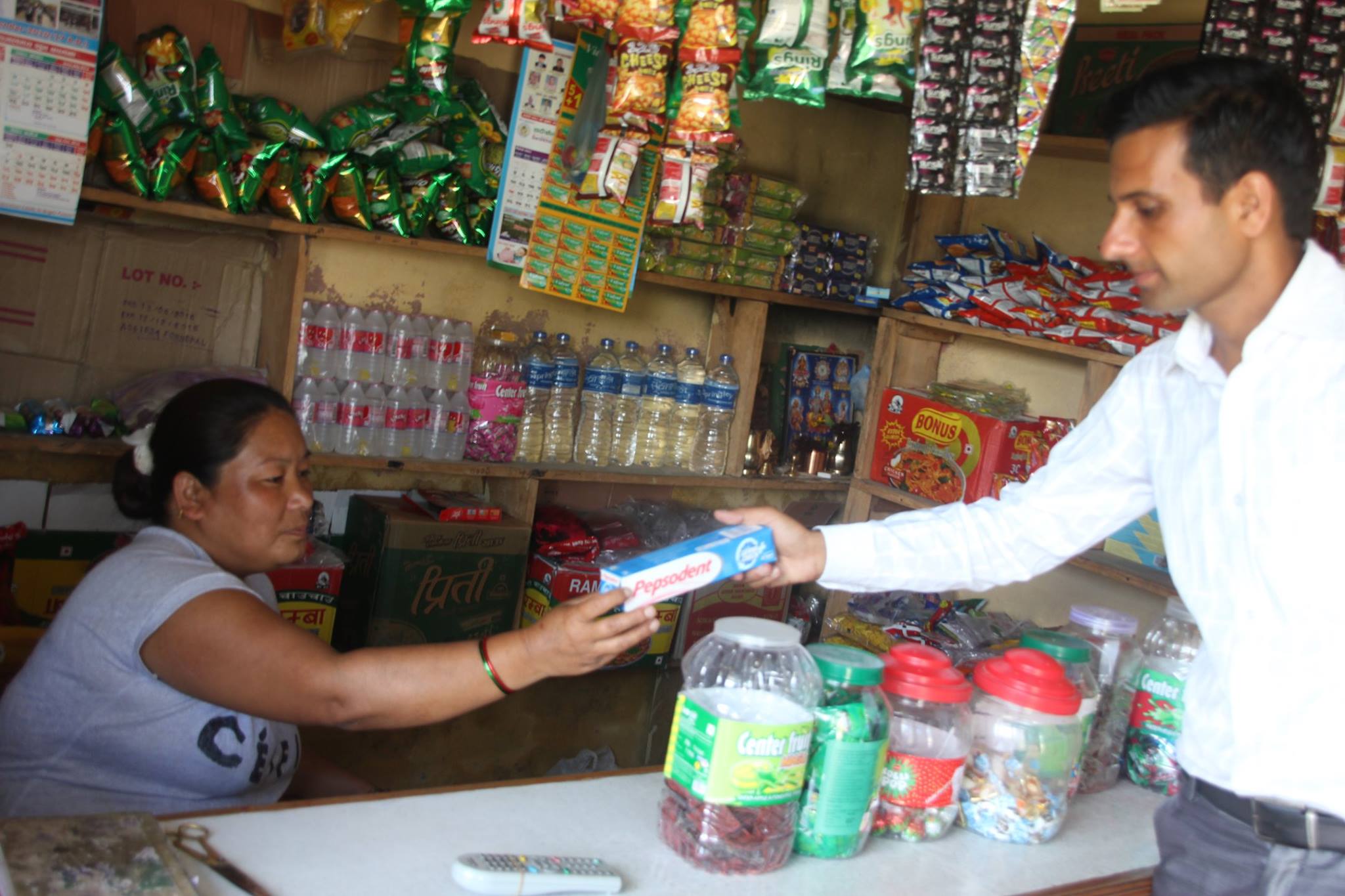
Instead, one of the four core activities in JOHC is called Vendor Outreach, where we work with village shopkeepers to make sure that dental hygiene products are locally available and affordable, the same way sugar, salt, incense, and laundry soap are.

In the past, vendor outreach has mainly consisted of having local JOHC teams – i.e. residents – visit the shops in their villages, look at products, talk to vendors about fluoridated toothpaste, and sometimes put up posters or stickers that help people identify toothpaste with fluoride. But this summer we’re working on stepping it up. The main reason is that schools need supplies to run their school brushing programs. For that, we provide brushes and paste on a declining schedule, but by the end of two years, either students or the schools have to finance $1 per student per year to run their brushing programs permanently. Even though this is extremely inexpensive, our experience has been that when supplies run out, often schools just don’t replace them. If we want schools to buy brushes and paste, they need to be extremely easy to get.

Therefore, in June, we started Vendor Outreach 2.0 by looking for the best-priced wholesale distributors in Pokhara, with the idea of setting up a direct link between village shopkeepers and the best possible deal on dental care products. But when we approached our first shopkeeper with this idea he told us he already buys his supplies from a wholesale truck that comes through his village on a regular schedule.

P1000170 copyOk, we said, could we get the truck to go to the best-priced wholesale places? We showed the vendor the prices. The vendor showed them to his truck guy. The truck guy offered a better rate.

So that was over.

Onward, then, to Salyan, one of our harder-to-access regions, where Gaurab was organizing a vendor outreach program for the following week. He had a list of about 25 shopkeepers and their phone numbers. It occurred to us that we should invite school teachers also, since the point was for the teachers who run the brushing programs to connect with the vendors who supply the products they need. This stroke of insight made us feel brilliant. Actually, that was a really good idea.

Before the Gaurab’s trip out to Salyan for Vendor Outreach 2.0, I suggested that he print out little slips of paper with the location and contact info of the best wholesalers we’d found in Pokhara. That way we’d make sure all Salyan’s shopkeepers had this info in a nice tidy fashion. For the best deal.

“So how’d it go?” I asked Gaurab back in the office on Tuesday.

“Great,” he says. “We had over 20 vendors and a lot of the teachers running their school brushing programs came too. We made visits to a number of shops, and I brought the poster with the fluoridated toothpaste packages.”

Vendor Outreach in Salyan

“Awesome, did you give out the contact info for the wholesalers?”

“Yes but…”

“What?”

“I mean, they said they already get brushes and paste at that rate from their wholesale trucks.”

“Are you serious?”

“They said they can totally visit the wholesalers we found if they happen to come to Pokhara,” he consoled me.

“So basically, we’ve spent the whole summer on this, and what you’re saying is…village shopkeepers already get brushes and paste at wholesale prices from trucks that deliver right to them.”

“Yes.”

“All these schools already have vendors down the street with access to these products at the cheapest prices we can find.”

“Yes.”

“…So Vendor Outreach is basically just…getting the teachers up the street together with vendors, and convincing them to purchase supplies down the street.”

“Yes.”

“Like all we have to do is get everyone together and talk about it.  Maybe assign a specific shop to each school.”

“Pretty much,” Dilmaya chimes in.

“Guys,” I said.

“I mean, they can use the wholesalers we found if they come to Pokhara,” Gaurab reminded me comfortingly.

“Why is everyone going around handing out free dental supplies?” I demanded to nobody.

Back to the drawing board.

We find this over and over. Our complicated ideas for fixing things are 99% irrelevant, with a critical 1% of something that is missing: information, a tool, a little encouragement, some social integration, a familiarizing element or formality. Vendor outreach will continue to involve oral health education for shopkeepers, because most people are not aware of the importance of fluoridated toothpaste in preventative care. But then it’s mostly a matter of building relationships between vendors and purchasers–especially between schools and specific local shops to source the supplies for their very affordable brushing programs.

In other words, we need tea parties more than we need supply chains, more than we need products, more than we need anything that’s not already there.

In conclusion, we’ll enthusiastically be taking donations of items such as art supplies for oral health games in schools, certificates of achievement for Oral Health Coordinators, funds we can spend on having local tailors sew brush holders, holding workshops, lobbying local leaders, creating teaching materials; and actually, if anyone wants to offer rides to our field officers out to Sindure and Rupakot and Salyan so they don’t have to spend so many hours walking or stuck on buses, that’d be great.  Also, snacks.  Help us out – there are many things we need to do our part well, and lots of opportunities to support communities in Nepal.

As far as brushes and paste though, I think local shopkeepers figured this out quite some time ago.  Duh.

*

Vendor Outreach in Sardikhola with technician Megnath Adhikari

Vendor Outreach in Sardikhola with technician Megnath Adhikari

Hopeful in Sarangkot


Yesterday we met with the Sarangkot Health Post Chairman and a committee of local leaders.  Our goal is to advocate for Sarangkot to invest government funding in their dental clinic, our longest-running one.  This is part of a larger strategy of bringing rural dentistry into Nepal’s nation-wide Health Post network, which we’re only really beginning to dive in to deeply now that we’ve sorted out the clinic model itself.

A normal meeting in Nepal will begin, at best, 30 to 60 minutes after the stated starting time.  In villages, it is not unusual for this to be doubled: our Oral Health Coordinator trainings, which involve teachers from all over the village, frequently start at least two hours late.  It’s just a given, and if you’re Nepali you are pretty down with the long waiting period prior to your carefully planned program.  If you’re me, you basically never get used to the feeling of dread that nobody has shown up, all is lost, nobody cares about anything, and you were way overly optimistic to be in this line of work anyway.  Inevitably, just when you’ve chewed your nails down as far as they will go, people show up and casually take their seats.

Amazingly, however, when the four of us arrived at the Sarangkot Health Post on two motorbikes at 1:25pm for a 1:30pm meeting, about 10 local leaders were seated and waiting patiently for us in the chairman’s office.  I think I’ve seen that happen…maybe never.

It’s important to know that Nepal has not held elections at the local level since the early 2000’s. Instead of an elected local government, most villages have a handful of people – probably 95% men – who are socially (or self) appointed to make decisions, plus a village chairman and a Health Post chairman, who are both appointed by the district government.  These village Committees have power over spending but have no direct obligation to represent the needs or desires of local residents.  For us, that means convincing a committee of influential people and two all-powerful officials that the dental clinic is not only worthwhile, but should be a spending priority. If there’s a code to crack on getting village residents to apply pressure, we haven’t found it yet.

20160714_152552

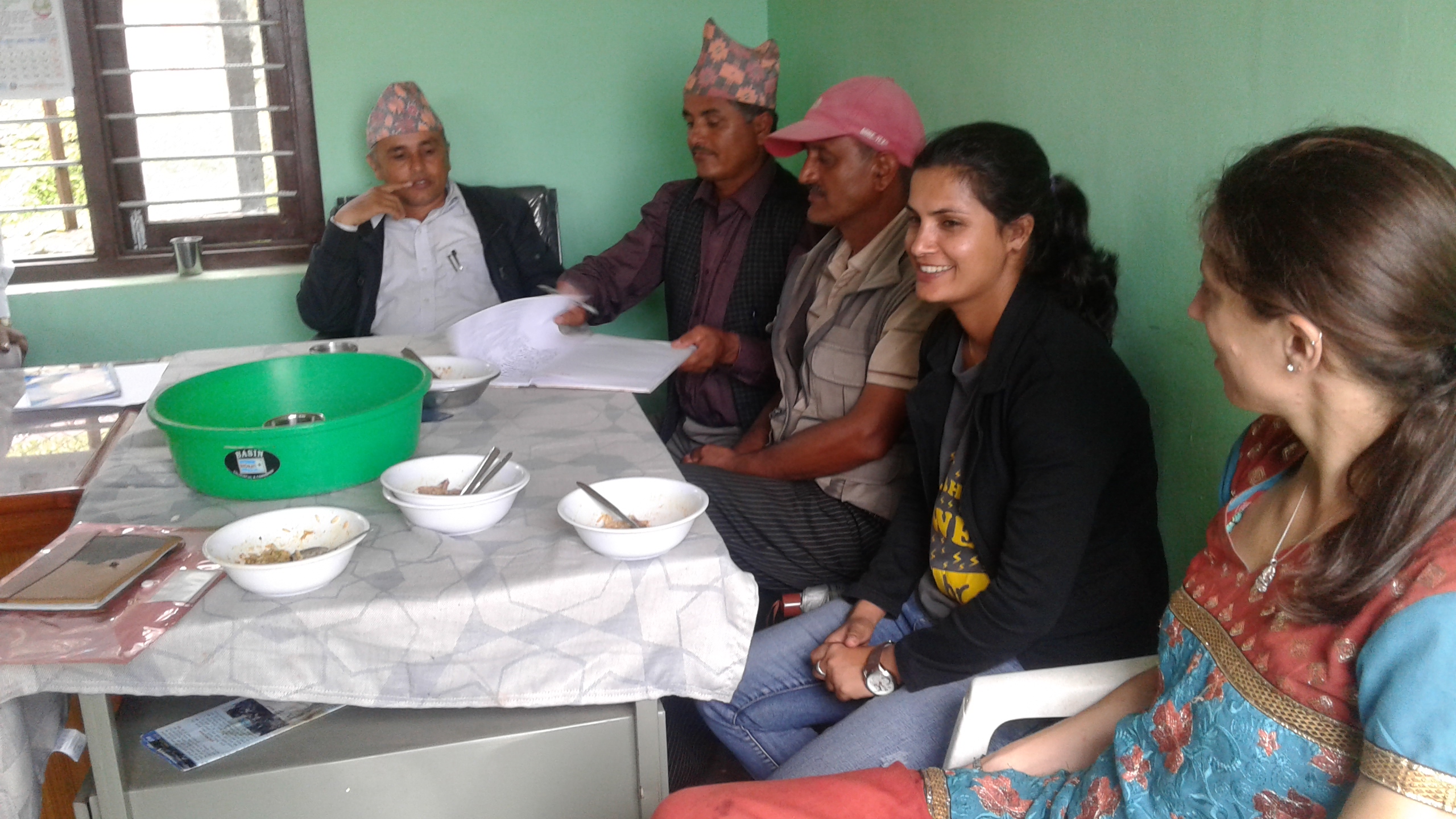
Our meeting with Sarangkot went amazingly.  Aamod and I had invited the Health Post chairman for coffee a few days earlier and he received us with some expected concerns and doubts, but with an open mind.  A few days later, we found the committee gathered in his office to be genuinely interested in talking with us and quick to acknowledge that, notwithstanding the flush torrent of external funds in to Nepal, any new health service for rural people is not truly stable unless it can be incorporated in to the government health care system.  Our proposal was that we would invest $1000 in new supplies and training for the Sarangkot clinic, upgrading it to our current infection control standards, if the government agreed to pay the salaries of the technician and assistant.

They said yes.

Not to the amount we’d hoped for – $1000 per year – but to a lesser amount that is reasonable (our original hope was a serious long shot, given that the district and central levels do not recognize oral health as a funding priority, and they finance village budgets).  After a lot of discussion, we came to a decision that was duly recorded in the meeting minute book and signed by everyone present.  This involves a commitment for the local Committee to include oral health in their requested budget for the next fiscal year starting in July 2017 (which gets submitted in November), and for the intervening year between this July and next, to submit a proposal to the municipality for an emergency amount that will help bridge the gap.  They are also preparing to move the dental clinic in to another room that is bigger, cleaner and more secure.

There are still many unknowns – meeting minutes definitely aren’t action, and they definitely aren’t funding.  Some critical steps are up to people higher up, where we are also moving in to advocacy.  It will be important for us to monitor and collaborate in this process, following up on the agreed timeline, offering support to Sarangkot’s funding proposals.  There are lots of places where things could fall through.  BUT, we got through an important step one more successfully than any of us expected, which is that everyone appears to have agreed it’s worth trying.

In the short term, the new room is to be ready in two weeks.  We supplied paint and set some other requirements: secure doors and windows, removal of storage that is not related to the dental clinic.  After that, we will provide various supplies and training in stages, at pace with the progress of Sarangkot’s investment in the people.

Good start.  Now, on to Bharat Pokhari!

*

IMG_7579

Dipendra and a vigilant mom at the Sarangkot Clinic in 2016.