Over the Mountain and Up to the Clinic


Yesterday morning all 30 of us piled in to a bus to head out to our first day of screening in Puranchaur. I kept being worried that someone on our field staff would bail out, get a flat tire, have a sick buffalo, or need to attend a last-minute puja at an uncle’s house. But everyone made it on to the bus. And it took very little time before bus songs began, complete with Live Traditional Dance By Dental Technician.

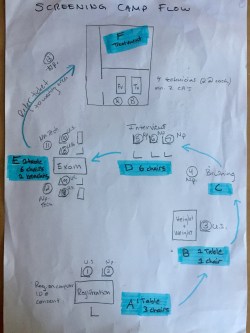
Thank goodness I have 12 years of Race to the Rock under my belt. I knew to have a map of our planned camp flow, and I hoped that, as we’d been assured, the needed chairs and tables were already at the Health Post waiting for us. I’d printed out this camp-layout-2high-tech map for everyone in their welcome packets, and I brought an extra copy of the map with me since I knew most people would leave their welcome packets at the hotel, and this series of actions allowed me to answer most questions in either language from any one of 30+ people with: “Ah. Have a look at the map! Oh that’s okay. I put a copy of the map over there. It will answer all your questions.” Tricky, right?

We are aiming to have 300 mother/child pairs for Madhurima to screen in the next three days. That is a lot of people to mobilize in a rural area where people are busy cutting firewood during this season, and especially when you consider Puranchaur already has weekly dental services available, plus we’ve done outreach in schools already. We’re hoping that will work to our advantage, and that the teachers assigned in each school to run the brushing programs will bring students and mothers. But it’s also exam time, so we knew things would be slow till mid-morning. Once everything was set up, there was that familiar lull…would anything happen?

…Anything?

Then suddenly we looked out and saw this line of primary school kids in their uniforms winding our way over the hills towards us. If this isn’t the cutest thing you’ve seen related to dental care outreach programs in mountainous regions, you have no heart.

I want to explain how we organized this project using a human-rights design, because it seems obvious, but actually, a lot of these details are rarely prioritized. What we care about with JOHC is the development of dignified, sustainable, high-quality health care for rural Nepali people. It was important to me to set up this collaboration in a way that promoted the development of local services, which meant not only studying interventions or issues in the abstract, or providing a transient benefit to participants in a study, but building the manifest capacity of local providers and institutions.

Fortunately, although JOHC is small it is mighty, because we have those providers and are already working with all the schools, the local government, and the local img_4484Health Post in Puranchaur. The involvement of our team leaders and clinic staff in this project was a great development opportunity for them – and therefore the communities they work in – and as long as consciously nurture it, that benefit occurs regardless of the outcome of the research.

We were also able to set up this collaboration as an opportunity to strengthen and test our community relationships. Our preparation involved a great deal of mobilization, largely done by our team leader in Puranchaur, who is himself a local resident. We’ll still be in Puranchaur when the week is over, so we’re accountable and vulnerable to the way in which the program impacts the community and its power structures. Which is as it should be. In short, the project is about Puranchaur and the other villages where our teams work, not about us, and that’s what I care about.

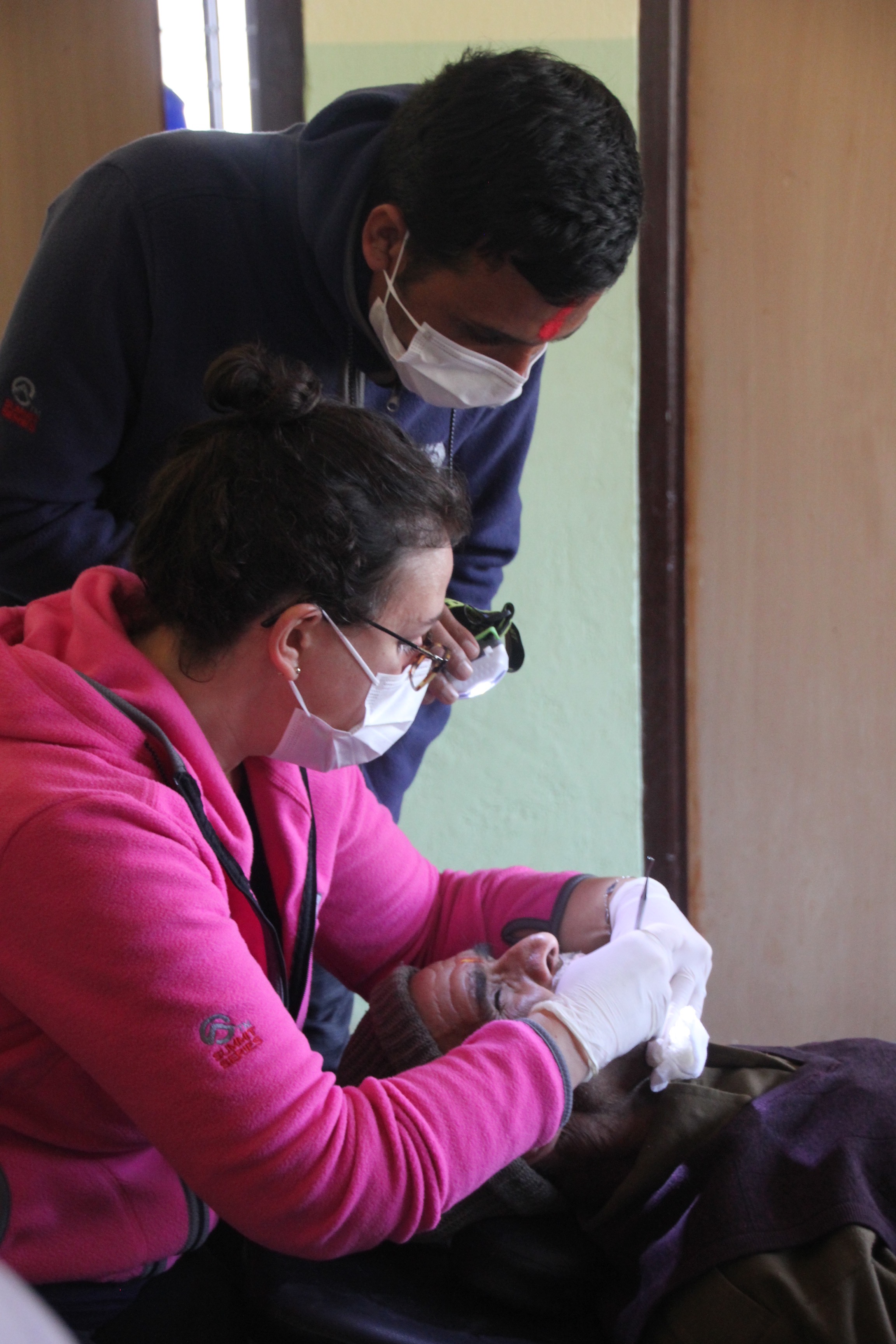
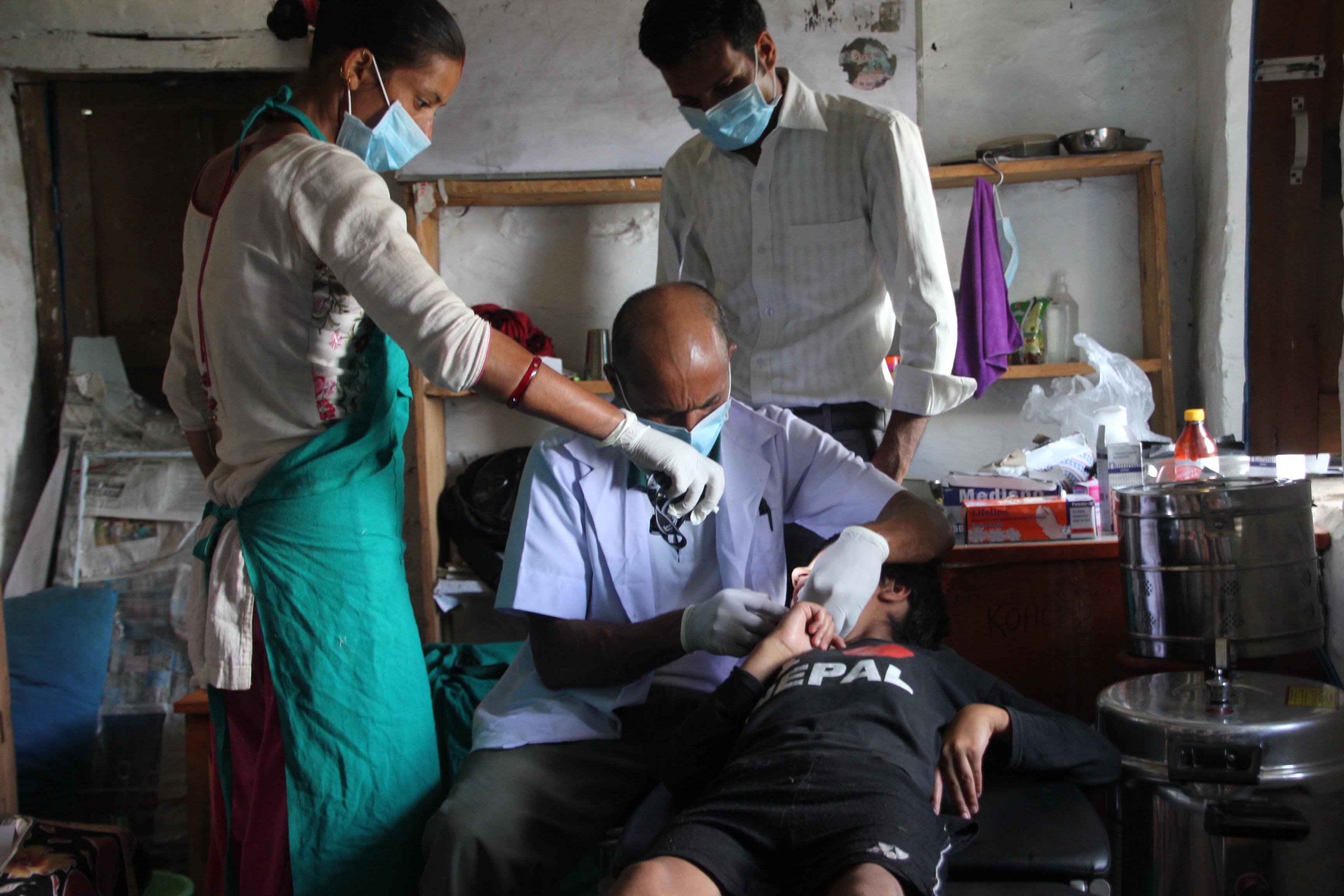
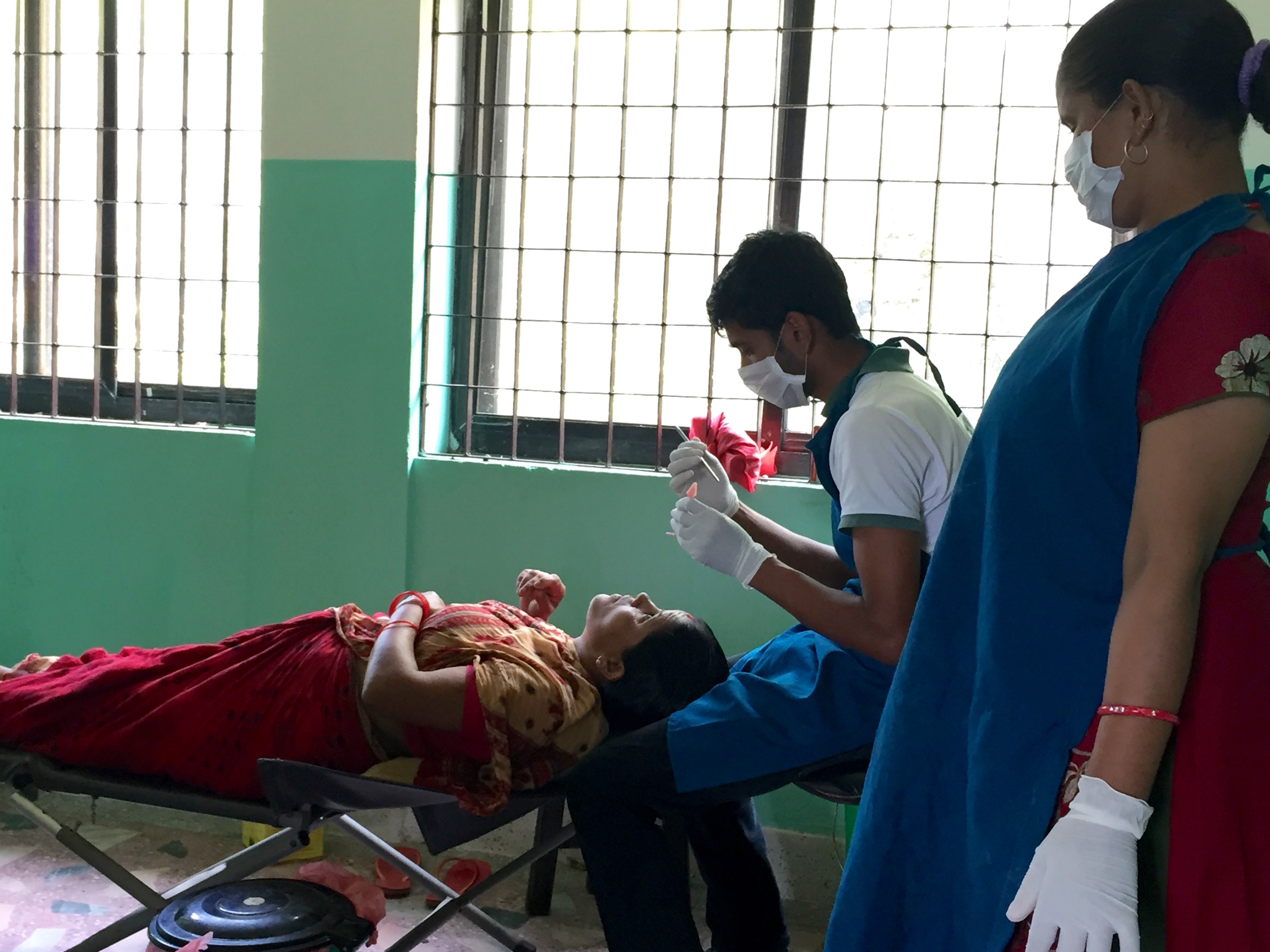
Of course, we still had our breaths held all morning. We had kids, but would we get mothers? But as the day went on, the pace picked up. Things got so packed in the clinic upstairs, where our technicians were providing their usual treatments plus the new fluoride and silver fluoride treatments, that by the second day, we needed to move to a large training hall. On the second day, as word got out, we got even more people – about 140. Bethy and Keri were able to provide intensive oversight to our technicians as they worked; our team leaders were collaborating with the UCal students to conduct surveys, help with dental exams, and provide the same oral health and brushing instruction they do already in their home villages. On the ride home that evening, our team leader Kasev, who had been conducting interviews with mothers, said that many participants referenced the school brushing programs when talking about their health practices.  It was as awesome a day as we’d have dared to hope for.

Tomorrow we are off to Hansapur, a non-working area where we had to apply our best strategies to get the word out.  It’s a great chance to get some anecdotal evaluation of differences between an area where we work, and one where we haven’t yet.  Let’s hope we get as good a response as we did today!

*

This slideshow requires JavaScript.


Welcome Research Teams!


The troops have descended.  I woke up and headed down to the pair of hotels that are housing our mob.  One one side of the street is a group of twelve people from UC Berkley, UCSF, UConn and UP in Cambodia.  The group includes three dentists, a pediatrician, and a gaggle of dental and undergrad students.  Across the road is almost our entire JOHC field staff: 6 technicians, 5 clinic assistants, and 5 team leaders covering nine villages.  I stopped in both hotels to make sure breakfast was happening and then went down to our training hall about 10 minutes before we were scheduled to start.  Naturally, I found that the hotel staff had just begun to clean the hall, and that this process involved spraying copious amounts of air freshner in to a room with large, closed windows.  I requested a halt to the air fresher and opened the windows, which looked pleasantly out over the lake.

It was crazy watching everyone filter in to the training hall.  I know all our technicians pretty well, but the team leaders and clinic assistants I don’t see often besides in photos.  I’m only in Nepal for 4-8 weeks at a time and there’s no way to get to every site during every visit, so sometimes I won’t see field teams for over a year.  And the technicians collaborate with each other at big school programs, but the rest of the field teams don’t get many chances to see each other after their initial training, and even then, usually only in the cohorts they started with.  Then, on the other side of the equation, I’ve spent a lot of time on email and skype with all the people from the universities, but the only person I’d met in person Dr. Keri from UConn.  Now here was everybody, all together, in a very air-freshened room, sitting down in actual chairs.

We immediately encountered a projector obstacle.  Namely, the projector was not working.  Dr. Karen got everyone occupied with an introductory activity while I frantically tried to deal with the projector, which eventually led to a hotel guy running down the street with admirable good-will (he might have been fleeing from the crazy American going WHY? WHY ISNT IT WORKING WHYYYYY?) to have someone swap out a cable, while 40 people were distracted on a scavenger hunt looking for other people who had never had a cavity or who inappropriately eat sweets for breakfast.

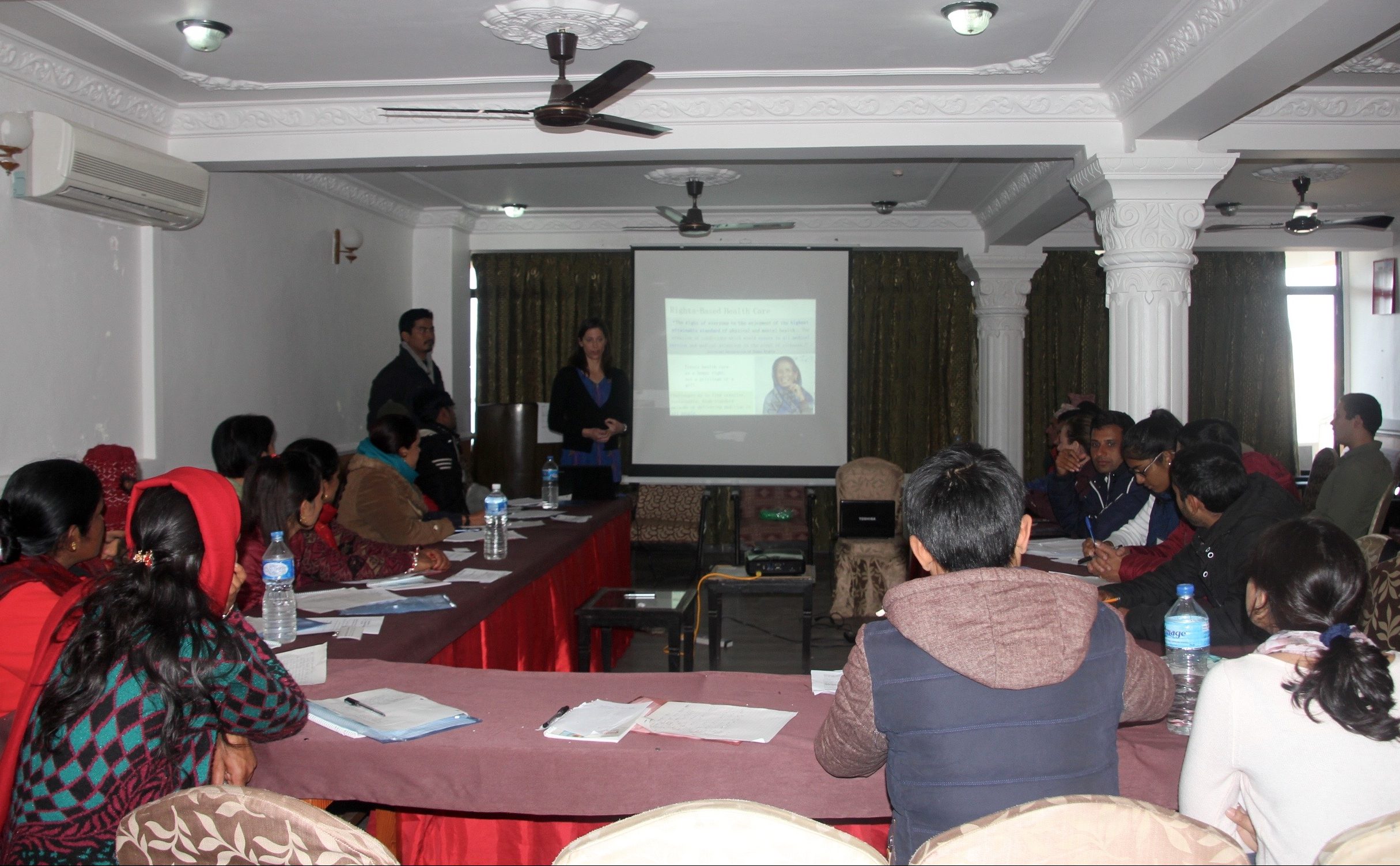
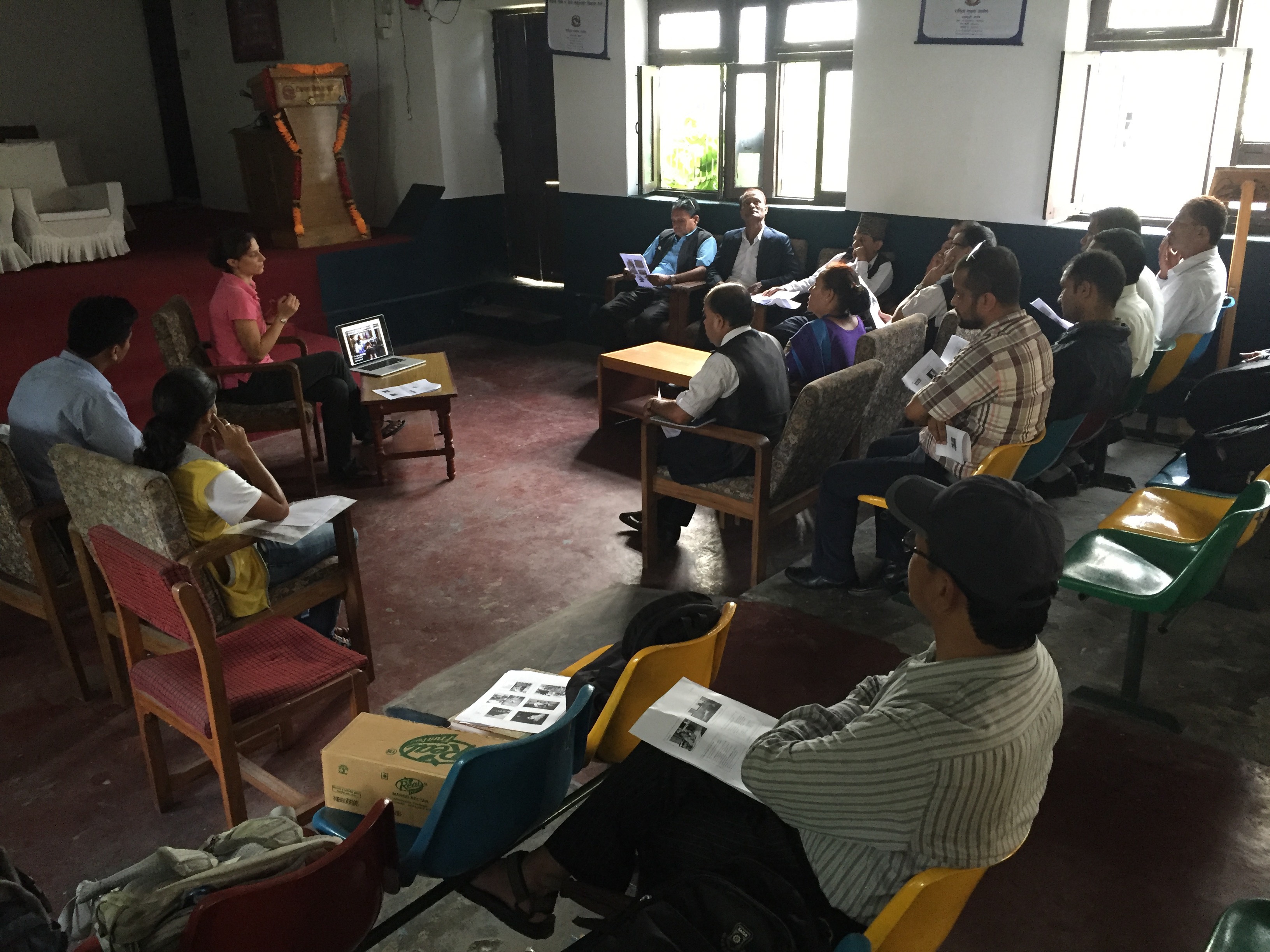
The projector obstacle went through a number of other iterations that I’ll skip; eventually, it worked.  Aamod and I gave a presentation on our JOHC model and human-rights health care for the visiting research teams.  It was really fun to see our field staff get excited when photos of their clinics or programs came up on the screen.  Then Madhurima and Karen presented on the relationship between nutrition and oral health, which was super interesting and will make great material for our teams to incorporate in to their school education programs.

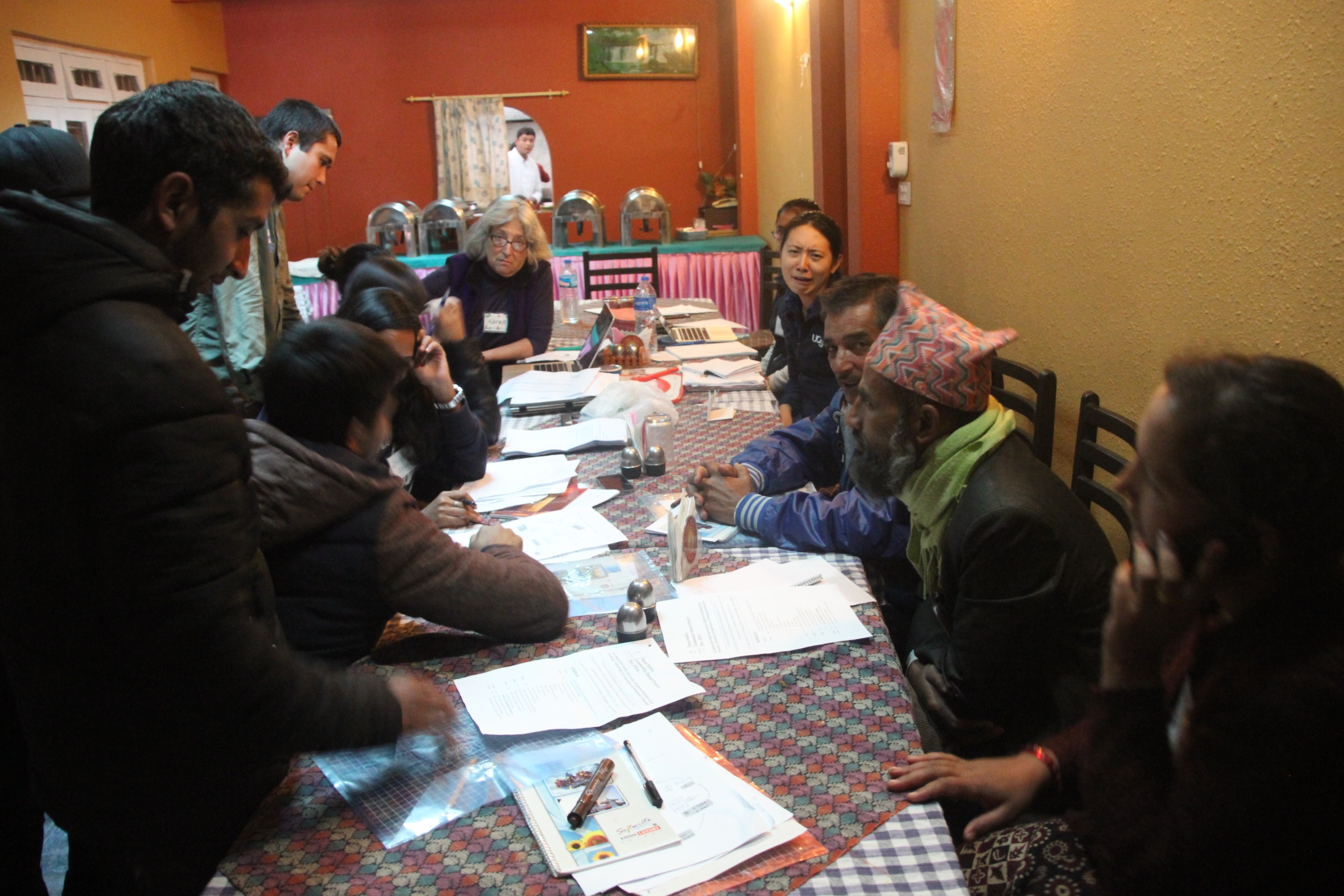
After lunch we split in to two groups.  Our team leaders went with Madhurima and Dr. Karen to learn how to conduct surveys tomorrow.  I am pretty sure from the one photo I took and the minute I spent watching that this involved a lot of everyone trying to figure out what everyone else was saying, which I’m sure will work out just fine.  They’ll be assisting the UCal group with a study of oral health practices and nutrition, and we set up some of the screenings in Puranchaur where we operate, and then in one of our non-working areas, Hansapur, to see if there are any differences between these two areas in oral health knowledge or practices.

img_4287

While that was going on, our technicians and clinic assistants had an amazing training with Dr. Keri, a pediatric dentist at UConn, and Dr. Bethy from New Zealand, who is doing her PhD in Cambodia.  They had an in-depth orientation on pain diagnosis, and then learned techniques for fluoride varnish and silver diamine fluoride, a substance which is used to arrest carries with no invasive techniques or anesthetic.  During the upcoming screenings this week, our technicians will begin using these techniques under supervision, in addition to the fillings and extractions they already do.

So while this was all happening, we encountered a fleece jacket situation.  I realize you feel that there are many reasons to believe we had overcome all components of the fleece jacket situation.  I understand how you feel.  I really do.

But by late afternoon, we still had no jackets.  Also, obviously, there was a random shutdown of travel in the middle of the day in one part of the city, so the Man In Charge of the Fleece Jackets couldn’t get to his printing factory.  Because, these things happen.  They really do.

Therefore, I kept leaving the pain diagnosis training to make calls about fleece jackets.  Finally Muna looked at me and declared, “We will get the fleece jackets.”

Me: “But–”

Muna: “Go upstairs.”

Me: “By–”

Muna: “We will get them.”

Oh Muna, bless your heart.  Back to pain diagnosis.

Muna and Gaurab got the jackets, using the magic and unknown powers of being not me.

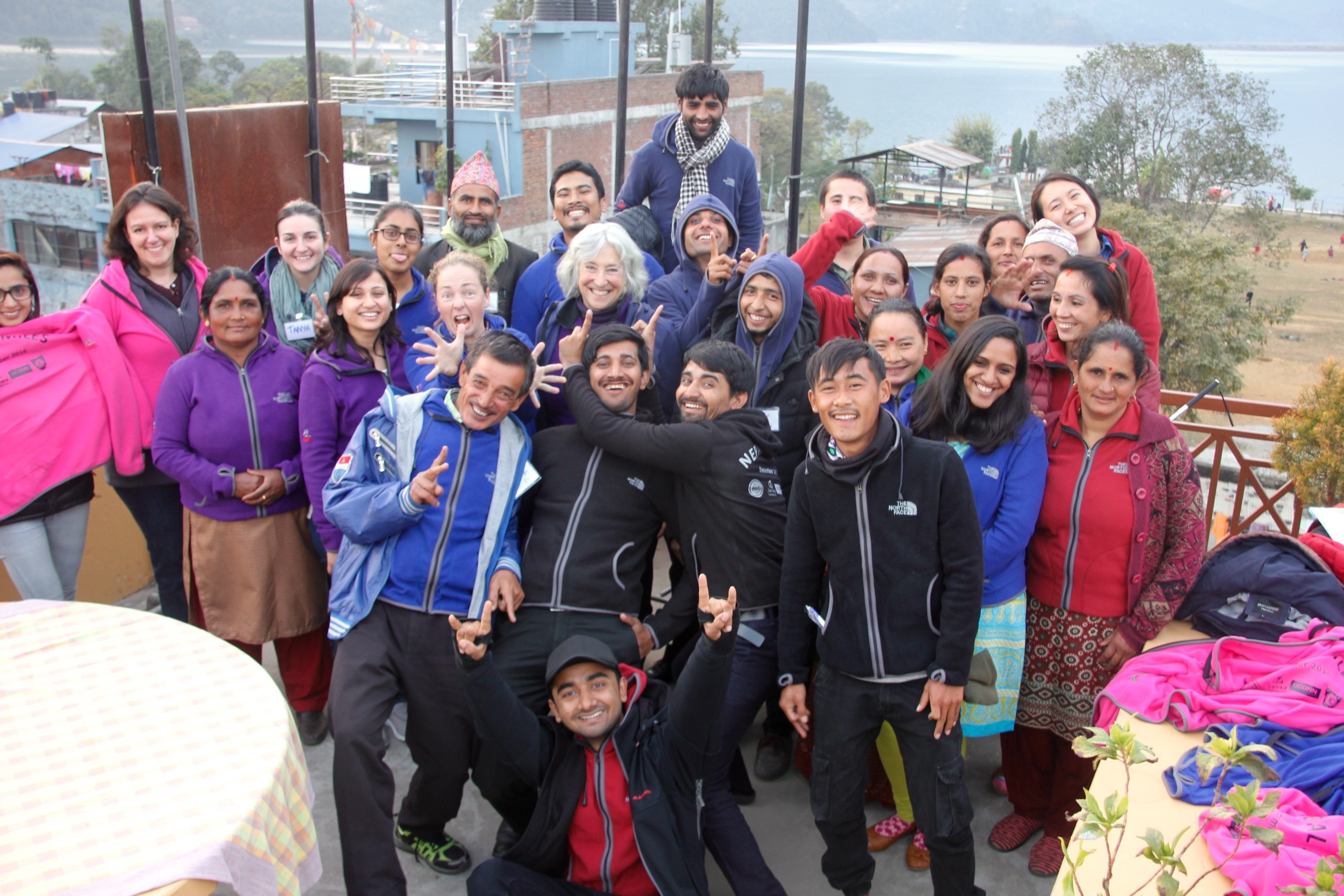
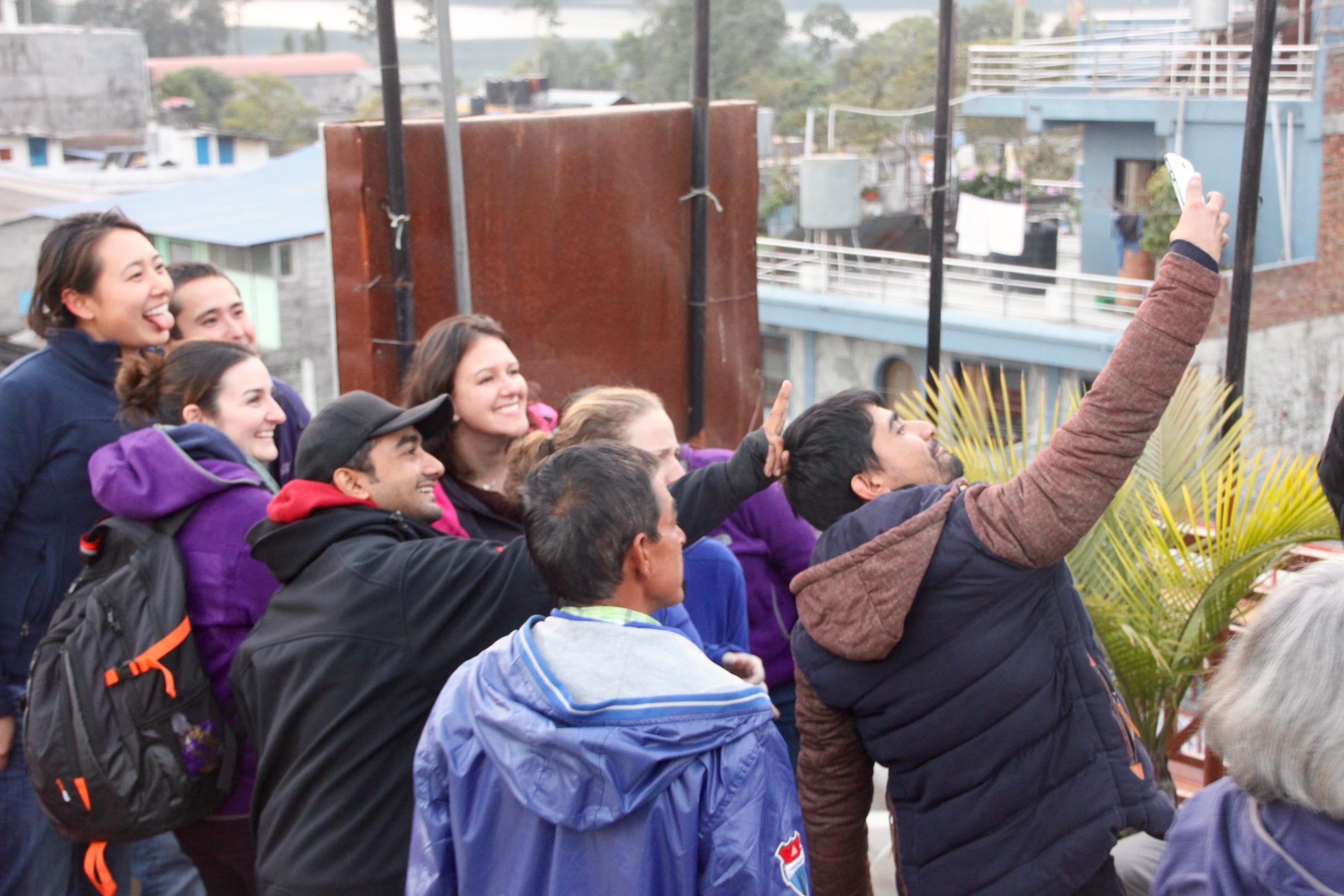
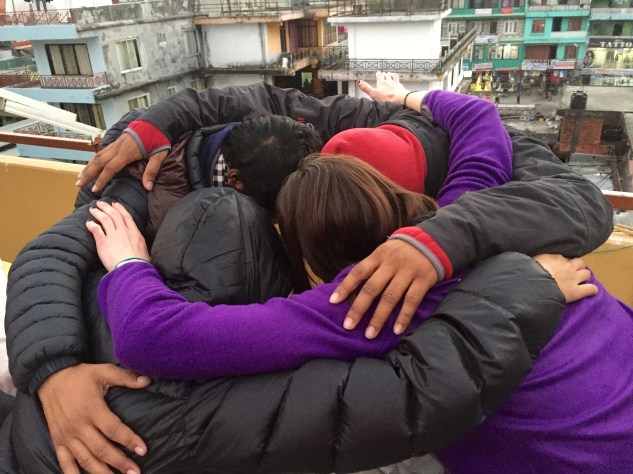
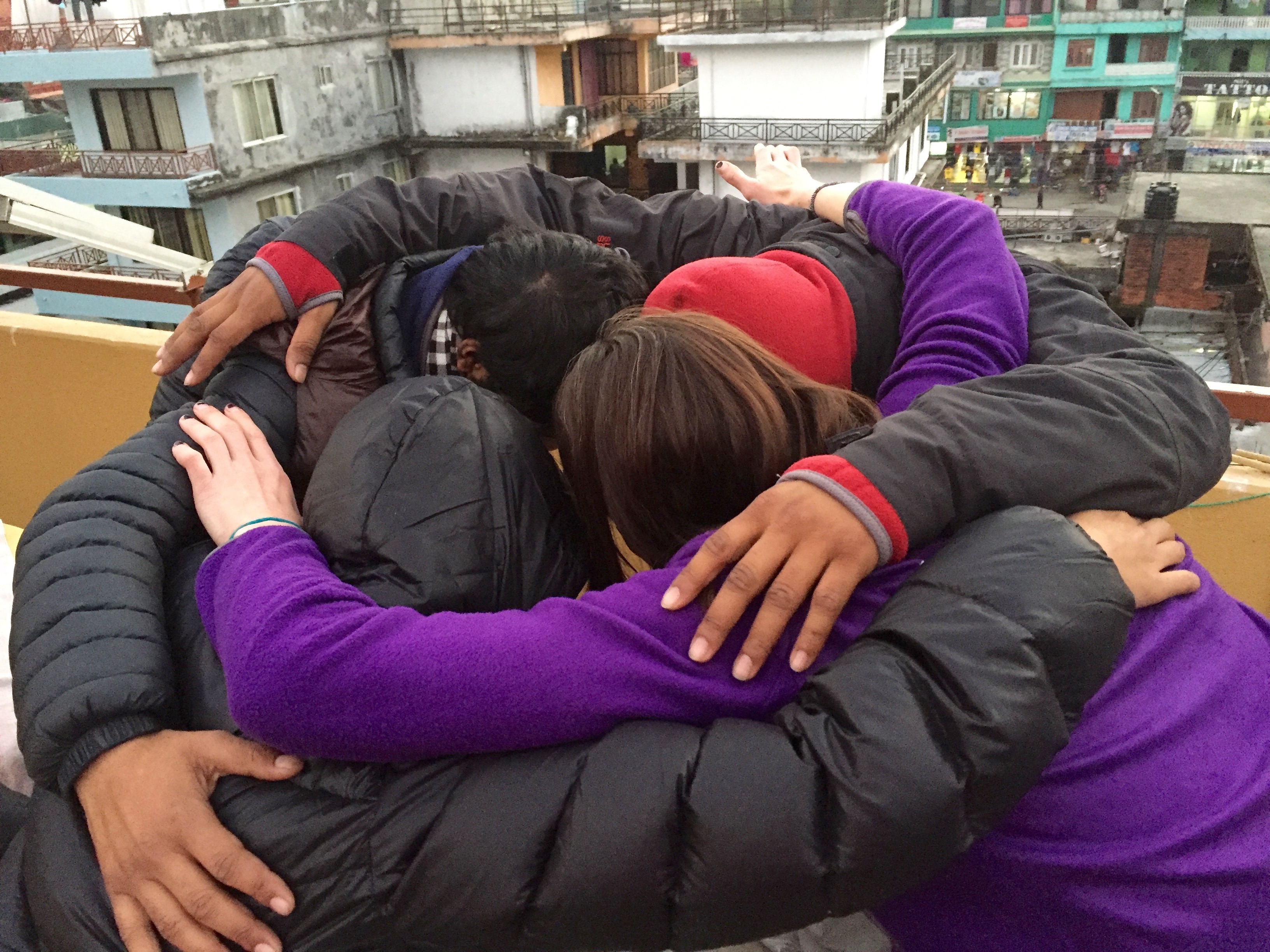
Five PM.  Photo op!  Selfies.  Also staff hug.  We survived training day!


img_4341

img_4348

img_1075

Dance Parties, Sticky Notes and 1000 Goves

SO FAR SO GOOD!  We arrived at the office today to find that the internet wasn’t working, and I discovered that I’d left the house last night with one of my flip flops and one of Prem’s, and there was no time to swap them out today, so I’m still wearing till two different shoes.  Basically, our final preparations for the arrival of our Cal / UConn / UP Research Team included:

1. A beginning of the day de-stressing office dance party.

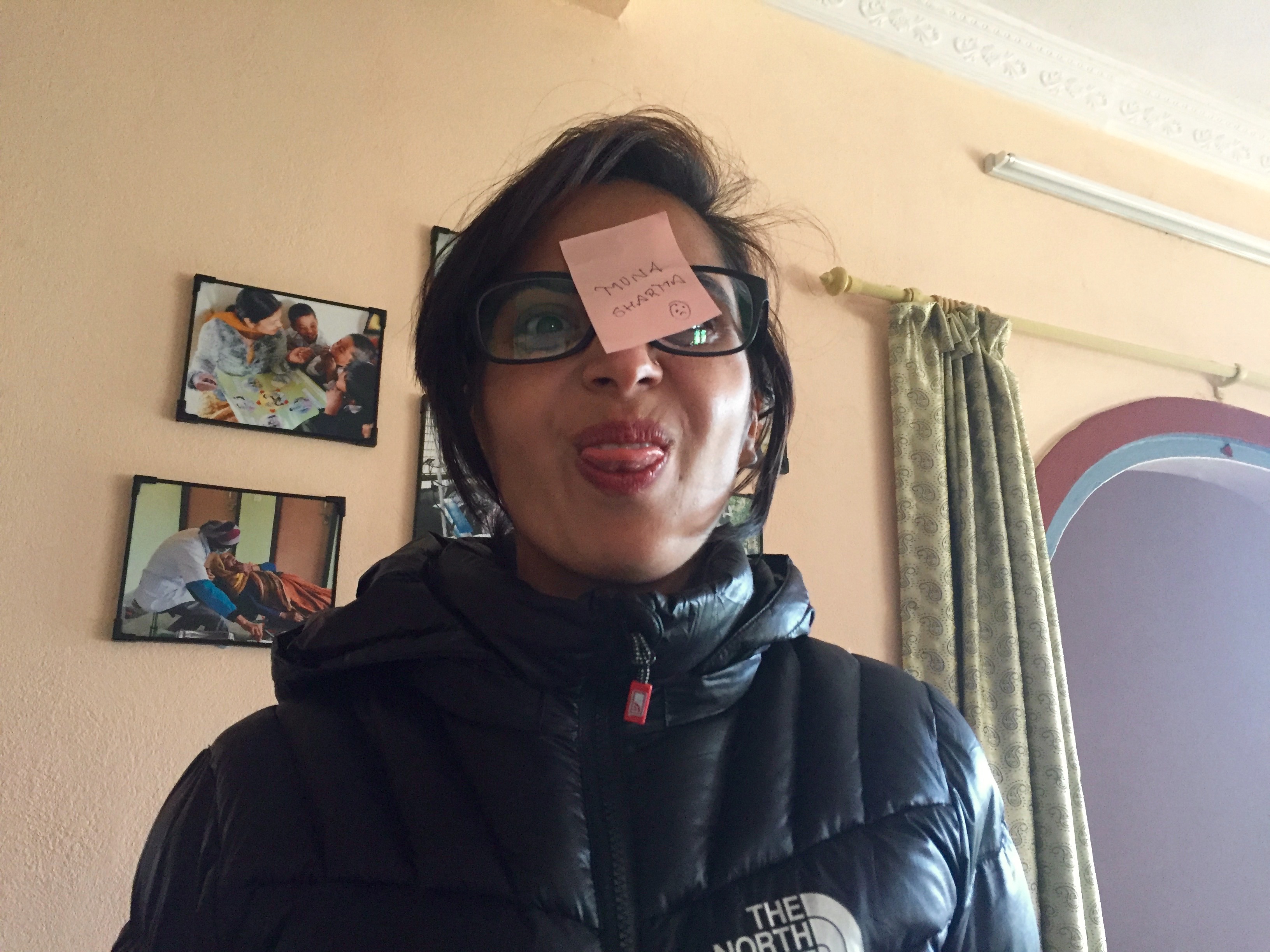
2. A discussion about the value, or lack thereof, of name tags.  Everybody else in the office thought I was nuts to insist we pick some up, because apparently sticky name tags are not a thing in Nepal.  I spent about five minutes trying to describe a sticky name tag and then advocate for its value in life, only to have everyone get very excited when Muna ran in to her office and then came out triumphantly with a sticky note, which she planted on my shoulder to the raving approval of the rest of the staff.  I countered that, aside from the fact that a sticky note is not a name tag, this made me look like an inventory item, and stuck it to Muna’s face to prove my point.

img_1051

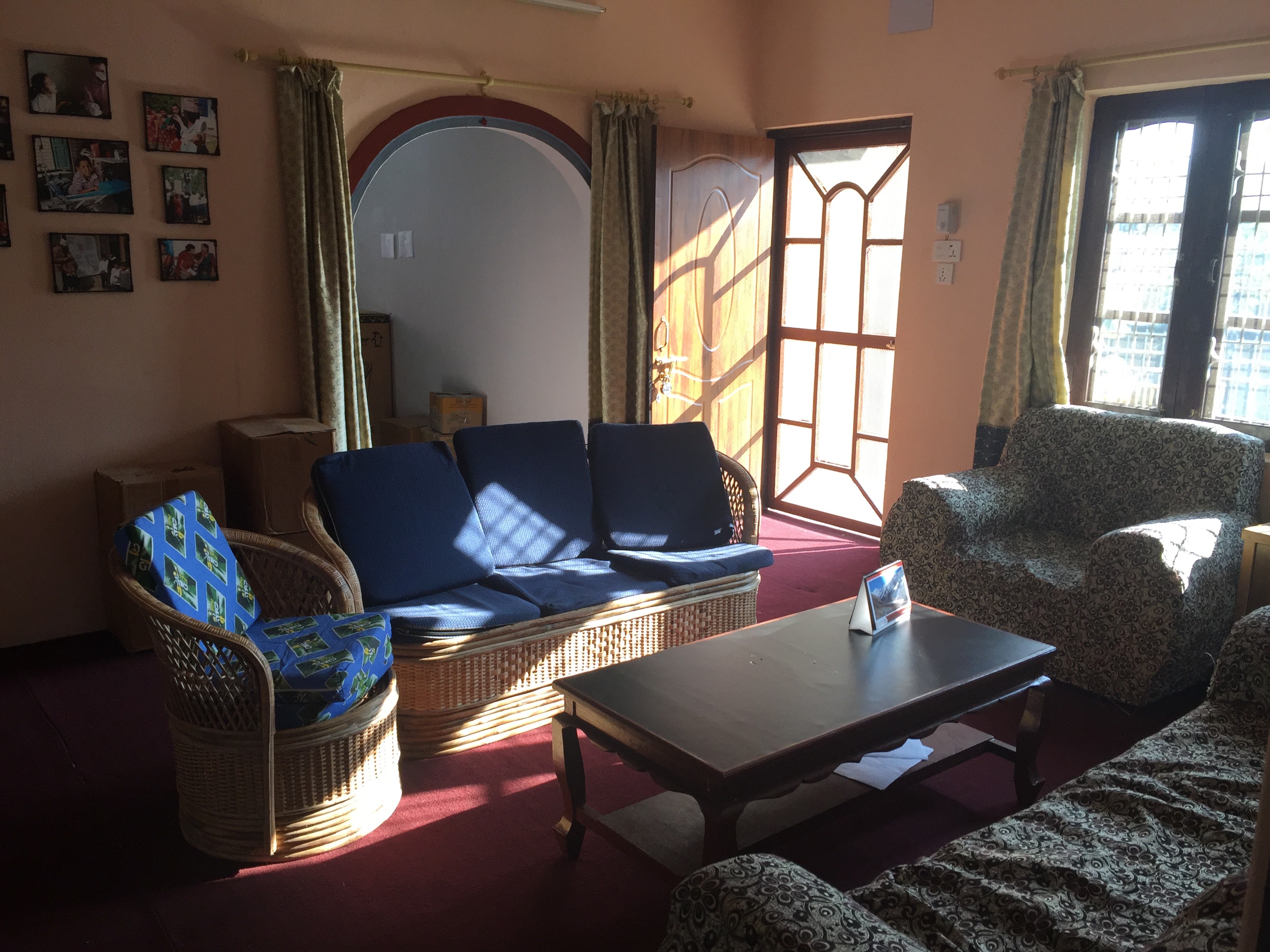
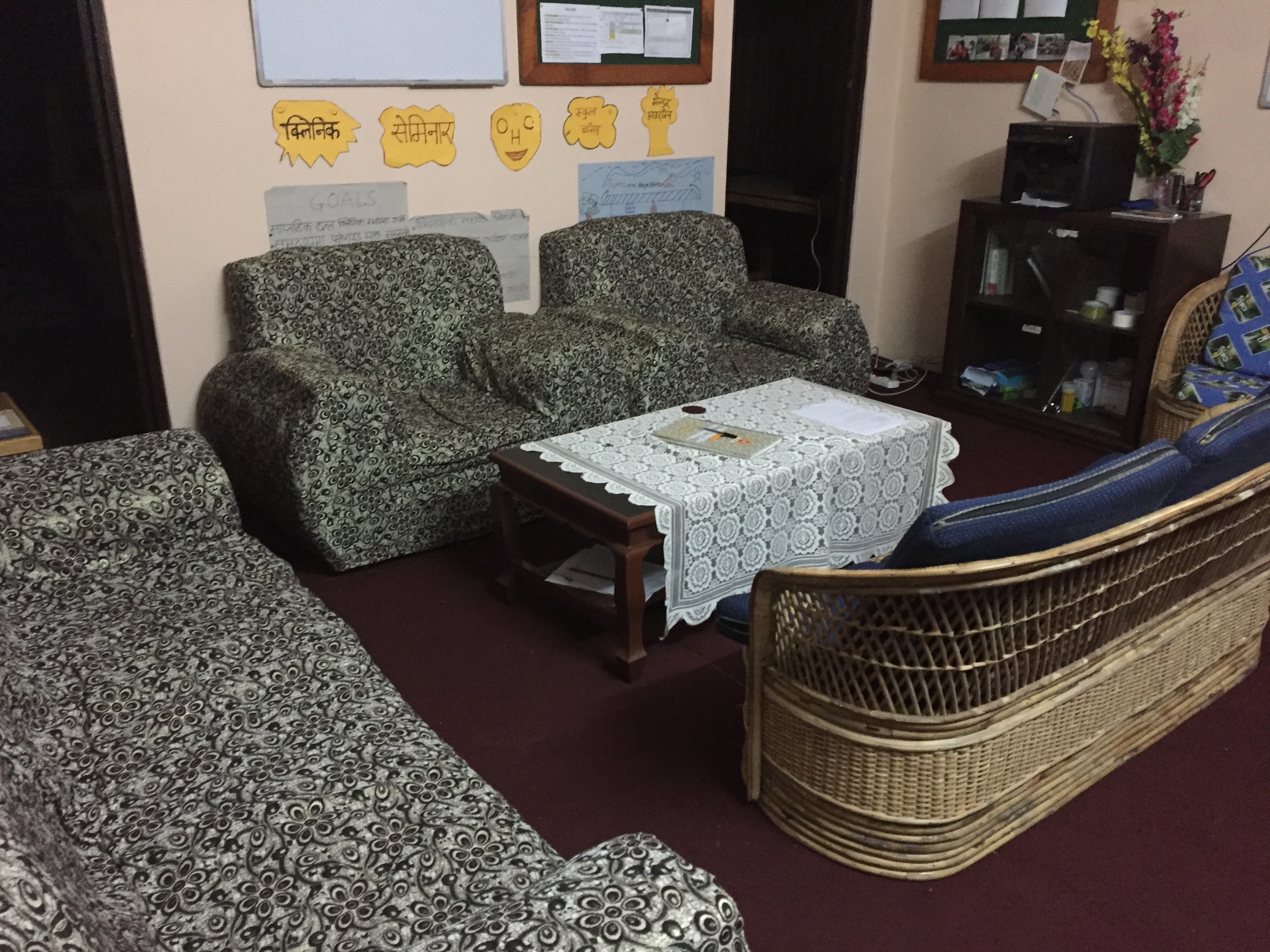
3. Rearranging the dowry couches gifted to us by our landlord, and cleaning the office.  Ready for visitors!

Ready for visitors

5. Reviewing the schedule, completing our welcome packet, confirming hotel reservations and a training hall and a bus, organizing the inventory so it looks like a wax library, picking up everyone at the airport and sorting supplies in the hotel!  Want to know the best part?

Dr. Sokal brought NAME TAGS!!!  Basically, I won, and that’s what counts.

Welcome to Nepal!!


Fleeced and Ready


So we’re in the final countdown before 20 of our field staff and 12 dentists, public health specialists, and students arrive here on Monday night.  As I’ve previously explained, we are trying very hard to steel ourselves against the persistent unraveling of planning that seems to occur despite all efforts to the contrary in this neck of the woods.

This steeling involves checking and rechecking that hundreds of people will show up in rural locations for dental screenings, and that our own field staff will make it here by Monday night (our best hope that everyone will be on img_0886time for the start of training on Tuesday morning…very crafty).  We’ve combed through a detailed inventory of supplies – mind you, none of us are dentists, yet we are in charge of the 2% Chlorhexidine solution – and we still have to shop for 50 teaspoons (don’t ask, this is my life, it’s real).  We found a training hall and a bus for forty people, and there are currently no political strikes or holidays scheduled.  I reviewed the whole thing with Dr. Sokal on skype and drew a layout of our workflow complete with the number of chairs and tables we need.  We booked nine people on one flight from Kathmandu to Pokhara, and hopefully, the flight will not be cancelled.

So this week it snowed in Connecticut, and with the bad weather, Dr. Discepolo, a pediatric dentist coming from UConn, missed her flight.  Because even Connecticut starts going haywire when Nepal gets involved.  Fortunately, Dr. Discepolo was scheduled to come in a day early, and will be here Monday instead, so we are ALL SET.

Today while Aamod and Gaurab were in Puranchaur meeting with people in the local health ministry about the upcoming project, and visiting primary schools (again) to make sure they’ll be sending mother/child pairs for screening, Muna and I were at the office fielding other essentials.  Among which was printing jackets for everybody, which we need by tomorrow night.  But after the Nepal Health Research Council and the 10-tab spreadsheet of budgets and reservations?  Jackets – no sweat!

We’d picked out a few samples on friday, and Muna called the printing press this morning to ask if we could send photos to inquire which jackets could be silkscreened.  The printer told us he had to physically see them.  So we went to the shop to get the jackets, and while Muna took a taxi to the printer to show them a puffy vest and a fleece, I commandeered basically everyone in the store to help me take 40 more puffy vests out of little stuffing bags so I could check off sizes on a spreadsheet.  Then we finished that and I tried on option two, the fleece number, so I’d know what sizes of those we’d need if the vests didn’t work.

Muna texted: “They said they can’t print on either type.  I am coming back.”

We put everything away again.

Muna returned.  “They told me, even if someone says they can print on this vest or this fleece, don’t let them.  It will be ruined.”  Ok then.  Back to the drawing board.  We tooled around looking for something else that could be printed on.

The store owner came in.  “I can bring this vest to my Son-in-Law,” he announced. “He has a factory, and I’m sure he can print this.”

“But the other printer said–”

“My  Son-in-Law can do it,” the owner declared.  “Even if we have to stay up all night, we will print your jackets by tomorrow evening.”

We considered.  It was decided that I would go with the store owner to visit the son-in-law’s factory to review the case.  But only after lunch.  The store owner had not eaten since early in the day.

Muna returned to the office to call all 20 of our field staff, again, to remind them when and where to appear tomorrow night, and I took my computer next door to the jacket shop to work on a Welcome Packet during lunch.  (I say it’s Welcome Packet, but in point of fact, I think I just need the list of 40 participants and the screening layout and the schedule where I can see it at all times.  It’s for me, forty times.)  After lunch, the store owner pulled up in a car and took me to his son in law’s factory.  We presented the vest option and the fleece option.  The vest proved unprintable, but the fleece was a definite.  Definitely a definite doable printing job.  I poked my head in to the “factory,” which was, in top Nepali style, basically a living room.

“I will take you to the printing shop to arrange the logos on the computer,” said the Son-in-Law. “We have to wait for my colleague to go ahead on his bicycle.”  Courteously, we waited for the colleague to get a ways ahead on the bicycle, and then we caught up on a motorbike.

We entered the printing shop and presented a sketch of the layout to be arranged for the jacket.

“Yes, I have this pattern,” said the printer.   He pulled up our jacket on his computer.  “This, right?”

Me: “…?”

“The young woman was in here earlier,” he explained.

I texted Muna.  “I’m back at the same printer you took the sample to this morning.”

Muna: “WHAT?  They said they couldn’t do it.”

Me: “…? …I know, right?”

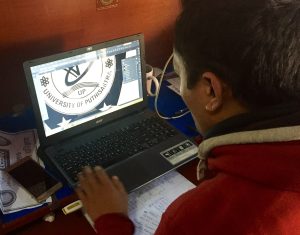
It takes about an hour an a half to arrange the logos, mainly because one of our visiting dentists teaches for a Cambodian University, and their logo has Khmer lettering that won’t come out right.  The printer guy painstakingly recreates each picture of the Khmer lettering in the logo for the Cambodian University.  He arranges all the pieces of the printing for our jacket and prints it out on laminate.  The son in law comes back and gets me and the laminate on his bike.  He deposits me on the main road so I can take a bus back to the store to get the rest of the jackets out while he prints a sample at the “factory.” I seriously have no idea how this day would have turned out if not for the shop owner and his son-in-law, who basically saved our butts.

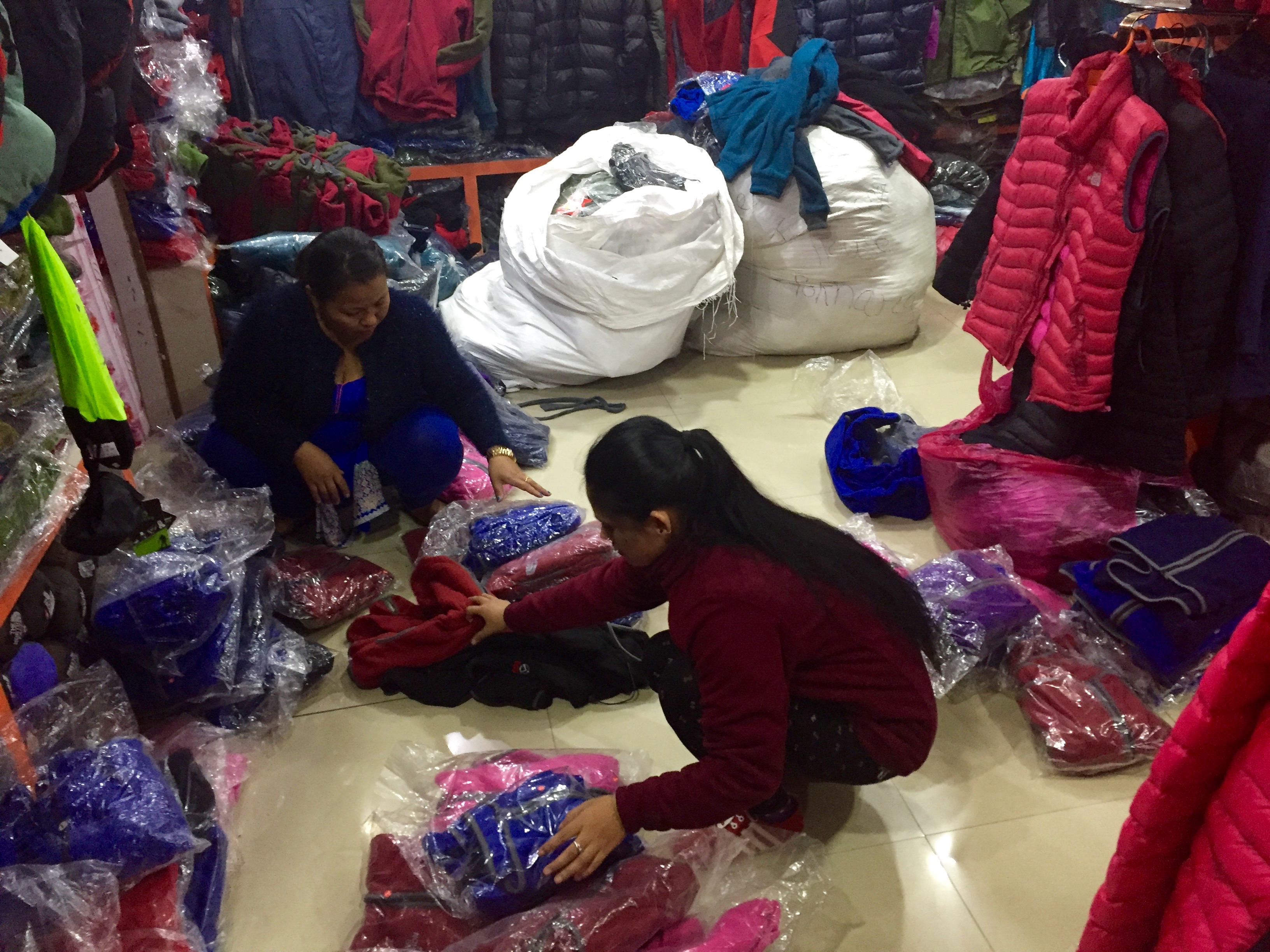
It’s now 4pm.  I take out my spreadsheet again.  The entire staff of the store that Muna and I entered at 11:30am today begins taking out fleece jackets from various unpredictable locations.  Fleece jackets appear from every heap and rack of mountain-wear, and they are sorted in to piles while I read from my spreadsheet, again.  Everyone is concerned that the men are not to wear hot pink fleece jackets, and this must be accounted for.  The floor is is covered in fleece jackets.

img_1046

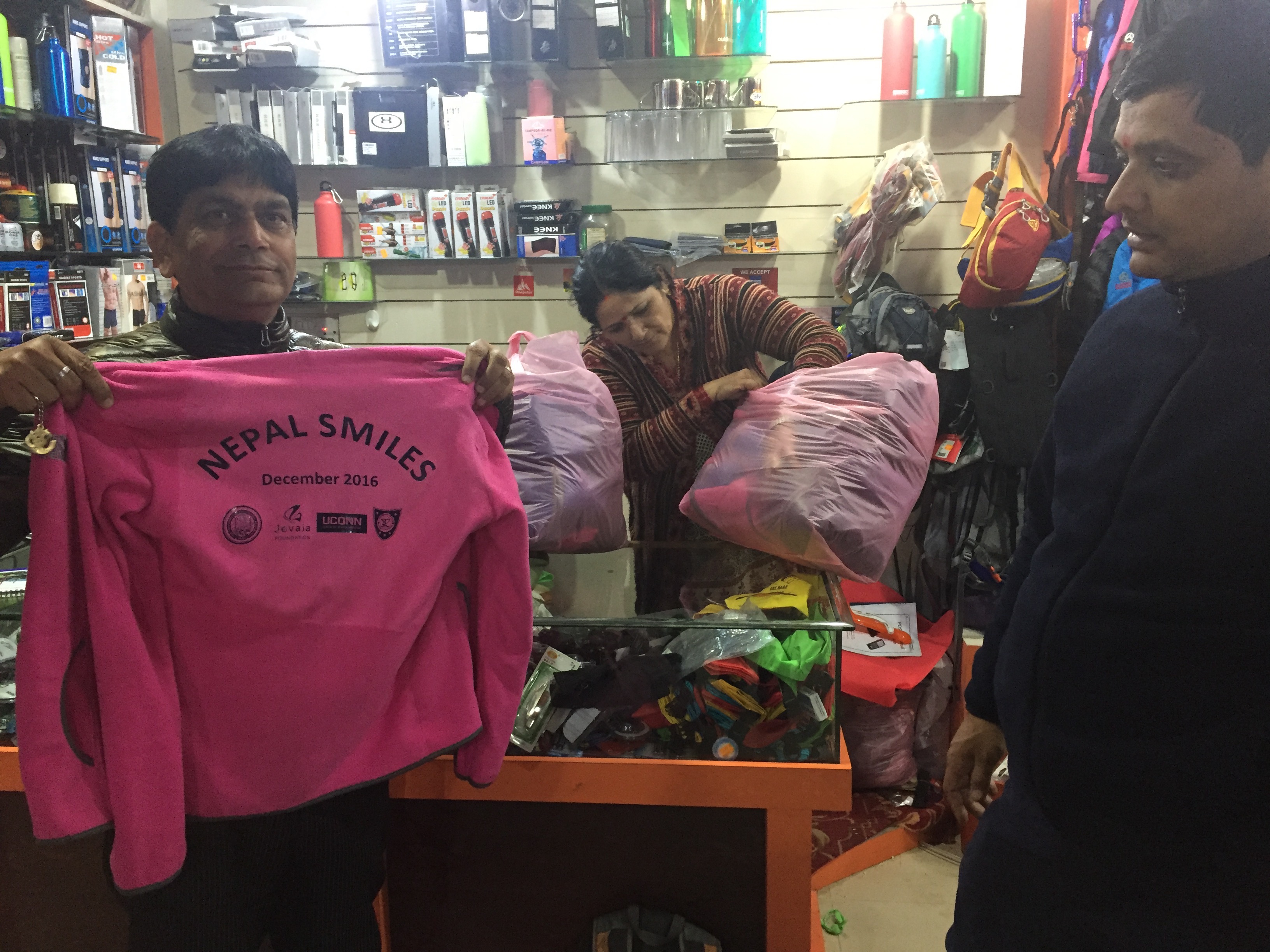
I leave for an hour and a half to go do an interview with a local paper, and come back at 8pm.  The son in law has brought a sample jacket with him.  The only problem with it is that the whole thing is too high, and the hood falls over the printing.  Also, while putting the print on, they accidentally melted off one of the drawstrings at the hood and pressed it in to the shoulder of the jacket.  This too must be corrected.  They promise not to melt any parts of any of the other 39 jackets, which I send off in 4 oversize plastic bags.

At 8:45pm I head home for dinner.  Among the things I did not do as planned today: write a training schedule; print referral tickets; send an abstract to UCSF.

Why are you so late? Bhinaju asks.

*

img_1047


Hope Against Entropy

(Editor’s note: apologies if you’re on my email list and receiving this a second time.  It won’t happen too often.  If you’re not on my email list, you should be!  Please write “SUBSCRIBE” to laura@jevaia.org).vision-nepal-global-exposure-workshop-088-2

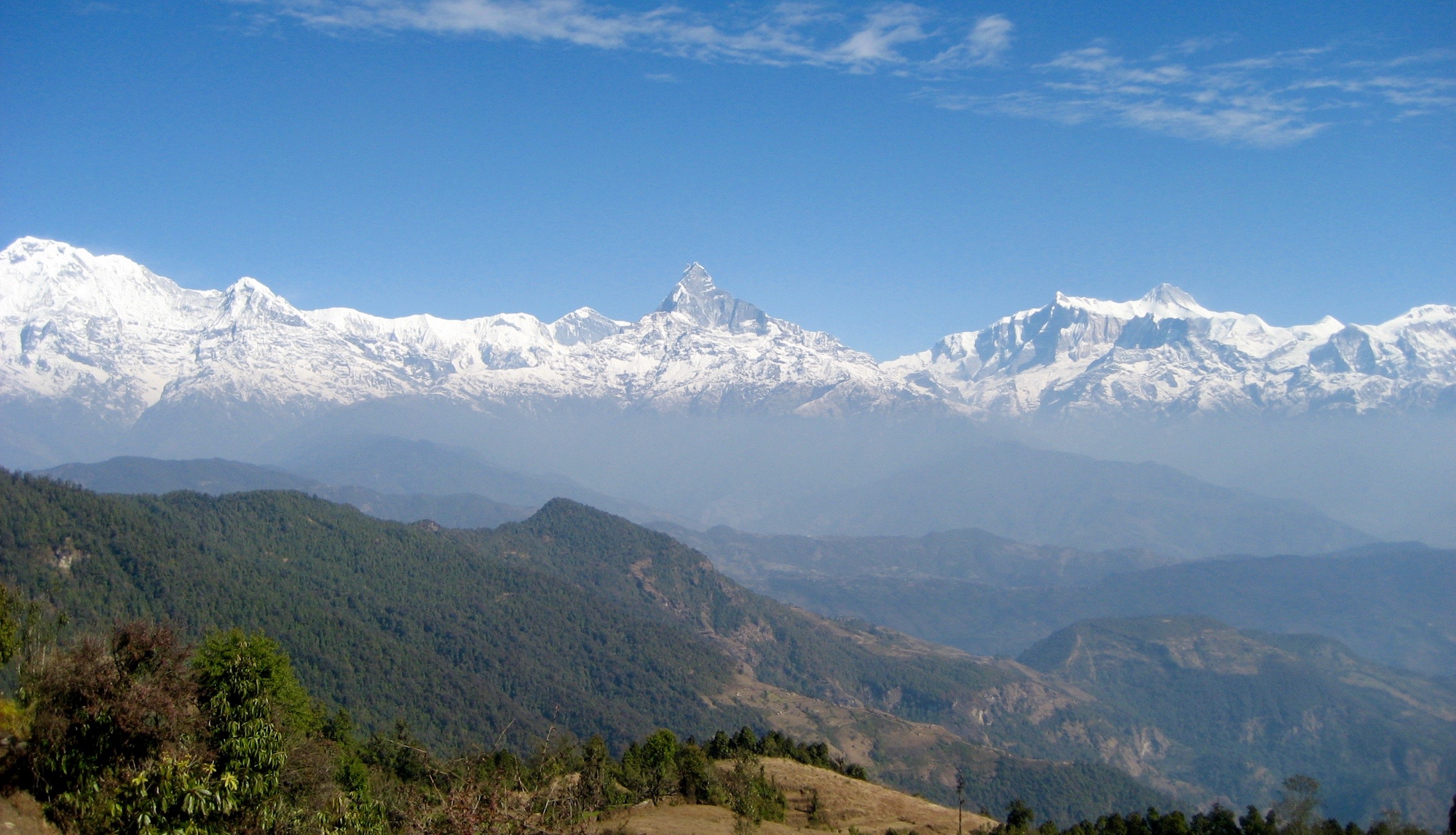
Good morning from sunny Pokhara!  I arrived yesterday and enjoyed a nice homecoming tour of all my regular haunts. Since August, Pascal has rigged up a home-made antenna on the roof, Aidan’s other front tooth has finally come in, and the corn has been cut down in the garden in front of our office, replaced with new seedlings.  I absolutely love this season in Nepal – the cold, wide air, the clear mountain skyline which is obscured by fog during the monsoon, the evening snuggles with my nephews under warm blankets.  Tonight I head up to beautiful Kaskikot to see Aamaa.

photoI’m so excited to tell you about our plans for this winter.  After 10 years of chipping away at all this, we are just days away from a two-week collaboration with dentists, researchers, and students from Berkley, UCSF, UConn and the University of Puthisastra in Cambodia. It is a strange and wonderful feeling to be preparing for such a large and qualified group of visitors after so many years of working away with few outside witnesses to our efforts.  There are many great things wrapped up in upcoming this ball of projects.

The first is helping to implement a UCSF/Berkley study of oral health and nutrition in mothers and their children.  Our own JOHC field teams will get to work with the researchers to conduct this study in one of our villages.  The second project is training our technicians in some new techniques, which they’ll incorporate in to their sustainable clinics.  Third, we have the chance to bring dentists to our rural clinics for medical audits.  Believe it or not, after an entire decade, this will be the first time we’ve had foreign dentists come to visit our clinics.  

And finally, we’re going to pilot an evaluation of past patients who’ve been treated by our technicians over the years.  If you don’t think that sounds like Christmas, listen here! This means comparing the outcomes achieved by our local dental technicians to the results produced by fully credentialed dentists in prior studies of the same treatment techniques. img_3285 This is a HUGE step towards our goal of having Nepal’s national health care system adopt rural dental clinics in to all of its health posts. Why? Thank you for asking!  Because the main criticism is that community-level health workers aren’t qualified to perform dental medicine…even though that excludes millions of people from care.  But we’re making the case that, rather than write off local health workers, the medical field must find ways to properly train them to provide the best care possible in their settings.  And that’s what we’re doing!

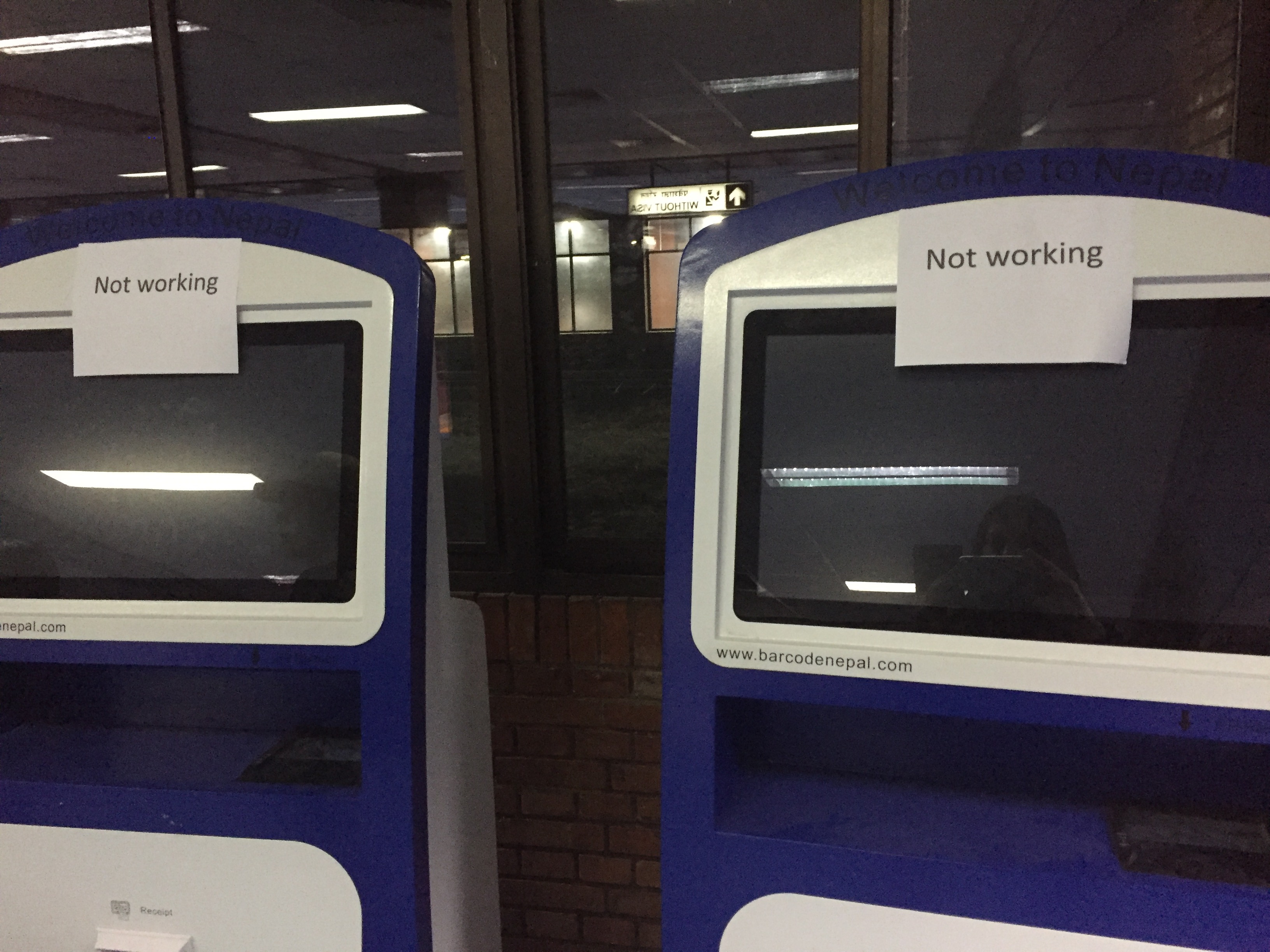
Ok, so those are the technical points.  Now let’s talk about me organizing for fourteen people to show up next week from California, Connecticut, India and Cambodia.  We have a schedule, a budget, a training plan, hotels, flights, and t-shirts.  We’re doing our best to keep things under control.  But we are up against the entropy of Nepal, people.  THE ENTROPY OF NEPAL.  Pretty much anything could derail our plans and contingency plans: a wedding, a political strike, rain, someone’s grandpa dying, a forestry meeting, a buffalo falling ill.  A buffalo having a baby.  A traffic jam.  A flat tire.  Lost luggage.  Fog on Sunday afternoon.  Somebody decided to drive this point home for me at the recently renovated, lusciously carpeted arrival terminal in the Kathmandu airport, which has a new row of fancy kiosks for visa filing:

img_0854

On the plus side, sometimes fate works to your advantage.  Consider our office.  This fall, our landlord’s son got married.  The son received a number of couches by way of dowry.  They don’t fit in our landlord’s apartment, so I arrived to find them in our office, which now looks rather like a furniture store.  If you have any idea how much I have obsessed over the setup of our office, you will especially appreciate this stroke of….er….luck…

img_0872

Well, in solidarity, I think I’ll leave you there on the edge of your seat.  Except for sharing a photo of this year’s Race to the Rock, which was one of our best yet.  If you missed it, please consider Jevaia in your end of year giving.  After all, we’ve made it this far – through many political trials combined with road mishaps, fuel strikes, weddings, earthquakes, and baby buffalos – almost exclusively on the wings of individual donors, and here we are entering a very exciting new chapter.  Thank you for being a part of the ride with me and all of us.

*

img_4046

Meticulous Serendipity

I’m already in the last week of my visit, and as usual things have flown by too fast.  This monsoon has been more spirited than last year’s, blanketing us in torrential downpours every night and through each morning.  Finally this week the weather seems to have calmed down, but I’m missing the cool and comforting feeling of the rain closing us in with its clattering and clanging.

The main focus of our summer has been a new foray into the world of health care advocacy.  We have a model for rural dental medicine, and we want Nepal’s government to fund dental clinics in all of its village Health Posts.  Our idea is that if the government would set a standard at which it will finance rural dental services in the national health care system, then the global development industry will start doing what we’ve doing: training, mentoring, supervising and auditing rural dental technicians so they meet the standard (which we can help define).  As far as I know, we’re the only organization in Nepal working on this particular topic in this way.

IMG_3269

Salyan Dental Clinic at the Salyan Health Post

Like many developing world countries, there’s a complicated and often mutually distrustful relationship between the aid sector and the government of Nepal.  This largely results in aid agencies privatizing their projects as much as possible; I’ve done this myself, because it’s easier to just do something right yourself than manage a hassle of hectic and sometimes exploitative bureaucracy.  Mean time, weak governments spin out more and more self-serving regulations against a flood of foreign funding that is trying to silo itself.  Ultimately, it’s development itself that suffers, as decades-old aid industries, still chasing down base level poverty, make apparent.  So something that excites me about what we’re doing now is that, setting aside dental medicine itself, I see the process we’re in, if it works, as a strong example of effective collaboration between the private sector, which is great at risk-taking, innovation, and raising money, and a developing-world government, which, at least in Nepal, is by far the best option for scale and stability. I like to think this is a version of life where we all do what we’re good at, with respect for the reality that we need everybody if we’re going to think big and get somewhere.

Now then.  Should you choose to work on rights-based health care policy in the developing world, which you might have been considering, here is your primer on how to get started (after refining your particular service of choice for 10 years).

Our advocacy happens at three levels, beginning with the village level, where we’ve been pushing for permanent local government funding.  This is not for the faint of heart and best suited for people with a good sense of humor.  You’d better be down for a ride that’s 90% culture and 10% policy, and heavily focused on navigating relationships, social dynamics, and weather.  The village level is where we’ve focused most in the past, so we’re reasonably adept at this…except that the reality is that institutional services just aren’t very stable at this level.

Next is the district government, where we’ve previously had only very simplistic coordination, such as required letters to required people.  But it’s the district government that sanctions and distributes village budgets, so without support here, it’s a lot harder to get anywhere at the local level. The other day we had a District Coordination Meeting where our program director and I presented (in Nepali!) on the role of the government in extending our oral health care model to its predominately rural population, filling a gaping hole in the primary health care system. This meeting exceeded our expectations – we received a lot of positive feedback and useful criticism.  I was lavishly complemented, of course, on my village accent.

IMG_9327

Lastly, the day before I leave Nepal, we’ll have our first workshop at the central level in Kathmandu, and with this, we’re leaping in to completely new territory.  But this is ultimately where it’s at: it’s the central government that fixes funding priorities and distributes earmarked budgets through the national health care system.  Recognition of our model at this level would set up a standardized place for rural technicians in Health Posts, providing a framework for agencies with a lot more money to invest in creating rural dental technicians who can then be permanently staffed by Nepal’s own government.

We’re feeling emboldened and encouraged after learning a lot from each and every meeting we’ve had so far.  Despite my own resistance in the past to clunky public systems, at this stage of the game, I’m finding some of the cumbersome government procedures to be oddly reassuring.  They give us steps to take.  We’ve met some very decent and hardworking public officials over the summer, even if they receive us with skepticism and give us some hard knocks. I think this has actually grown our confidence.  We can wait for the meetings, answer the questions, submit the documents, do all the things, because we have confidence in our product.  There’s also the humbling reality that the government has plenty of reasons to be cynical of the social work sector, so if we have to prove ourselves, that’s fair.  It’s forcing us to be both meticulous and more adaptable…eventually, we’re responsible for creating our own good luck.

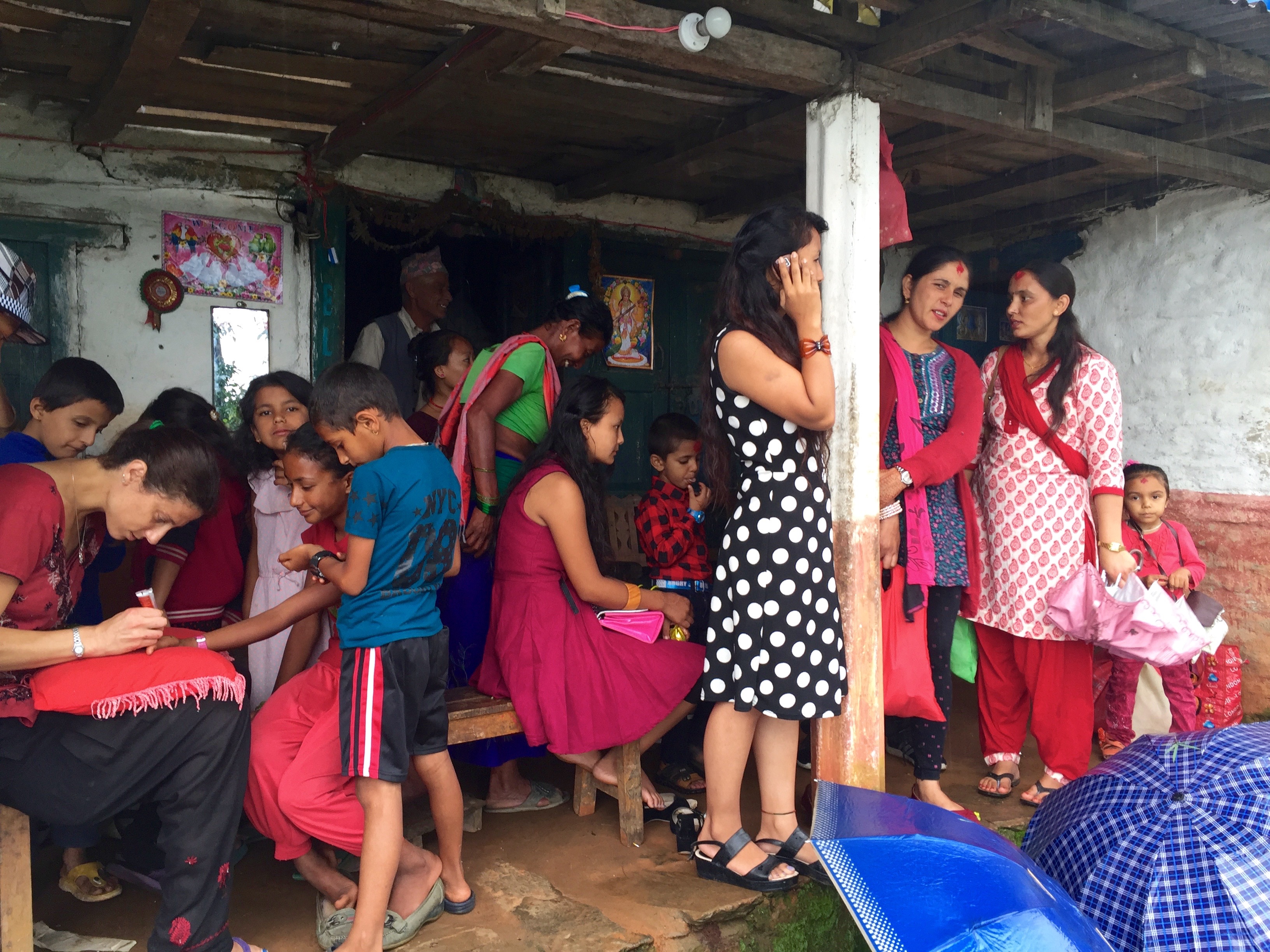
Besides that, rice planting season concludes with a wonderful festival where everyone puts on green bangles and paints their hands with henna.  Kaskikot’s premier henna-drawer has become none other than yours truly.  What did you expect with an activity where people let you doodle on them with temporarily-staining plants?!  Govinda’s porch had an hour long wait for these skillz on Saun 1.

IMG_8891 IMG_8905


The best thing about the henna designs is that you start with an idea, and then it becomes a meditation that designs itself, following a pattern in the creases and borders of someone’s palm, incorporating smudges and wayward marks in to unexpected flowers and vines.  You just can’t say before you start exactly what you’re gonna make.

Doodle doodle doodle…

*

 IMG_9420

Nooks and a Little Sauce

IMG_0412

Over the course of 13 years in Nepal, I’ve spent almost all my time in villages. My whole understanding of Nepal, and all my friends, routines, the food I eat, the places I sleep, even the way I speak the language and therefore the way I think, have been organized around my adopted family and rural life, or its popular sister, the cramped and thankless circumstance of recent urban migration.

But this summer, I’m full-time supervising a city-based office with four people and a field staff of 16; getting a latte each morning; diving in to health care policy and human rights frameworks. I schedule coffee meetings and visit offices. All told, it’s only in the last 1-2 years that I’ve started getting to know some of the other long-term foreigners and NGO founders living in Pokhara, who all pretty much know each other, because they all live in the city, which for me has always been just a place to visit for work. And when I’m here, my non-work life is completely centered around my (recent urban migrant) Nepali family.

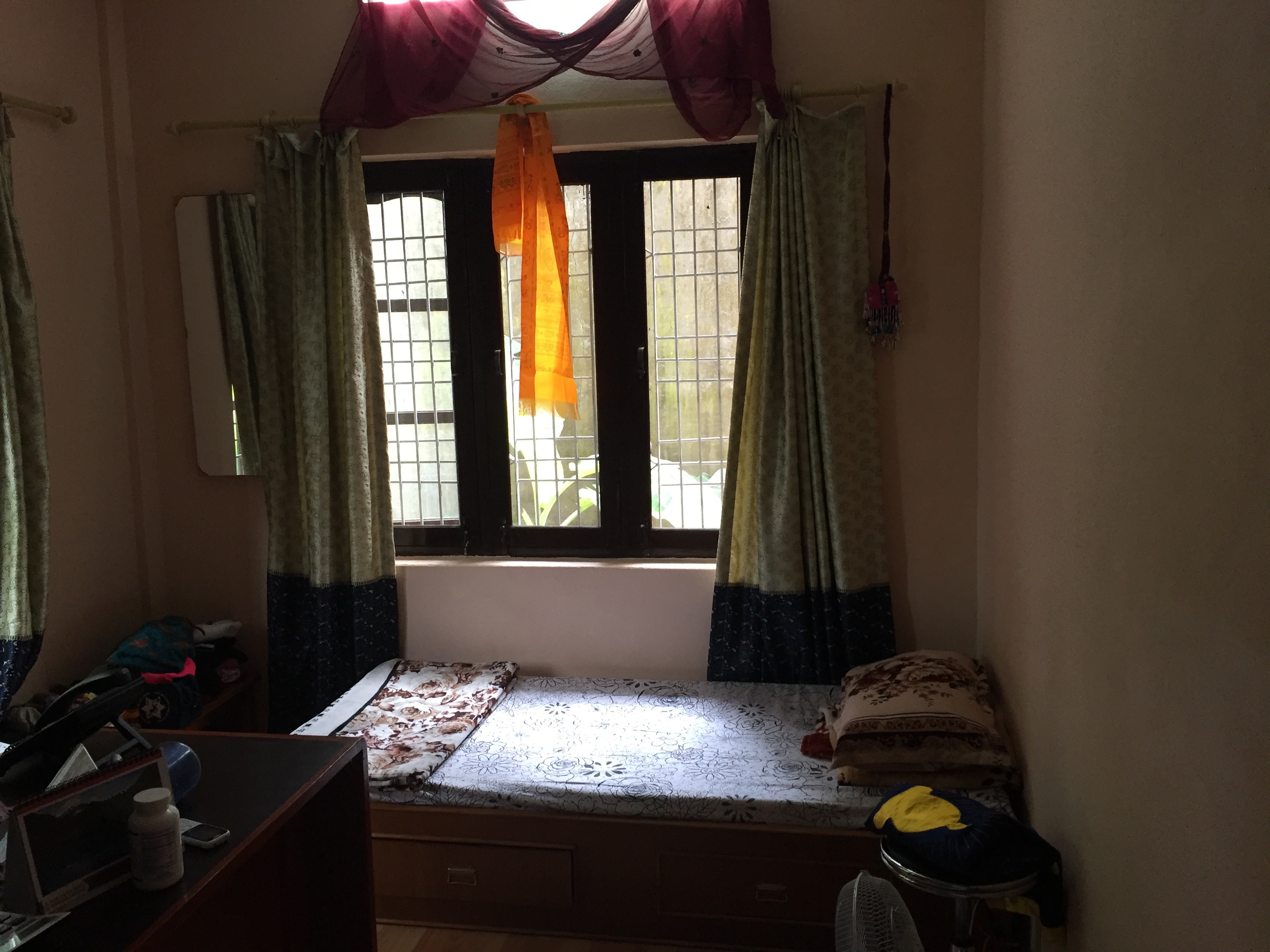
There’s a vague sense of discovery about this new routine. For example, I’ve been sleeping in a room in the office, and – this is going to sound weird, but – slowly realizing I can put things there to make the bed and little space around it mine. Like: a new blanket. Or: a hook on the wall. This is an especially weird feeling. In all the time I’ve lived in Nepal, the only space that’s been mine-ish is the small house in Kaski, with its two beds and one dresser that I share with the rest of the family. A single bed and little shelf of clothes for me alone, that I can modify to my liking, is a bizarre amount of freedom that I’m only even noticing bit by bit. (Mind you, we’re talking about a bed in the finance and admin room of our office.)

Obviously, I have no trouble with this in the rest of my life. But in Nepal, well, it’s just not the way I’ve learned exist here.

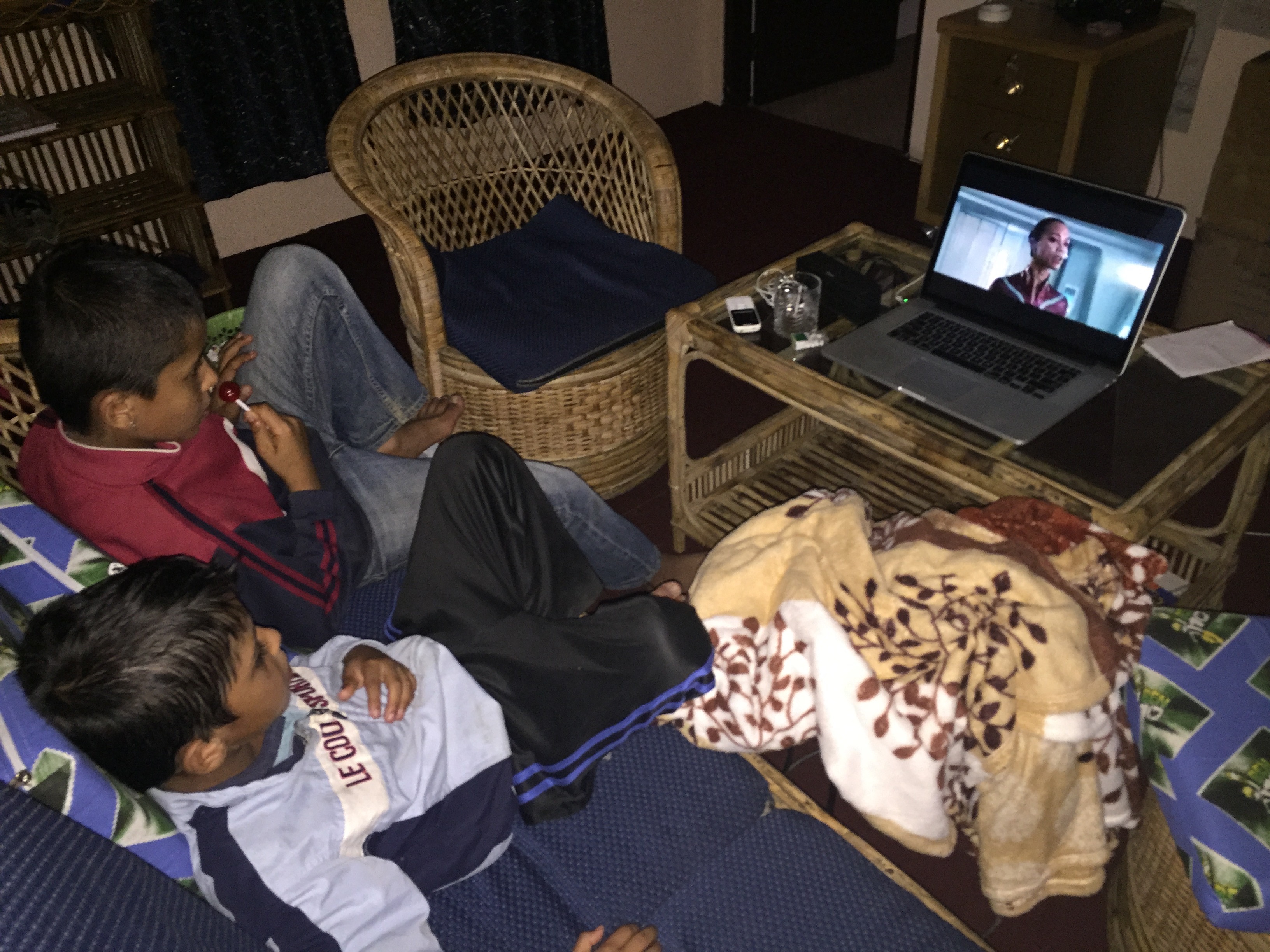
IMG_9195The other night, I had Pascal and Aidan for a sleepover at the office, with its main attraction, the Internet. We watched movies and ate treats. We’ve also been out for boating and out for dinner, because it’s fun, and we live in the city. And yet these are activities that have never remotely crossed my mind in the past, because they are more similar to how I live in the U.S. It actually never occurred to me I could do them here because the communities I spend my time with mostly don’t.

Today I went to a salon and got my hair done. A salon.

When I was a kid, I was literally the pickiest eater the world has ever seen. I know you think your kid is pickier, but trust me on this one. I was okay with a short list of simple foods, and I would gladly sit and watch everyone else eat rather than be forced to alter this known quantity. Once, I went to my best friend Katie Schultz’s house, and they made me pasta with butter while the rest of the family enjoyed a normal meal. It wasn’t till I put the pasta in my mouth and a terrifying and unfamiliar taste exploded on my tongue, that I found out that butter doesn’t taste like margarine, which is what we had in my house. The feeling of shame and fear sitting at the dinner table, hoping nobody would notice if I didn’t eat, is still with me almost 30 years later.

It wasn’t until eighth grade, on a school trip to Smith Island where I was stuck in an adolescent group eating situation, that I tried tomato sauce for the first time. For a few years – ok, until college – I’d put a little blob of tomato sauce on the side of my plate, and kind of dip my fork in it. Eventually I worked my way up to normal pasta, but to this very day, when I make my own meals, every component sits side by side so I can mix as I go. I’m no longer alarmed by new foods like I was as a child, but I don’t adventure much. I eat the same reliable items almost every day.

What, you ask, does this have to do with Nepal?

I’m not sure, but all I can say is it kind of feels the same. I’ve spent a long time in this environment adjusting to the absence of almost everything I was accustomed to before I came. I found my nook and I’m comfortable there. Rural life in particular, while not materially complex, runs miles deep, and each iteration, each day, each season and year, enriches and returns itself to the last one with a sense of familiarity and certainty: the next one will come too, even if we are not here to see it. I haven’t made a life of travel. I plopped down in one place and snuggled in. Altering its fundamentals even in small ways creates a whole orchestra of funny tastes on my tongue.

Also, FYI, we eat the exact same thing for every meal in this country. PHEW.

Mean time, I do like this blanket though. How do you like my office nook?

IMG_9255


In the Trenches


This summer I’ve been spending a lot of time sitting at a computer, in our lovely bright office, which is definitely a first.  Last summer, for example I was hiking for 10-12 hours a day in the hot sun visiting earthquake-affected homes in Lamjung, and in general, my time in Nepal is spent covering ground, carrying things, and changing elevations.  Well finally, today was a more typical day in the trenches.

We had scheduled our advocacy meeting with the Health Post committee in Bharat Pokhari.  We’re holding these meetings to push for local funding like we did in Sarangkot.

I woke up at home in Kaskikot.  I had to meet Dilmaya at the bus station in Pokhara at 8:30am, and the local bus from Kaski leaves too late and goes too slow to get me there on time, so I’d cleverly arranged a ride with a neighbor in Kaski who drives a taxi.  However, the road between where he lives and our house is totally washed out with the monsoon, so I woke up at 6am – POINTS FOR ME, THAT’S THE MIDDLE OF THE NIGHT IN MY WORLD – and walked 20 minutes to the other side of the muddy section to meet him at 7:05.  Naturally, I discovered at this point that we were still waiting for another passenger, an ill lady slowly making her way to us.  While I got nervous and then annoyed that I’d be late, there wasn’t much to do.  This is why you don’t stay in your village instead of in Pokhara the night before catching an 8:30am bus for an important meeting.

Naturally, we made it to the bus station on time despite all signs to the contrary.  Dilmaya and I took 1.5 hr very, very bumpy ride out to Bharat Pokhari, cutting over some intervening foothills.

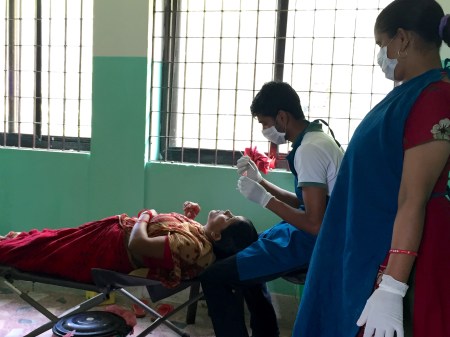
After another 20 minute walk up the road to the Health Post, and we had arrived by 10am for a 12:00 meeting.  No sweat – two walks and two vehicles later, all before breakfast.  Aamod came bouncing up the road on his motorbike and, with plenty of time to pass before the meeting, we went in to visit Bharat Pokhari’s weekly clinic.
IMG_8999

Bharat Pokhari was handed over just this past spring, which means that its protocols are up to date, subject only to how well they’re being observed.  But funding wise, things are in limbo.  The clinical team has been showing up and working without pay, trusting that between us and their local government, someone is going to come through.  In all transparency, we signed a funding agreement with Bharat Pokhari before we launched the clinic, as we do everywhere.  But seeing these through is challenging in every single place, so realistically, we’re in basically in negotiation with Bharat Pokhari’s leaders about it anyway.

We’ve already met with both the Health Post Chairman, a young and ambitious Public Health graduate, and the Village Chairman, who is older and more traditional; these two hold the main influence, technically speaking, over how funds get budgeted.  We’ve briefed both of them extensively over coffee in Pokhara.  The Health Post Chair was very much down with the idea of piloting a new health service in Nepal’s rural system, and as a public health specialist was easily oriented to the larger vision about what this would mean; but, like many Health Post leaders, he’s an appointed transplant who will be moved to a new location within the year.  By contrast, the Village Chairman is very, very local, with social clout and a more complex set of competing interests.  Any meeting is functionally meaningless without both of them present.

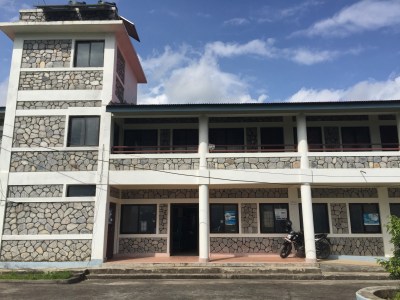
At 12, nobody had arrived yet to meet us.  We used the time to mill about Bharat Pokhari’s Health Post, an impressive, hefty hospital-like building constructed with foreign funds, in which many rooms appear to be empty or minimally used.  At 1, we were still waiting in a spacious meeting room with one very talkative local leader who discussed with us, at length, how difficult it is to get everyone together for a meeting.  We agreed.

Around 1:30, this wonderful looking man came in, and it turns out that in addition to being on the Bharat Pokhari government committee, he is our dental technician’s 86 year old grandfather – a magnificently venerable age for these parts.

IMG_9013 (1)

1:45pm, we were still waiting for the Village Chairman, who, in theory, had called the meeting.  But then he had apparently been summoned urgently to the municipality in Pokhara.

By 2pm we decided to go for tea with anyone who would come with us, and there we finally got in to a vibrant conversation with some of the health post staff, local leaders, and passers-by about the permanence of the dental clinic.  It dawned on me as we talked “informally” over tea that we weren’t even ready for a meeting of 10 or 15 social leaders in Bharat Pokhari, and that in Sarankgot we were lucky with how quickly things got organized.  Here, we’re still lobbying individual people.  It was probably advantageous that we ended up in a public space, chatting in a tea shop with locals sitting around about how the village should be using its public funds.
IMG_9017

Bharat Pokhari Health Post

We returned to the towering Health Post with our precarious baby clinic inside.  It sits across from a similarly built community center that the same international agency is building; when I asked for what, I was told, “community things.”  I sighed and, knowing it was a bit too simplistic – but nevertheless, true at this moment – said to Dilmaya, “It’s so easy to build something one time and go, isn’t it?”

By 3:15 we decided we had made the most of our day, and climbed on to bikes to head home: me with Aamod, and Dilmaya with the Health Post Chairman, because, we’re in Nepal.

At 3:30, as we were literally rolling down to the road, the Village Chairman showed up.

We got off the bikes.

All of the positive talk from our earlier coffee with the Village Chairman seemed to have dissipated. Tired, we began again at the beginning, making the same case we’d made just a week ago.  We’re realizing that’s just part of how it works.

Finally, around 4pm, Aamod and I left Bharat Pokhari on his motorbike, which is 9 years old and regularly stalls out.

“Should we take the short road?” he asked.  I know this is a trick question that translates to, “I am planning to take this steeper, bumpier short cut, and I am letting you know that we will not be going the other way, which is only for sissies.”

The bike stalls out.

“Well, why take the long road if there’s a short road?” I oblige. “I don’t really know any of these roads.”  Actually, those things are all true.

The bike starts.  We take the short road.

About ten jostling minutes down the short road, just as we are yelling loudly over the bike about how our day of meeting-hazing in Bharat Pokhari was a necessary step in which we feel we put the time to good use, a bike comes up in the other direction.

“The road is closed below!” says the Guy Going Up the Hill.

“What do you mean ‘closed?'” Aamod asks.

“No road,” the Guy Going Up the Hill explains.

I mentally sigh; now we will have to ride 10 minutes back up the bumpy short road, and then down the long road.  We still have a coffee scheduled at 5:30pm with the Village Chairman from Lwang Ghalel.

“I think we should see it,” Aamod says.  “I mean, how closed can it be? I came up this road this morning.”  I know this is a trick question that means, “I don’t want the road to be closed, so I’m going to ignore the obvious and keep going.”

“Well, if you came up the road this morning, what does ‘no road,’ really mean, anyway?” I oblige.

We pass another bike coming in the opposite direction.

“THERE’S NO ROAD BELOOOOOOOOOOOoooooooooooo…w!” he zooms by.

“Maybe there’s no road,” I suggest traitorously.

“Let’s just see,” Aamod replies.

We pull up to some construction workers – the ones turning around all the bikes.  Presumably the same people responsible for the missing road.

“No road below!” the construction workers inform us.

“None at all?” Aamod asks, because, we should be sure.  “Can a bike cross?”

“Absolutely nothing,” they confirm.  Finally.

“Let’s just have a look,” Aamod says.

“I think it’s going to be closed,” I confess.  “Maybe we should just turn around here, we’re wasting time.”

“How closed can it be?” Aamod asks.

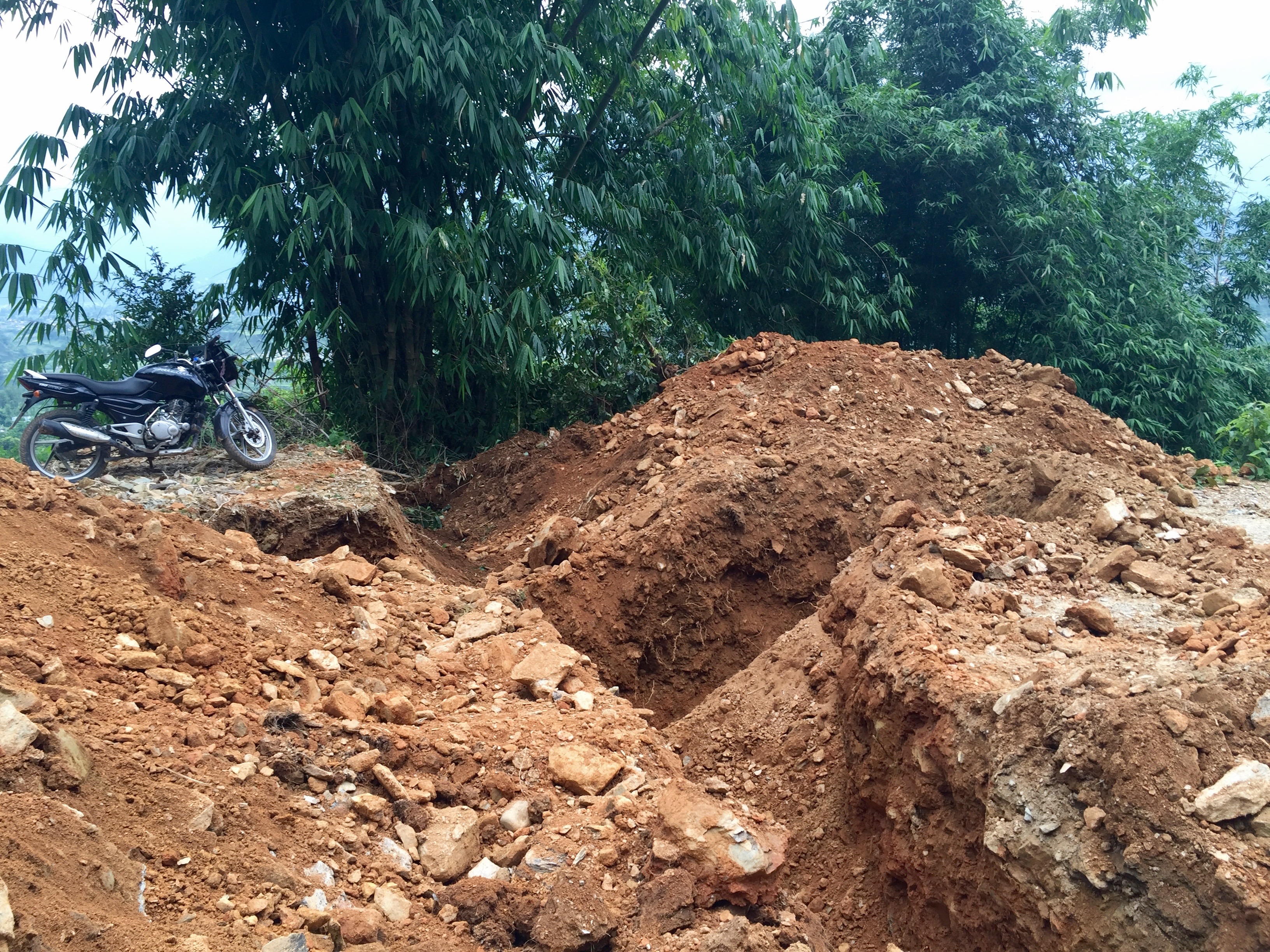
So it takes us about 30 minutes to drop Aamod’s extremely heavy bike down this seven foot trench, maybe cut for concrete piping, roll it across the uneven loose dirt and rocks at the bottom, and get it back up the other side.  I now have a lot of dirt and exhaust up my nose.  But, we have won the road.

“That was definitely faster than going back up to the long road,” Aamod points out as we set off again.  I know this is code for “I never suggested we wouldn’t get drenched in sweat and that rolling this five ton bike out of a ditch wouldn’t be part of the process, and it was still worth it because we have won the road.”  He calculates the amount of time each stage of the going up would have wasted, and, indeed the total is longer than the half hour we have spent in the trench.

“Yes, that’s true,” I agree, mildly confused about my final evaluation of having won the road.  “It would have taken way too much time to go back up.”

“You know, the thing is in Bharat Pokhari,” Aamod shouts over the wind, “is that if they just give us a fixed challenge, we can solve it.  But if the challenge keeps changing, it’s gonna be really hard.”

He’s definitely right about that, and we discuss it as we zoom down the short road.  If there’s a real and defined obstacle to overcome to sustain our clinic, we can strategize through it, but if the landscape keeps changing and people aren’t really working with us, we’re pretty much doomed.

“What’s wrong with these people?”

“Yeah,” I shout over the wind.  Politics in Nepal is a whole special level of screwed up, I think.

“They just dig a trench across the road and leave it like that.  They at least need to lay a walkway across before they go.”

“Oh that,” I call out.  “I thought you meant—”

And then my sentence trails off.  The short road presents us with:
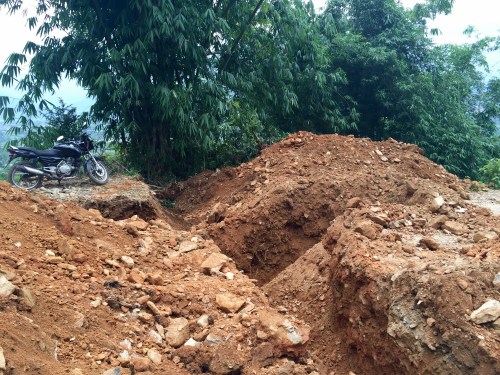
Trench Number Two

Trench Number Two

Now we’re between two trenches.

“Well, we have no choice but to cut across this one too,” Aamod states.

“That does seem to be the case,” I agree with happiness and enthusiasm.  It’s either this one, or the first one again.

A bike comes up the road on the other side of the trench and, peering over the opposite side, turns around in dismay. We, however, roll Aamod’s heavy bike in to the trench – for a second time – and lay stones, gun the motor, push the thing from behind, the hot exhaust huffing hot on to our ankles.  I eat a lot more dirt.  I am not very effective at this, so Aamod is doing most of the work, although I get exertion points for lifting a heavy bike at the wrong time and pushing it in the wrong direction, and also for laying stones behind a cloud of exhaust.  And then we are through.

We set off again.

“It’s cause you said that thing about the obstacles,” I offer.

“We should stop for a snack,” Aamod says.

As we finally get near town, we stop for pakora and knockoff Redbull.  We deserve it.  I rinse the dust out of my mouth and wash my arms and shins.  Our 5:30 meeting!  Aamod calls the Lwang Ghalel Chairman.

No answer.

It starts to rain.

We sit for forty five minutes, talking strategy, thinking about new clinic launches, considering how to adjust the initial setup and benchmarks along the way, based on what we’re rapidly learning now.  We still have three other post-handover sites and four mid-term sites to manage.

Aamod calls the Lwang Ghalel Chairman again.  No answer.

More rain.

“Can we call it a day?”

“He’s not coming.”  That was a day all right.

We get back on the bike.  It stalls out.  We restart it.  Aamod drops me off in Pokhara.

Good night.

*