Day Thirteen


Today is the thirteenth day after my friend Mary’s passing.  As I’ve written about before, this day marks the end of the initial kriya period, where the immediate family of the deceased observe two weeks of purification and austere ritual that instructs their food, bathing, clothing, sleeping, movement and prayer.  It is during this time that the spirit wanders in its new world, perhaps hovering about in this one, finding its way.  On the thirteenth day, a large meal is cooked, the family and community drink purifying bitter gaun, and life begins again.

I have decided to go back to Connecticut a week early for Mary’s memorial service.  But I wanted nothing more than to observe this thirteenth day in my own way, here in Nepal, where I feel close to the sky.

In addition, there’s the baby buffalo.

Two weeks ago, on friday morning, I woke up to a misty dawn with my phone near my head, and rolled over to see how my friend had fared since some bad news had arrived in my email the prior night. There was nothing yet – it was now night time in the U.S. – but I had a bad feeling.  And when I walked outside to wash my face, our very, very, very pregnant buffalo Lulu was shifting about uncomfortably in her shed.  She was due any moment.  Since I’ve arrived in Nepal this summer, I’ve been hoping to be at the house when Lulu has her baby – a phenomenon I’ve witnessed only once in twelve years, and will never forget.

For anyone who’s never seen a large animal like a buffalo very pregnant and approaching their moment, it’s hard to describe.  You can feel, like a physical entity, the pent up power of nature, the imminent violence and miracle of birth.  This animal that is normally so much bigger than you is so much smaller than what’s about to happen.

I left that morning for a meeting in Pokhara, already crying on the bus, where another little blue dot popped up on my phone – a new message saying things had not improved, that Mary was probably in her last hours back in New York.  And I was on this strange road in Nepal, on a mountain, the mist close and threatening rain, and the buffalo shifting around uncomfortably in her shed under Aamaa’s watchful gaze.

I spent a surreal day in Pokhara, and called Aamaa late in the afternoon.  The baby buffalo had been born and everyone was doing fine – the marvel of life.  Twenty minutes later, I got a message saying that Mary had died.

IMG_0450

So this little baby buffalo has been a source of wonder and comfort to me.  I named named her O’Neil. When I came up to Kaski a few days later, Aamaa pumped me full of the nutrient-dense, sacred milk that the mother buffalo makes in the first few days after giving birth, because she wanted me to be nourished.

The birth of a buffalo is a ritualized affair that is, in some ways, the inverse of a death.  For eleven days, we are not to eat the milk with food, or wash cups and bowls used for the virgin milk in the same impure space as the rest of the dishes.  When I took a little burnt piece of something out of my milk one day and tossed it on the ground in the yard, Aamaa went and picked it up, lest it touch the bottom of someone’s foot.  It is, essentially, an eleven day observance of the fragility of life and the gift of the milk that our Lulu will provide to her baby, and to us.  Then on the eleventh day there is a puja, with a priest and everything, and on that day we cook rice pudding, putting the milk into our own “bread” and bodies.  And the cycle goes on.

P1020891

Kalika Hill

I had missed O’Neil’s birth puja because I was out in Dhading.  So today was the first chance that Aamaa had to make rice pudding for me with O’Neil’s milk.  And that’s how Day Thirteen began, with a rich and delicious celebration of the life of our little baby buffalo who was born almost the same hour that Mary died.

Then I climbed up to my favorite place in all of Nepal, a spot along the hilltop that leads to the Kalika Temple, for which Kaskikot is named.  First I went to the temple, with flowers and incense from our house.  I made my offering and rang the bell.  Before heading back to my favorite spot along the crest of the hill to do my qigong, something made me think I should look around for some sign, something that would make me feel like Mary was here with me, and I was here with her.  From the Kalika Temple, you can see everything, the valley on all sides, the lake to the southeast, the stretching falling foothills reaching to the horizon, and the soaring Annapurna range to the North, towering halfway up your field of vision.  It is spectacular.

But the direction I decided to look was up.

IMG_5176

I have taken hundreds – literally hundreds – of photos of rainbows in this village.  I know where they show up and in what kind of weather.  But I have never seen a rainbow like this anywhere on the whole planet.

I left the temple gates and ran through the grass in my flip flops, following the hilltop to my favorite rock.  I kept checking behind me to see if this amazing rainbow was still there, and it just kept getting brighter and more extraordinary.

When I found my favorite rock, I lit incense and placed more flowers I’d brought from our house.  I am so close to the clouds on this three feet of rock.  I can see my little house looking like a toy in the hillside.  Everything is far away and whole.  I closed my eyes.

When I opened them forty five minutes later, the rainbow was gone.

.      .      .
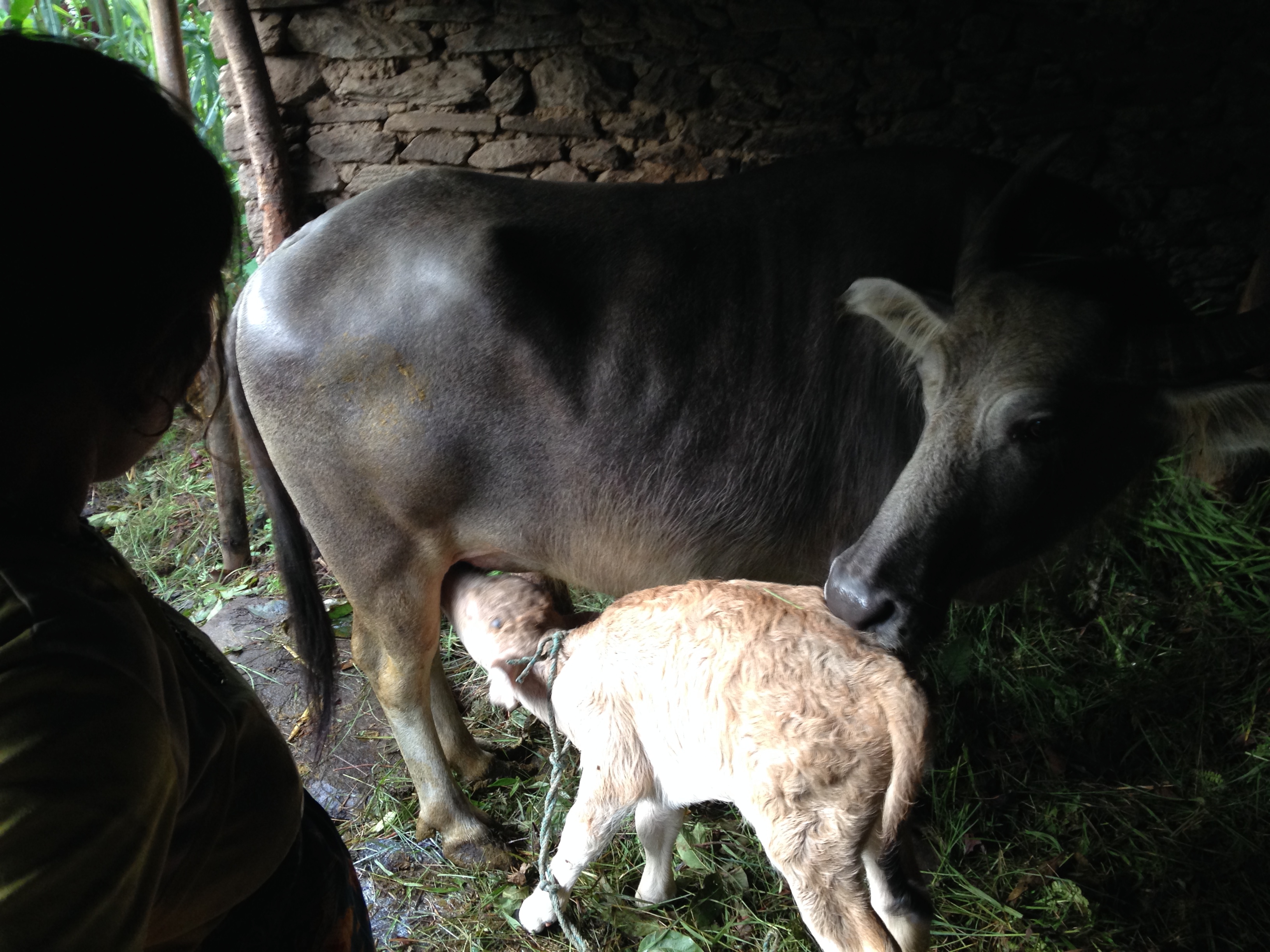
Mama Lulu and Baby O'Neil

Mama Lulu and Baby O’Neil under Aamaa’s watchful gaze


The Merit of Stories


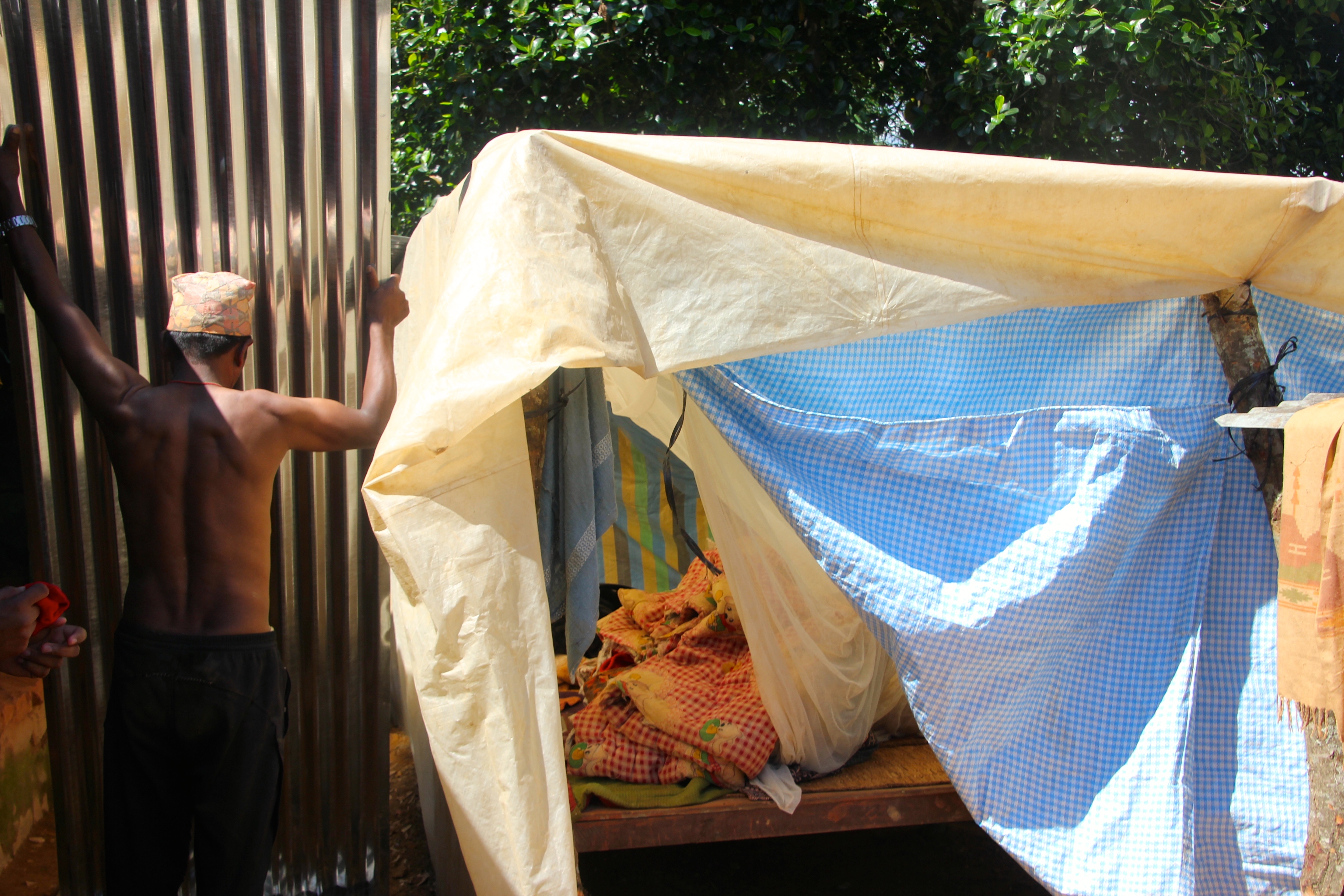
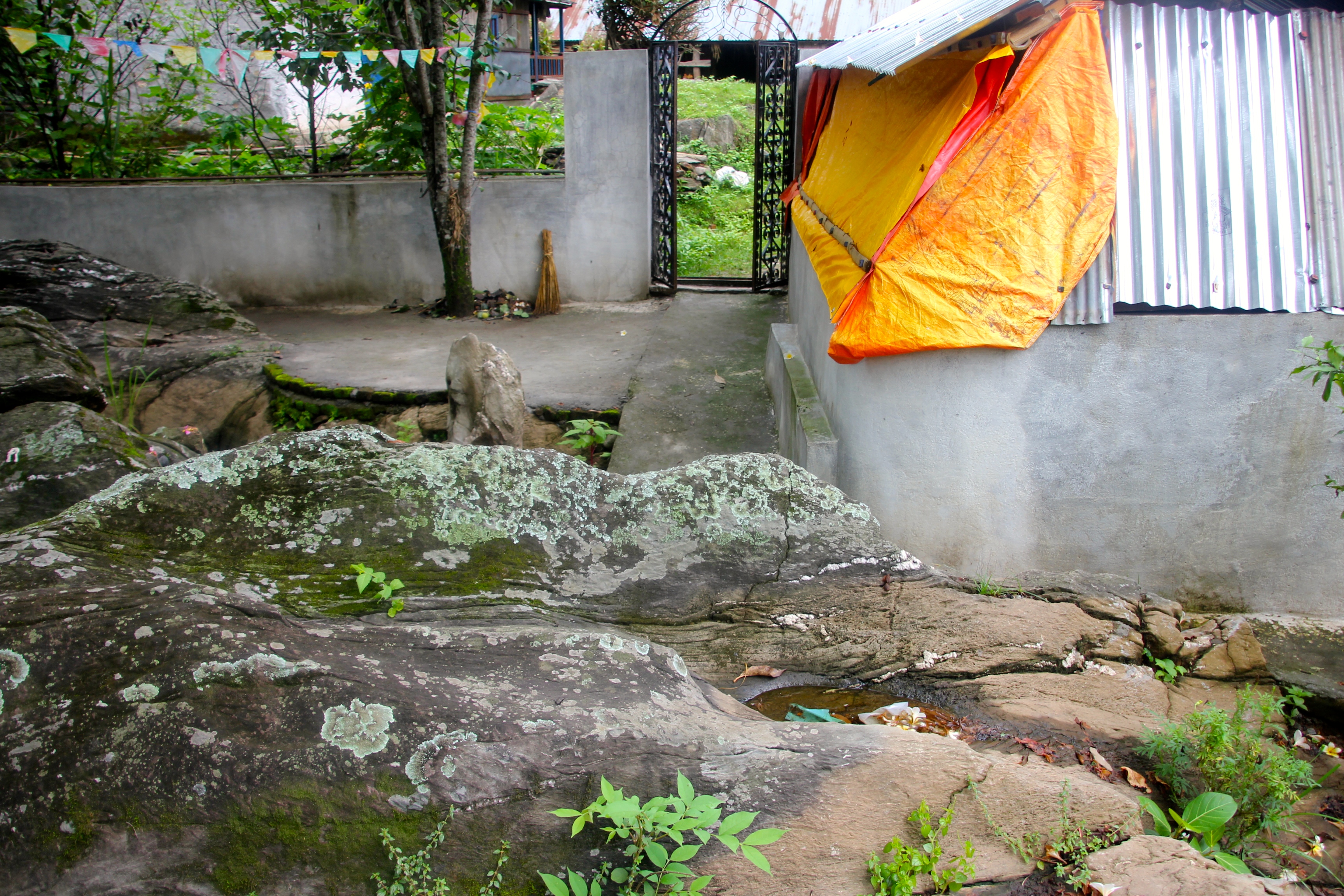
Last night in Tripureswor, Anne and Dilmaya and I slept in a makeshift tin cottage with the sound of the river rushing by outside. When we got up in the morning, we were astonished to find that the shelter was buttressed up against this stunning prayer site.

This slideshow requires JavaScript.

It is hard to capture the beauty of this place in a photo: river-worn, looping rock formations swirling around the base of this strong and humble tree. It is maintained daily and with great joy by our host, Krishna Man Shrestha, known by everyone here as Saila Dai.

He took us in to this wonderful garden and proudly went around showing Anne and I where each of the Gods sleeps in it. Below is the bed for Shiva, king of the Hindu gods. I missed a brilliant moment where Saila Dai lay down in this nook in his shorts and Nepali hat with a blissful smile, eyes closed, hands clasped in a Namaste over his head, to demonstrate how Shiva sleeps here.

IMG_0672


Yesterday, as soon as we met Anne and crammed in to a hot bus with tiny seats to drive to Dhading, I told her about my friend Mary, who died a week ago. I’ve been missing her terribly and I feel myself trying to sort out where she is in this strange journey I am on in post-earthquake Nepal. Even today, I’m not sure why we’re headed out to Dhading. Because Anne is an expert on ritual, I knew she’d have some ideas of ways we could connect with Mary on our impending adventure in Tripureswor. While we bounced along in the bus, Anne told me about the Buddhist ritual of cultivating and offering merit to a departed soul, to help them along on their transition from this world to the next. I knew that was the perfect thing to take with me into our undiscovered story in Ward #6.

Saila Dai

Saila Dai

So Saila Dai’s gorgeous prayer site was an auspicious beginning to our day. After tea, we left with Bishnu to explore his village. I brought along my recorder and camera. With no clear plan and full day from Pokhara, it is safe to say we were winging it.

What we ended up doing was sitting down at house after house talking with the owners. We asked about their families and where they were when the earthquake hit; how they’d rebuilt and what they thought the future held. When asked what we were doing there, we were honest: we said we weren’t sure. We admitted don’t have the capability to do a complicated or expensive project so far from our base in Pokhara, but we were interested in understanding what people are experiencing in Tripureswor.

IMG_2357To our great surprise, person after person told us that we were doing a great service by taking time to talk with them. One person said, “by coming here and looking us in the eye.” Anne and I were both amazed by how many people said things like this. People’s lives are pretty shaken up in Tripureswor. But of course, it’s not just the talking, it’s the sitting, the cup of tea or slice of cucumber, the story of the prized son who is studying college in Kathmandu, the unwritten story of getting old in this place. It’s the lack of an agenda. That’s how most of the things that have mattered in the end have started for me in Nepal.

And then there was the water. The main focus of the iNGO community right now is shelter, but no matter who we asked, everybody told us that the biggest problem in Ward #6 is water. The earthquake damaged the water tank that supplies this whole ward, so they’ve been piping water in from neighboring wards, but that sharing won’t last. And even so, people have to walk very long distances to fetch water. Having done plenty of that myself, I can tell you it’s no picnic. The community has already located a new spring, and all that’s needed is infrastructure to collect and distribute. But in addition to some simple concrete tanks and many kilometers of pipe that they need – which is something we could provide – there are some complicated engineering factors, one of which is that the water source is on the other side of the river, so pipes need to be slung across it like electric wires.

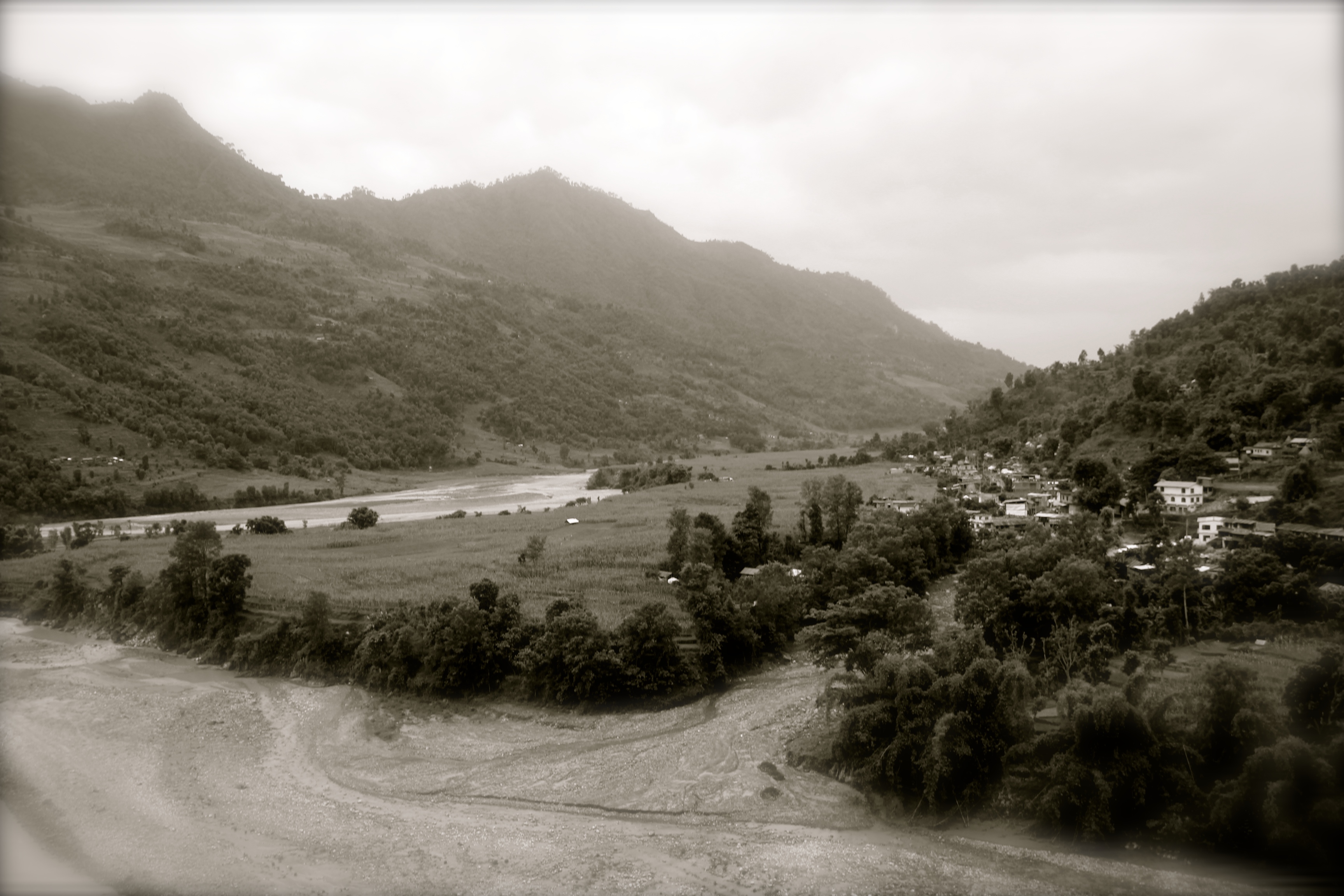
Ward #6’s water pipes will have to be slung over this river.

Ward #6’s water pipes will have to be slung over this river.

As the day went on, it became clear that the water project also is too complicated for us. However, Dilmaya and I did feel like we’re capable of advocating for it. I can contact Oxfam, the major iNGO doing recovery this village, and my contacts at United Mission to Nepal, who are also involved with relief in Dhading district. We decided that Anne would stay for the week and help get together enough details for a proper proposal. Late in the afternoon, we all went in to town to meet with the Village Chairman and run this all by him.

The last thing to come out of our day was that Anne, who’s spent many years doing cultural and sociological research in Nepal, came up with a beautiful project for her upcoming week. There is a Japanese tradition whereby people write prayers or wishes on small pieces of paper, tie them to strings, and then hang the strings in the air, sort of like prayer flags. She plans to have tea with all sixty families in Ward #6, look people in the eye, and write their worries and prayers with them. She bought the paper and string while we were in town meeting the chairman.

I also did a lot of recording and hope to produce an audio slideshow about Tripureswor, as well as a radio story about the effect of the earthquake on animals. So if that works out, I’ll have a concrete reason to point to that we schlepped – and I mean SCHLEPPED – all the way out to this village. And if the water project actually comes around, that will be really amazing.

But on some level, I understand that this expedition was not about something concrete anyway.

Late in the evening, I went up to a high hill behind the house, overlooking the valley and emerald hills that are glistening with humidity and rain. I did my qigong practice and offered the merit of our day to Mary, to guide her on her way. I offered the merit of Saila Dai and the humility and joy he gives to his enchanted prayer site, and which he had in turn offered freely to us. I offered the merit of looking people in the eye, of meeting Janet for twenty minutes in a coffee shop and connecting her good heart to mine and following the road out to Tripureswor Ward #6, with no agenda but to listen to stories and return them to Janet, whom I don’t know at all. I got started late, so by the time I was finished with my practice, it was nighttime on the unlit hill, nothing but moonlight reflecting off the river in the valley and the spare lights of the bazaar down below. Which seemed right. The merit of stories is how they linger past sunset, into the darkness, when all the people have gone to bed.

.      .      .

IMG_0835

The Road We Followed


A few weeks ago, I was sitting in a coffee shop in Lakeside, and overheard a woman at another table on the phone, trying to figure out how to help a village in Dhading. When she hung up she was frustrated and kind of flustered. We got to talking, and it turned out her name is Janet, she’s from Taiwan, and she has a friend named Bishnu in this village in Dhading, Tripureswor, Ward #6.  She explained all the ways she’d been trying, unsuccessfully to help Bishnu’s village.

I don’t know why, but after asking her a few questions, I told her I’d try to figure out what was going on in Tripureswor, Ward #6. Dhading is a few districts over from Pokhara, quite far from us, but I’ve learned enough about the system now that I figured I could at least make a few calls and get more information for Janet.

Plus, although I’m proud of the work we’ve been doing in the lower percentage of damage, I can’t help but feel drawn to at least see the higher percentage of damage first hand. So I was fascinated with Tripureswor Ward #6, because it fell in my lap.

I made some early phone calls a few weeks ago and confirmed, to my surprise, that Janet was correct in thinking that so far Oxfam had only provided 2 bags of rice, hygiene kits, and 20 kg of rice seed to residents of Tripureswor. Any other work there had been done by small, private groups.  I learned that out of 947 households in Tripureswor Village, 924 had been destroyed or damaged.  Fifteen people died.

I never actually saw Janet again in person, although I called to tell her what I’d found out, and she left to return to Taiwan a few weeks later, and recentlyIMG_5124 sent me a disappointed email saying she’d never been able to get anything together to help Bishnu’s village. One organization after another had either refused to help, or said they’d help and then backed out.

But Tripureswor Ward #6 has stayed in my mind. Since Lamjung is one district in the right direction and we were going there on Thursday and Friday to deliver tin, I called Janet’s friend Bishnu on Wednesday and introduced myself. On Saturday morning, Dilmaya and I decided to keep going on from Lamjung to Dhading.

Additionally, my good friend Anne has just arrived from the U.S. Anne and I met in the one Nepali class I’ve ever taken, during the summer of 2006 at Cornell. We are a great pair because she can read Sanskrit and speak royal Nepali, and I can’t read at all but I can talk with animals; she did her PhD and wrote a book on modern politics and public ritual in Nepal, making her an expert in local history and religion, and I am the world’s leading expert in carrying things on my head with village wives and cracking jokes in my rural accent. Between the two of us there’s pretty much no situation that we don’t have covered.

So on Saturday morning, Dilmaya and I took a bus east from Lamjung and Anne took a bus west from Kathmandu, and we met by the highway in Malekhu. And from there: to Dhading.

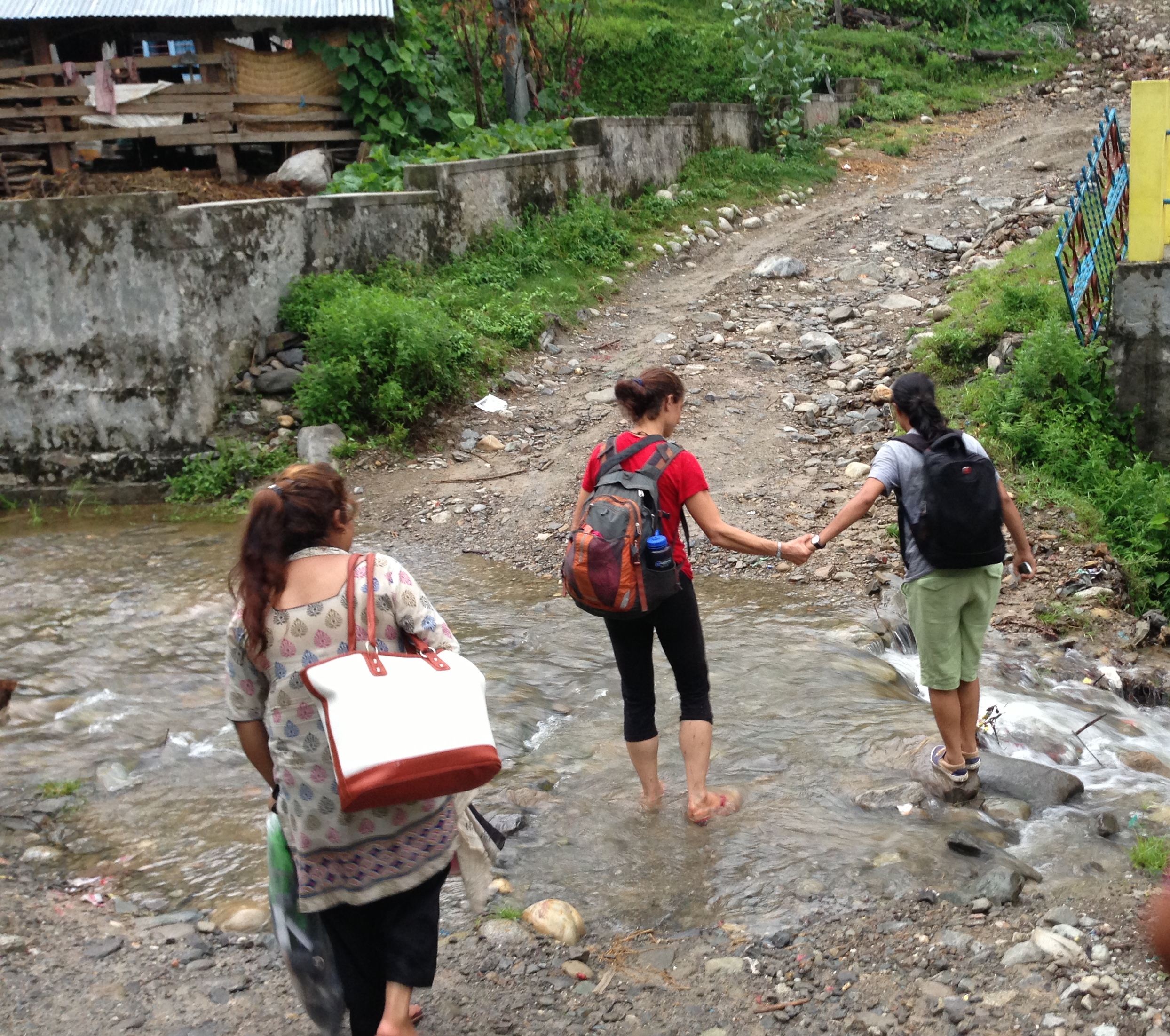
This is now the part of the story about a very, very long muddy road.  The second and main part of the journey, a few dozen kilometers from Dhading Besi to Khahare, took us five hours.

We passed this jam,

IMG_5131

and this jam,

IMG_5127

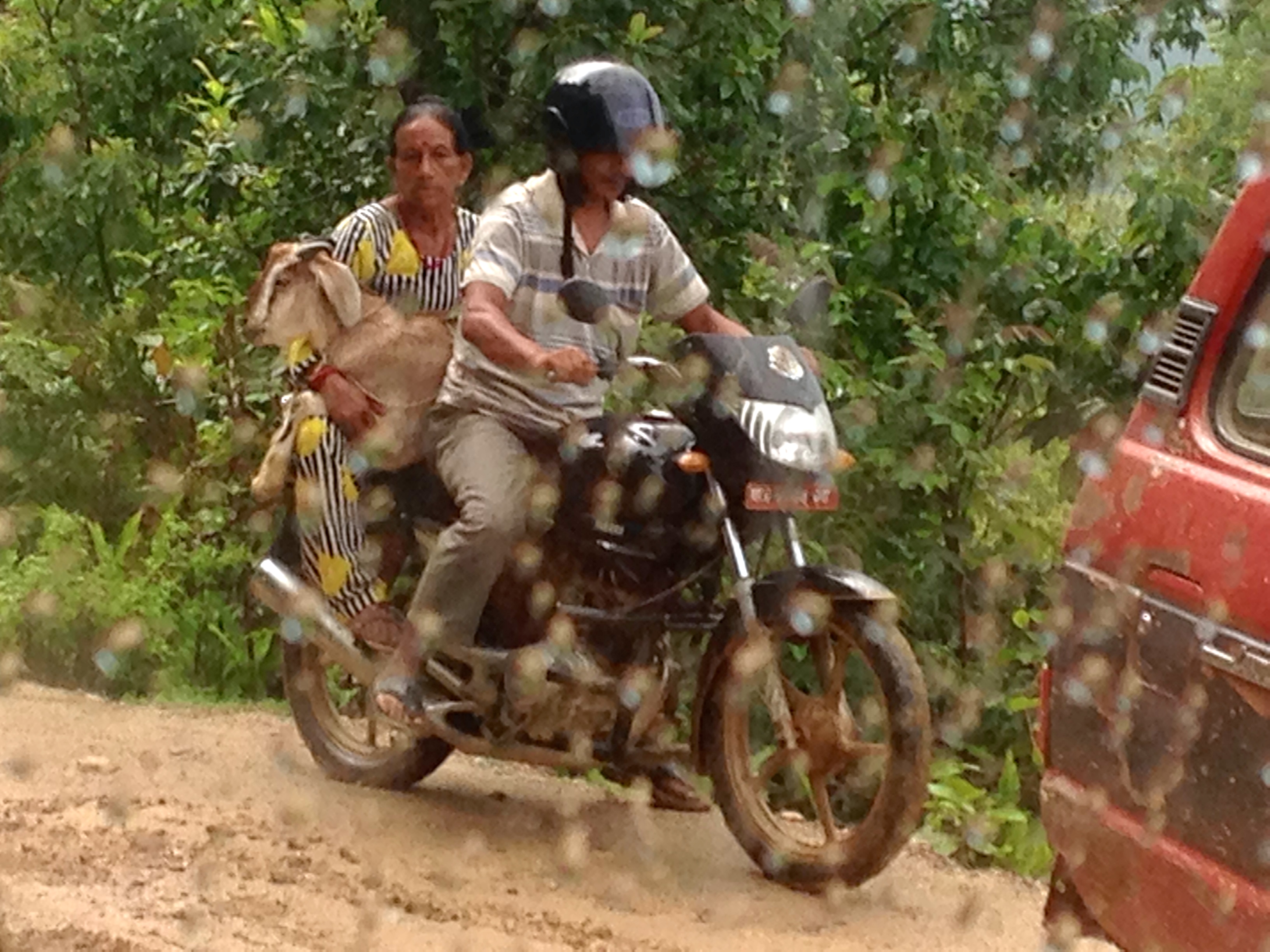
…let’s just zoom in on that grandma on the back of the motorbike with the goat.

IMG_5130


Inevitably, the bus gets stuck, because someone had decided that morning that it was a good idea to use a bulldozer to churn up the dirt on this road to improve it.  During the monsoon.


We sit in the bus for a long time, it is raining, I have no idea where we are, I play some Amy Winehouse on my phone and entertain everyone with my village accent. Eventually we get out of the bus and we start walking. We passed some people standing near the bus clucking their tongues, saying, “The dozer had just dug up this road and made it so nice and flat. And then just like that the rain came.”

I just want to use this opportunity to make a public service announcement: IT’S MONSOON SEASON, PEOPLE.  The rainy season.

IMG_2319

Dilmaya and me walking to Khahare (photo credit: Anne).


Now that we were all used to the idea that we would not be arriving in Tripureswor at 2pm or 5pm, but more like 8:30pm, or maybe never, the walk was nice. It gave us an opportunity to take in more and for me to take photos of the misty evening that had turned the glassy rice paddies blue and green.

IMG_0654


First of all: Dhading is nothing like Archalbot and Bharte. Almost all the houses collapsed or became tear-downs.

IMG_0636


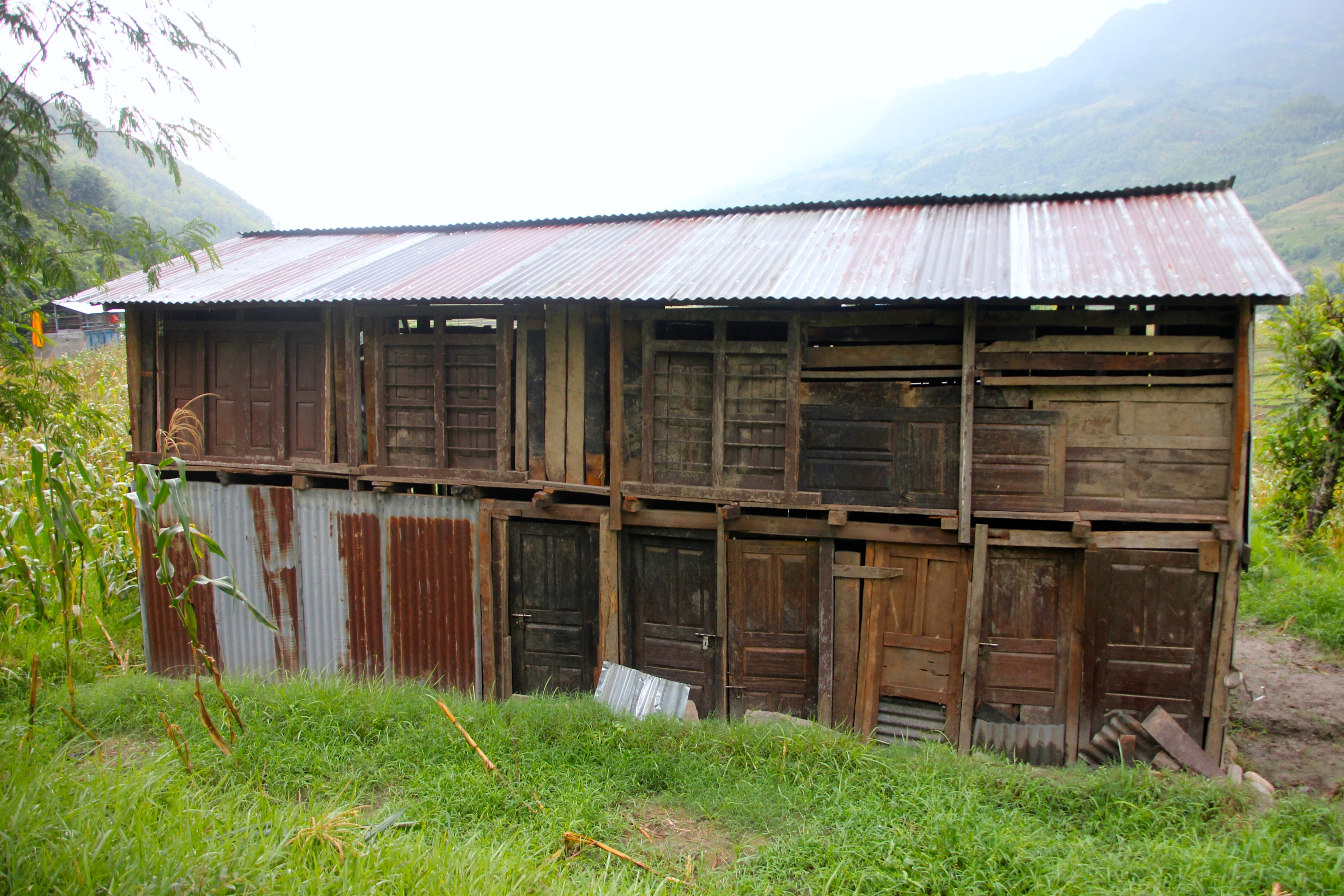
However, the rebuilding that’s already happened here is amazing. We realized right away that even though we don’t have the capacity to do tin delivery in a place like this, we don’t need to. House after house had been fully demolished by hand, materials organized in to piles, and new homes made from extremely innovative techniques. Our favorite was this one, made almost entirely out of doors and windows.

IMG_0635


We followed this road for what seemed like forever to its endpoint in Khahare. Bishnu’s mother came to meet us, and led us across a suspension footbridge over the river (this river and footbridge, has been one of the major obstacles to efficient aid delivery in this Tripureswor). And then there we were, at Bishnu’s house in Tripureswor Ward #6. We left Lamjung at 8am, and arrived here at 8:30pm.

IMG_0779


Not sure what we’re doing here, but I guess we’ll find out, and then I’ll tell Janet about it.

.      .      .

IMG_0745

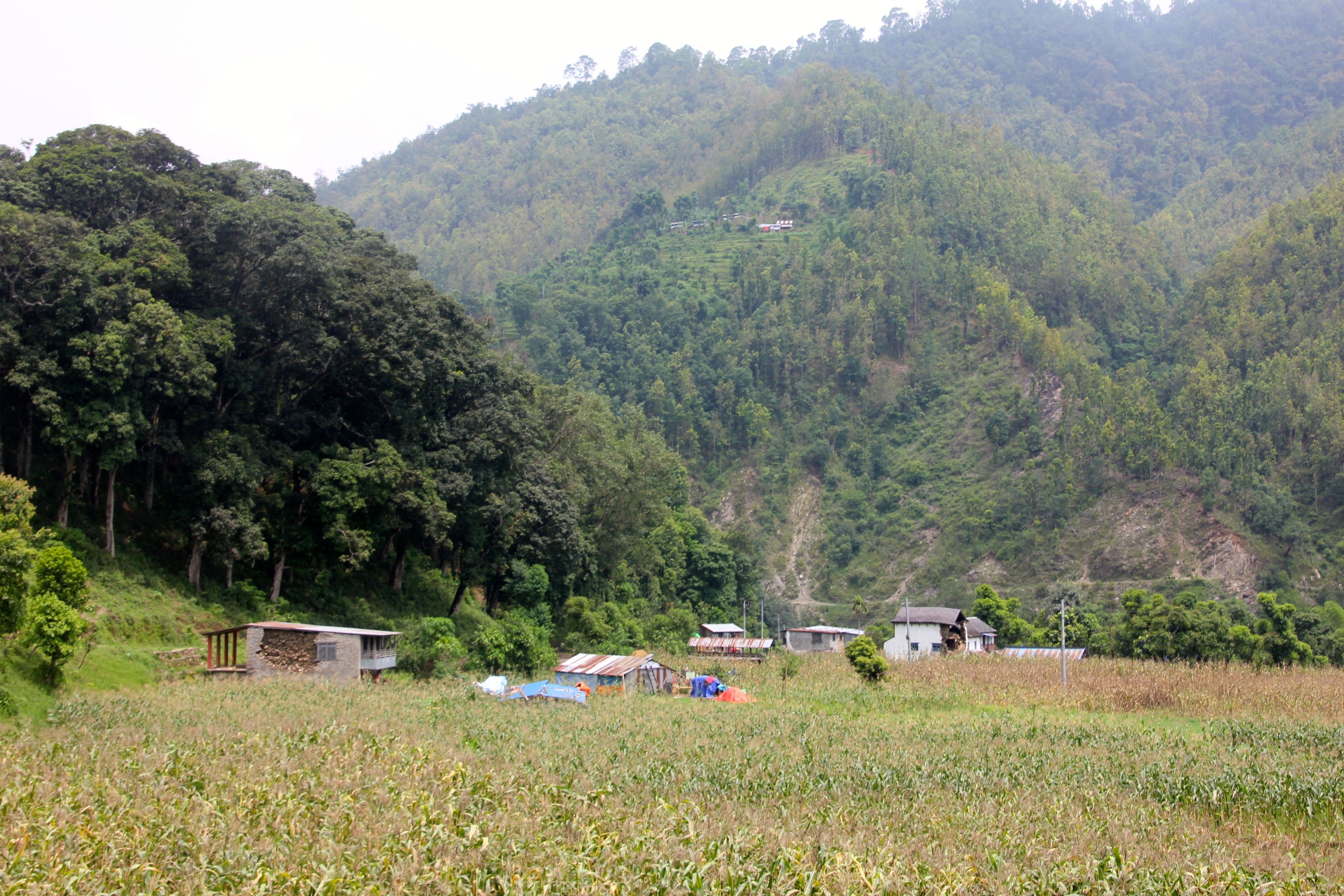
Bishnu’s recently built tin house, sitting among the corn fields in Tripureswor Ward #6.


Life Boxes in Bharte


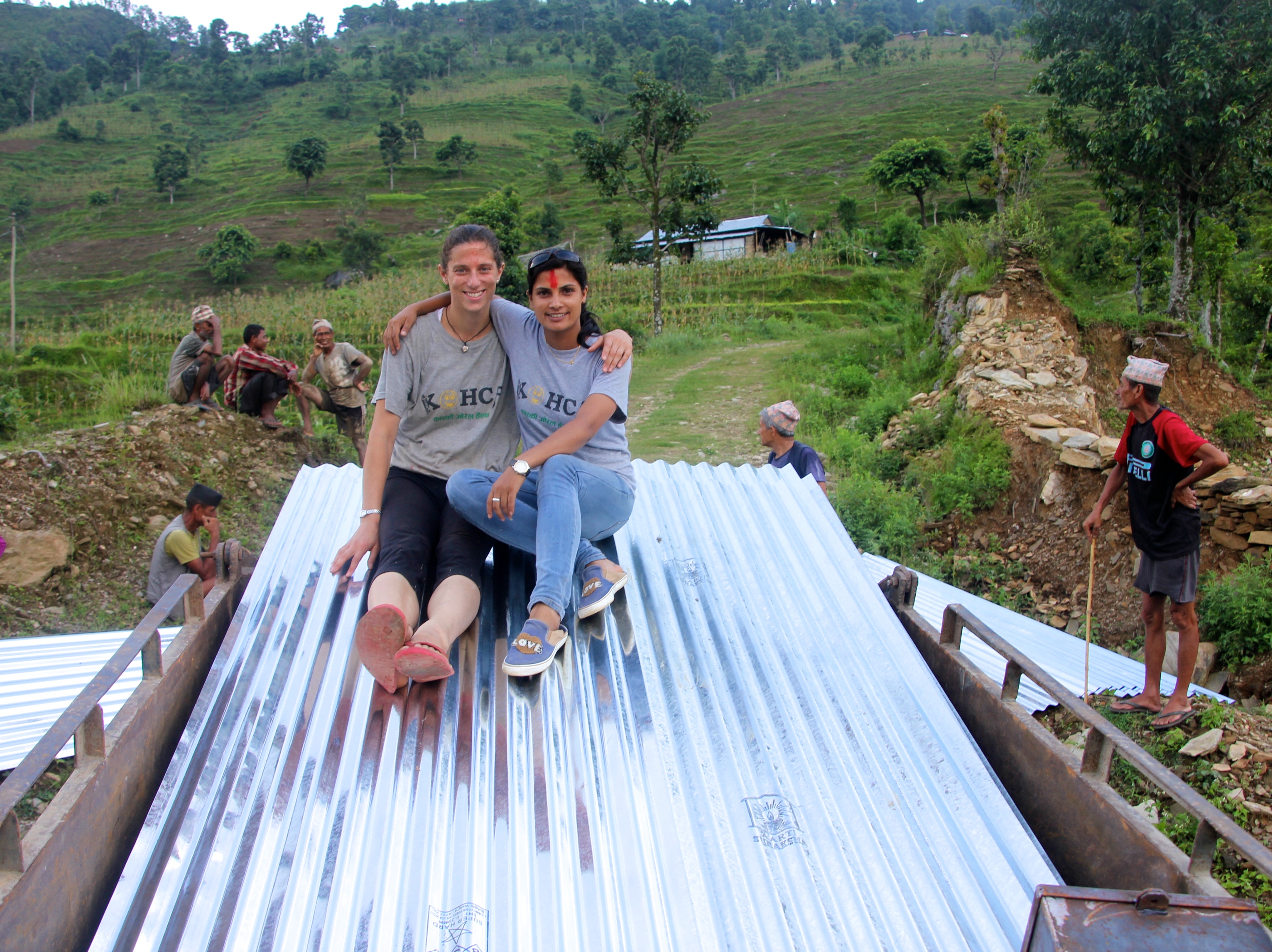
We ended up providing roofs for 19 bamboo shelters in Archalbot, all tightly concentrated in a single community. But I’d still say Archalbot was a training ground for us. We really hit our stride in the neighboring village of Bharte, where we’ll end up having done about 80 houses. The community in Bharte really stepped up to the plate; we didn’t really have to do much running around encouraging people to build. Once we offered roofs in exchange for walls, we got walls and more walls. Today was our second tin delivery in Bharte – we were only able to bring about 30 more roofs, because we’re having trouble securing enough tin! So there will be one more lap as soon as we can get our hands on the rest.

IMG_0564So remember that road with the double-tractor-head-butting situation from the first time we did this? Ok, so, now they are taking down that pesky bridge where the wire had popped out of the ground. Therefore our tin delivery to Bharte was held up for a few days because the previously bad road was…well this photo is what it looked like the afternoon before we were supposed to go to Bharte.  You can see that the bridge cable that had been a problem at knee height a week ago was now at head height, and the road completely churned up by a back-hoe.  The reason is because they decided to take that entire footbridge down.  In any case, there was no getting pas this road block, tractor or no tractor, and the entirety of Bharte is on the other side of this 10 meter stretch of road.

Luckily, the cable was taken down and road cleared by late morning.

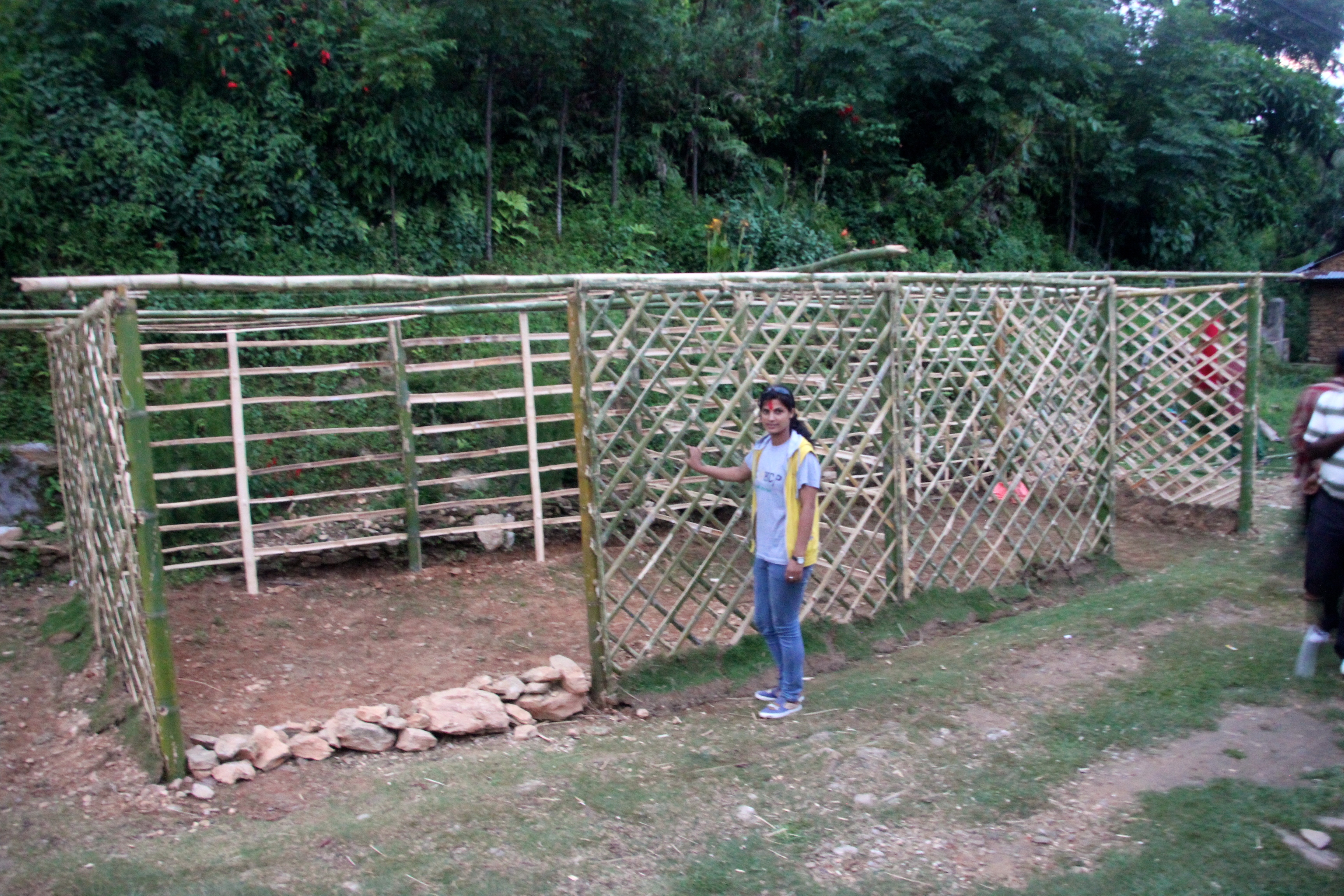
Bharte Village pioneered the group house, which is awesome not only because the group houses are very well made, but because it was their idea and they ran with it. It’s also a great solution to the land problem that so many families in Nepal are facing if their houses didn’t completely collapse. And when you build with bamboo, it’s not too hard to partition the inside if you want to.

The group houses also offer a brilliant opportunity to distribute…Life Boxes!! Since people are sharing these structures, they are the perfect place to put my little invention that provides some lockable privacy. In my personal opinion.  We ordered ten more Life Boxes and had them delivered with our tin.

IMG_0579

The group house is Sirewari

One of our first stops was the amazing and now completed group house in Sirewari, where we gave out the first five Life Boxes. I started to put one in the ground with my twin sister Santa (many people, including my mother, have said she looks like me – and I’ve done a double take myself at some of her photos!). But we ran out of time and had to jump back in our jeep. So, here’s Sirewari…you can see the tarp this replaced here.

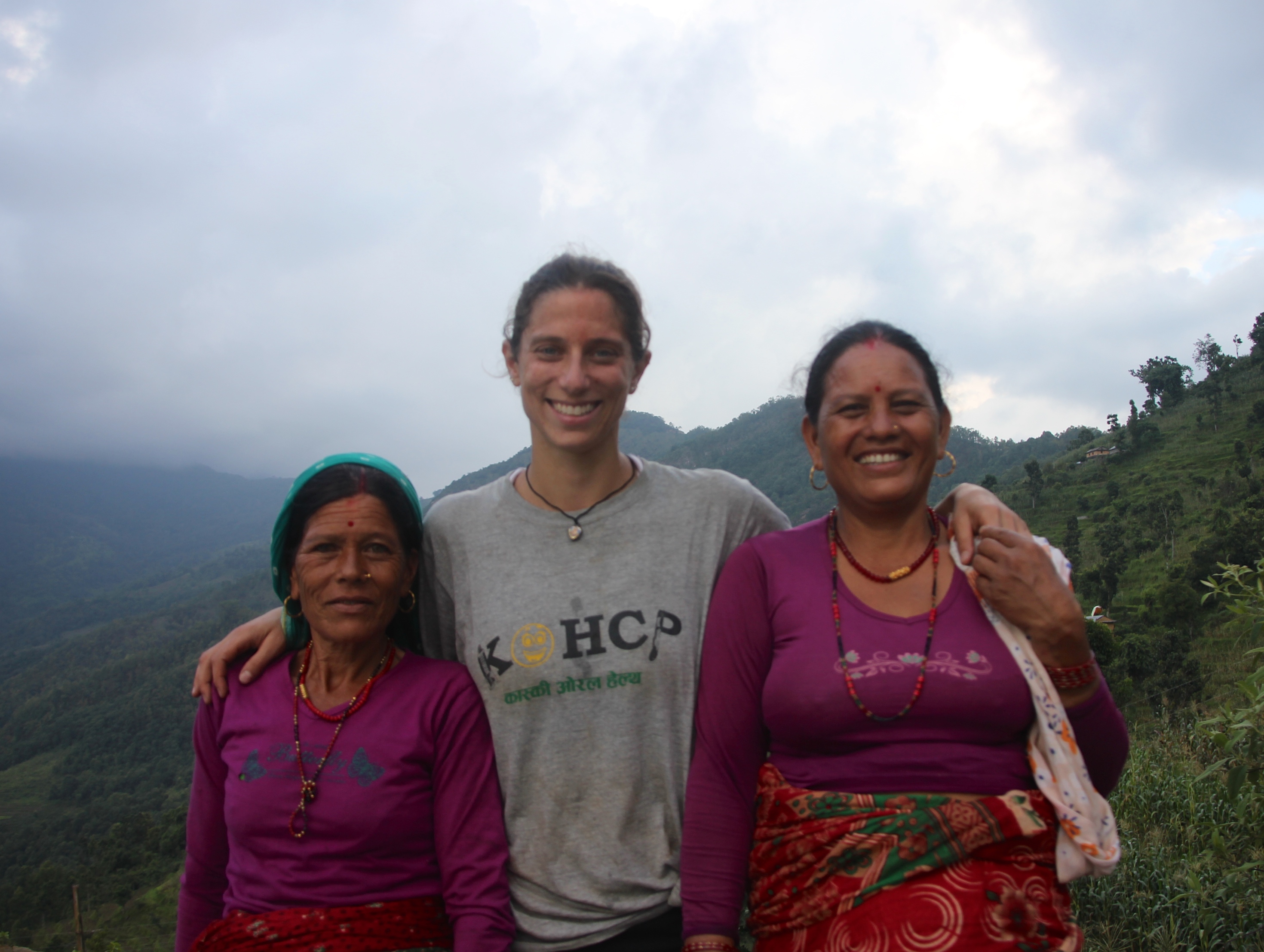
We continued with the rest of our deliveries of tin and boxes. Late in the afternoon, we arrived for a drop off and these two ladies got to talking with me. One of them had gotten tin from us that day, and the other handn’t. They’d been sharing a tarp with one other family and took me on to a ridge to show me the tarp from afar, in the hope the other two families under the tarp IMG_0614could be part of our last remaining delivery. There was something about them that was naturally appealing and almost familiar. I remember thinking their voices and speech patterns were a perfect representation of “how people talk around here,” because I was sure I’d heard it before.

Come to find out, these are Bal Kumari’s older sisters!   They were like, “You guys are the people who helped our little sister, with the roof and the cash.” And we thereby became besties immediately. And I love how they all seem to wear purple. I think I know these gals from a past life.

Since we couldn’t add to our tin list today, I did the obvious thing in the mean time: provided Bal Kumari’s other sister with a Life Box. We’ll get her tin on the next round.

IMG_0630Here’s another group house at the junction in Lakure. We have them Life Boxes too. Our local coordinator Laxmi was excited that this is a junction area that gets some traffic, so our Box will get some visibility. That’s right, you heard it here first, folks. Life Box. Soon to become famous at this junction in Lakure.

Laxmi has been an amazing liason and I think Bharte is a place where we will definitely consider starting our dental program in the future. The people here have been good natured and proactive. For me it’s been a pleasure to have these small personal stories woven in, moments of connection with Santa and Bal Kumari and the ladies at the tea shop in Lakure. It was late at night again by the time Dilmaya and I got back to the hotel in Bote Orar, ate something, and fell right to sleep.

.      .      .

IMG_0602

A Bamboo Village

I am so excited about this post. I started hoping I’d get to write that title a few weeks ago, and now here it is.

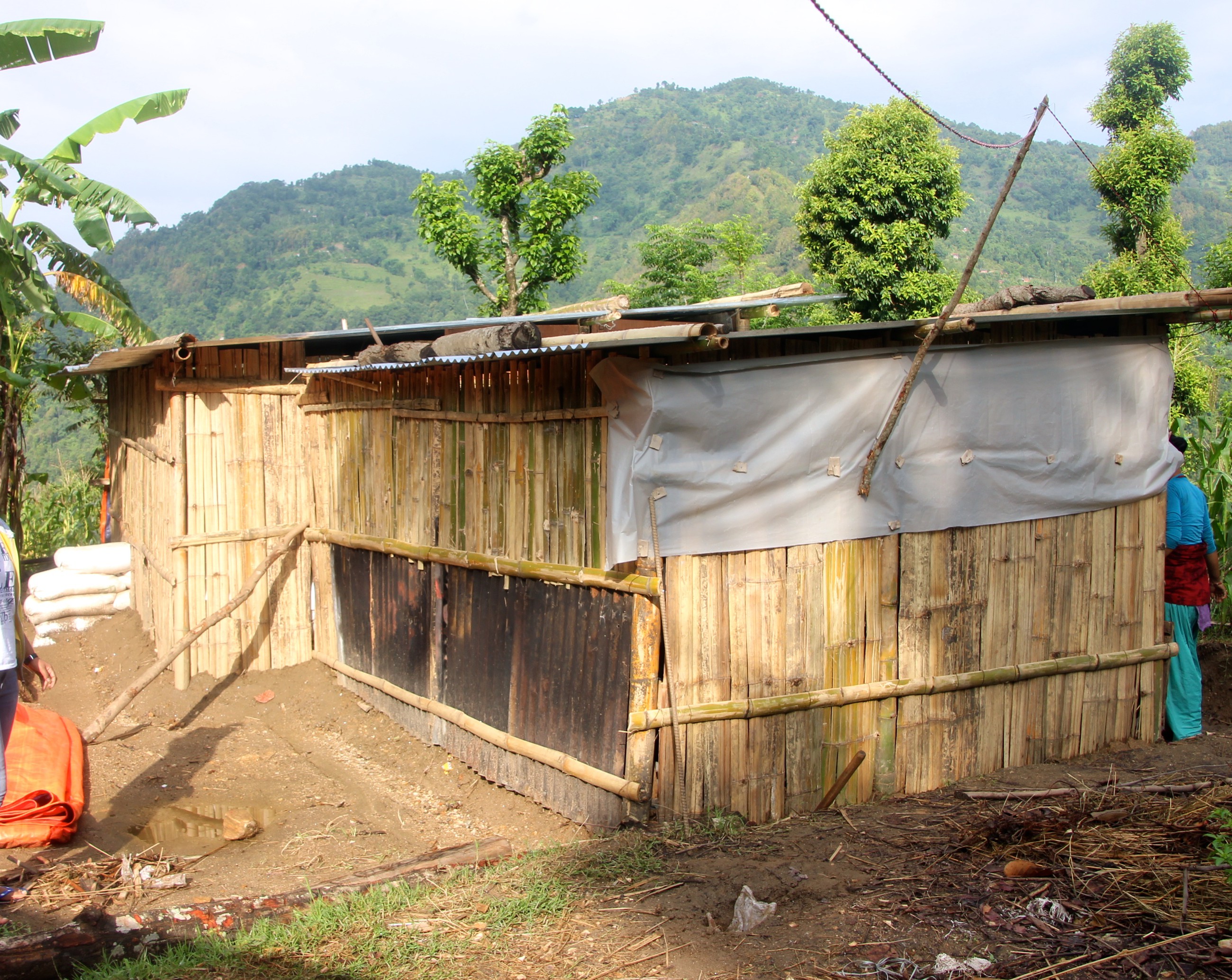
We went back to Archalbot today to see how things had progressed since our tin delivery about a week ago. In contrast to our first shelter outreach effort, where we left not knowing how many heads we’d actually covered, in Archalbot we found a village of new bamboo houses. Some of them are still in progress, for a few reasons. One is that the houses in Archalbot didn’t fall completely; most people still have homes that are dangerous, but not technically unlivable, which slows down the shelter construction. The second is that it’s planting season, so people kind of got something up as quick as they could, and plan to do their plastering and finishing in about a month.

Still…this was a pretty great sight to see. Let’s start with the earthbag house. It’s been covered in a bamboo frame and turned in to a pretty sweet little cottage with electricity and everything hooked up, and a neighboring home built right next to it, much like the attached houses they are temporarily replacing.

IMG_0513


Next up, remember Kushal? Here is a photo from the tour he gave me of his original house, and here he is in his new bamboo home.


The site we glamped at in Kripa’s yard, which was previously the buffalo shed, is now a bamboo outdoor hotel (which unfortunately, I seem not to have taken photo of!) And this lady, Kripa’s neighbor, was seriously so happy about her bamboo cabin that she absolutely insisted we come back again after the planting season, when it’s all plastered and everything, to stay the night.

IMG_0494

I could post another load of these photos. They were just great, one after another.

IMG_0497

For the sake of transparency, I should admit that there was one woman who hadn’t built a thing; her tin was sitting on the buffalo shed waiting to be used. In the end, we didn’t pre-check all the frames or original houses in Archalbot, because we’d spent so much time there and the homes were so concentrated that we relied on the community to police itself (and in fact, it was a neighbor who brought us over there). This house is one of those that is ambigiously unsafe; cracks in the walls, but generally a more appealing place to live than a temporary house, so it’s kind of up to the owner whether or when they’re going to bit the bullet, move out, and rebuild.

We had an awkward interaction where I politely explained that she didn’t really need a roof – which I could see from looking in her house – so we’d be giving it to another family in the morning. I said we’d welcome do our best to provide anything else she could think of for something she actually needed. That was at 7:30pm. When we came to pick up the tin the next morning at 9:30am, we found the following:

IMG_0549

Well, that worked. For something.

So we have the successful, the more successful than we actually we wanted…and Uttam. Of all the houses in Archalbot, Uttam’s family’s are my favorite. Unfortunately they’re on borrowed land and in the last week and a half, the landowner said they can’t stay, so in theory they’re going to have to relocate this whole operation to their own land, where their ruined house is still taking up a lot of space. As a result they didn’t bother building the front wall. But I still give this house an A- overall, and an A+ for improvement from starting point.

IMG_0555

IMG_9442

However the trophy goes to Uttam’s older brother, whose home is quite smaller. Remember when I this family didn’t want to go cut bamboo because they said nobody would help them? When Uttam’s older brother and his wife left for the woods with their tape measure, and when he showed me where he’d planned the guest area? This guy and his wife looked so proud of their house and so grateful that something in this world hadn’t proved to be a sham.

IMG_0471

When I took this photo of Uttam’s brother outside his house with his grandson, he called me over and pointed to the camera, and I knew he was going to say what people always say: “Please send me a copy of this picture.”

But he wanted something else.

“Show this photo to the world, ok?” he said. ”You know, something for people out there to remember me by.”

.      .      .

IMG_0483

Beautiful Things

We are building houses of many kinds around here, one of which is our own. In between trips out to Lamjung, I’ve been slowly setting up our new office. We’re moving from a one-room office to a four-room office, and anybody who knows me will know that I can labor for weeks or months over small decisions, and filling up a new space requires an infinite amount of decision-making. It took me three weeks to choose carpet, and then the people who came to lay down the carpet did a really bad job, cutting jagged lines and making a mess of it. I had the store send them back and then stood there while they cut everything in straight lines. As they left we were chatting, and I asked them not to take it too hard. Americans, you know?

If I’m honest, my obsession over our new office setup isn’t just about an neurotic issue with straight lines. These walls are going to be ours for some time to come, I hope, and a home where we chase a vision of some kind. And after over a decade of sharing spaces – from dressers to offices – there is a part of me that feels the slightly daunting emptiness and possibility of this unfinished office. The prospect that it will be a space I designed, and that when we walk in, it will feel like it has something of me in it. I realize this is pretty indulgent, but the compulsion is real. 

Anyone who’s ever worked with a contractor knows that anyone in any country can obsess endlessly over both important and insignificant issues of build, and contractors can correspondingly obsess not enough over these things. But I do feel confident saying that Nepal takes certain aspects of haphazard interior design to a new level. The kind of care people put in to their planting, or their outfits when taking a photo, or cooking, or weaving mats, just doesn’t get put in to home decoration. Modern housing in Nepal is quite compatible with leaky faucets and doors that don’t quite fit their frames and paint assortments of ecstatic colors that overlap lazily from one feature to the next. So for better or worse, I’ve begun to lord over each poor unlucky soul who comes here to put something together, just to make sure our work space doesn’t become an accumulation of unloved creations.

IMG_5081So it’s not exactly going fast, but it’s going.
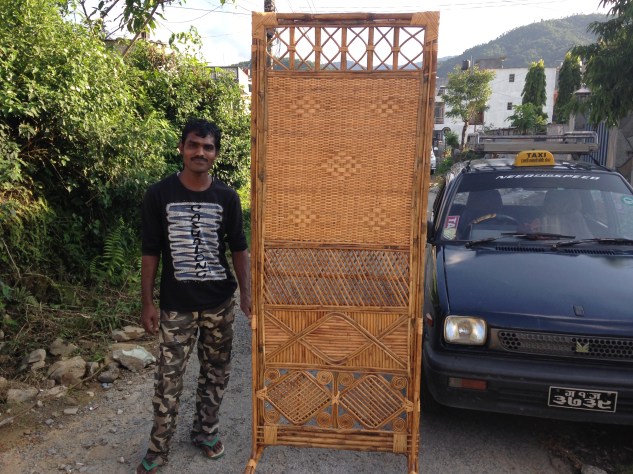
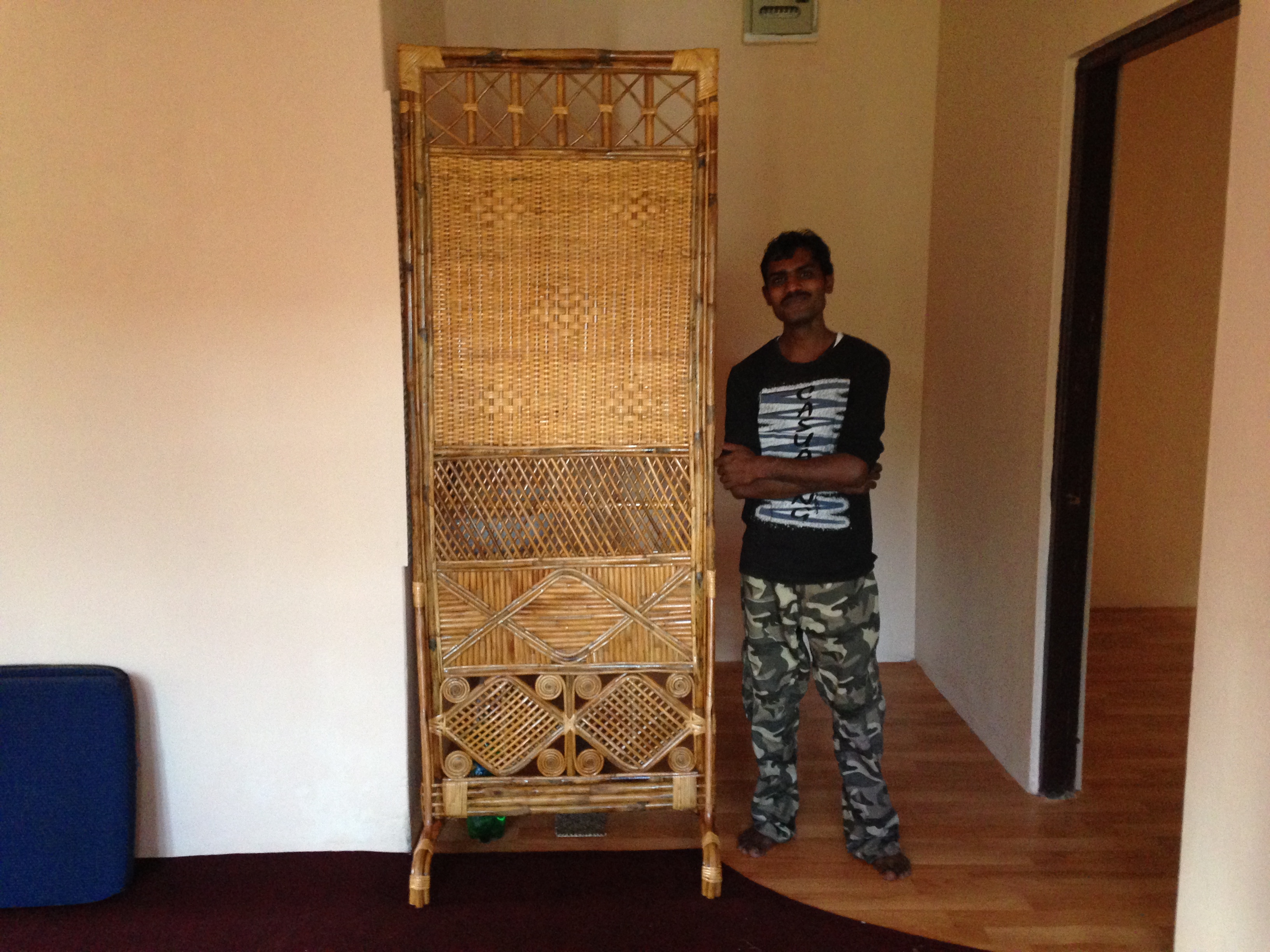
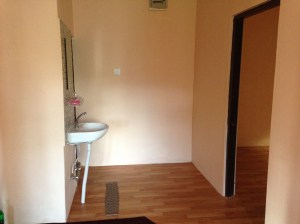
One funny quirk of our new space is this sink outside the bathroom, which is just hanging out in full view of the rest of the office. Someone suggested that I get a local bamboo artisan to create a simple screen to put here, so that people coming out of the bathroom would have some privacy while using the sink.

So last week I asked Shiva to go to Mahendrapul with me and stop in at one of the bamboo furniture places. He pulled his bike over at the first one we happened to see, where there was a young man named Umesh.

Off all the things we need to set up in the office, the bathroom screen isn’t the one I was most concerned about. But when I set about explaining what we needed, Umesh began leading me around his shop to examine various handmade bamboo chairs and tables and hangers, cataloging designs I liked. He was extremely attentive and enthusiastic, and as our conversation went on, he couldn’t help himself from admitting that he’d opened his shop just two weeks ago, after fifteen years of working for someone else.

“I told them, I can make anything,” he said, looking like he’d been bursting to tell somebody this. “My hands are full of skills. I said, ‘Why are you keeping me down here?’ And I left and opened this shop.”

Being the choosy perfectionist that I am, I could easily have told Umesh thank you very much and moved on to the next place so he could get his new business going with a less high-maintenance customer. He quoted me $90 for the screen – as expensive as one of our desks, three times as much as the chairs he sells. Very enterprising, I thought. Good on ya.

Instead of going to the next shop, I went with Umesh to our office so he could look at the extraneous bathroom sink area himself. And after all the discussing we’d done, I waved my hands and said, “Ok, the main thing is it has to be opaque from here to here. Other than that, do whatever you think will look nice. Make it your own style–a ‘By Umesh’ bathroom screen.”

“I’m going to make you a beautiful screen,” Umesh proclaimed. “This is a very new idea – it will be first of its kind in Nepal.”

Four days later he called to tell me it was ready. He put in in a taxi at his own cost and brought it to our office, and when I arrived to meet him, he was already standing in the road with the screen next to him, trying to hold his smile in.

IMG_5076

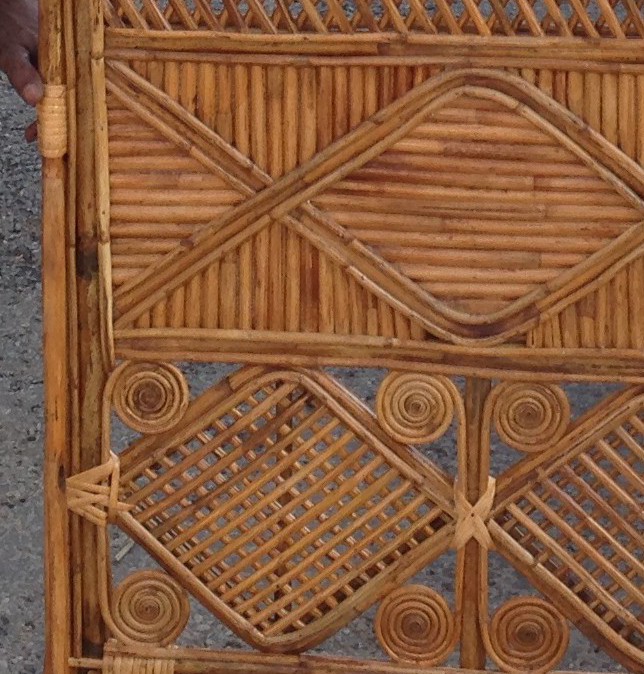
This exquisite bamboo sink screen is no doubt my single favorite thing in our new office. It is absolutely gorgeous and in the U.S. would sell for a few hundred dollars. It has the charming quality of being made from bamboo during a period of months where I’ve been, oddly enough, spending inordinate amounts of time in the hot sun encouraging and supporting the creation of bamboo homes in post-earthquake Nepal. But most importantly, it was created with a great deal of pride and love. One side is bent a little, the natural curvature of the bamboo, a perfect imperfection. What started off as a temporary wall to enclose a bathroom became this magnificent piece of artwork.  And as we were all discussing later, you should have some things that you keep around just because they are beautiful.

IMG_5080

Before Umesh left, he couldn’t help admitting another thing, which was that, actually, I’d been his very first customer. I said he was our very first artisian in our first professional office, and that I expected his career was going to go quite well.

“I’m never going to forget you,” he said as he left.  And I said, “I’m pretty sure I won’t forget you either.”

.      .      .

IMG_5076

Speeches and Roofs in Gijyang

Well folks, we have returned to Parbat. Our most recent delivery of tin was for 25 families in the village of Gijyan, where our dental technician Anita made multiple visits to help coordinate. We’ve learned a lot since our first visit to Parbat a few short weeks ago; now, we require that people begin building a frame before we provide the tin roof.

I present you this awkward photo of me, to prove that at least Dilmaya and Anita were laughing at my jokes.

I present you this awkward photo of me, to prove that at least Dilmaya and Anita were laughing at my jokes.

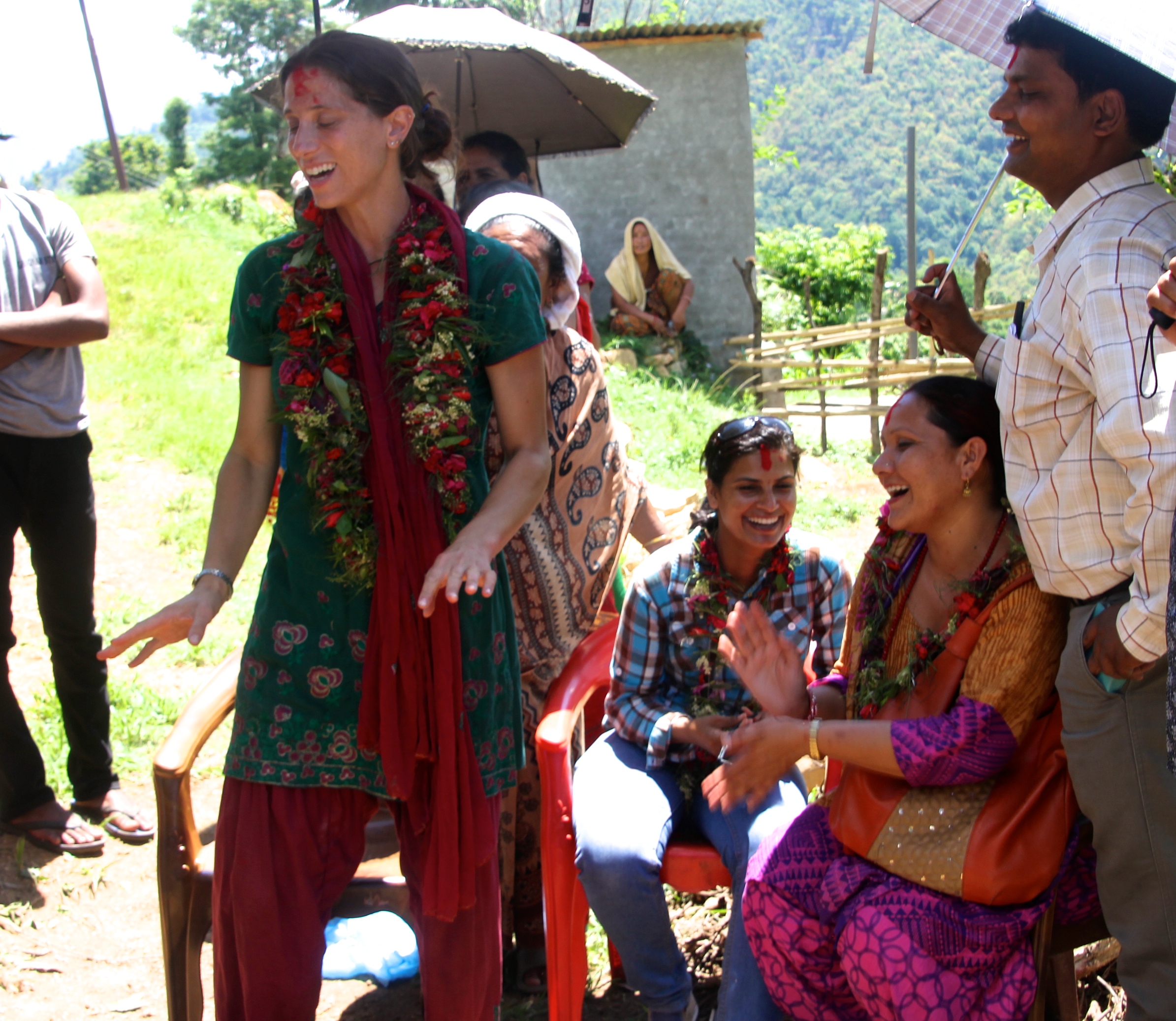
This day went really nicely. There was a welcome ceremony with flowers and tikka and everything – a process which all of us prefer to skip, but which must be allowed for if the community is really looking for a chance to express thanks – and I was asked to give a speech. I’m not much for public speaking in English, but every once and a while I find myself in some Nepal speech situation where aliens take over my brain and make me suddenly completely fluent in another language, and I have everyone’s rapt attention for four solid minutes. I cracked jokes, I said how much we appreciated how hard they’d all worked to rebuild, that we know roofs don’t do much without the effort of the people who need to live under them, but that we hope our small contribution to their efforts will go a long way to extend their results. I offered that the reason I was taking photos and recording was to share their village and their story with other people in the world, not to show off photos of my disaster vacation, so I hoped they wouldn’t mind. Anyway, as you can see, this speech was more riveting in Nepali than English. The strange thing is if you asked me to write it down in Nepali now, I’d need lots of help. Sometimes these things just come out of my mouth and I don’t know where they come from!

After that we began our tin delivery and it was hot as all get out. This one lady kept following me around trying to keep an umbrella over my head for some shade, much like an 18th century European Dutchess, which I truly appreciated because it was hot, I tell you, HOT.

IMG_0359

We visited a handful of the houses that were being made or had been completed in anticipation of our tin delivery. Some of them had wonderful bamboo work. I spent some time talking with this 21 year old woman who is going to deliver her baby any day and was living under this tarp, where her family had hooked up electricity and a TV.  I hope that with the tin roof, her family will replace this heat-insulating tarp with ventilated walls made from something natural.

IMG_0420

Dilmaya and Anita and I all felt really great about today. Our 25 bundles of tin went on 25 respectable shelters.  Success!

.      .      .

 IMG_0362

Tractor Cowgirls


What a wonderful day!

After a week of endlessly trying to chase down corrugated tin, Dilmaya and I spend the entire day today riding around the hills of Nepal delivering roofs in Archalbot in Bharte.

IMG_0147

Our morning started off pretty slowly – I’ll spare you that part – but let’s just say there was heavy rain and 53 bundles of 12 foot, 60kg, corrugated tin involved – when you stack up even some of that tin and try to lift it, it’s as unmovable as a 12-foot block of concrete. There were two tractors and a jeep.  And, of course, one cute little Life Box.

IMG_0146We had a few special deliveries as well – cash relief for Bal Kumari, and a box of ceramic mugs for Muna Bujel’s family, which had completely rebuilt (minus tin) when I met them on that crazy ridgetop in Lakure. When I asked what else they needed, given that they’d done such an amazing job reorganizing their rubble in to a house already, Muna Bhujel looked around and kind of shrugged, like “Lady, look at this whole situation,” and said, “well a lot of our glasses were smashed.” So we threw a set of teacups for her.
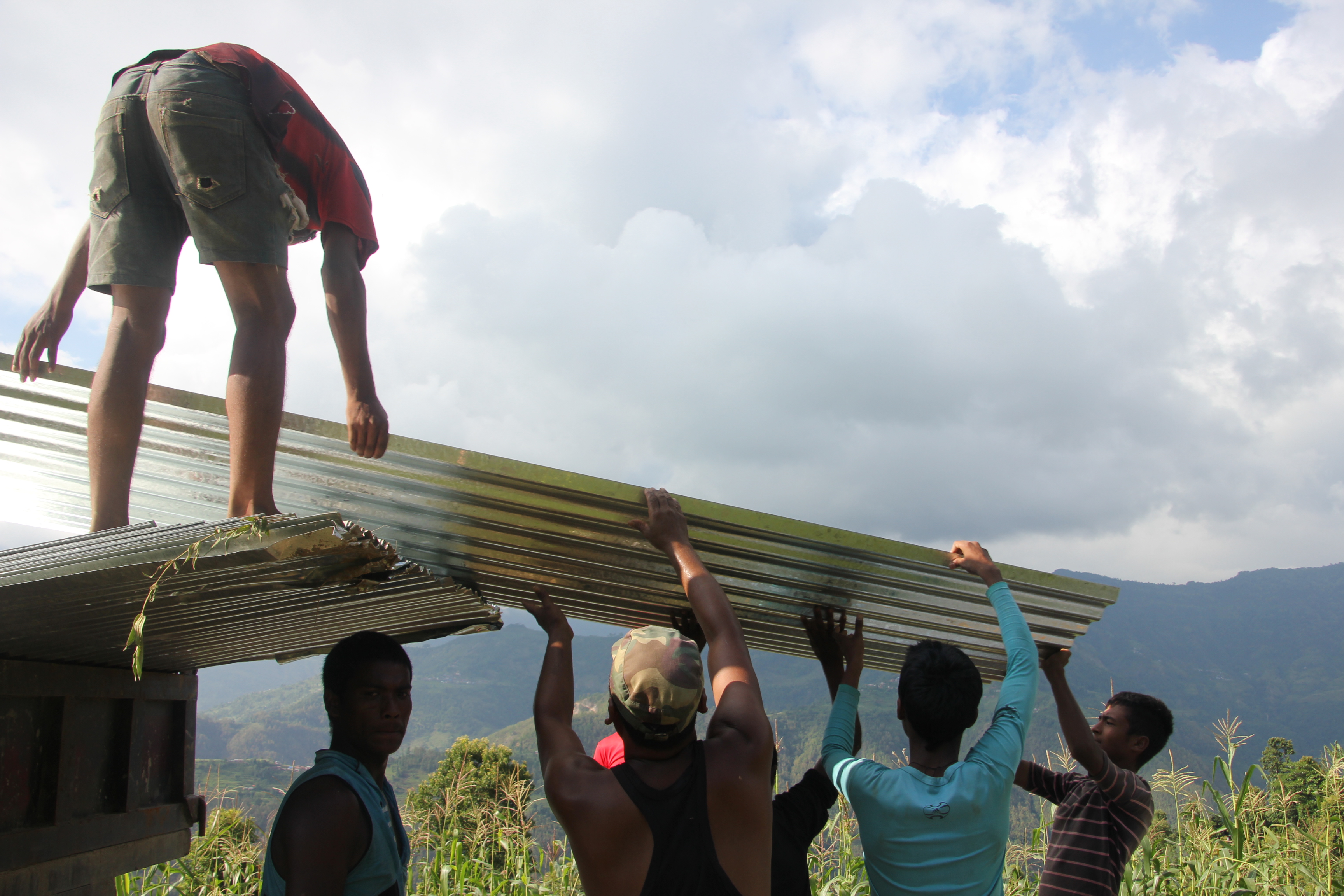
It was nearly 11pm by the time we hit the road in Udipur on tractor #1, which was carrying 17 bundles of tin for Archalbot. Voila, Archalbot tin delivery! While we were here, we met three more families requesting roofs. I visited their houses and told them to start building. We’ll be back next week to check on the rest of Archalbot, and we can bring roofs for a few more families if they build before then.

Next, we had to switch to tractor #2 which was loaded up with our major delivery for about 50 homes all over Bharte.  This led to a situation and the following clip of video that pretty much says it all.  Here is what it’s like to try to provide aid for half a million ruined and damaged homes in Nepal’s hills.  An anchoring wire on a footbridge had popped out of the mud softened by the rains, and our tractor couldn’t get over it.  This video takes place about half a mile from a paved highway, on a 10-meter stretch of the only road that leads up to the village.  We did this for ONE HOUR before crossing this little patch of road that is the access point for the entire hillside of Bharte.

We finally got to our first stop in Sirwari, which was totally awesome.  When I first visited Sirwari about a week and a half ago, three families were living together under this tarp.  We asked them to build a good quality bamboo house and promised a roof.  When we arrived today, they had built this gorgeous bamboo community home for all three families!  I love this photo because you can still see their old tarp in the middle, hanging out until we can put it out of business with corrugated tin.  We delivered said tin that very afternoon, and promised we’d come back to see the finished product and spend the night.

IMG_0202


We looked at some of the other bamboo frames in Sirwari, and of course I wanted to take lots of photos and hang out and talk with everyone and Dilmaya was texting me madly to hurry up because we still had two tractors and a jeep full of tin and a lot of deliveries to make.  On the way, we picked up Sarita, Kripa’s young sister in law, whose house we’ve been staying in in Archalbot, and who’s become our pal.  The three of us crammed in to the two-person seating area in the front of the jeep, and we were off again, eating some lychees.

Our next stop was Bharte Banjang.  As far as I could tell, it’s the poorest, most remote and devastated area that we’ve visited.  Lakure is also quite remote, but people there had mostly rebuilt, whereas in Banjang, we met families with lots of young kids living between rusty tin or having moved in to the buffalo shed, with the buffalo.

IMG_0219We brought new tin for 10 homes, housing 49 people, to Banjang.  By now we were in a hurry, so I don’t have as many photos, but the building quality wasn’t as good in this area.  People didn’t have access to long bamboo nearby, so even though our coordinator in Bharte offered long bamboo off his land for free, nobody went and got it.  Many of the frames this community had made were far to low to stand up in.  Instead of the bamboo wall technique we saw in Sirwari, which is tight and can be plastered with mud and made permanent like Tulasi’s house in Parbat, people had simply criss-crossed bamboo, like this, which is far less secure.  This is kind of a mystery to me.  I wasn’t IMG_0233sure why so many of the people in Banjang had made structures with such obvious problems.  We decided we’ll do our best to provide day employment for some of the Sirwari people to come up and help the people in Banjang.  We’ll see how that goes.  In any case, at least these folks will be able to move out of the buffalo sheds and such.  I will venture to say that if we had not required that people build before providing these roofing sheets, this is an area where a lot of our tin would likely have sat in the yard or been thrown on top of unsafe houses.
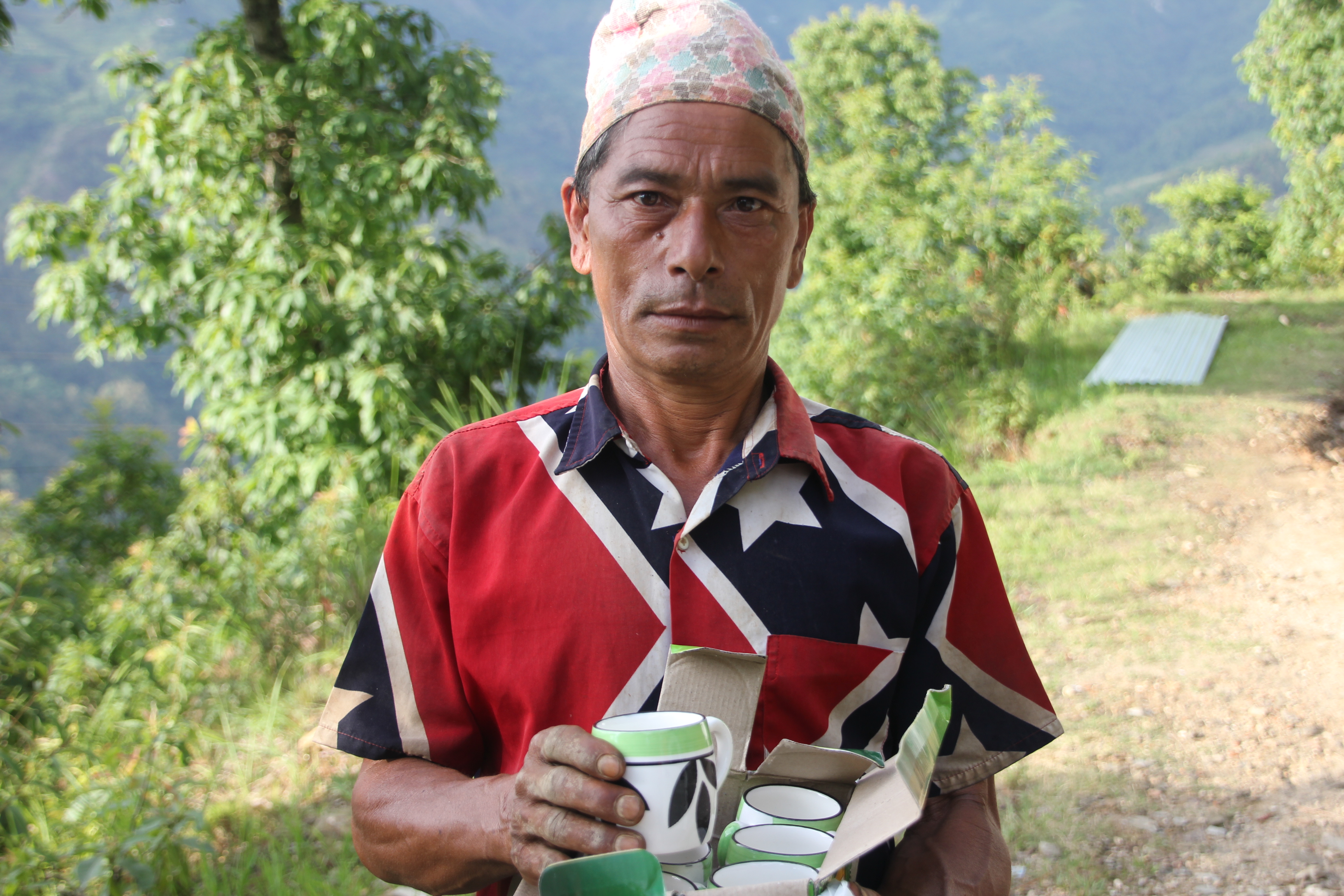
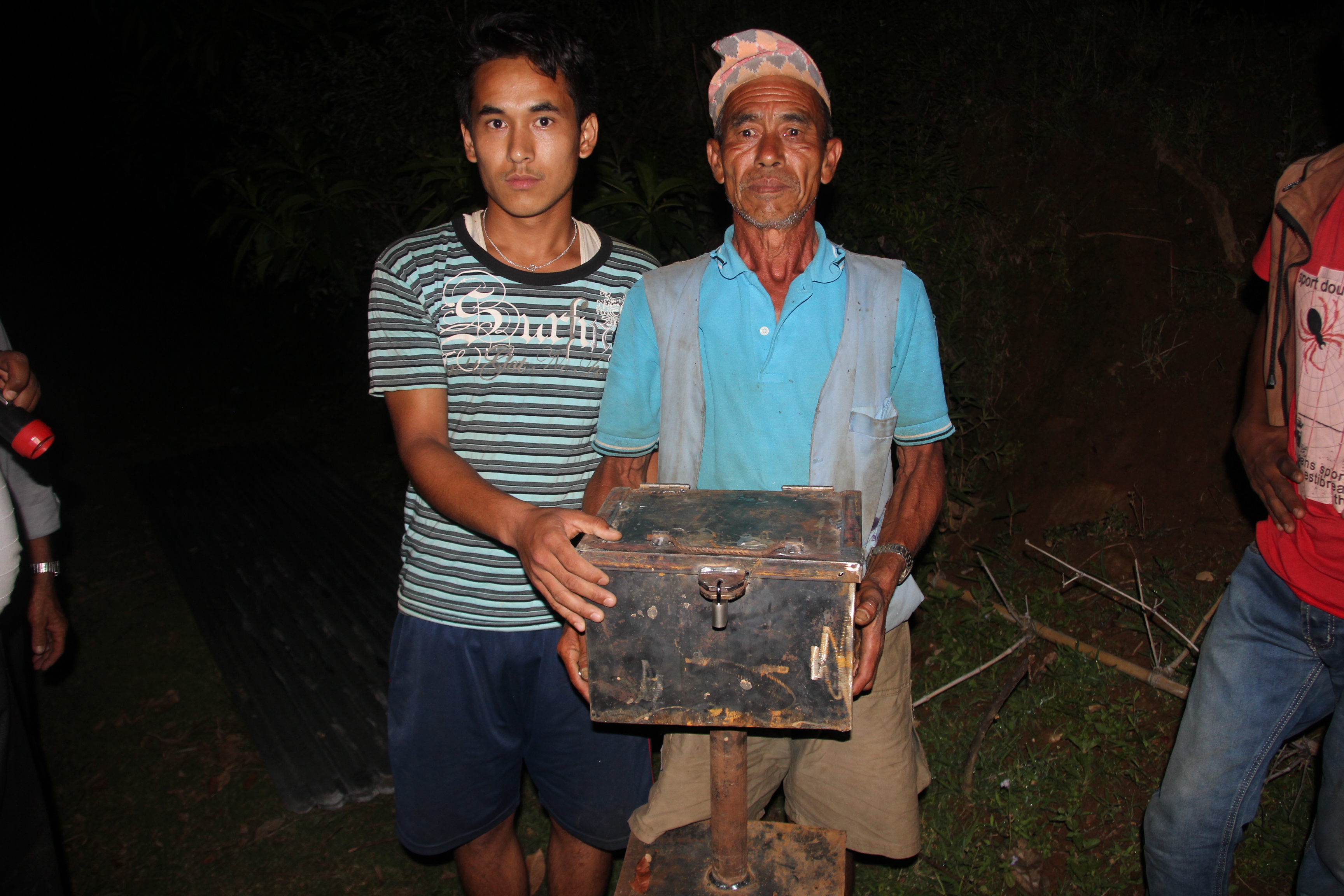
From there we went to Lakure, my favorite spot in Bharte, where we delivered tin to Bal Kumari, and gave her $300 in cash that she was not expecting, to repay her loans.  Here is Muna Bhujel’s father with the teacups we gave him.  As you can see, he is pretty much speechless.

IMG_0236Then it was time to go to Besigaun for another 12 homes.  By now it was dusk, and as we headed out to our final few stops, it was night.  We made our deliveries in the dark.

Now, are you realizing we’ve left something out here?

Life Box, man.  Life Box.

We took this box out here and there to show people, but it was all so hectic that we didn’t really have time to do much with it.  I mean there wasn’t exactly time to dig a hole in the ground and bury the thing.

At our very last stop, we realized we had an extra bundle of tin, and this nice guy, Lok Bahadur Bhujel, and his son, came out and found us in the road.  They had built a temporary house but for now they’d covered it with a tarp, and wanted to ask us for help.  Well, as it happened, we had an extra bundle of tin that needed a home, so off it went.  Along with the Life Box!

Well, that was one of the more interesting days of my life.  All together, we covered over 50 houses and about 250 heads.  We’ll come back to Bharte in a week or so to check on things and see how some of these homes turned out. Dilmaya and I ended up spending the night at Sarita’s birth home in Bharte, and let me tell you, we did not have any trouble falling asleep.

.      .      .

IMG_0271

The Long Road to Tin


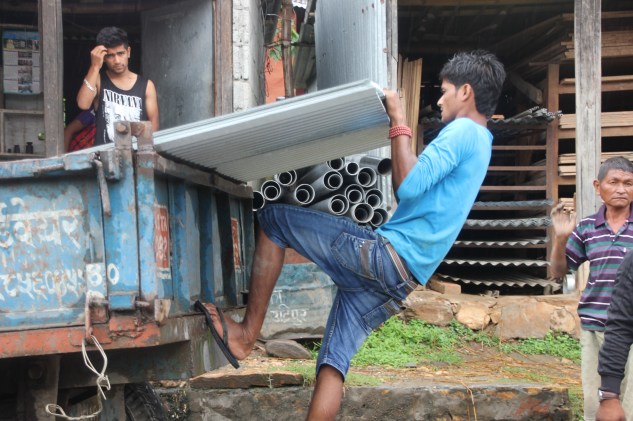
IMG_0105Everyone predicted a tin shortage in Nepal, and now it’s here. Just last week, I got two bundles of tin for Uttam’s family in the morning and delivered it to them in the afternoon. Now we are ready to bring 53 bundles of tin to our two villages, Archalbot and Bharte, and we’ve been trying to get tin for five days. I have all kinds of random new phone numbers stored in my phone – in addition to all the people we’ve met in the communities where we working, I now have contacts for Tin Shop Dhumre, Tin Shop Lamjung, Tin Shop Udipur…

Last tuesday night at about 6pm, I finally found a hardware store, on reference from one of the guys we’ve gotten to know in Archalbot, that had the 50 bundles of 12ft. tin we needed.  They had a tractor and everything. We’ve been putting people off in our villages for about five days, so we confirmed our plans on the phone and got ready to go the next morning.

Dilmaya and I set out in a cab from Pokhara at 6am. On the way, we decided to provide $300 in cash relief to Bal Kumari to help her repay her loans, because I shared a post about her on facebook and people offered to support her. So we had to find an ATM that would work in Dhumre. Two of them wouldn’t take my card, and finally Dilmaya was able to withdraw $300 and I shoved it in my bag and we were off again.

We arrived at the tin shop in Udipur, just north of Bote Orar before you get to Besishahar, and things started to get crazy. First, our cab driver demanded more than the fare he’d agreed to. Then, the tractor driver seemed like he was never going to show up. But things got really funky when the shop owner suddenly informed us that the tin would be $10 cheaper per bundle than she’d promised me on the phone the night before. In rupee terms, that’s an extra 53,000 rupees – enough to cover ten entire houses according to her original price.

I normally keep my southasian cool pretty well, but I was enraged. This is exactly what the government said wouldn’t happen when others said it would happen. And our hands were totally tied: we had fifty families who had built homes and, after we’d told them to sit tight each day for a week, were waiting for us to show up with roofs because we’d totally promised this time it was for sure. Today.

There’s also the blinding fury of watching people casually do something awful, such as profit off of the plight of earthquake victims and manipulate social workers encumbered by a tin shortage.  Certain things will really light your fire, if you know what I mean.

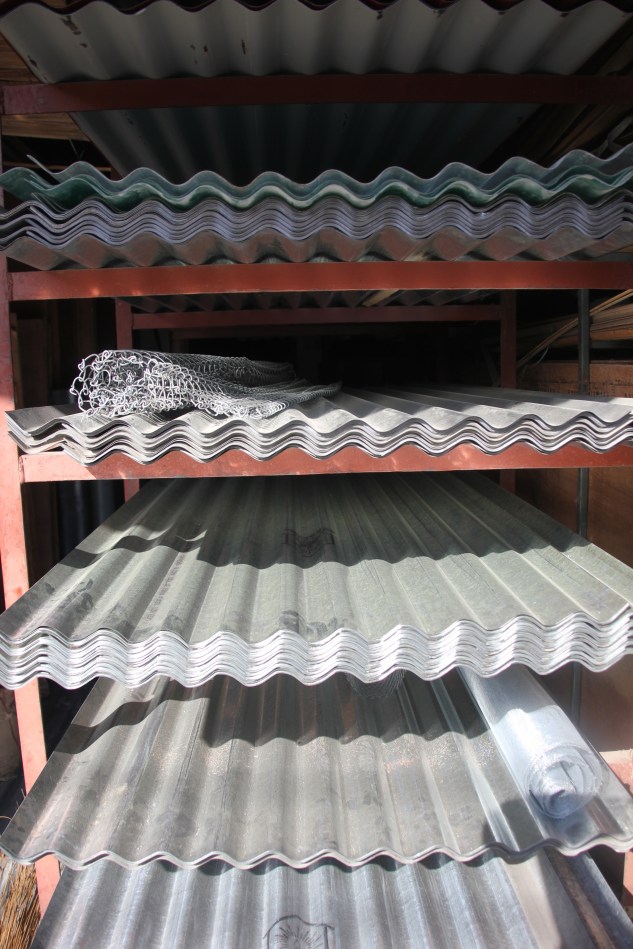
Stuck between an major rock and a hard place, called our pal Pradeep, the head official of shelter relief for Lamjung district, to explain our plight. Among other things, he told us to check the weight of the tin. Turns out that even 26 guage tin comes in all different weights and thicknesses. When we went and looked, the tin was only 42kg…lightweight. It folded like tinfoil.  They were selling it at the price of medium weight tin which is 25% stronger.

Reluctantly, Dilmaya and I realized we had to give up our plans for the day and drive up to Besishahar, Lamjung headquarters. We’d spoken repeatedly with tin vendors there on the phone, but it was impossible to get any straight answers. We were going to have to sit down in person at a tin vendor and wait it out, even if it meant calling all of our contacts in their villages, again, and telling them, again, to trust us.  We were still coming.  Really.

Before we left Udipur, we walked up the street and took down the name and number of another tin vendor named Sagar. He seemed like an honest guy. In any case, we sure had learned all the right questions to ask, and we needed all hands on deck.  The way the tin situation is working is that vendors in this region, which is in central nepal along the edge of the earthquake’s epicenter in Gorkha, drive about 10 hours south to Chitwan to pick up tin near the border in India.  Then they drive it back up here.  Often, they can’t say for sure what kind of tin they’ll be returning with until they get there and see what’s in stock.  That’s what Sagar was up to later that day.   If you’re lucky, you can order ahead of time and there will be a delivery of exactly the thing you need, which is what we were trying to do.

IMG_0106So that’s how we found ourselves in this shop, Raja Enterprises, in Besishahar, where we sat for about three hours, watching the owner Rajesh make calls about tin. And at 5pm, when we’d finally secured and ordered the tin, and it wasn’t going to come for a week, we were ready to get in a bus back to pokhara, successful on one hand and defeated on the other.
Then my phone buzzed. It was Sagar from Udipur – the guy we met in the morning. He was driving to Chitwan to pick up tin and could get us the 50 bundles we needed by the day after tomorrow.

Reboot. Reschedule. We reordered the tin from Sagar. Plus some other items of a different size from Rajesh in the shop where we’d spent three hours. By now we knew our list of households, the size of their tin, the number of people in their homes and the areas of these villages they live in so well that we were referring to them by their first names. FIFTY OF THEM.

Dilmaya got a call from a friend and said wearily, “I’m ready to open a tin business.”

So this all meant that we were going to stay the night in Besishahar, and hang around tomorrow, because there was no point in going all the way back to Pokhara only to turn around again tomorrow night.

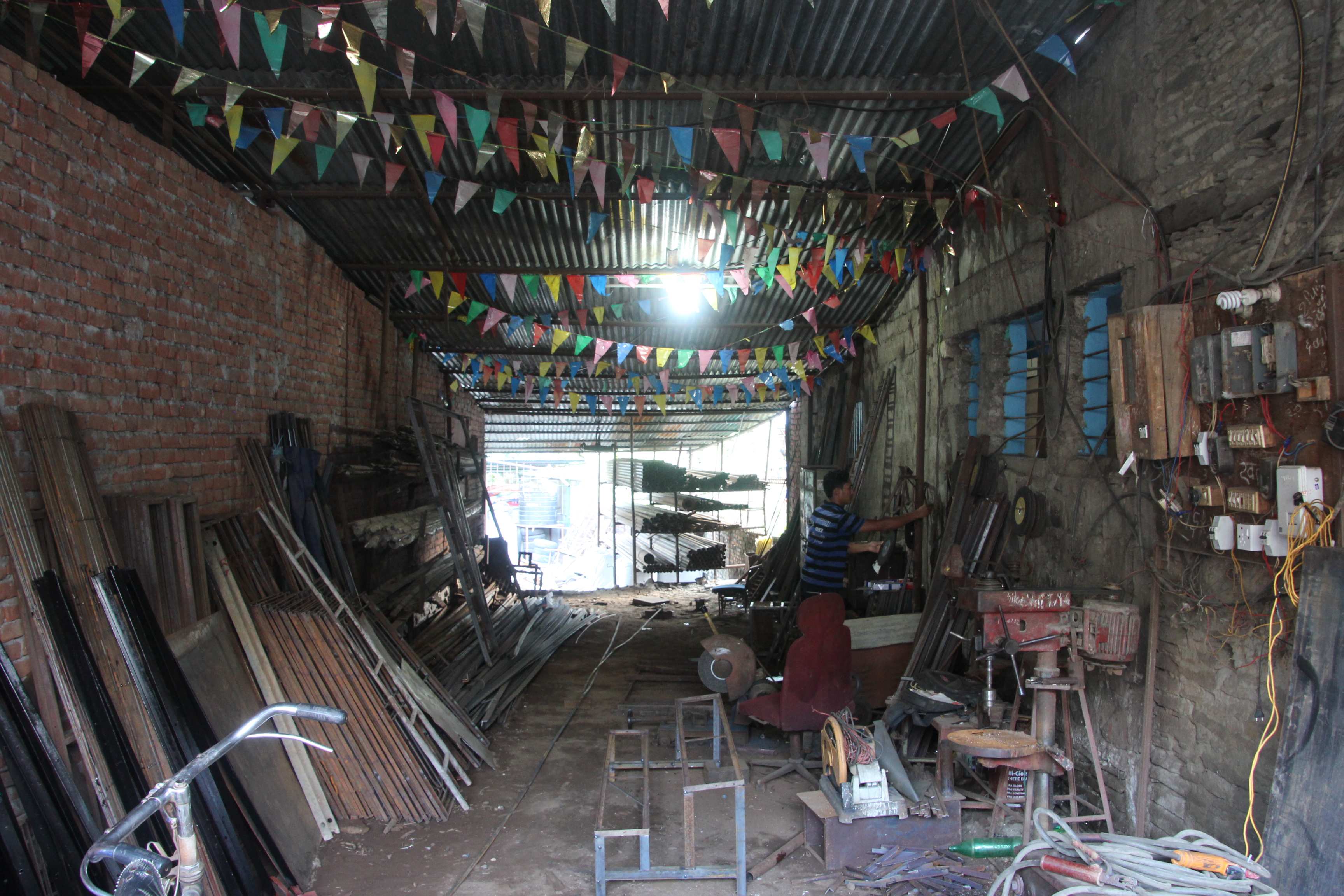
It was late evening and we were absolutely wiped out. On the way home, we passed a steel-working shop, and suddenly I had an inspiration.  After all, we had a day to kill in Besishahar, and this place looked like a Willy Wonka Dreamland of junk turned wonder.

I went in and described my imaginary safe-box. “Is this something you could make?” I asked.

.      .      .

A Willy Wonka Dreamland of Junk Turned Wonder

A Willy Wonka Dreamland of Junk Turned Wonder