Small Bundles in Big Spaces


IMG_9794

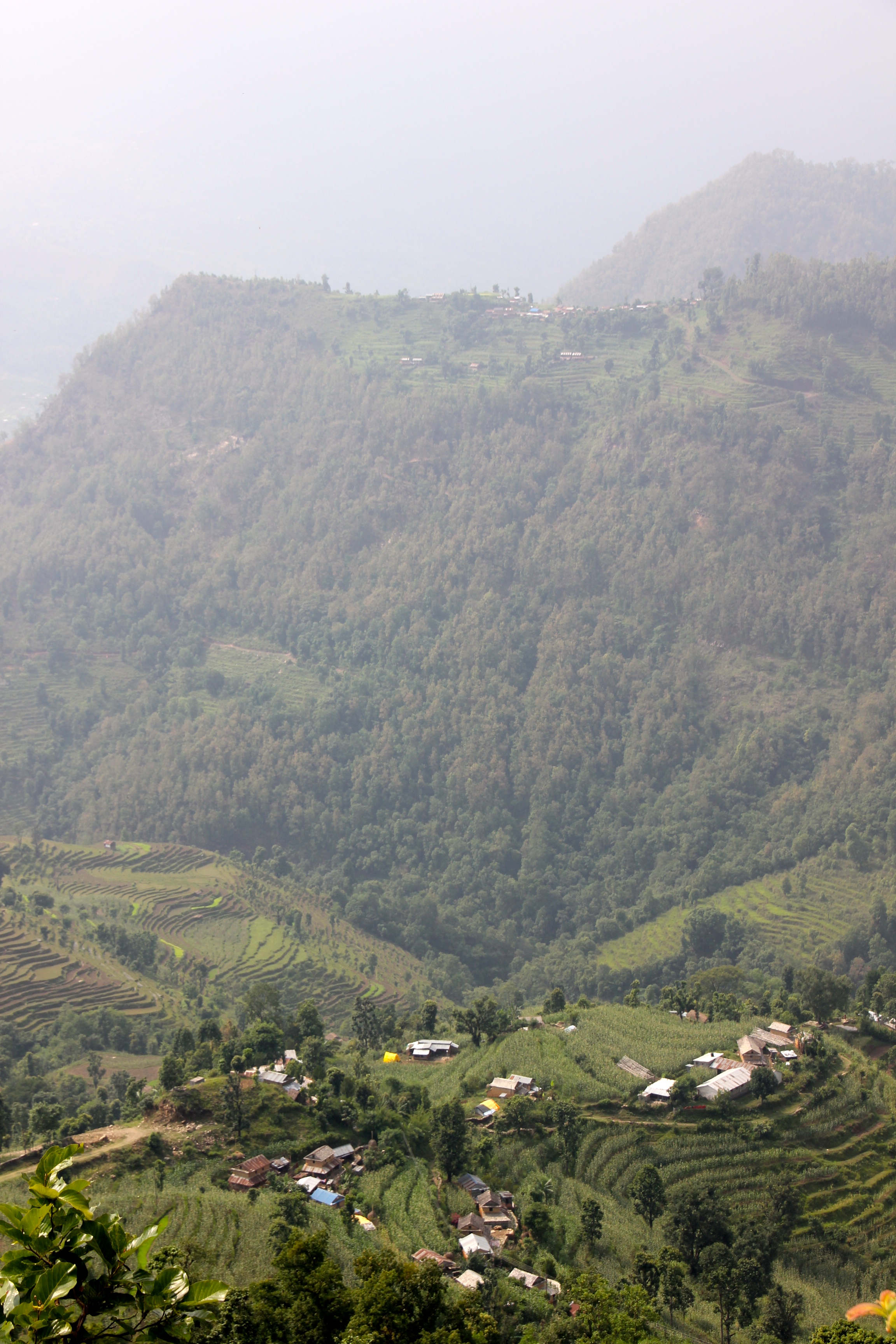
View across the valley, from Bharte

After my visit to Bharte, I went up to Besisahar to spend the night. Many of the international NGOs working in Lamjung operate out of a hotel called the Himalaya Gateway, and I wanted to sit in on a training by the Danish Red Cross on shelter distribution. Plus, I had to retrieve our first delivery of tin: two bundles for Uttam’s family.

I arrived bedraggled and hungry at the hotel at 8:15 pm after many hours of hiking up and down in Bharte in my flip flops (points for irony on the hotel name, Himalaya Gateway). I sat down and talked for a while with Laurienne, the head of CARE’s relief effort in Lamjung. I’d met her at one of the shelter cluster meetings and found her to be a really nice person, so I’ve kept in touch. It’s pretty funny that I’m running around in my flip flops in Bharte and taking a bus to Besisahar to a pick up our first two bundles of tin, while Laurienne is coordinating the transport of 1200 bundles of tin on 28 tractors – TWENTY EIGHT TRACTORS – we had a good laugh over just the image of 28 tractors climbing up the narrow jeep “roads” of Lamjung district. A bit of a nervous laugh, too. The delivery of all this tin is probably going to take a toll on Nepal’s fragile environment. The Red Cross has committed to almost four times that many homes in Lamjung alone – one of the less affected districts.

Speaking of damage, I got myself a pint of ice cream (“Ma’am, how many scoops would you like?…The whole container?…????…Certainly.”). I turned on the air conditioning in my hotel room which noisily and enthusiastically set to delivering air at the same temperature as the rest of the room. I took a shower and fell asleep on the fluffy bed.

The next morning I went to the Red Cross shelter training. It was super interesting, but probably not something I will be able to use much. The topic was how to conduct efficient mass distribution of tin sheets, building kits, and envelopes of cash. For your kind information, and so I can make some use of my training, I offer you the following tips on distributing thousands of corrugated tin sheets to remote Nepal: distribution area has one entry and one exit; recipients move through in a single straight line only, no criss-crossing; vests must be worn at all times and a flag clearly visible to signal that this is a humanitarian space; a question and complaint-receiver stays outside the delivery area.

Also, it is suggested that your team (and, one assumes, your tractors) arrive at your distribution area the night before.  Because there might be some problems with travel.  Maybe.

Mean time, I was coordinating our first delivery of a grand total of two bundles of tin for Archalbot. In the morning, I ran in to the Chief District Officer of Lamjung at the hotel, and of course, we are old friends. I said I was delivering two bundles of tin today in Archalbot and asked if he had any transport suggestions.

The Chief District Officer looked at me funny and said, “Two?” Awkward pause. “That…doesn’t seem like a enough.”

Right right, I said.  True enough.  But see it’s part of this thing that’s going step by step. I promised there’d be more.  There will totally be more.  Also, I’m two bundles ahead of the Red Cross, and I’m going to enjoy every bundle of my lead for each hour that it lasts.

It was about 2:00 by the time I hopped in to a truck with our two bundles of tin. The hardware store owner had a delivery vehicle that was headed south anyway, and agreed to take our tin sheets (and me) for free. And thank goodness this truck was large enough to house a killer whale, because only thing inside it was our two little bundles of tin, which you literally couldn’t even see in the gaping darkness.

We hit the road and I called Kripa to say I was on my way with Uttam’s roof.
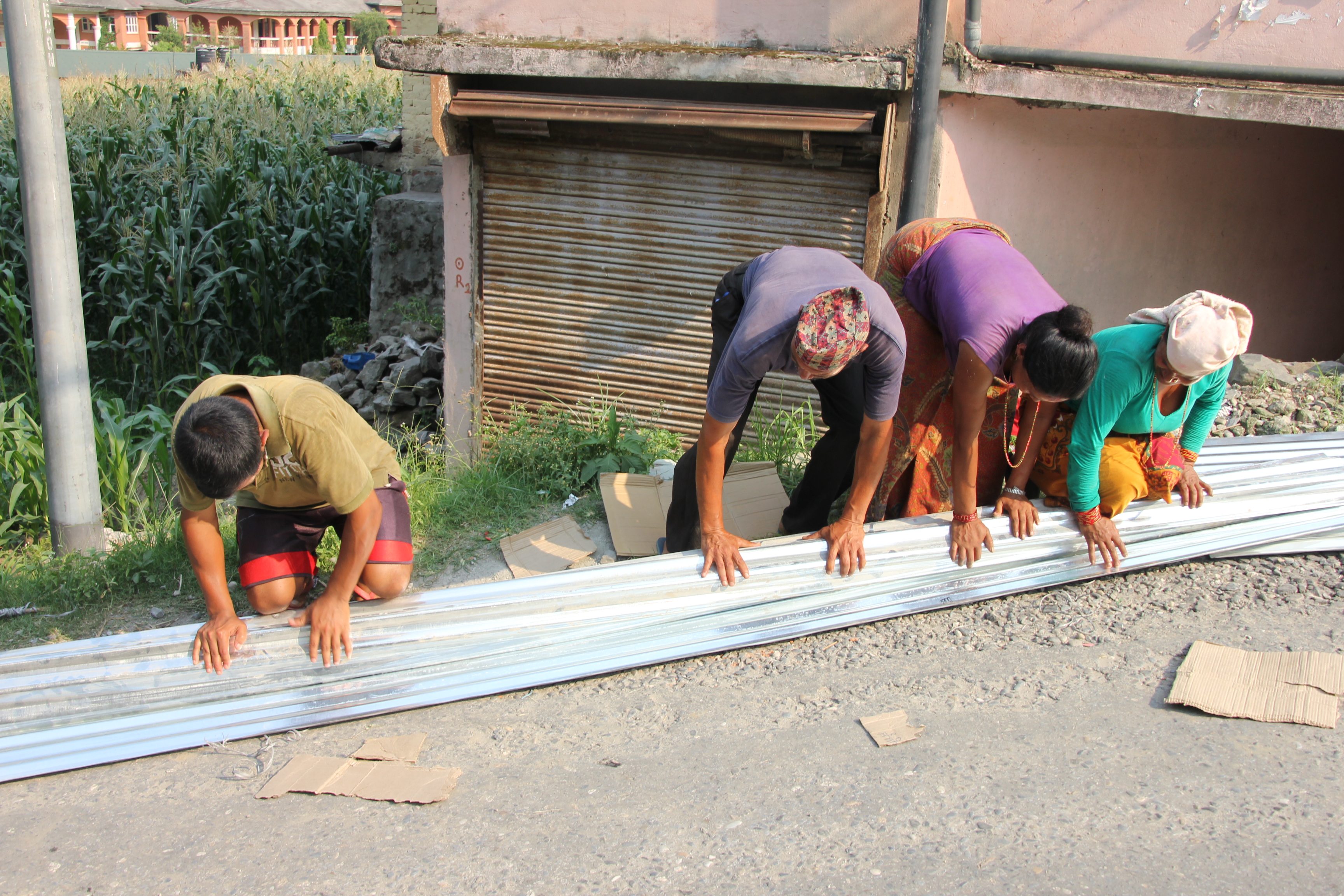
IMG_9669When we arrived in Bote Orar to unload the tin by the side of the road, about eight people from Archalbot had come down to roll the sheets and carry them up to the village (note to self: get a tractor when it’s time to deliver tin to the other 15 families). I hoisted an end of one tin roll over my shoulder, uttam’s sister in law took the other, and we were off.

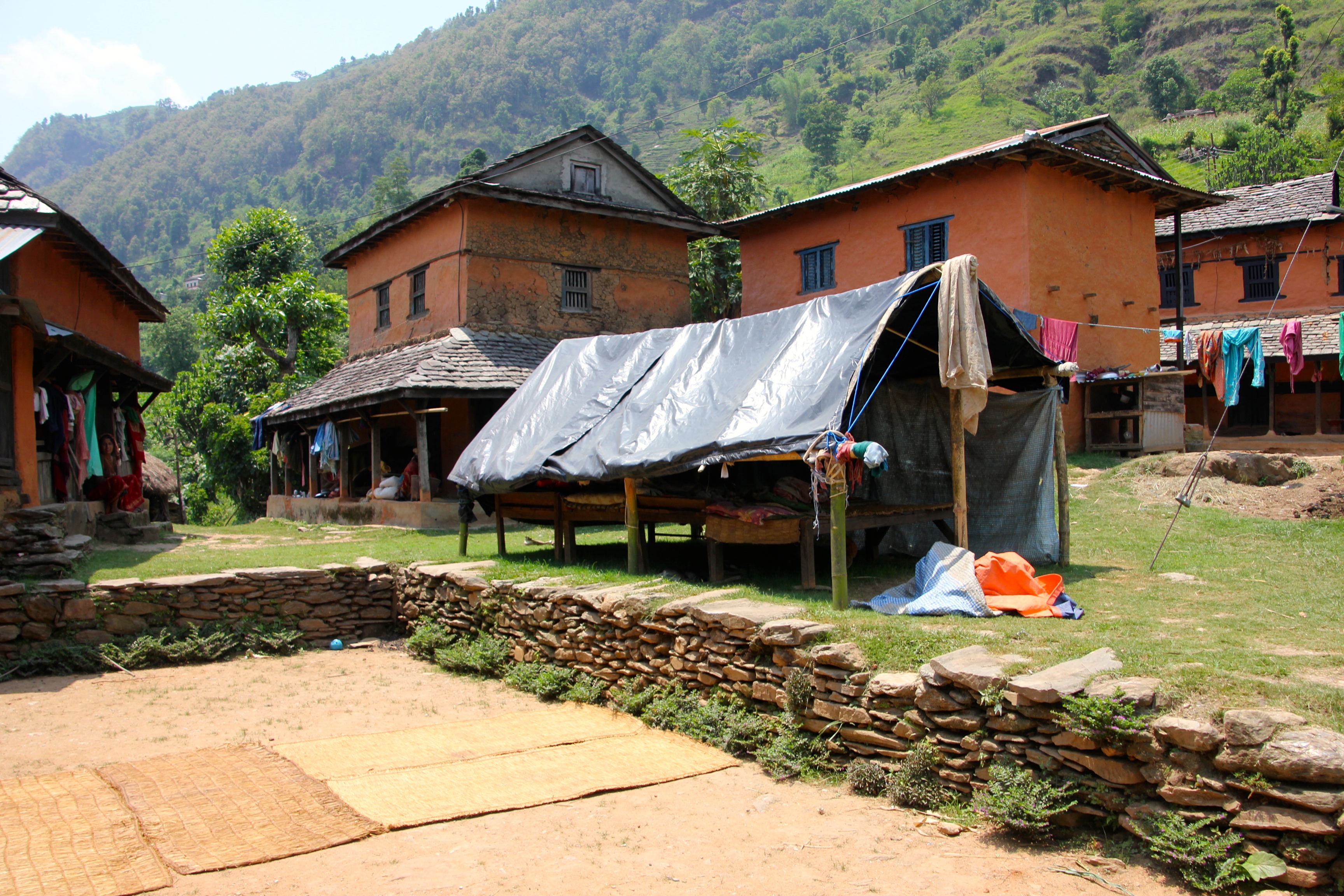
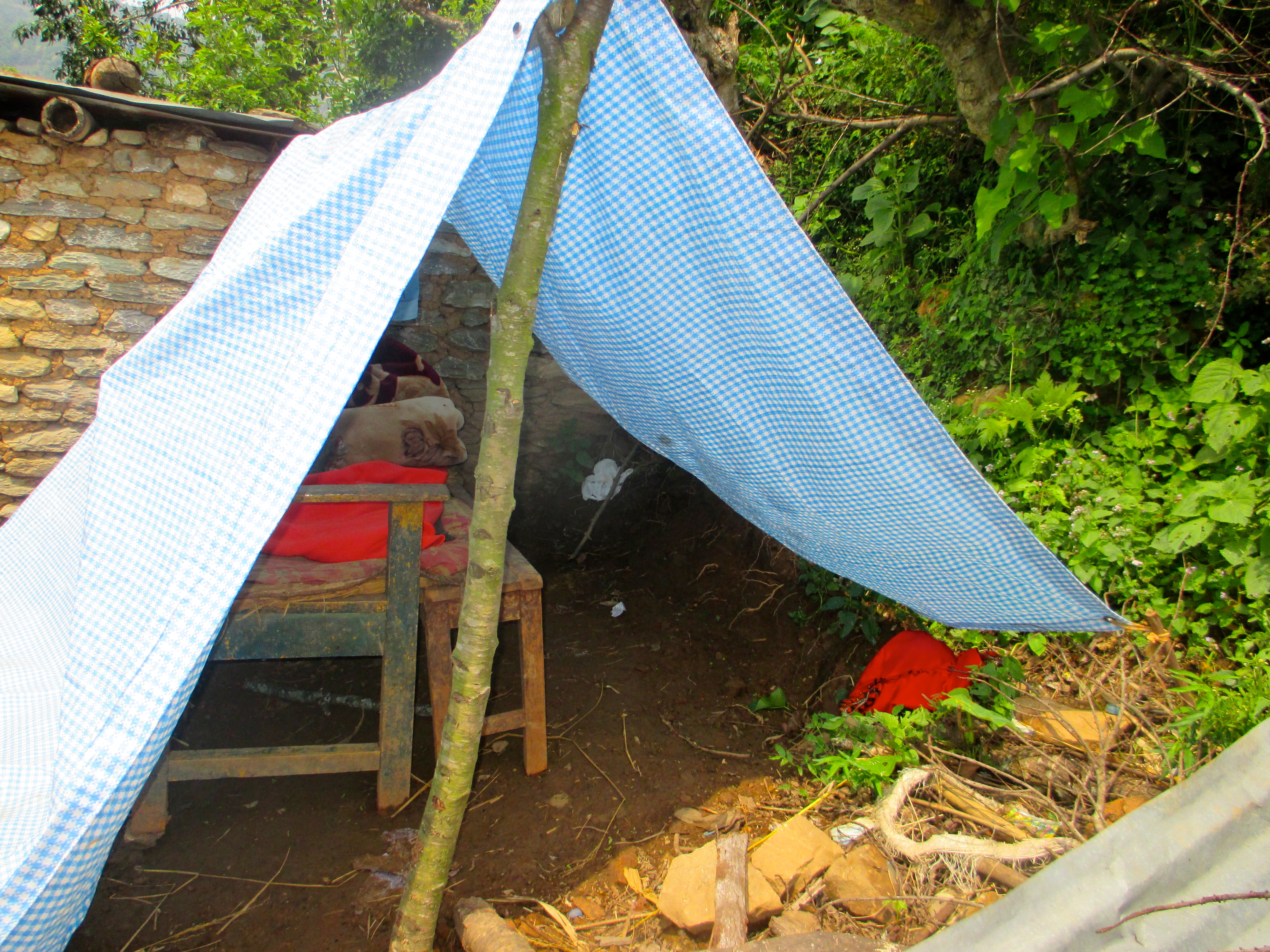
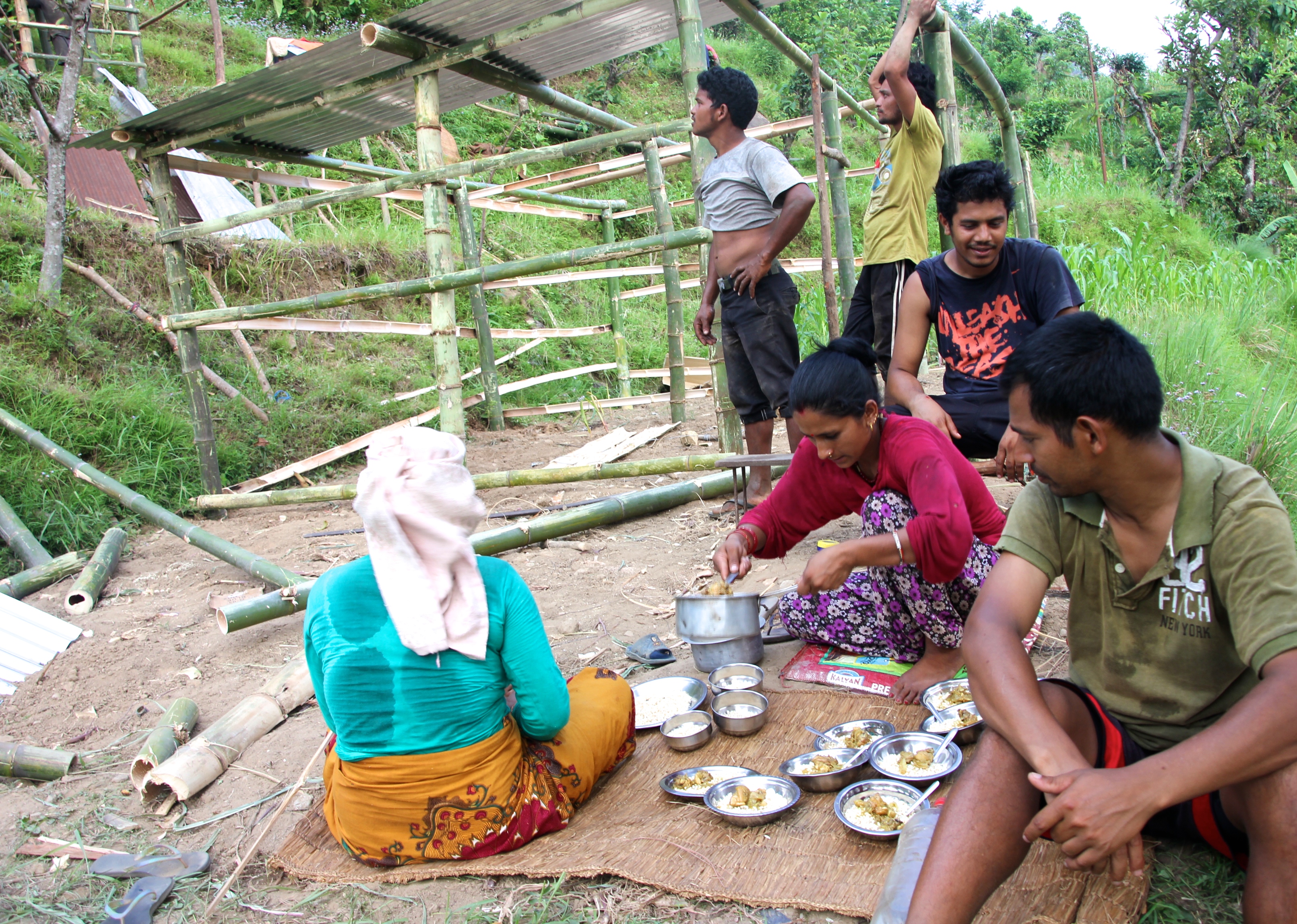
I could hardly believe it when I arrived at Uttam’s house.  I’d only been away for 24 hours, but what used to be the tarp shelter in one field was now two bamboo frames under construction, with lots of people about.

The family called me for snacks. They had gone to buy a few kilograms of meat – a pricey indulgence – to feed to all the people.
IMG_9695

Later, I was talking with Uttam’s brother. Even after all the days we’d been in Archalbot, working on the earth bag house, sleeping in Kripa’s home, stopping by to visit people in their yards and encouraging them to go cut bamboo, eating and bathing and washing our clothes with everyone else – after all this, Uttam’s family wasn’t completely convinced that we’d really show up with their tin.

It wasn’t until I’d called from the truck a few hours earlier, to say I was on my way from Besisahar with the tin, that the mood turned celebratory. That’s when someone was sent out to buy the meat.

Oh, and also, added Uttam’s brother, they’d made this excellent and spacious bamboo frame, and as I could plainly see, one bundle of tin wasn’t going to be enough to cover it.  They would need another, he informed me.

Very clever, Uttam’s brother.

Uttam and his brother building their bamboo house

Uttam and his brother building their bamboo house

If there’s one moment that will stay with me the most, it’s when I asked Uttam’s oldest brother, who is building the IMG_9677smaller upper house, to explain what each area of the inside would be when it was done.  He and his wife had clearly thought about this.  He pointed to the place where the kitchen fire would be, and the sleeping area (there weren’t exactly a lot of rooms, but that’s not the point).  I motioned to a spot at the edge of the house that was a few feet wide.  From the frame it was clear that the roof would slope down over it.
“What is this for?” I asked.

“That’s a place to stay if someone comes to visit,” he said.

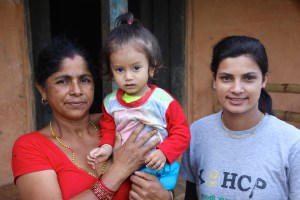
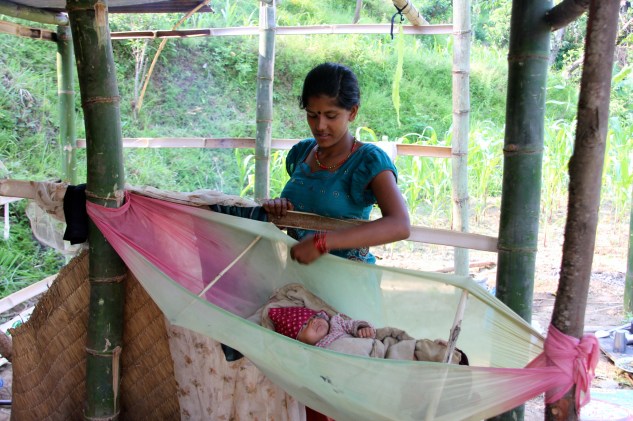
Uttam’s family’s two houses are still going up, but before I left the next morning, I was happy to take this picture of his wife and two month old baby.  Another small bundle in a big space…nice improvement.

.      .      .
IMG_9711

IMG_9440

Stones in the Sky


It sure is hot, I’ll tell you that much. No matter how much water we’re drinking, it just seems to turn directly in to sweat. I’m thirsty all the time.

It took me about two hours to walk from Archalbot to the next village over, Bharte. But it was two hours in the direction away from accessible travel. Bharte is next to Archalbot on the map, but once you get a little way in, it’s pretty far from anything. Instead of the clustered communities I’m used to in Nepal’s hills, Barte’s houses are often a few hundred meters apart.

Let’s just say it’s a lot of walking.

It took me about an hour and a half to get to Barte from Archalbot this morning. I met up with a guy named IMG_9645Pashupathi, president of Nepal’s Red Cross Chapter in Bharte. The first place we stopped was at a collection of households sharing a tarp in the yard.

We sat down and discussed the plan: we’ll provide one roof per family if they build walls. Each time we have this first conversation, it has a different feeling. Some people seem over-eager to get what they can whether they need it or not; some proud and cautious. We’ve even been some places where homeowners didn’t seem to see the point of what we were proposing—as if the entire situation seemed too overwhelming or pointless to try to break into. In Sirewari there was a friendly, open vibe, and people caught on right away. I took down the number of the person who seemed like my best contact, a young mother named Santa.

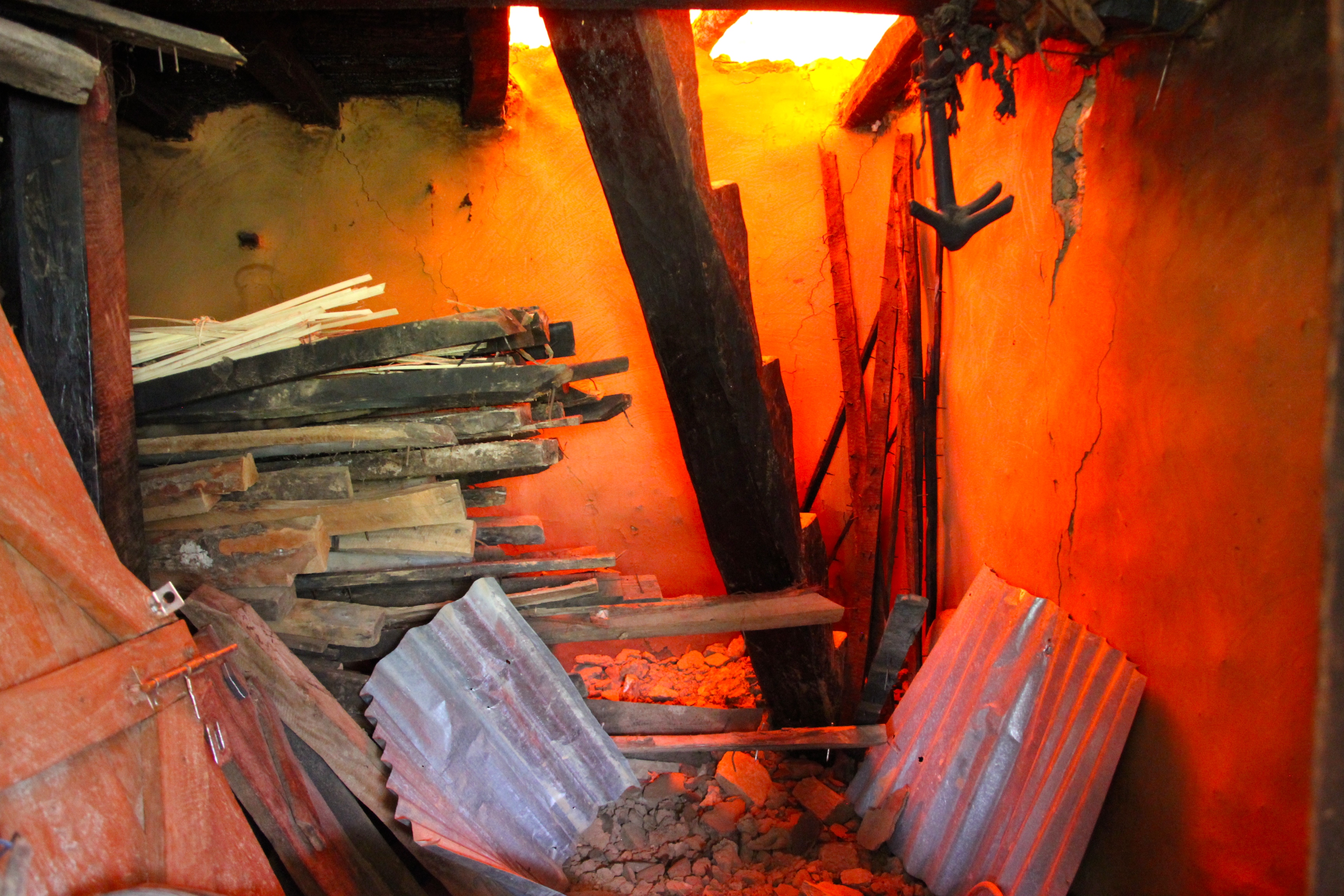
Next we went around back and visited the home a woman who unlocked the door of her boarded up house. I peered inside, where the orange tarp over a hole in the roof cast a firey glow onto the wooden staircase and various items and broken wood stowed in what used to be her living space. The scene looked ominously like those iconic photos of ground zero, leaving me momentarily mesmerized.

IMG_9644

From there Pashupathi took me on a very long climb. It took us about an hour winding up quiet hillside paths to reach a soaring ridgetop in Lakhure. It looked like you could roll off either side of the hill and land all the way back in the valley. Summer clouds have obscured the piercing Annapurna peaks that would break the horizon in winter, but and endless fall of terraced fields across the valley are in full green bloom, spilling down from the sky in a dizzying cascade.

IMG_9784I went to four houses along this ridge in Lakhure, all of which were leveled in the earthquake, all of which belong to Dalit (“low caste”) families. This was my first visit to a place where houses where actually completely demolished. And what to you know – all four families had rebuilt themselves shelters, which they’d covered with traditional grass and reused tin. Most were using their tarps on top of these completed shelters to keep water off the fragile roofs.

We spent some time talking with Bal Kumari, a widow – read, highly marginalized in rural Nepal – whose two daughters are married and whose two sons are still in school. She hired people to rebuild her fully leveled house in about 10 days. They literally took the stones of the rubble and put them back in to a house. Which, admittedly, used to be two levels, and is now it is one. But it’s a sturdy, warm, normal house. With old tin and a tarp on top (we will be bringing her new tin shortly). She still doesn’t know how she’ll repay the $300 debt this put her in to.

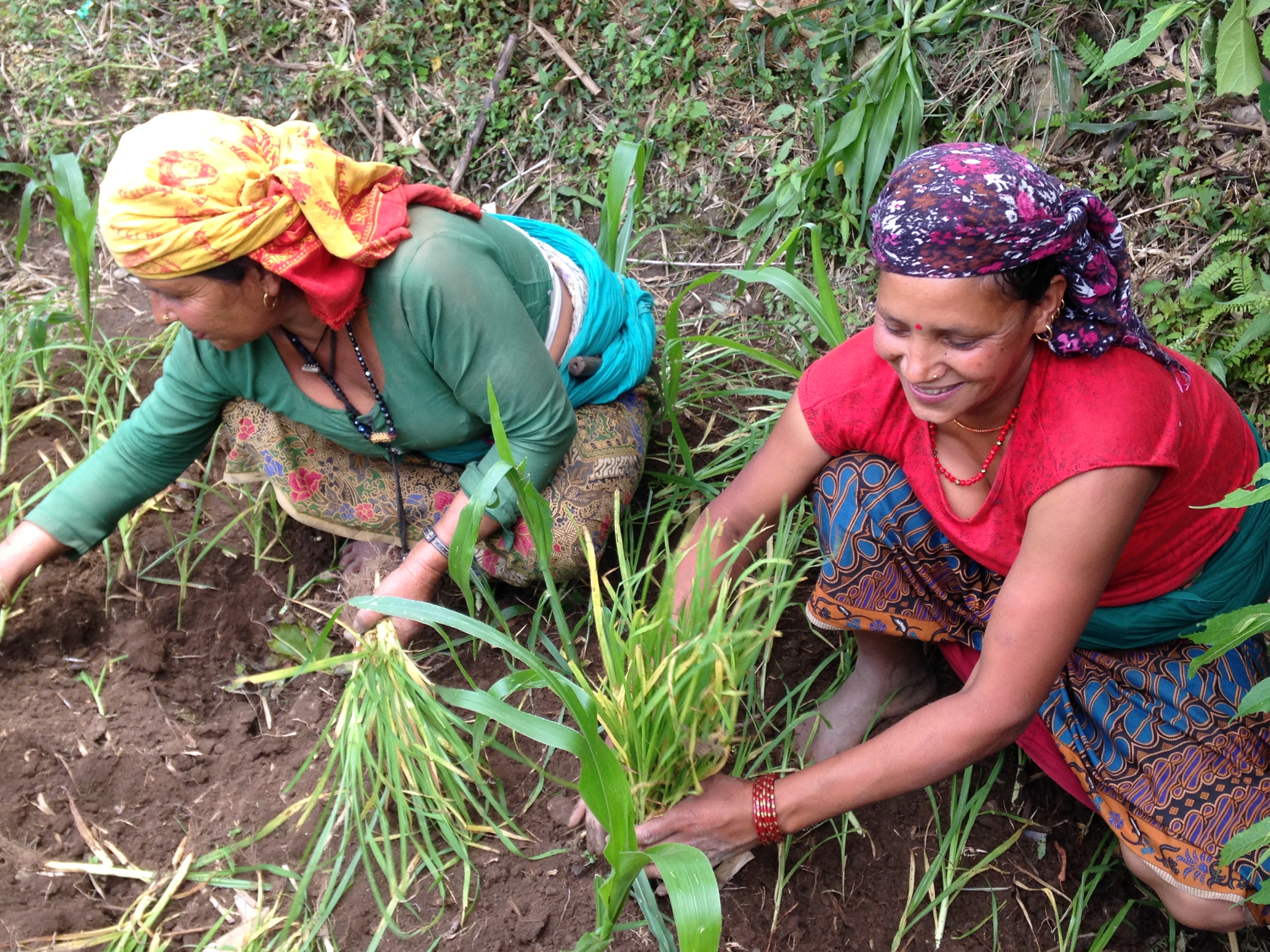
IMG_9664Other members of this community had cut and woven bamboo, or spent hours collecting and bundling grass for their roofs. I know the pundits talk about the resilience of the Nepali people so much it is becoming a cliché. But it is very moving to see this courage and persistence concretely, as stones and walls and laboriously crafted grass roofing.  The only aid they’ve received here is some rice, oil, salt, and tarps.
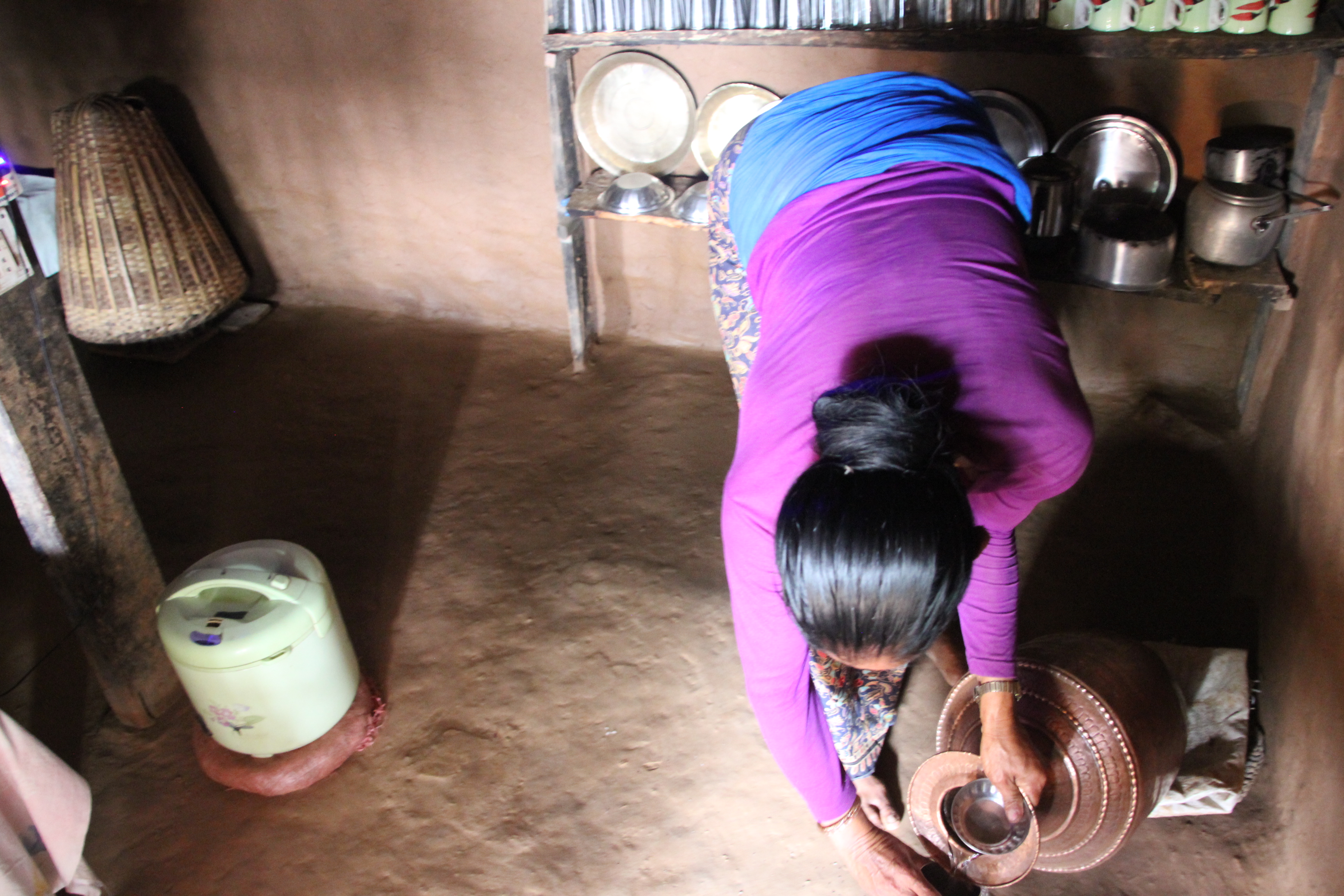
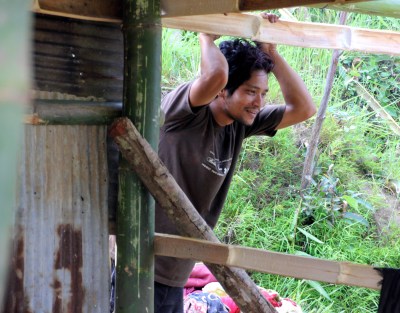
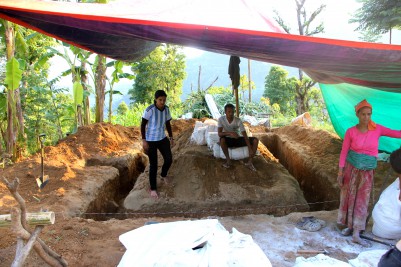
We’ll be bringing tin up to Lakure next week, and in the mean time, I hope we can find a way to employ a few of the people from these houses as day-laborers to help rebuild elsewhere in their community. They’ve certainly proven they know more than I do about it.

.      .      .

IMG_9660

Bal Kumari Bhujel inside her house, which was leveled in the earthquake. She hired help on credit and rebuilt it herself.

Uttam


Dilmaya and I spent two days in Archalbot, helping with the earthbag house and talking with members of the community about the upcoming week of building. The plan is for the whole group to take a one day gap on Monday to build the bamboo shelter for family living under the tarp. A lot of our time went in to talking with that family, especially with the son, Uttam.

Uttam is 21 years old and he’s the first person in his family to get an education. He stayed in school until sixth grade; his two older brothers didn’t go to school at all. But his younger sister got through eighth grade, and his youngest brother is currently in tenth grade. If the younger brother passes his school leaving exams, he’ll be the very first person in Uttam’s family to graduate from high school.

As a teenager, Uttam got a job in Dubai through a labor company, where he earned $200 a month. HeIMG_9708eventually learned to drive a bulldozer there – a fairly lucrative skill – but the company never raised his salary. In Nepal, he can’t drive a bulldozer without a license, and he says it costs a lot of money to obtain a license. So for now he’s got a job working in Chitwan.
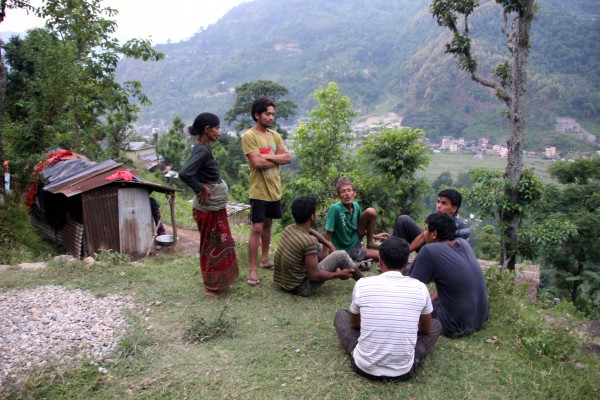
Uttam and his wife met over the phone. Love marriage. Their baby is two months old and his wife is seventeen.

“Almost eighteen,” she said.

I wanted to take some time to appreciate Uttam’s situation from his point of view. It was frustrating for Dilmaya and me, as well as for the other neighbors, to have to work so hard to motivate his family to go gather bamboo for us to help them make a decent shelter. “It’s so hard to make them understand,” the neighbors kept saying with mild distain. And certainly enough, any time we discussed the plan with them, they seemed distrustful and obstinate. The truth is that if it hadn’t been for the baby and the insanity of their current living situation, it would have seemed like a poor use of our time, given how many people need help.

But what I began to realize as I talked with Uttam was that he didn’t believe anyone was really going to show up and help them build. The bamboo actually costs money because it’s on someone else’s land, and even if they arranged a barter instead of payment, Uttam’s family didn’t have any reason to believe anyone was going to reward their investment.

The more I talked with Uttam, I began to see the bias of the outside world, whose border was no further away than the border of the family. Uttam is facing tremendous odds. The fact that he can read is progressive in his context. He has traveled to Dubai and Chitwan for work and learned to operate a bulldozer. Bootstrapping has never meant trusting anything. It has meant knowing nothing is on your side, grabbing the closest rung on the ladder with a free hand, but never moving your feet off the rung you’re on when there’s no assurance the next one isn’t rot. Of course it is hard for Uttam and his family to “understand.” What he understands is the reality he is in, not the one someone else is telling him is possible.

Like all of us.

The truth is that, they have largely adjusted to seeming like a poor use of someone’s time.

Dilmaya and I were standing with Uttam outside his tarp tent at dusk, after a day of failed attempts at bamboo collection. They have almost fifteen people living in here. It was unclear to us how hard they were really trying. To some extent, maybe landowners were giving them a hard time about accessing the bamboo; on the other hand, maybe their efforts were half-hearted. We had no way of knowing.

“Well,” I said, “I can tell you one thing. If you don’t cut any bamboo and clear out this tarp thing, you can be sure nobody is going to come here and help you build on Monday.”

He looked at me with the squinty smile, like, “You’re funny. Fair point.”

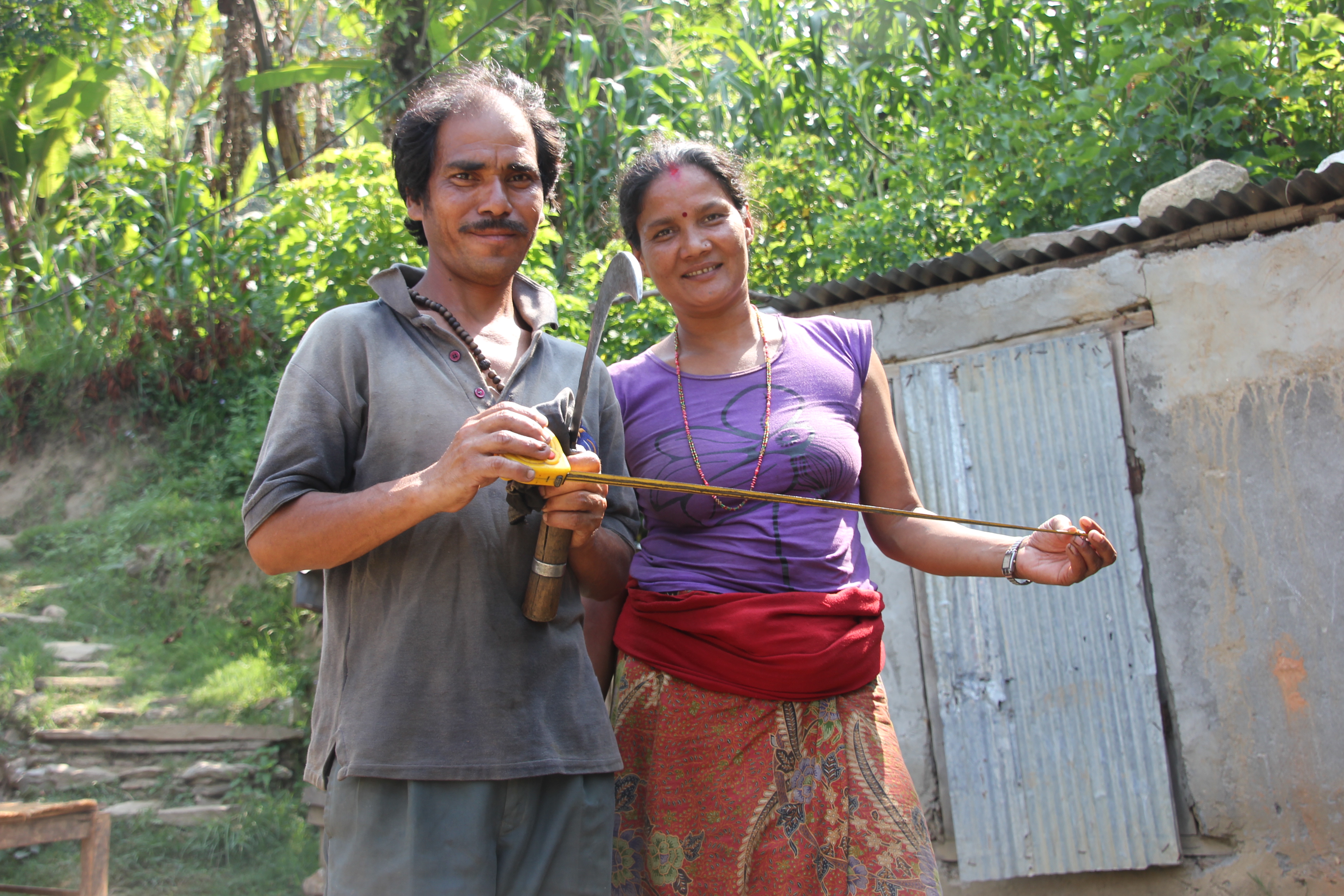
As Dilmaya and I were leaving Sunday morning, Uttam’s relatives stopped by.

They were headed out with a sickle and tape measure.

.      .      .

IMG_9637

Possibility of Tin


The first part of the group left for Archalbot on Thursday: Robin and Colin, the French volunteers, and our field officer Dilmaya. I came a day later because I was working on IMG_9463getting our new office set up. Actually I was busy repainting it with the wrong type of paint, so before I left for Archalbot on Friday, I had to call a painter to redo my redo.

On Friday I rode out to Bote Orar, where the road to Archalbot turns off the main highway between Dhumre and Besisahar. When I arrived at about 5pm, the earth bag house already had a one-meter deep rectangular foundation.  Not bad for one day’s work.

As dusk fell, Dilmaya and I accompanied some of the young men to a clearing on the edge of a terraced field for a community meeting. We sat across from the tarp-shelter in the field.

We’d explained the plan to our local organizers, Kripa and his cousin Surya: anyone who builds a shelter gets a tin roof from us; the earth bag house is a sample building style and we can provide materials if anyone else wants to do it; the family in the field will be a sample building project where the community works together build a bamboo house in a day. Kripa and Surya were getting a lot of questions about who would get tin for what, and they wanted to gather their neighbors and discuss this plan in front of us, to protect themselves from future accusations of greed or favoritism.

IMG_9471

With night falling around us, the discussion that unfolded was amazing. It basically boiled down to: “This organization is here to give us tin roofs for completed shelters. How are we going to help each other complete shelters?” They discussed the order of priority in the village – everybody agreed that the tarp family in the field was the top priority – and other matters such as where and how to get enough bamboo. Even the tarp family made their way over to the meeting, but they seemed guarded, unsure whether to believe us and everybody else. It was their neighbors who explained the plan and assured them they needed to start collecting bamboo.

People kept turning to us and saying, “How many houses are you going to build? Tell us and we’ll figure out who should get them.” And Dilmaya and I kept saying, “You tell us how many houses you’re going to build, and we’ll bring one bundle of tin per family. If we have the problem of too many people building, we’ll deal with it later. That’s never happened.”

Dilmaya did a great job of continually redirecting the discussion back to that point, that everything depended on their planning, and we’re there to meet them wherever they can get to. One guy asked if large families would be able to get more than one bundle of tin. We replied that’s not up to us; our allotment is one bundle of tin per family, and people can add more area with re-used tin or natural materials. “On the other hand,” we said, “as a community, if you guys tell us that a certain household really needs more tin than that, we’ll believe you.”  Because nobody’s going to be the jerk who tries to make off with unneeded extra tin under the scrutiny of the entire village.

There are still many of steps between this meeting and a rebuilt bamboo village in time for monsoon. But I’ve been doing community work in rural Nepal for nearly a decade, and this was as good as it gets at this stage. What you hope is that your attention will mobilize existing capacity and snowball in to a collaboration that combines the best of what we have with the best of what local people have. When we can frame our “aid” as an incentive, even though we want to give it away, people start to ask each other, How are we as a community going to capture the possibility of tin?  Our responsibility is to maintain a consistent and intelligent presence, to keep redirecting ownership back to the community, to closely monitor to make sure nobody’s taking advantage, and to live up to our word. We bring in a small quantity of crucial expertise in building, plus the final critical hardware: a new roof.

There’s also the simple value of spending time with people.  When we arrived, the corn field that needed to be cut down to make the earth bag house was still standing, and the family slashed it in half an hour–but IMG_9492they weren’t going to do that until they saw us standing there for real.  Kushal, the twelve year old boy we met during our assessment, called me almost every morning between Monday and Thursday, and he never had anything to say. He just wanted to see if I’d pick up.  Millions of rural poor go unseen by the world unless they are in the midst of a thrilling crisis that offers the chance for airdrops, mass collection of first aid materials, teeth-clenching field medicine, and smoky photos of catastrophe. But the persistent plight of invisibility and systemic disenfranchisement is too complicated and time consuming for most of the world to attend to by looking people in the eye.  It’s not the habit of our global society, of our governments or social organizations, to sit down in a clearing and say, “We’ll stay here and work on this with you. What do you think?”
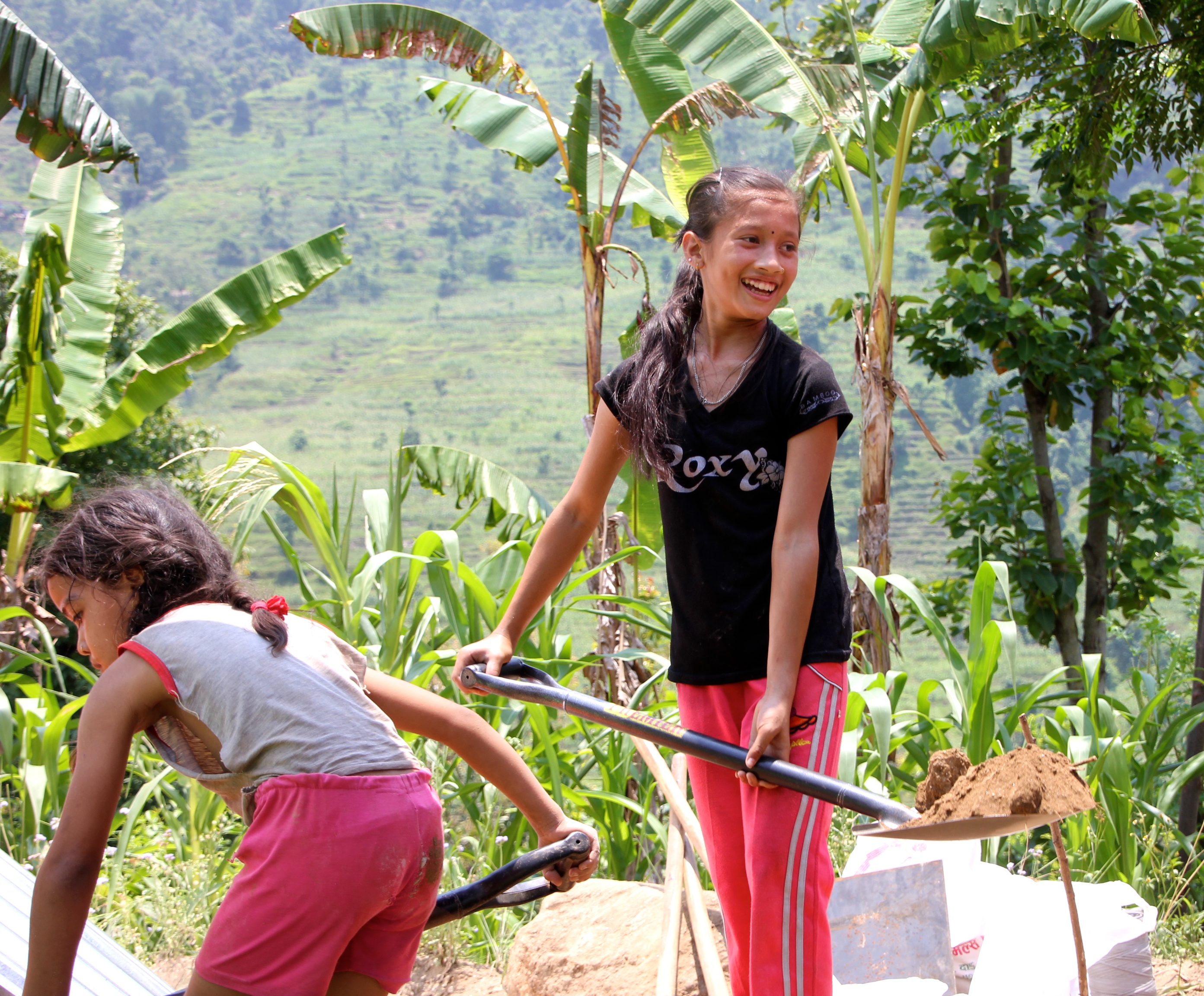
I understand why large aid agencies can’t work like this. It’s not their job. They have the budget and infrastructure to strategize to best possible average and cast a wide net; their purpose is to get to the highest number of people, not to reduce the amount of waste or increase the amount of human connection. And Nepal needs them.  An organization like ours could never hope to reach any reasonable fraction of those in urgent need using our approach. But I’m reminded how much groups like us matter, even in the face of a gigantic task like building half a million houses in a few weeks. Because the best possible average still leaves out a lot of people, and for each one of those people, their house is 100% of the problem.

This strategy doesn’t always work, and I don’t know how things will turn out in Archalbot, although I admit I have a good feeling about it. But the hardest part is that you have to be willing to walk away if the community can’t carry its weight, and that’s devastating when it happens, because you and your team have put your heart in to it. You sit in the grass with people while they work things out. You tell them you are there for them and that you respect the wisdom they bring to the process as well as the result. When it falls through, it doesn’t just hurt your budget, it hurts your sense of hope and capability. It’s not something you write up in a report and send up the chain to management. You just go home and cry.

But what am I talking about?  Here’s to you, Archalbot.  We’ll stick it out for better or worse.  Show us how it’s done.

.      .      .

 IMG_9569

Coordination Tactics

On Tuesday, the first thing I woke up to was a call from an unknown number at 6:45am. I silenced my phone but got three more calls from the same number, so I picked it up.

“Hello?”

“Hello.”

“Who is this?” I could already tell who it was.

“Archalbot.” It was the little boy, Kushal, from our visit to Archalbot yesterday.

“Hello Archalbot,” I said. “How are you?

“Fine.”

I waited. “Ok….Well….I’m fine too.”

“Ok.”

“All right then, talk to you later?”

“Ok.”

“Bye, Archalbot,” I said.

“Bye!”

Later in the morning, Dilmaya and I debriefed with Robin and Colin over coffee. We reconfirmed the plan we’d come up with yesterday. Dilmaya was to call our main contact, Kripa, and I’d coordinate with the government. If everything was organized, we’d start Thursday.

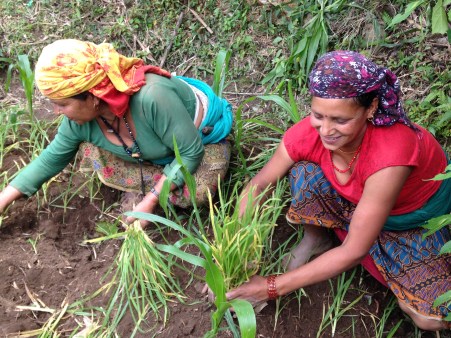
IMG_5049I’ve been here three and a half weeks and I haven’t spent a single day in Kaski. Wednesday is millet planting day, so I promised Aamaa that I would take a day off from coordinating housing outreach and tooth brushing programs to come churn up dirt between the corn stalks and shove little millet seedlings in to it. I spent the rest of Tuesday running around, planning for a day in Kaskikot away from internet like it was year on Mars. Finally I ran to the bus park at 5:30pm, just as a downpour began.
The bus left an hour late, at 6:30pm. That’s where I was when I realized that I was supposed to submit my enrollment for graduate school classes in September at exactly 6:45pm my time, 9am EST. If you don’t do this right when registration opens, it’s likely that the classes or sections you want will fill up within an hour or two.

I tried to log in from my phone, but not surprisingly, the cell connection wasn’t strong enough. So I called my parents to see if they could log in to my account from in Maryland and click “submit.” I got my dad on the phone, but in order to log in he needed a password. And the meticulously written document I’d made before I left for Nepal with all my logins and passwords in it had evaporated from my computer. I searched and searched and it was nowhere to be found.

So I hung up and waited a precious 45 minutes until I got to Kaski, where there’s one hotel that sometimes has internet, and my password is saved in my browser so I can log in without the missing document. I got to the Kaski hotel and the internet wasn’t working. I called my dad back while the hotel owner tried to restart the internet, which took about 15 minutes. Then the UConn registration site let me take every step except for actually hitting “submit,” because the site itself was having technical problems, which I now knew because my dad was on the phone with the registrar.

Which is to say that by this point my dad was holding the phone up between the registrar in Hartford and me in Kaskikot, while we discussed options for resetting my password, which required me explaining to my dad that the registrar was saying she was going to send him an email with a reset link; now I’m walking home from the hotel to the house so Aamaa doesn’t think I’ve fallen off a mountain, and the registrar needs to get someone else on the phone so she adds yet another person to this phone chain. Then my iphone won’t download the new password, and then when it does, and I read it over the phone from our house in Kaski to the person four phones away in Hartford, it gets rejected.

It’s like the Nepal jeep travel version of online class registration.

In the end, the registrar’s office took pity on us and just overrode their system to register me for my classes. It was 9:30pm here. Aamaa and finally sit down for dinner. Bring it on, millet planting season.

.      .      .


Throwing stones at Tin houses


Last Thursday, our meeting with two district officials in Lamjung was so encouraging that I’d been energized all weekend. I talked with a friend at home who did her thesis on post-earthquake housing in Haiti. My dad helped me get in touch with the inventor of earthbag building.  I pored over diagrams on the internet and learned the term “waddle and daub.” I was looking for every possible way to supplement a government housing kit consisting of tin roofing and tools. And of course, I talked with a few people about my safe-box idea.

Screen Shot 2015-05-29 at 11.40.19 PMAamod and I made our second trip out to Lamjung on Monday, for the shelter cluster meeting.   (Relief coordination between large iNGOs and the government is divided in to clusters of which shelter is one). We somehow managed to be an hour late again, which this time meant entering a room of a few dozen government officials and representatives from big international organizations.

We sat down in the corner and I took out my notebook. A slide up on the projector showed the names of about six multinational agencies, the villages where they’d been assigned to provide housing, and the number of households covered by each agency, which ranged from about 900 – 1500. Then on the bottom row was our name with two blank columns next to it – no villages yet assigned – and “100” in the righthand column under number of houses. Well, A for effort, anyway.

Besides, with the possibility of using the government’s housing kit, we were hoping to get that number up to about 300.

But the next hour was nothing like either our personalized visit with Lamjung’s district officials a few days earlier, or the big health cluster meeting I’d attended in Kathmandu. Today we were in a room of local politicians talking about use of resources. And my prior enthusiasm was quickly put in check.

Within minutes after we arrived, a discussion about reassigning some villages from one organization to another turned in to a 15-minute debate over whether aid agencies should be allowed to flash their logos while working. After all, it’s the government that should come out with the recognition – is housing aid to become no more than advertising anarchy?

All the big iNGOs have Nepal offices with all-Nepali staff. As I watched the Nepalis representing those agencies negotiate this discussion, even I started to get lost as to who was allied to what cause. I basically understood why these folks engaged a conversation about who would get credit instead of pointing out the more urgent matter of thousands of homeless people in Lamjung; let’s call that standard operating procedure, a necessary hurdle to eventually getting back to housing.

But when someone from one of these NGOs suggested that the Chamber of Commerce should broker
the massive upcoming procurement of corrugated tin roofing, I couldn’t keep up. This guy was working for a huge iNGO that needed to get tin in order to help build shelters.  To put this in context, Nepali P1070134villagers can build anything out of anything.  The overall approach being used with transitional housing is to provide a critical piece of hardware – THE ROOF – and let people build around it.

Foreigners in the room had already explained why their agencies were working on getting corrugated tin from multiple sources to meet the need as fast as possible. Why would this guy, tasked with representing his iNGO to the shelter cluster, encourage all these government officials to control and inevitably slow down the process?  Was he bluffing? Maybe he knew his suggestion would never work out, but would satisfy egos and clear the way. Or maybe he meant it. It was either brilliant or terrible, but I still don’t know which.

Finally, one of the European aid workers spoke up. I’d noticed him sitting off to the side, a burly, hearty looking man with clear blue eyes and a tousle of graying hair. He captured all my biases – obviously a disaster professional, not a Nepali-speaker, here for Earthquake and that alone, bored with these talking games that I’ve come to sort of enjoy as sport.  He was keeping a feel for the pulse of the conversation while mostly ignoring it, looking rather peeved.

In a few swift paragraphs, this guy listed the amount of corrugated tin available in Lamjung district, and in Nepal as a whole – about 10% of the tin needed for the number of houses destroyed. He knew exactly the number of trucks he needed to transport housing materials to his coverage area; the amount of square footage needed to store all the supplies. He pointed out that accomplishing all this was a massive task and that the monsoon will be starting imminently.

“If we could please finalize which of us are taking which areas, than we can all get to work,” he said.

Silence.

Even I was taken down a good notch, as I am so accustomed to all this politicking in Nepal that I’ve come to expect it, even though we’re in an emergency.

Corrugated Tin Roofing

Corrugated Tin Roofing

And there’s more. The government has established a policy to give two sheets of tin to each family that needs to rebuild – but there isn’t nearly enough tin in Nepal to deliver on this quickly without a lot of smart planning and international coordination. So instead, Nepal’s government has decided to give everyone $150 in cash to buy their own tin.

“And when you do that,” said the burly aid officer, “the price of tin is going to skyrocket, because there’s not enough tin available in the local market.”

“We have controls for that,” said an official.

“You can’t control that,” pointed out the aid officer. “When you put money in to a market where there isn’t enough product, the price will triple.”

The matter was never totally resolved.

Later, Aamod and I discussed why on earth Nepal’s leaders would willfully do something like that. The only reason can be to to pacify constituents quickly with cash rather than sorting out the more complex problem the population is actually facing. People will be pleased with receiving $150 and they won’t realize it’s useless because the thing they most need is nowhere to be found, or is now worth $450.

I wonder if this cash reimbursement matter is getting any coverage in the U.S. The only reason it won’t cause an economic collapse in Nepal is because there’s no more room to fall; people literally have nothing. So instead it will just put the most urgently needed commodity – sheets of corrugated tin, for goodness sake – out of reach by displacing the government’s responsibility to provide it on to people who can’t possibly solve a material shortage.

I actually watched a group of politicians look at each other, confront this fact, and, from what I could tell, decide to do it anyway. It felt as though this inflation matter was a good point, but a lot of trouble to solve. It’s a perfect example of the structural rot that weakened this country long before an earthquake shook its softened beams to the ground.

IMG_2599

Just to put icing on the cake, before we left, we found out that the district had changed its mind about providing a government housing kit for us to use. In fact, the friendly engineer we talked with the other day – Pradeep – a genuinely sincere guy who seemed to like our idea of collaboration, said the official policy is now that government is only to deliver its tin (or $150) in places where NGOs are NOT working. As for the entire housing kit, which includes things like nails, wire and hammer…that’s just a suggested kit. The big multinational agencies will use it, but the government won’t.

I knew it had all seemed to good to be true. Didn’t I say it was a miracle?

I made a hard pitch to Pradeep that he and I had the opportunity to set an example for how community organizations can collaborate to achieve the work of the government. There are countless groups like Eva Nepal running around providing aid with tremendous energy. He actually liked my idea a lot, but said I’d have to write a proposal and send it up the chain. We all know how long that will take, and in the mean time, people are living under tarps. It’s not the time to play games.

Looks like if we want to work on shelters in Lamjung, we’ll have to bring in all the materials ourselves.

.      .      .


Dreaming of Safe Boxes


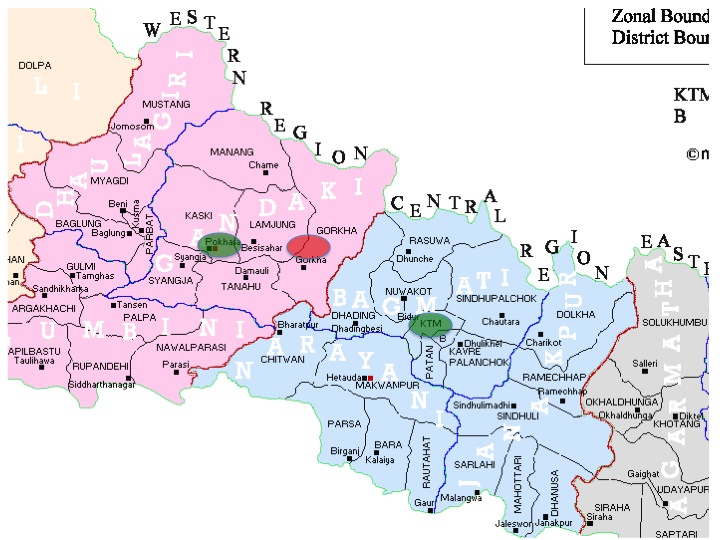
With a lot of thought going in to our current Kaski Oral Health working areas, we’ve also had quite a bit of discussion about whether, how, and why to get involved in a village closer to the center of the damage, where a higher percentage of houses – in some cases up to 90% – have been destroyed.  Lamjung, the next district over, shares its eastern border with Gorkha and this border was the epicenter of the earthquake.

Slide24

With all this going on, I’m gradually appreciating how much experience we’ve developed in community-centered design that incorporates multiple systems and people to address even a very specific issue like dental care.  I think that if we can work in one of these districts, we should because we can.  I also feel it’s important to have local, grassroots organizations involved and setting examples in the places where large agencies are doing a lot of work.

As I ponder how we can turn this expertise in to something useful for earthquake-relief (and I think we should have a moment of appreciation for the activity of pondering about turning expertise in rural South-Asian dental care in to earthquake relief), it seems the first step is to be working with a single community in a defined area.

I am hoping that if we can locate a community that’s a manageable size for our capacity and funds, we can at least do a really good job of using a community-centered approach to set up transitional housing in one Lamjung village, with the goal of creating an example to be copied by agencies with more resources. Once we see how that goes, we can decide if it makes sense to bring in another layer in the same community, such as the counseling element that Dr. Aung from the WHO suggested.

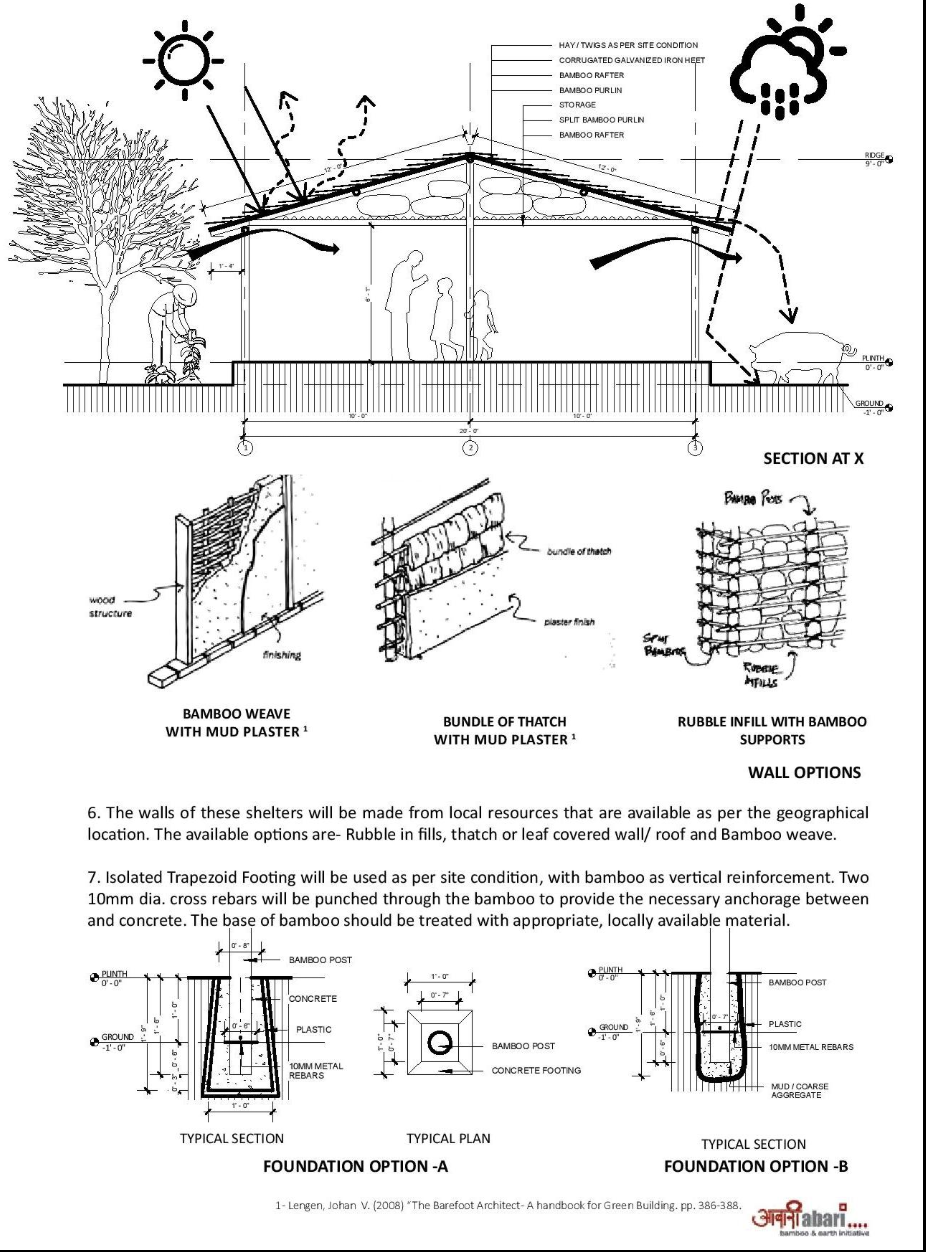
I’ve looked at four types of housing so far: Kiran’s tunnel, a simple tin tunnel, something called earthbag building that uses sacks of dirt and can be made to look very much like a traditional home – and then there’s the option of simply providing people with a corrugated tin and some other materials and letting them have at it.

All this was kicking around in my head the other night when I was in Kaski with Aamaa. While we were having dinner a crazy lightening storm started—the kind that’s more like a constant flickering than separate strikes of lightening. There is a lingering sense of nature’s awfulness in the air and everything feels foreboding, even the normal, dramatic patters of weather typical to this season. As we turned in for the night, it began to pour.

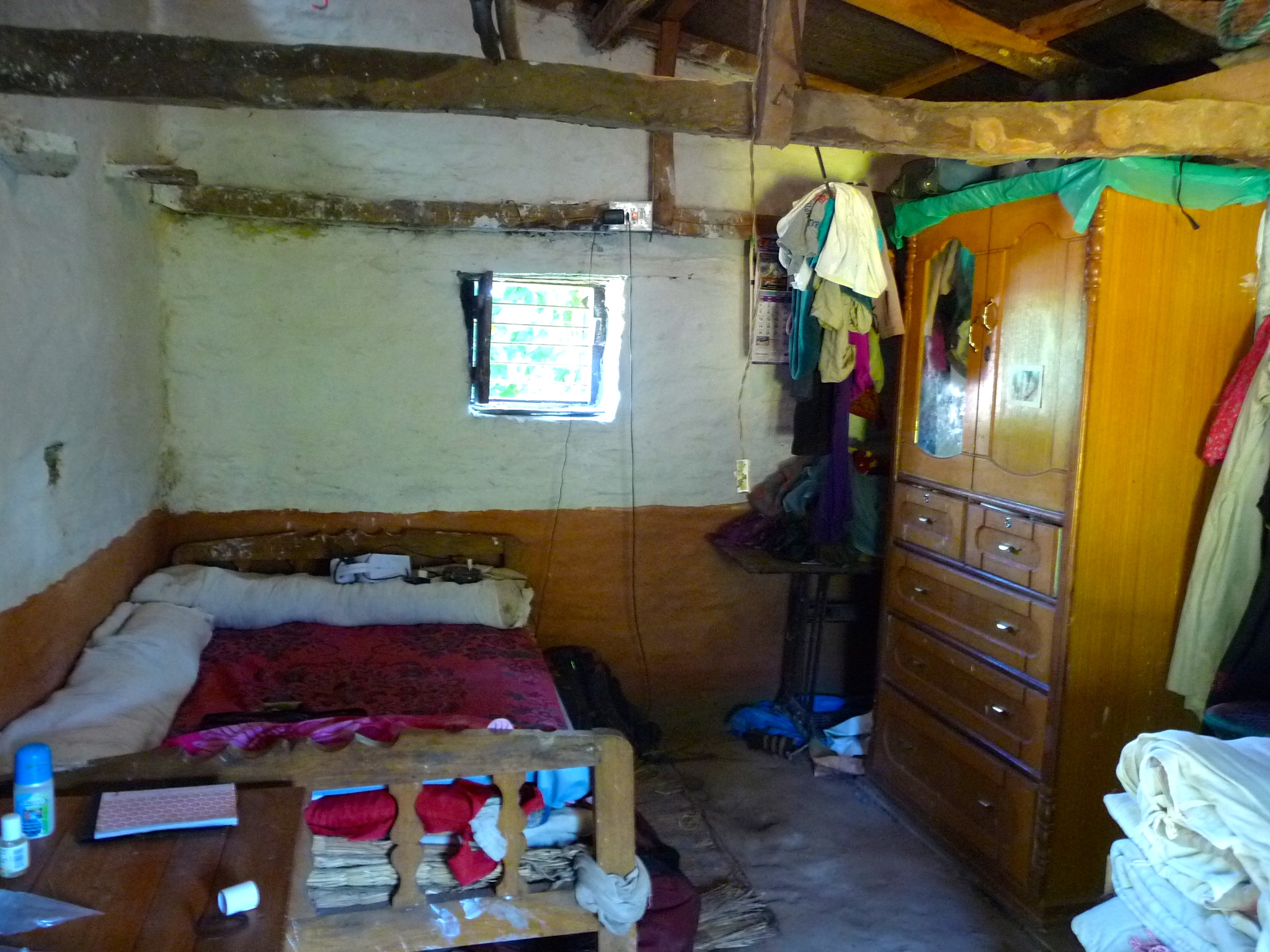
P1070133Lying in bed between the sturdy earth walls of our house, listening to rain clang on the tin roof, is one of my places of greatest serenity. This is my favorite way in the world to fall asleep, and my favorite way to wake up. You can hear the entire the distance from the ground under you up to the sky, but all the noise and space are close and balanced and soft like a blanket.

In my half-dream state, I found myself thinking about people lying in their makeshift shelters, with doors of plastic sheets or thin bamboo or synthetic, brightly-colored things, easily torn down or penetrated. Aamaa walks around all day with a key to this house hanging around her neck. She even sleeps with it.  It suddenly seemed like a great indignity to have no door to close, nothing to lock up, no single space to block out the rest of the unknown and uncaring world.

Not to mention the practicalities. Where are people storing any precious photos of grandparents extracted from the rubble? The few pieces of jewelry or any cash they are lucky enough to still possess? You’d have to walk around with all of this stuff on you all the time.

IMG_1719My mind reached about, searching for something that people could shut tightly, a safe box that can’t be stolen when there are no bolts or securities anywhere. Into my head floated a picture of a locked metal container with a pipe welded perpendicularly to the bottom, and a wide plate attached to the other end, like an upside down T. You could dig a hole, place the box in the ground so that the top of the T rests on the bottom of the hole, and then fill the hole in so only about half the box is above ground with the top accessible. There would be no way to lift this locked, anchored box, so if someone wanted to steal it they’d have to surreptitiously dig up the entire affair inside your tarp-house and then sneak out with a large metal T sticking out from under their shirt. Which, if they could pull it off, AND get your lock undone, then hats off to them.  Because the key would be on a string around your neck.

I fell asleep to the sound of the rain, wondering if we could produce a safe like that.

.      .      .

A New World

It was nighttime as we flew in yesterday, so I couldn’t watch the terraced hills coming in closer and giving way to Kathmandu’s gritty buildings. Staring at the city lights flickering in the vast darkness below, I felt a wave of sadness. I couldn’t shake the feeling of arriving in a foreign land and it made me feel like a foreigner to myself.

The normally quiet tarmac at the airport was scattered with a handful of helicopters and few gigantic cargo planes with their hatches open. And in a way that only Nepal can do, it seemed that someone had made an effort to spruce up the airport for an onslaught of international visitors: a new routing through the arrival area, which wound past a recently installed station where a vinyl banner reading HEALTH DESK had been mounted. A large sign announced that anyone having recently come from Africa was required to stop at the Health Desk for processing, and behind it, an airport official was tinkering with his iPhone. We all shuffled past him, to the main arrival terminal, where the computers weren’t working.

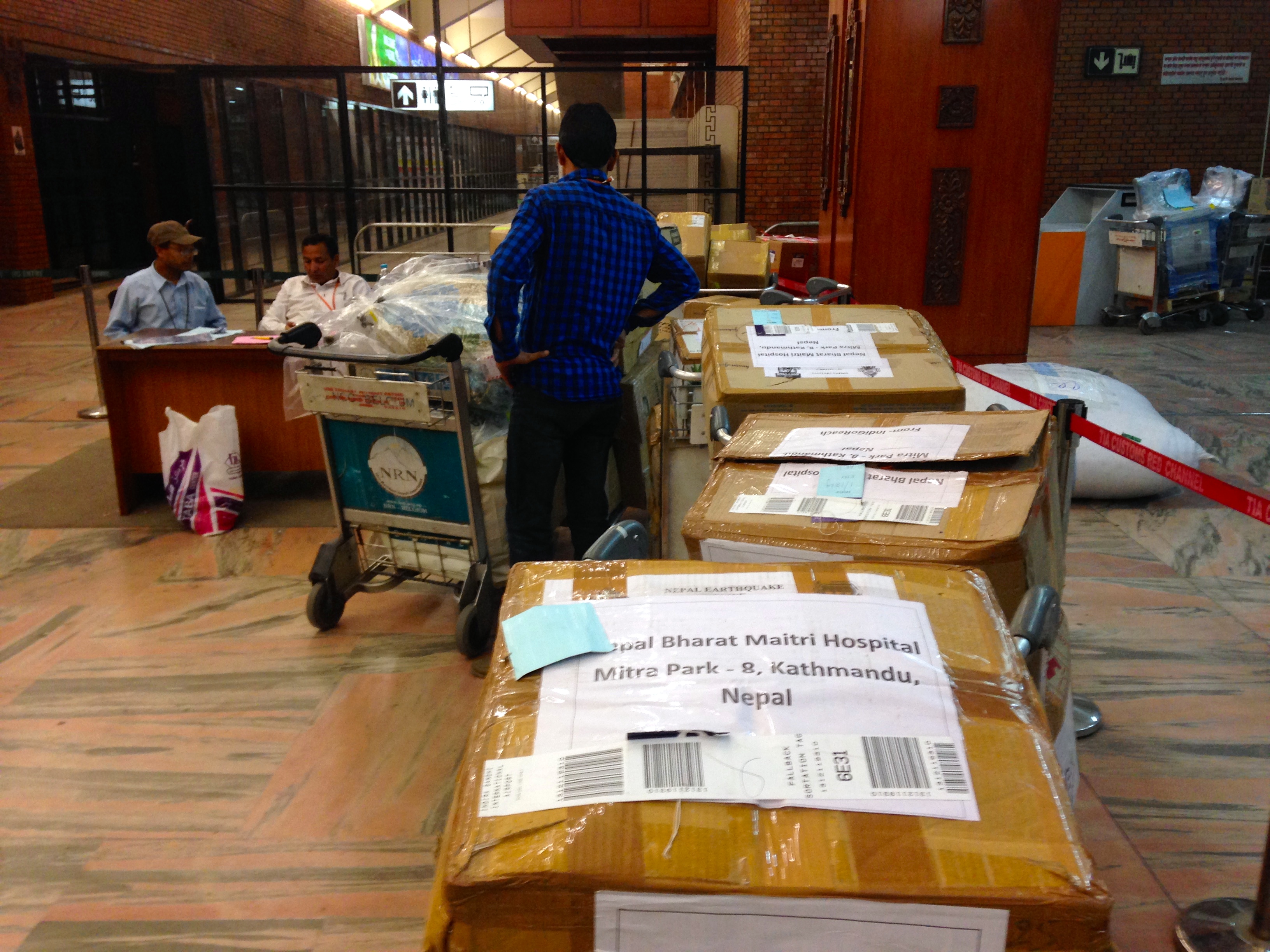
IMG_4863I was one of only about five foreigners waiting for a visa, which was new. And the baggage scanner that was previously set up at the airport exit was gone, probably to make way for a more official exit procedure. But to either side of the revised exit procedure were piles and piles of packages. I took a photo of a stack of boxes addressed to a hospital; it did not look anyone was in much of a hurry to get these parcels distributed.

Following Tuesday’s second earthquake, everyone is taking precautions again. On the cab ride from the airport, I didn’t see many damaged buildings, but people everywhere had tents up outside along the road. I stayed with a friend and the whole family slept on mattresses in the living room, right by the front door, which was left unlatched.  That’s where we are again tonight.

IMG_8714Today I spent the day getting a taste of local relief efforts, and it validated my early suspicion that the energy and creativity of locals can’t be dismissed. My friend Dr. Kiran Awasthi, who has trained all our dental technicians through his organization, has been furiously working with a group of high school classmates to distribute sanitation materials that will help prevent disease outbreaks. His connections through the private sector and health ministry have allowed his group to become a trustworthy distributor of hard-to-find supplies. They’ve also researched, designed and built a temporary housing unit in just two weeks, and they’ve tried it out in some areas already. Obviously the government will ultimately have to take the lead on a large scale, but groups like this are doing a huge amount to help get there more quickly.

My second stop was with a group called Women for Human Rights. Before the earthquake, I had planned to visit them on this trip to do an interview for a radio story I am producing about young widows in Nepal (as part of a series on migrant labor called Between Worlds…but that’s another story!). Like everyone, Women for Human Rights is also doing what they can towards relief, in this case for women especially. So I interviewed their founder about their aid efforts, and then went to a shelter they’ve set up for young mothers and children. It is a large canopy at one of the tent cities in Narayanchaur, at the center of a gigantic grassy mound in the middle of a traffic circle. I interviewed a 22 year old girl whose baby was three weeks old when the earthquake struck. When I asked the kids what they thought of spending their days lounging and playing in the hot sun at the camp, a twelve year old girl chirped: “It’s fun!”

I know that the government and army are making major efforts, and personally I believe very strongly that the government should be viewed with high expectations, tasked with responsibility, and held accountable.  But that said, there is huge distrust among the people of Nepal and the international community about the government’s ability to distribute aid, much less rebuilding, quickly or equitably.  There are still swaths of the hillsides where people have lost everything, suffered injuries and death, and received NO AID.  I couldn’t help noticing that when I walked past the police station, about two dozen officers were hard at work breaking, organizing and laying bricks – rebuilding the wall of their own compound.

IMG_8736

So that was a pretty long day. I already have hours of tape to sort through and tomorrow will bring a whole new chapter of stories before I fly to Pokhara at 3:00. I’ll be glad to get out of Kathmandu – about 70,000 people have left the city since the second earthquake on Tuesday.

Nepal has always shown me a graceful, practical relationship with nature and its whims. But everything feels wrong. Twice today I was in the middle of a conversation with someone who suddenly stopped and said, “Is that an aftershock?” and I couldn’t even feel any shaking. Everyone is on a razor’s edge. People keep telling me, “Things were getting back to normal,” when talking about the second earthquake, which really tells you something, because things were definitely not normal last Tuesday morning. But the second time seems to have redefined “not normal.” It’s as if now the injury of this event is not yet quantified – the sensation isn’t that something terrible happened, but that it is happening, and the final damage is unknown.   As long as the cost remains pending, the reckoning is impossible. You can’t mourn much less rebuild something that is still breaking apart. Everyone is just waiting, even as they run around providing aid to each other.

I will be glad to get to Pokhara tomorrow, but I think this month is going to be as strange and unsettling as expected. My mind is racing with ideas for how to make the best possible use of the $14,000+ we raised for aid, and it is good know that we have the ability to do something, or to provide significant support to someone doing something effective and under-funded. One idea I’m thinking about is collaborating with Kiran or a similar group working on temporary housing. Tomorrow, I am going to get an overview of how the big aid is working.

But I will write about that tomorrow!

How Many

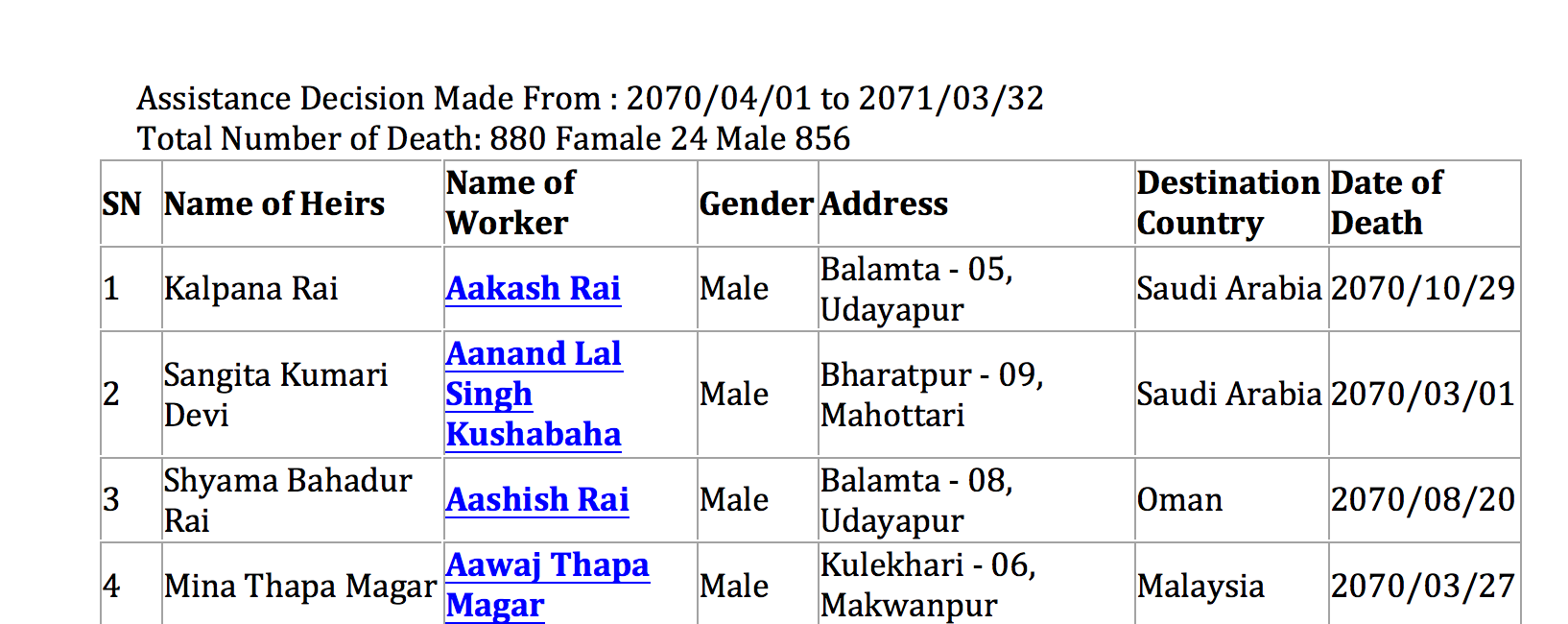
The List finally arrived in my inbox on Jan 29. Two lists, actually: one from two years ago, and one from last year. The title of the List, which Laxu picked up from the Foreign Employment Office, is Assistance Decision Made From (Date) to (Date). It’s a record of insurance payments managed by the government that’s as close as I’ve been able to get to a list of migrant laborers who’ve died abroad.

The first question I needed to answer was How Many. It seems as if everyone knows there is a flow of bodies arriving home to Nepal from overseas, but nobody is quite sure what the scale of the tide is. I’ve noticed that people I’ve interviewed usually shrug off the question How Many a few times, and then give me a sudden, precise answer that measures their own anxiety over the problem.

From April 2012 to April 2013, there are 727 names on the List. The following year, ending in April 2014, lists 24 women and 856 men—and average of nearly three laborers per day.

In reality, How Many is a more complicated number than three per day. A certain number of laborers go abroad off the books, or over the border seasonally to India. Study abroad has also become hugely popular, and waves of luckier young people to exodus to foreign countries (although I would guess that most of the boys in Kaskikot, given the choice, would still opt for labor over study).  While about 300,000 laborers per year leave Nepal through manpower companies, the total migration rate is a lot higher – closer to 800,000 annually.

All of which is to say, the airlines officer and security guard may not have been all that far off when they estimated the number of bodies or insurance claims they receive daily. Some estimates put the body count around five per day.  But I’m mainly concerned with young men, and occasionally women, who sign up with labor companies.

Screen Shot 2015-03-13 at 10.04.03 PM

When I opened the List for the first time, I felt like an intruder. To see a list of names in a place of reverence is one thing. But the black and white letters under Assistance Decision Made from (Date) to (Date) are simply data: eight hundred and eighty statistics.

Besides, each name was listed with only a spouse name, village and ward number (there are no house addresses in rural Nepal), and a date of death. It’s 42 pages long.  I had no idea how I would locate or speak with any of these families.

I closed the List and it was a few weeks before I opened it again. Then, yesterday, I was in Kaskikot, filling up our tin jugs at the water tap, when Madu walked by.

“Hey Madu,” I said. “Remember the project I told you about?” I said I was looking for the family of a young man who’d died abroad. After all that work, I was back where I’d started, having talked to Madu three months ago when I first arrived.  Honestly, I hoped Madu could help me circumvent the List.

As we were talking, Sher dai, another neighbor, walked by and joined our conversation.  He offered to do some inquiry on my behalf in Kaskikot, but then I mentioned that I had a List already at my house.  He followed me back home, where I set down the basket and took out the water jug. I pulled up a low stool in the yard and took at my laptop.

We reopened the list.  I searched “Kaski.” Sher dai and I started copying and pasting a short list of names in to fresh document.  Many were from Pokhara or surrounding Kaski villages that I know well: Leknath, Syangia, Hemja.  And then we came upon Dirgharaj Adhikari, Kaskikot-08.

“Sher dai, this boy is from Kaskikot.  Where is ward number 8?”

Sher dai said said he would look into our short list and get back to me. To my surprise, he came back not two hours later.

Dirgharaj Adhikari’s house is just half an hour up the road. It’s likely that, at some point in the past, I ran in to him in a bus or shop or at Kalika School, where he studied. He died last spring in Qatar. He was 22 years old.

“Shall we go?” Sher dai asked.

It was only 11 am.  Just a few hours earlier it had been a month since I’d faced the matter at all.  I’d assumed before I even began this project that I wouldn’t have to look far to find the bereaved family of a young male laborer.  But it was still unnerving to be so flatly correct.

I pulled my microphone and camera out of the back of the dresser and put them in my bag.  I got on the back of Sher dai’s motorcycle and we left for Dirgharaj’s house.  Within minutes, we turned off the main dirt road on to a small motor path that lead to a lone house, perched high up on the hillside. As we approached, I could see the yard was full of people.  A leather-thin man with clear green eyes emerged from the yard to greet us a respectful distance from the entry way. He was Dirgharaj’s father.

We had arrived exactly on the day of sarad, the annual puja that marks the anniversary of a death.  The entire family was there to honor Dirgharaj.  He died exactly one year ago today.

“Hello sir…may we come in?” I asked. “We’d like to hear about your son.”

*

Learn more about Dirgaraj and his wife Bishnu on PRI’s The World, where this radio story aired in December, 2015.

*

Screen Shot 2015-03-13 at 2.32.19 PM