The Merit of Stories


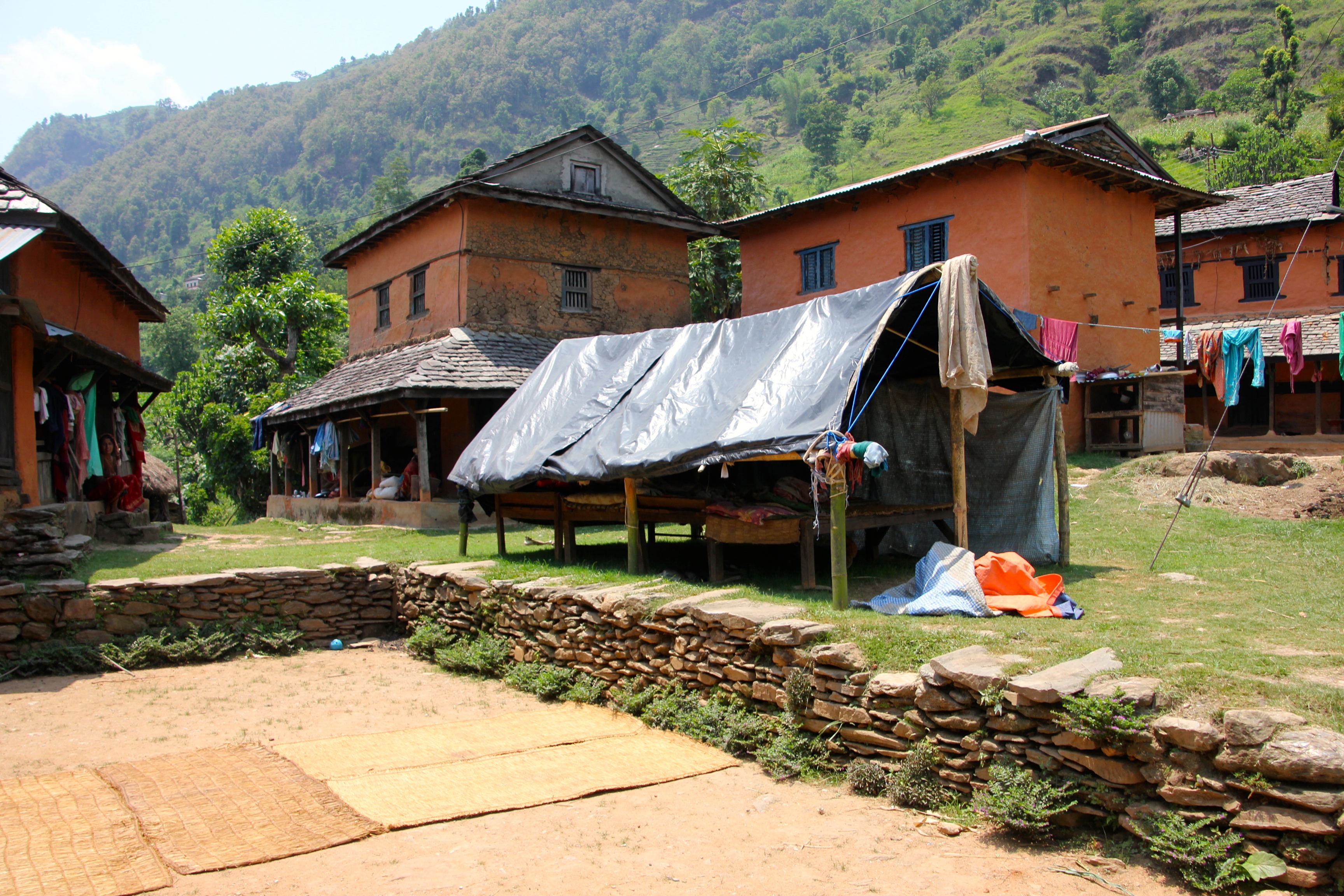
Last night in Tripureswor, Anne and Dilmaya and I slept in a makeshift tin cottage with the sound of the river rushing by outside. When we got up in the morning, we were astonished to find that the shelter was buttressed up against this stunning prayer site.

This slideshow requires JavaScript.

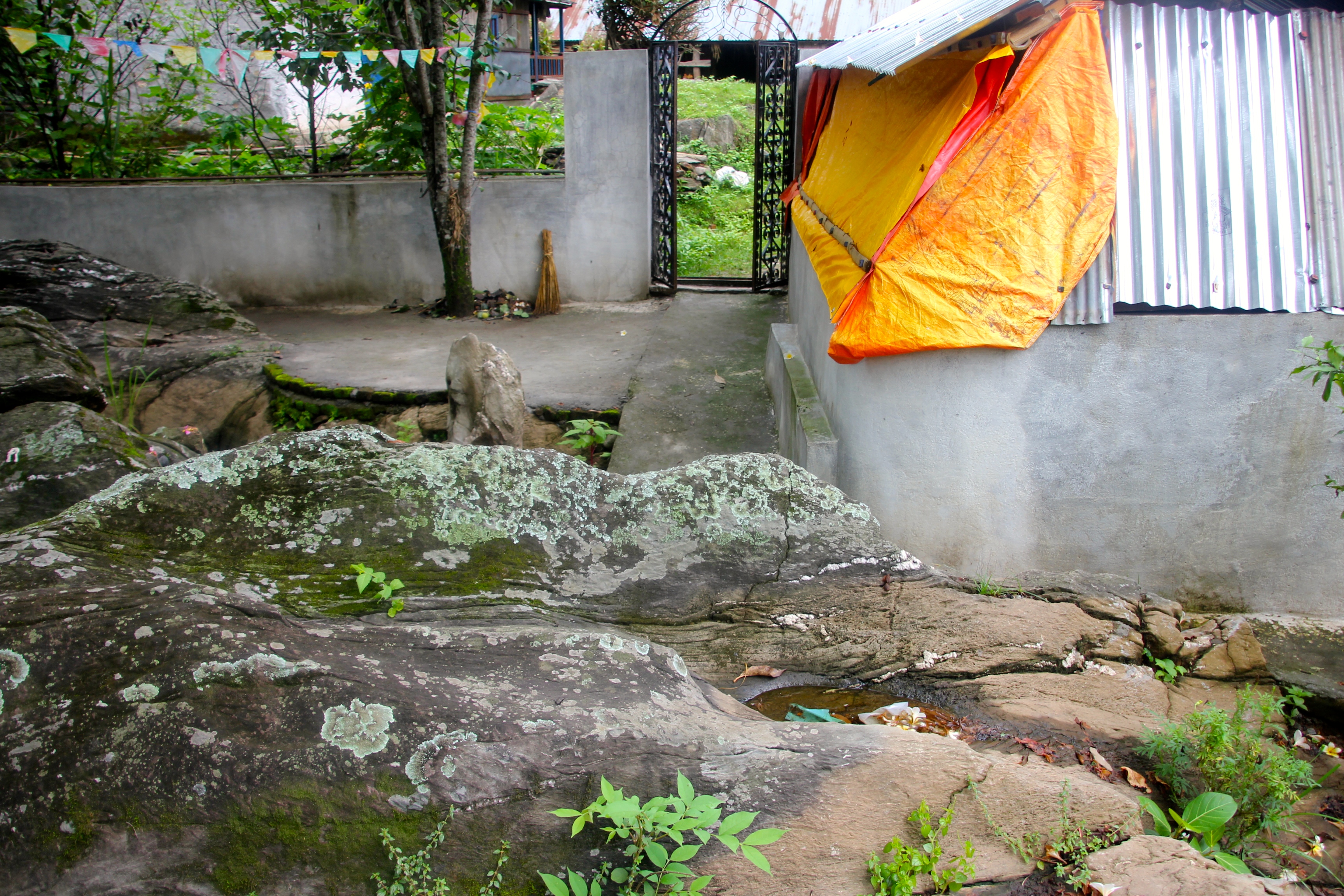
It is hard to capture the beauty of this place in a photo: river-worn, looping rock formations swirling around the base of this strong and humble tree. It is maintained daily and with great joy by our host, Krishna Man Shrestha, known by everyone here as Saila Dai.

He took us in to this wonderful garden and proudly went around showing Anne and I where each of the Gods sleeps in it. Below is the bed for Shiva, king of the Hindu gods. I missed a brilliant moment where Saila Dai lay down in this nook in his shorts and Nepali hat with a blissful smile, eyes closed, hands clasped in a Namaste over his head, to demonstrate how Shiva sleeps here.
IMG_0672


Yesterday, as soon as we met Anne and crammed in to a hot bus with tiny seats to drive to Dhading, I told her about my friend Mary, who died a week ago. I’ve been missing her terribly and I feel myself trying to sort out where she is in this strange journey I am on in post-earthquake Nepal. Even today, I’m not sure why we’re headed out to Dhading. Because Anne is an expert on ritual, I knew she’d have some ideas of ways we could connect with Mary on our impending adventure in Tripureswor. While we bounced along in the bus, Anne told me about the Buddhist ritual of cultivating and offering merit to a departed soul, to help them along on their transition from this world to the next. I knew that was the perfect thing to take with me into our undiscovered story in Ward #6.

Saila Dai

Saila Dai

So Saila Dai’s gorgeous prayer site was an auspicious beginning to our day. After tea, we left with Bishnu to explore his village. I brought along my recorder and camera. With no clear plan and full day from Pokhara, it is safe to say we were winging it.

What we ended up doing was sitting down at house after house talking with the owners. We asked about their families and where they were when the earthquake hit; how they’d rebuilt and what they thought the future held. When asked what we were doing there, we were honest: we said we weren’t sure. We admitted don’t have the capability to do a complicated or expensive project so far from our base in Pokhara, but we were interested in understanding what people are experiencing in Tripureswor.
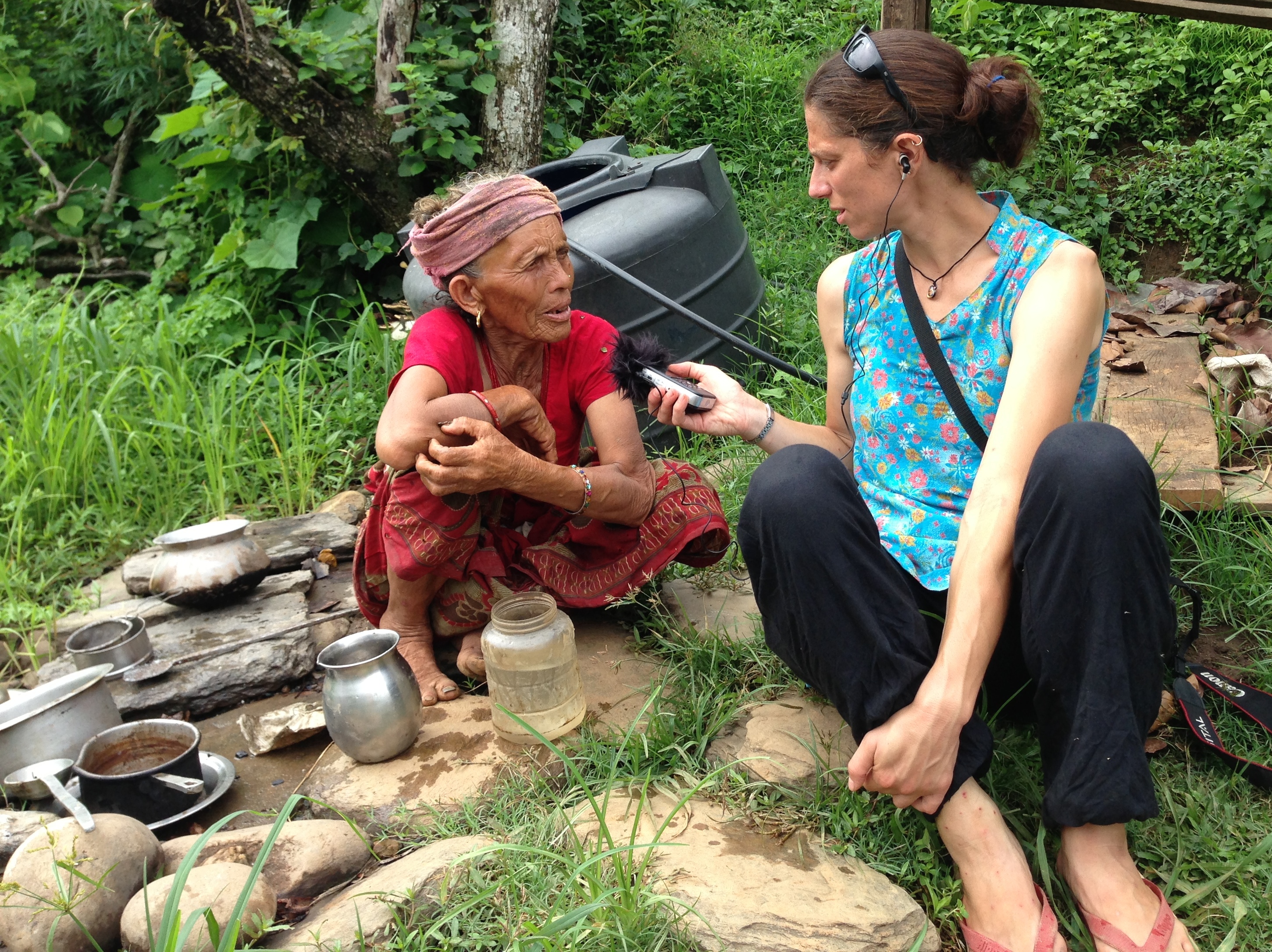
IMG_2357To our great surprise, person after person told us that we were doing a great service by taking time to talk with them. One person said, “by coming here and looking us in the eye.” Anne and I were both amazed by how many people said things like this. People’s lives are pretty shaken up in Tripureswor. But of course, it’s not just the talking, it’s the sitting, the cup of tea or slice of cucumber, the story of the prized son who is studying college in Kathmandu, the unwritten story of getting old in this place. It’s the lack of an agenda. That’s how most of the things that have mattered in the end have started for me in Nepal.

And then there was the water. The main focus of the iNGO community right now is shelter, but no matter who we asked, everybody told us that the biggest problem in Ward #6 is water. The earthquake damaged the water tank that supplies this whole ward, so they’ve been piping water in from neighboring wards, but that sharing won’t last. And even so, people have to walk very long distances to fetch water. Having done plenty of that myself, I can tell you it’s no picnic. The community has already located a new spring, and all that’s needed is infrastructure to collect and distribute. But in addition to some simple concrete tanks and many kilometers of pipe that they need – which is something we could provide – there are some complicated engineering factors, one of which is that the water source is on the other side of the river, so pipes need to be slung across it like electric wires.

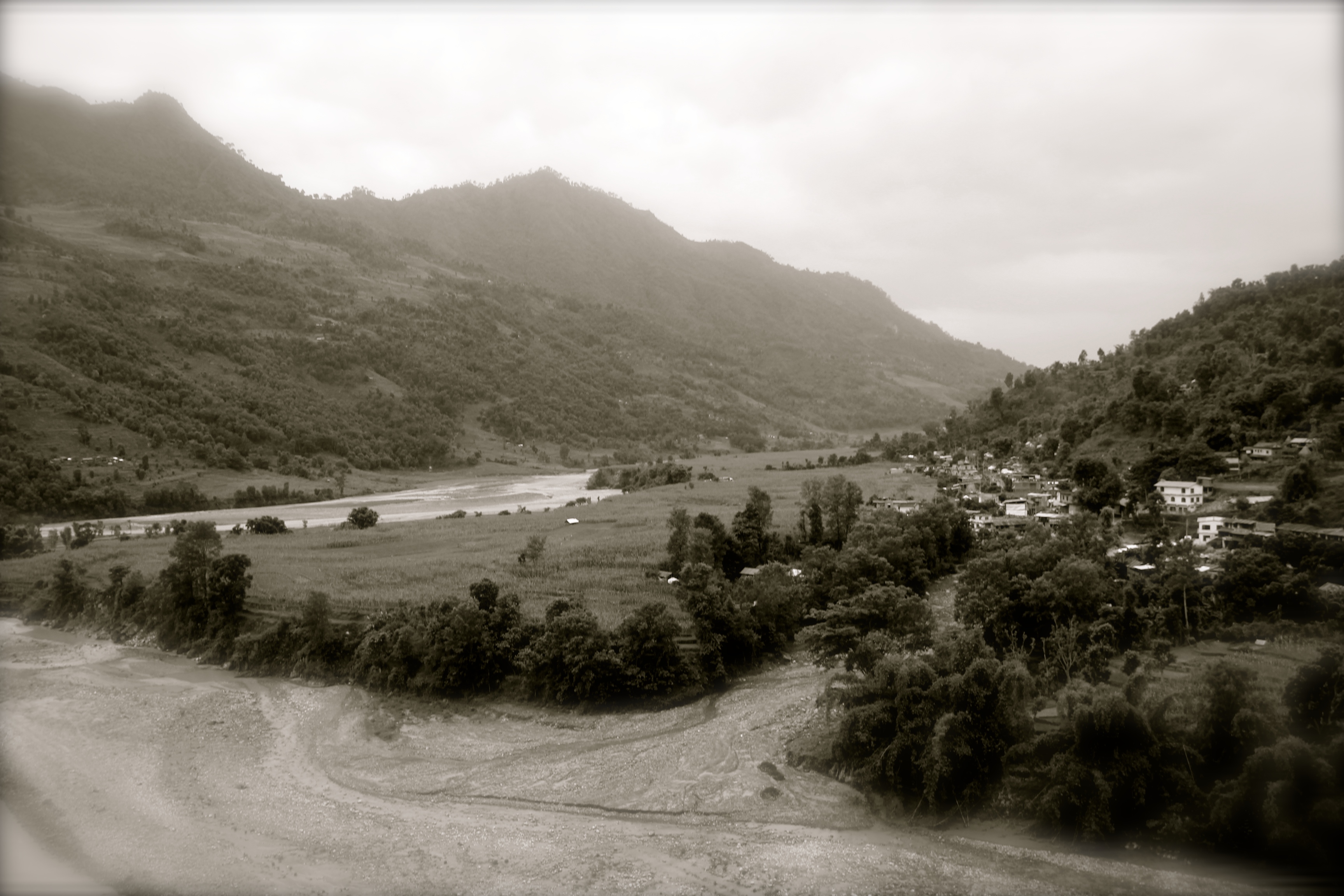
Ward #6’s water pipes will have to be slung over this river.

Ward #6’s water pipes will have to be slung over this river.

As the day went on, it became clear that the water project also is too complicated for us. However, Dilmaya and I did feel like we’re capable of advocating for it. I can contact Oxfam, the major iNGO doing recovery this village, and my contacts at United Mission to Nepal, who are also involved with relief in Dhading district. We decided that Anne would stay for the week and help get together enough details for a proper proposal. Late in the afternoon, we all went in to town to meet with the Village Chairman and run this all by him.

The last thing to come out of our day was that Anne, who’s spent many years doing cultural and sociological research in Nepal, came up with a beautiful project for her upcoming week. There is a Japanese tradition whereby people write prayers or wishes on small pieces of paper, tie them to strings, and then hang the strings in the air, sort of like prayer flags. She plans to have tea with all sixty families in Ward #6, look people in the eye, and write their worries and prayers with them. She bought the paper and string while we were in town meeting the chairman.
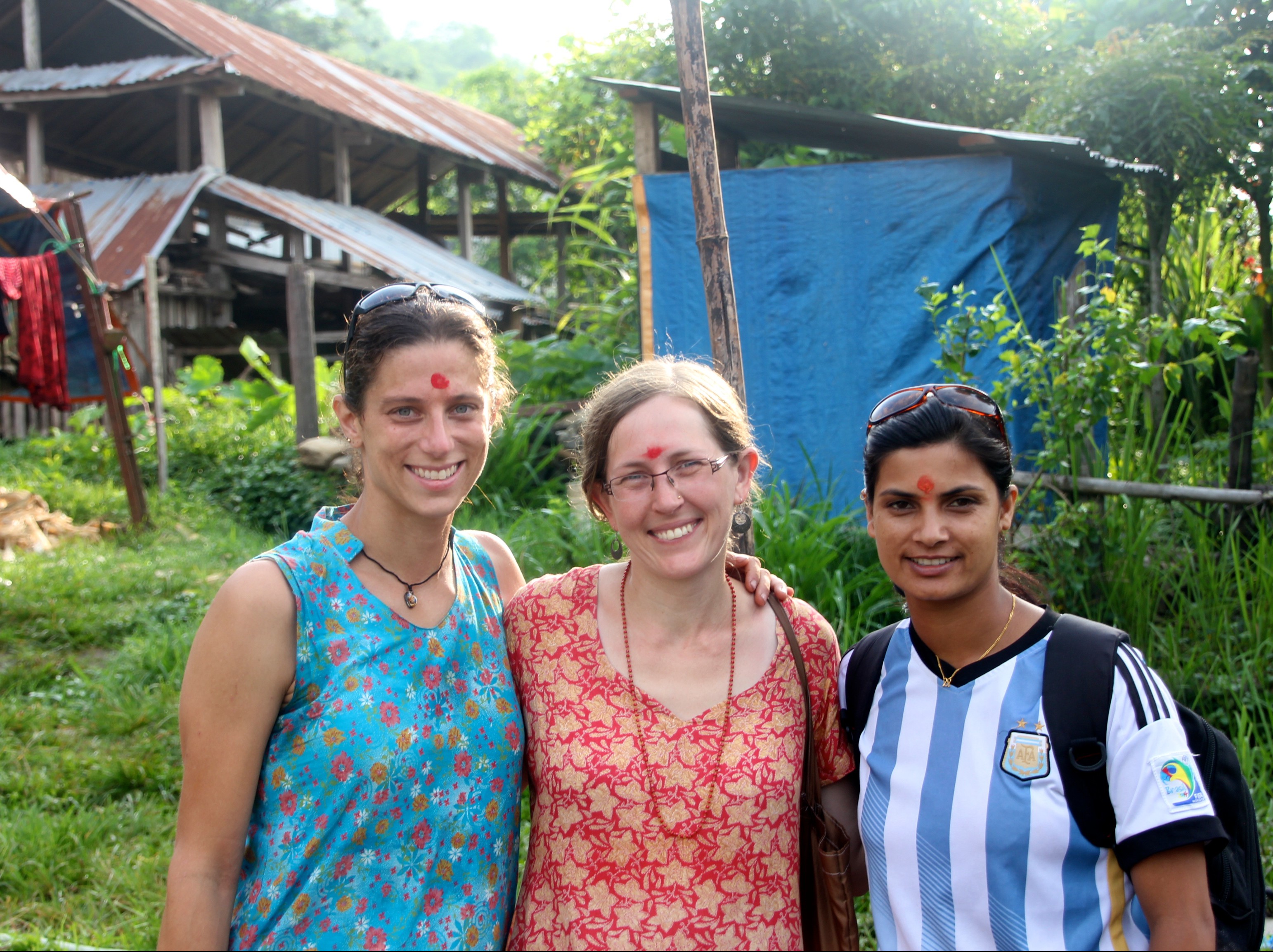
I also did a lot of recording and hope to produce an audio slideshow about Tripureswor, as well as a radio story about the effect of the earthquake on animals. So if that works out, I’ll have a concrete reason to point to that we schlepped – and I mean SCHLEPPED – all the way out to this village. And if the water project actually comes around, that will be really amazing.

But on some level, I understand that this expedition was not about something concrete anyway.

Late in the evening, I went up to a high hill behind the house, overlooking the valley and emerald hills that are glistening with humidity and rain. I did my qigong practice and offered the merit of our day to Mary, to guide her on her way. I offered the merit of Saila Dai and the humility and joy he gives to his enchanted prayer site, and which he had in turn offered freely to us. I offered the merit of looking people in the eye, of meeting Janet for twenty minutes in a coffee shop and connecting her good heart to mine and following the road out to Tripureswor Ward #6, with no agenda but to listen to stories and return them to Janet, whom I don’t know at all. I got started late, so by the time I was finished with my practice, it was nighttime on the unlit hill, nothing but moonlight reflecting off the river in the valley and the spare lights of the bazaar down below. Which seemed right. The merit of stories is how they linger past sunset, into the darkness, when all the people have gone to bed.

.      .      .
IMG_0835

Tractor Cowgirls


What a wonderful day!

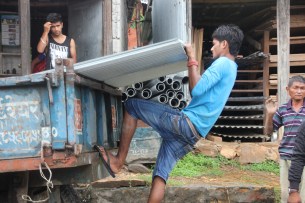
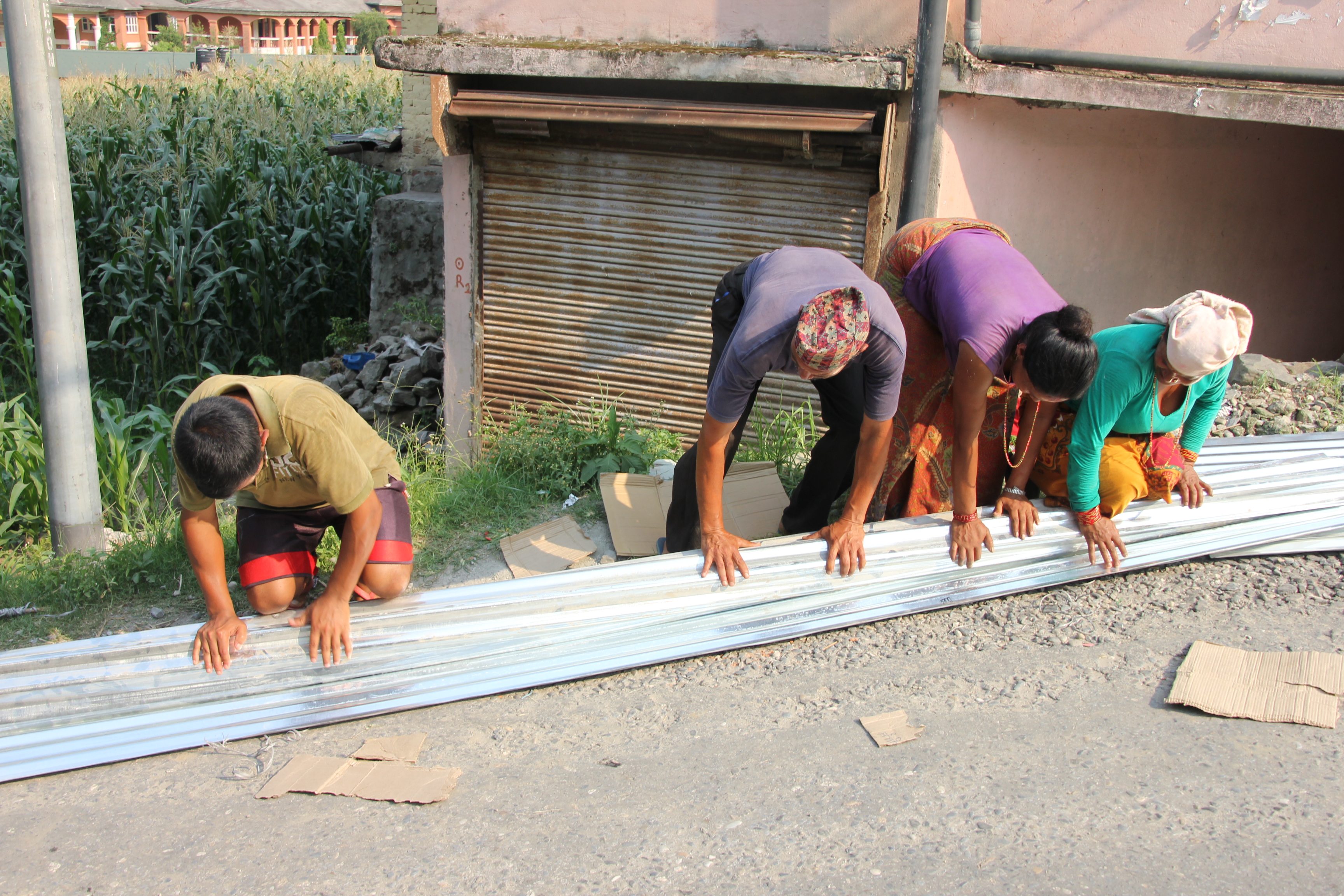
After a week of endlessly trying to chase down corrugated tin, Dilmaya and I spend the entire day today riding around the hills of Nepal delivering roofs in Archalbot in Bharte.

IMG_0147

Our morning started off pretty slowly – I’ll spare you that part – but let’s just say there was heavy rain and 53 bundles of 12 foot, 60kg, corrugated tin involved – when you stack up even some of that tin and try to lift it, it’s as unmovable as a 12-foot block of concrete. There were two tractors and a jeep.  And, of course, one cute little Life Box.

IMG_0146We had a few special deliveries as well – cash relief for Bal Kumari, and a box of ceramic mugs for Muna Bujel’s family, which had completely rebuilt (minus tin) when I met them on that crazy ridgetop in Lakure. When I asked what else they needed, given that they’d done such an amazing job reorganizing their rubble in to a house already, Muna Bhujel looked around and kind of shrugged, like “Lady, look at this whole situation,” and said, “well a lot of our glasses were smashed.” So we threw a set of teacups for her.
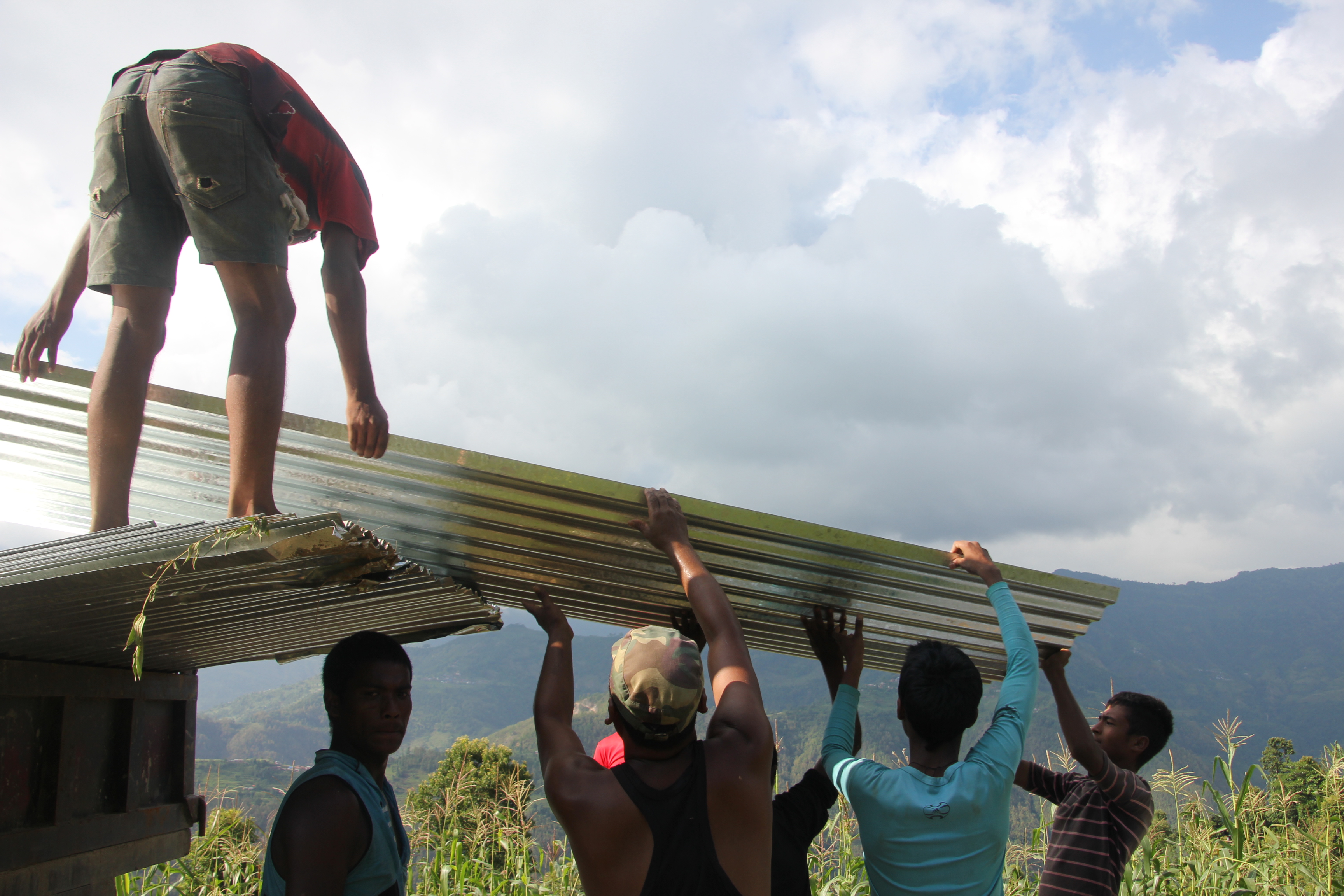
It was nearly 11pm by the time we hit the road in Udipur on tractor #1, which was carrying 17 bundles of tin for Archalbot. Voila, Archalbot tin delivery! While we were here, we met three more families requesting roofs. I visited their houses and told them to start building. We’ll be back next week to check on the rest of Archalbot, and we can bring roofs for a few more families if they build before then.

Next, we had to switch to tractor #2 which was loaded up with our major delivery for about 50 homes all over Bharte.  This led to a situation and the following clip of video that pretty much says it all.  Here is what it’s like to try to provide aid for half a million ruined and damaged homes in Nepal’s hills.  An anchoring wire on a footbridge had popped out of the mud softened by the rains, and our tractor couldn’t get over it.  This video takes place about half a mile from a paved highway, on a 10-meter stretch of the only road that leads up to the village.  We did this for ONE HOUR before crossing this little patch of road that is the access point for the entire hillside of Bharte.

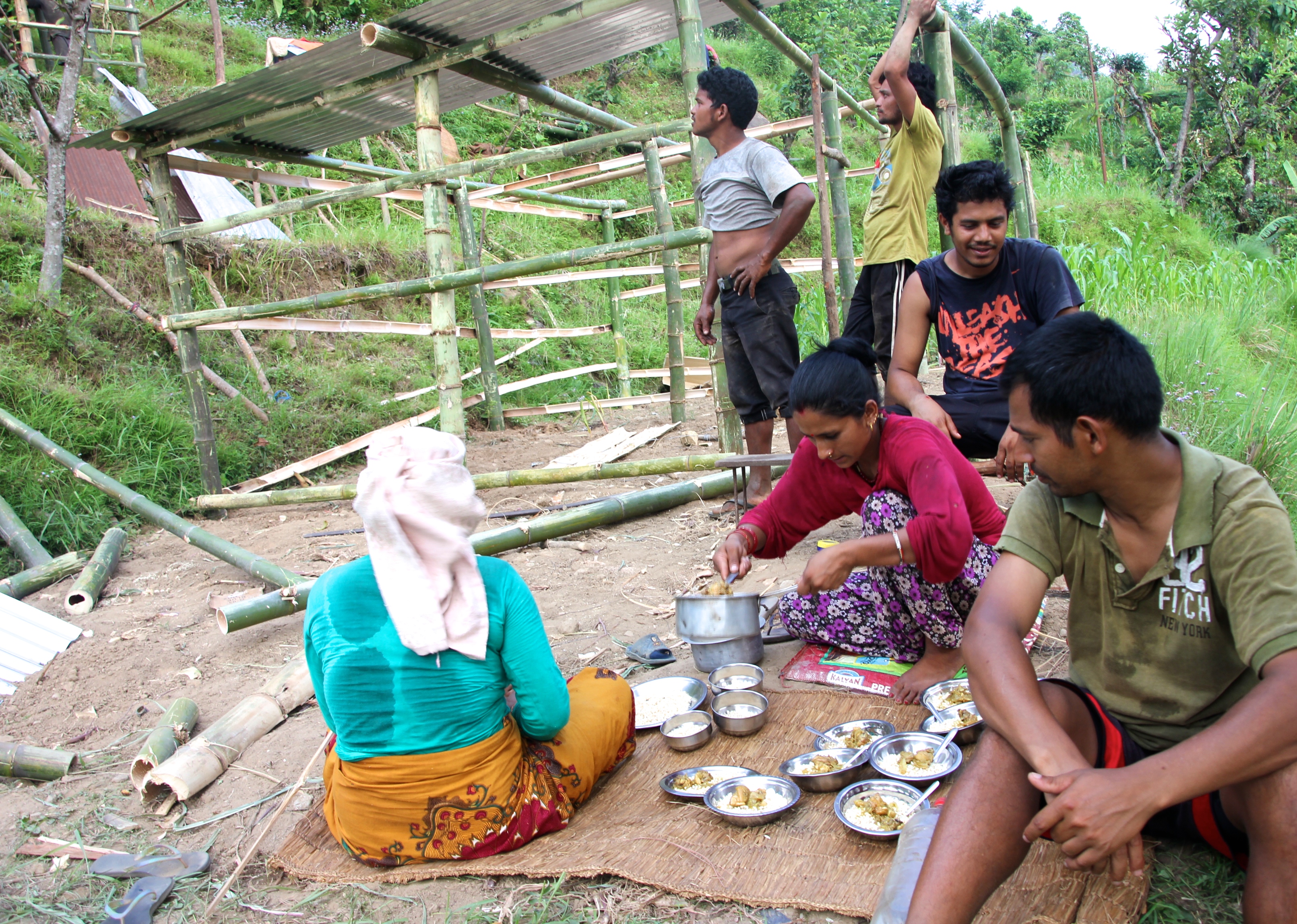
We finally got to our first stop in Sirwari, which was totally awesome.  When I first visited Sirwari about a week and a half ago, three families were living together under this tarp.  We asked them to build a good quality bamboo house and promised a roof.  When we arrived today, they had built this gorgeous bamboo community home for all three families!  I love this photo because you can still see their old tarp in the middle, hanging out until we can put it out of business with corrugated tin.  We delivered said tin that very afternoon, and promised we’d come back to see the finished product and spend the night.

IMG_0202


We looked at some of the other bamboo frames in Sirwari, and of course I wanted to take lots of photos and hang out and talk with everyone and Dilmaya was texting me madly to hurry up because we still had two tractors and a jeep full of tin and a lot of deliveries to make.  On the way, we picked up Sarita, Kripa’s young sister in law, whose house we’ve been staying in in Archalbot, and who’s become our pal.  The three of us crammed in to the two-person seating area in the front of the jeep, and we were off again, eating some lychees.

Our next stop was Bharte Banjang.  As far as I could tell, it’s the poorest, most remote and devastated area that we’ve visited.  Lakure is also quite remote, but people there had mostly rebuilt, whereas in Banjang, we met families with lots of young kids living between rusty tin or having moved in to the buffalo shed, with the buffalo.

IMG_0219We brought new tin for 10 homes, housing 49 people, to Banjang.  By now we were in a hurry, so I don’t have as many photos, but the building quality wasn’t as good in this area.  People didn’t have access to long bamboo nearby, so even though our coordinator in Bharte offered long bamboo off his land for free, nobody went and got it.  Many of the frames this community had made were far to low to stand up in.  Instead of the bamboo wall technique we saw in Sirwari, which is tight and can be plastered with mud and made permanent like Tulasi’s house in Parbat, people had simply criss-crossed bamboo, like this, which is far less secure.  This is kind of a mystery to me.  I wasn’t IMG_0233sure why so many of the people in Banjang had made structures with such obvious problems.  We decided we’ll do our best to provide day employment for some of the Sirwari people to come up and help the people in Banjang.  We’ll see how that goes.  In any case, at least these folks will be able to move out of the buffalo sheds and such.  I will venture to say that if we had not required that people build before providing these roofing sheets, this is an area where a lot of our tin would likely have sat in the yard or been thrown on top of unsafe houses.
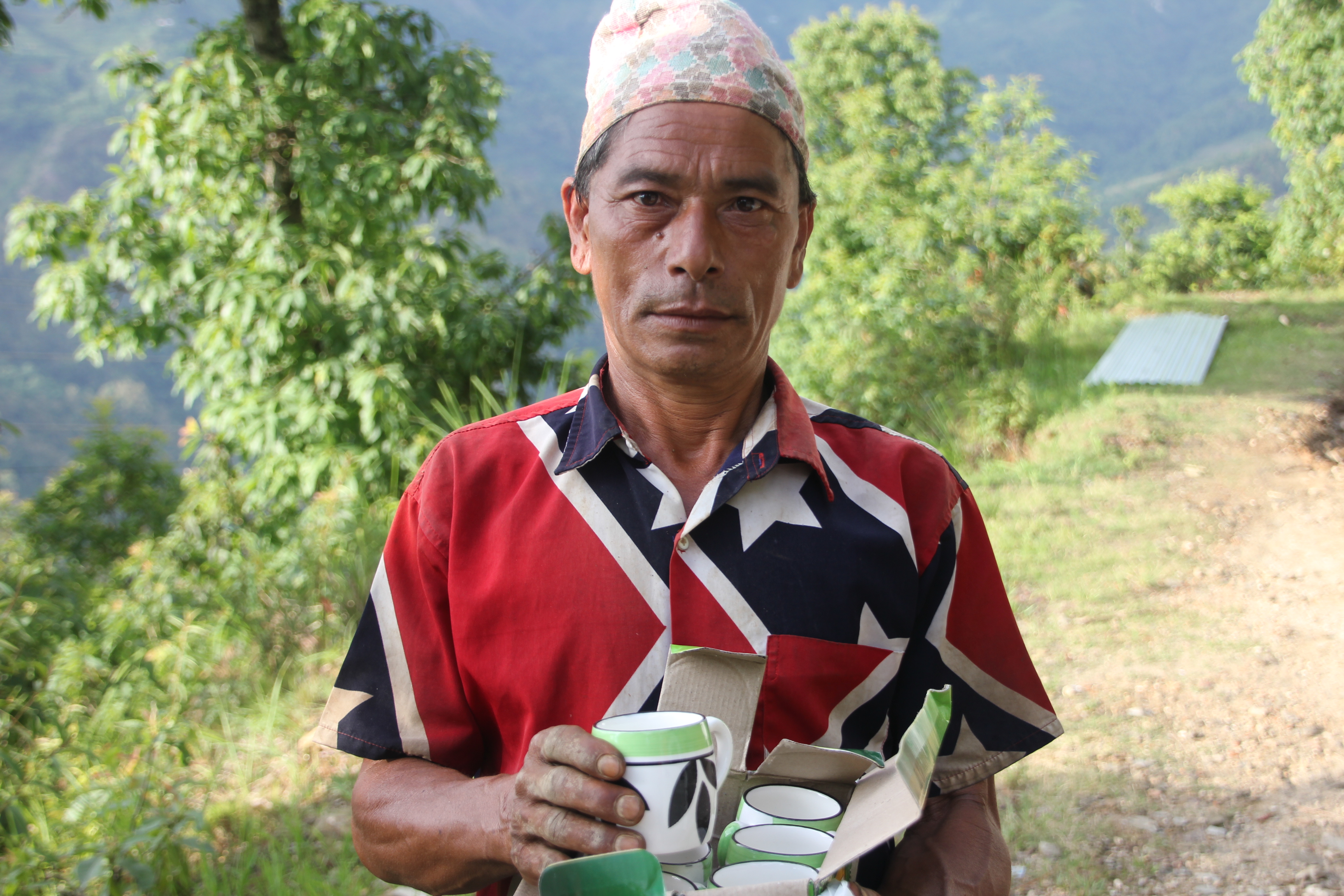
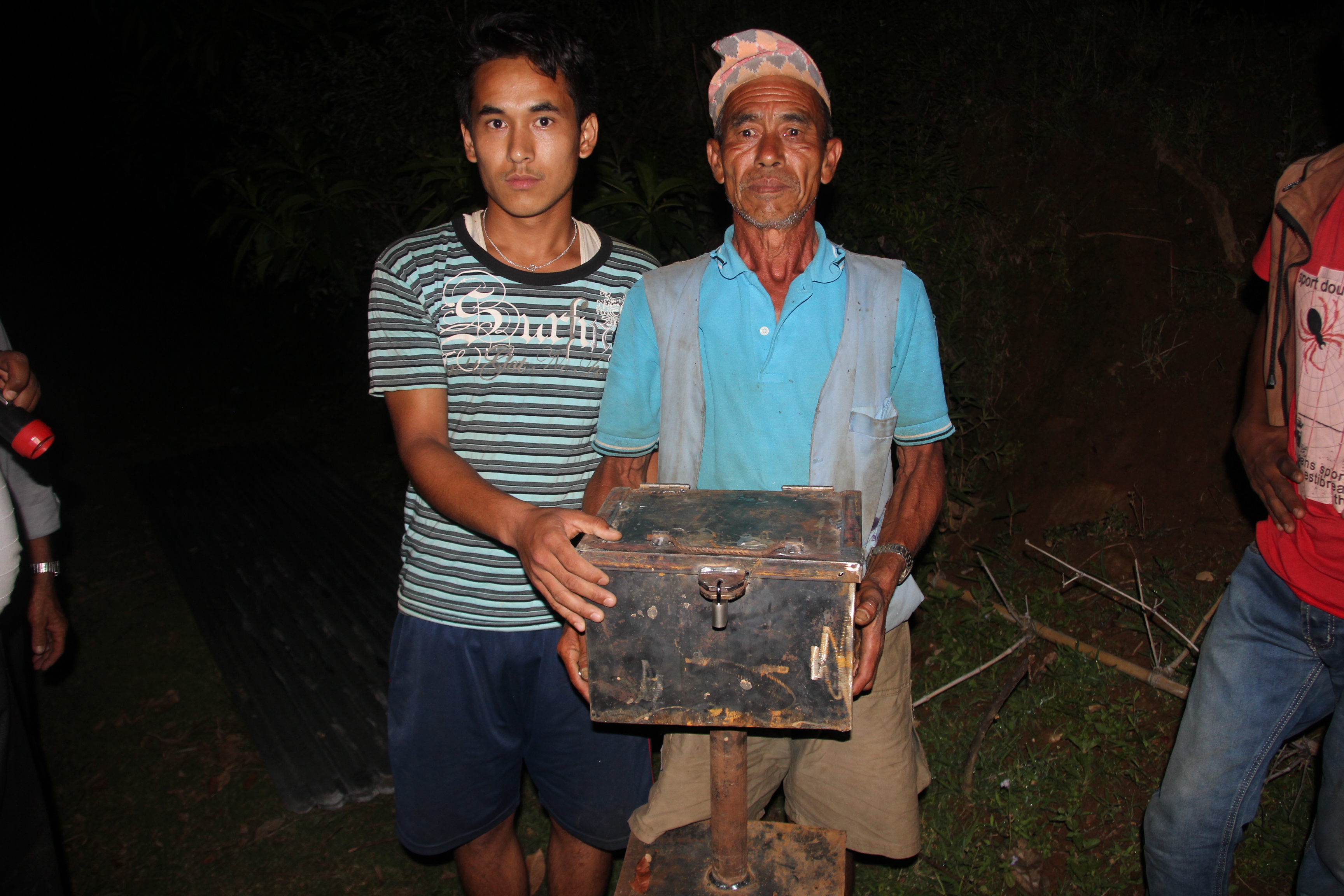
From there we went to Lakure, my favorite spot in Bharte, where we delivered tin to Bal Kumari, and gave her $300 in cash that she was not expecting, to repay her loans.  Here is Muna Bhujel’s father with the teacups we gave him.  As you can see, he is pretty much speechless.

IMG_0236Then it was time to go to Besigaun for another 12 homes.  By now it was dusk, and as we headed out to our final few stops, it was night.  We made our deliveries in the dark.

Now, are you realizing we’ve left something out here?

Life Box, man.  Life Box.

We took this box out here and there to show people, but it was all so hectic that we didn’t really have time to do much with it.  I mean there wasn’t exactly time to dig a hole in the ground and bury the thing.

At our very last stop, we realized we had an extra bundle of tin, and this nice guy, Lok Bahadur Bhujel, and his son, came out and found us in the road.  They had built a temporary house but for now they’d covered it with a tarp, and wanted to ask us for help.  Well, as it happened, we had an extra bundle of tin that needed a home, so off it went.  Along with the Life Box!

Well, that was one of the more interesting days of my life.  All together, we covered over 50 houses and about 250 heads.  We’ll come back to Bharte in a week or so to check on things and see how some of these homes turned out. Dilmaya and I ended up spending the night at Sarita’s birth home in Bharte, and let me tell you, we did not have any trouble falling asleep.

.      .      .

IMG_0271

Glamping and Magic Cake Houses


Reading over my blog entries, I’m realizing I’ve left out some of the nicest details of the hospitality we’ve received in Archalbot this week. So let’s just put them all together.

Detail #1: Glamping

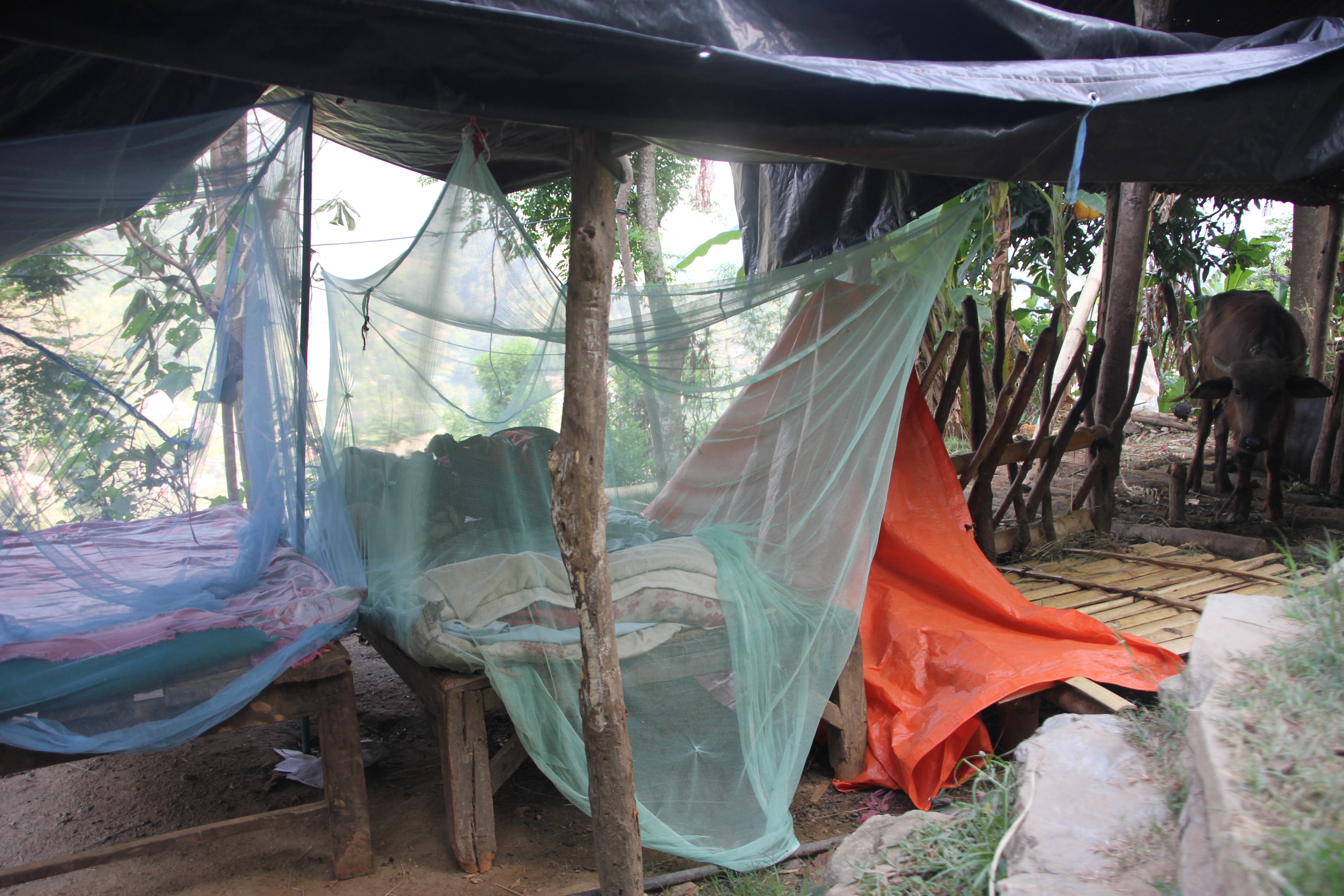
IMG_9481Dilmaya and I stayed at Kripa’s house. It’s standing, but unstable, so we’re all sleeping outside or in small rooms on the edges of the house. For years I’ve joked with Aamaa about going to sleep with the buffalo, or sending Pascal and Aidan to sleep with the buffalo when they’re being cheeky. Now, I can say I’ve actually slept with the buffalo. This glamping site (a phrase I learned this winter when a new “glamorous camping” hotel was going up in Pokhara) was one of the best places I’ve ever gotten to sleep. I loved dozing off each night in the open air and waking up slowly each morning to a cool breeze rustling over the corn, the green hills coming in to focus through the mosquito net.

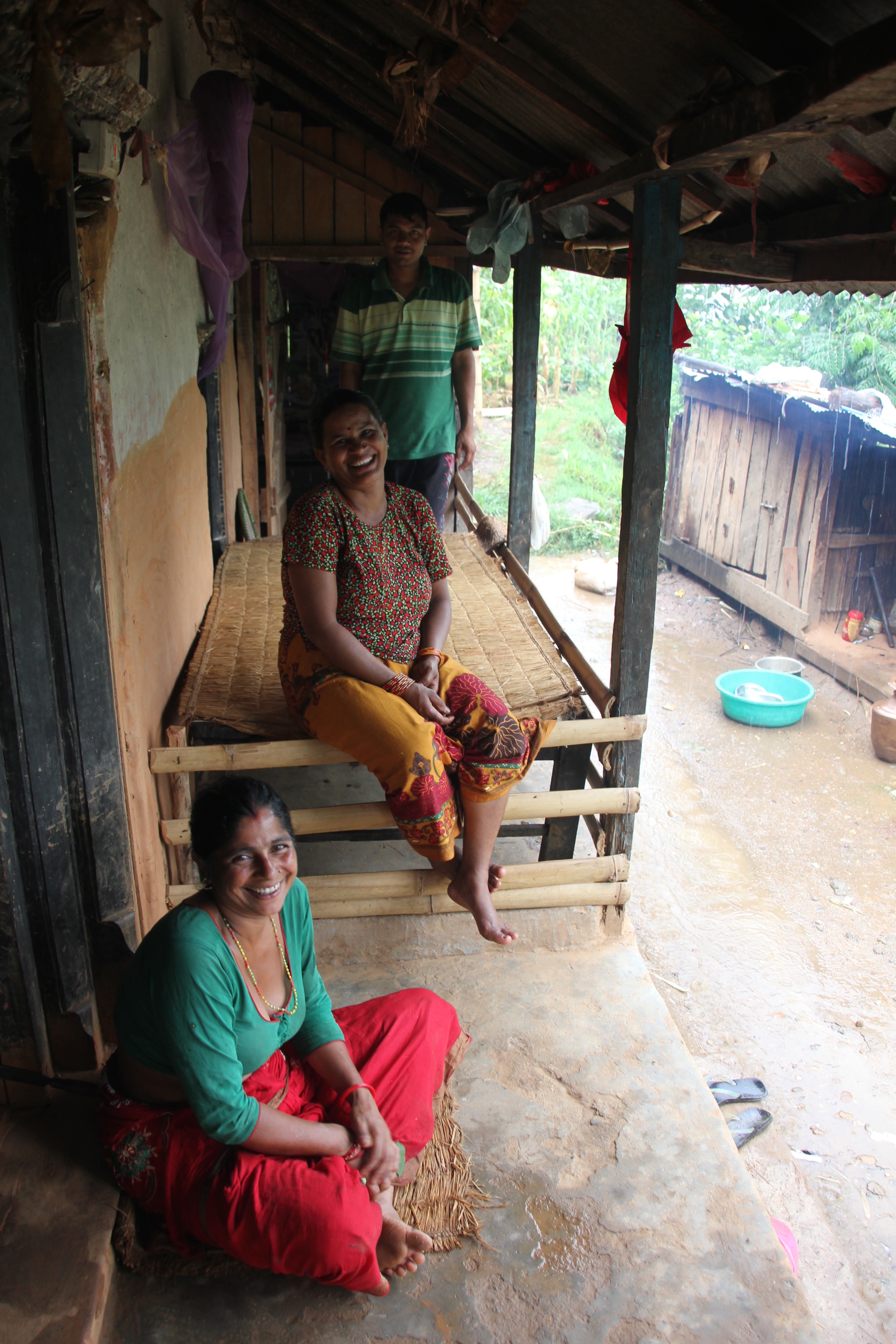
Later in the week it started raining, so Kripa’s mother moved the bed to the porch. Cute, right? Our last night in Archalbot it rained heavily all night and all morning, and I lay on this cot listening blissfully to the tap-tap-tap-tap on the tin roof.

IMG_9726


Detail #2: Dancing

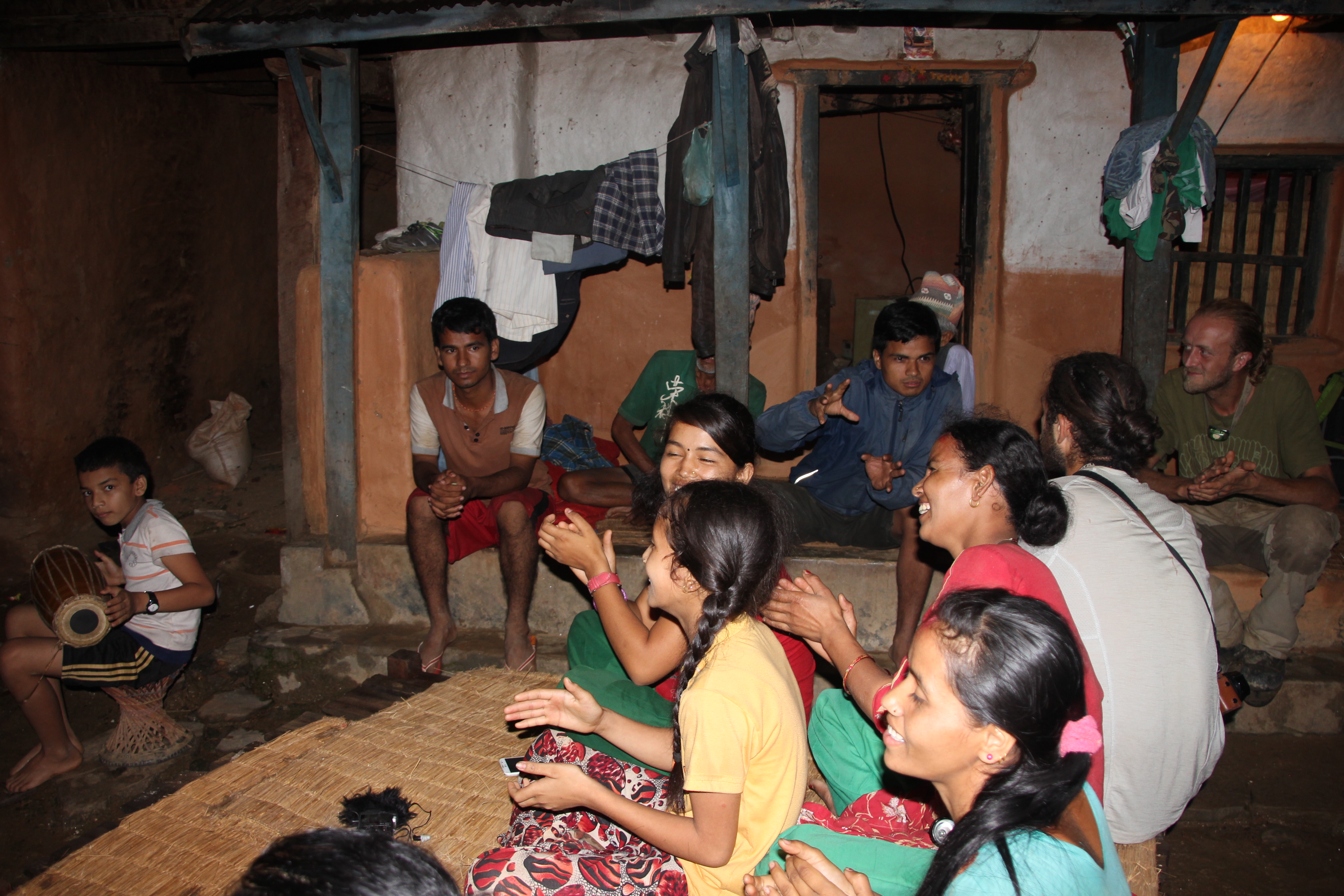
The night before Robin and Colin left Archalbot, we had a dance party at Kushal’s house, in the same yard where we first met this whole community just a short week and a half ago. It was so much fun. All the uncertainty and worry that the earth bag house hadn’t been finished, who had and hadn’t fulfilled what responsibility, what would be done next and who’d been let down or left out…everyone just kicked back and had a big old dance of it.  Which is how we handle potentially stressful situations in Nepal.

IMG_9741


Detail #3: This Grandma

For the days when we had lots of help with the earth bag house, everybody, and I mean everybody, pitched in. You just couldn’t miss this grandma, who unfailingly monitored the scene all day, and during stone-breaking, sat with her legs in a perfect South Asian squat, clicking stones in to pebbles.  One day, I was loading rocks on to our makeshift carriers, and she came over and carefully began placing stones one at a time on to the tarp, with this kind of tentative body language that said, “I mean why not? It’s the thing to do.  Let’s see about it.”  After I got too excited and overloaded one bundle, we made the next one a little lighter so she could carry it with me. I couldn’t choose between these two amazing photos so you’re getting both of them.

IMG_9608

IMG_9611


Detail #4: Breaking stones

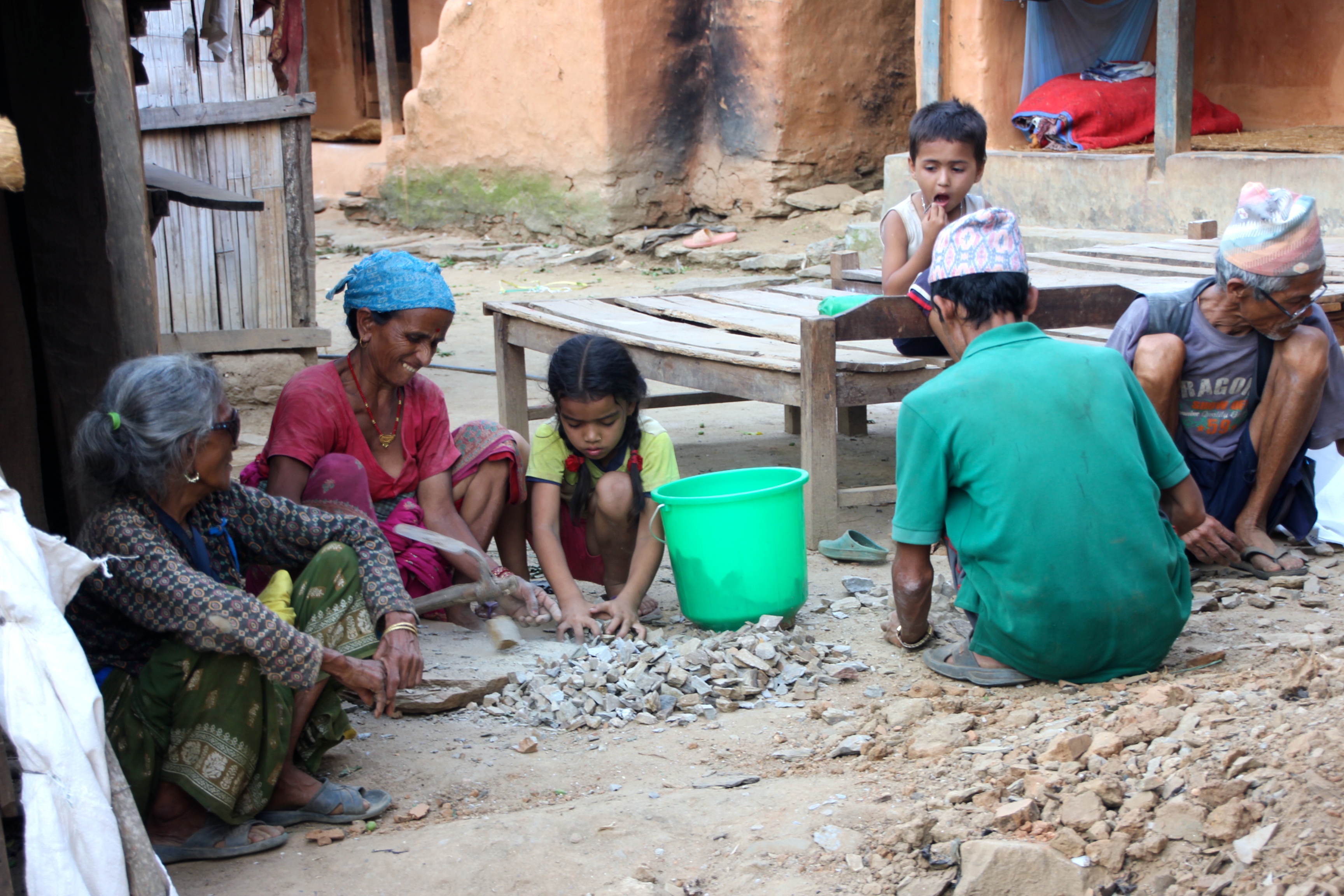
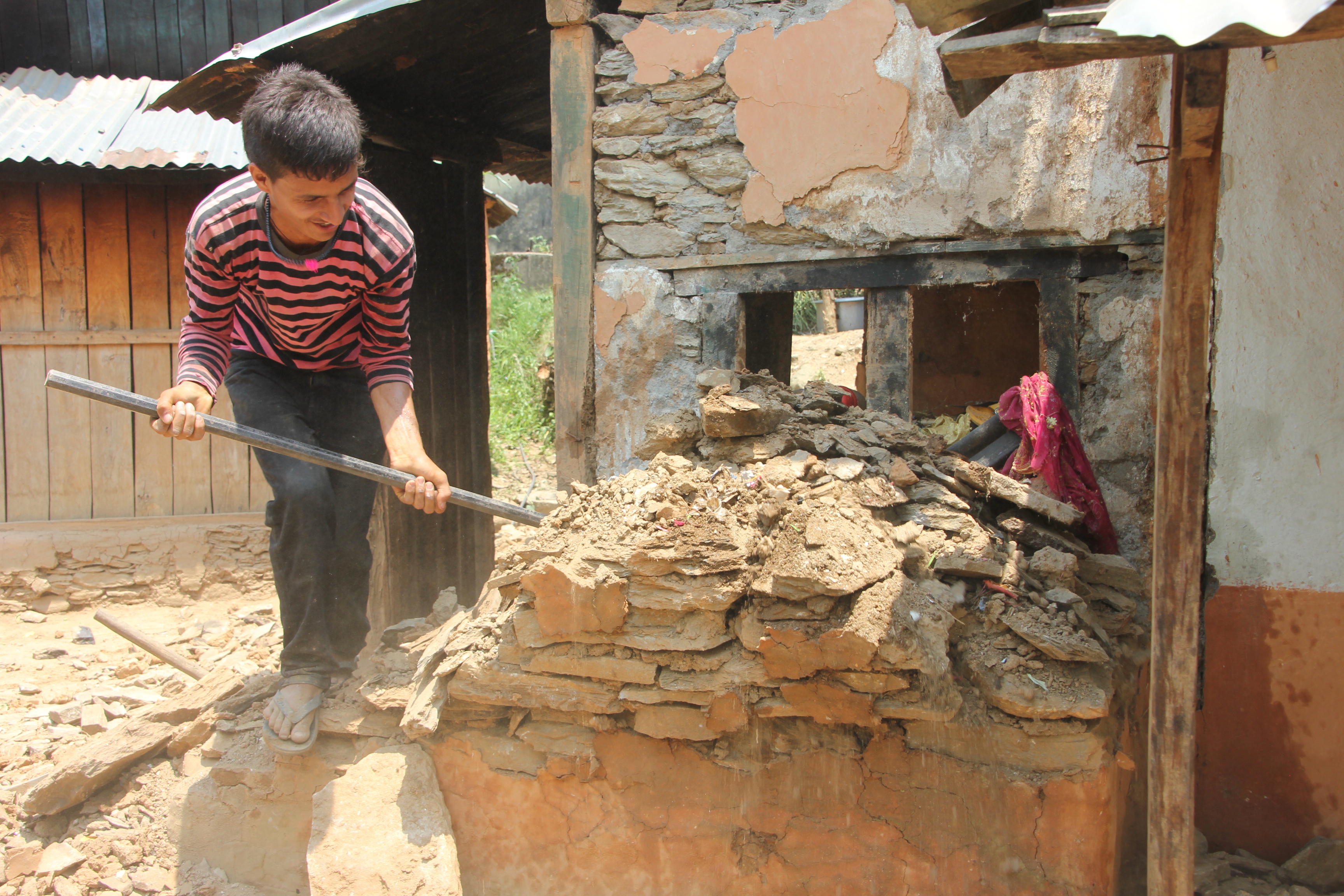
IMG_9624The foundation of the earth bag house is made of alternating layers of stone and packed dirt, and the first two layers of the house itself are made from sacks filled with little stones, which I now know to be called giti. In order to get enough stones, Mahendra’s family demolished one of the unstable rooms of their house, which was highly satisfying since the house will eventually need to be taken down anyway. Then, for days, there were all these people just sitting around clinking away at stones. A lot of the women and kids worked incredibly hard on this.

I’ve always had an association between stone-breaking and the awful child labor that you often see in the river bed: poor families breaking stones all day in the hot sun, children out of school. But this scene was totally different. It was like some kind of anti-submission-to-earthquake factory. It felt defiant and exhilarating having all these people in the community dismantling their own home in order to put the pieces in to the heavy foundation of a new house.

IMG_9603


Detail #5: Flour

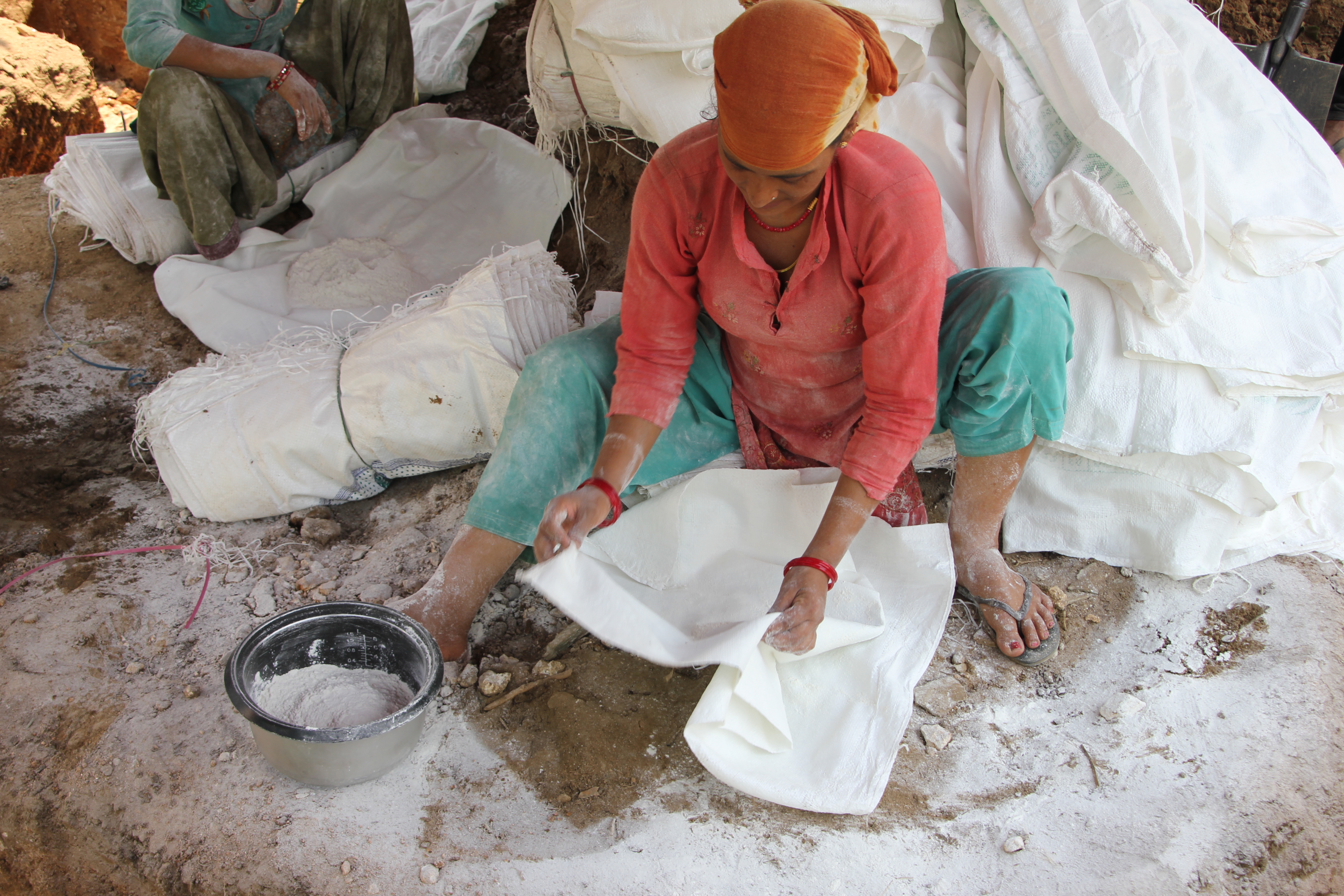
We used recycled sacks for the earth bag house, and they had previously contained flour. A team of two to three people was fully devoted to shaking out each and every sack to gather the palmfuls of flour remaining in each bag. Over the course of hundreds of sacks, the flour piled up like so. And, as Mariah pointed out, our earth-bag house was also something of a cake-house, and our team looked like a bakery.

IMG_9594


Detail #6: Kushal

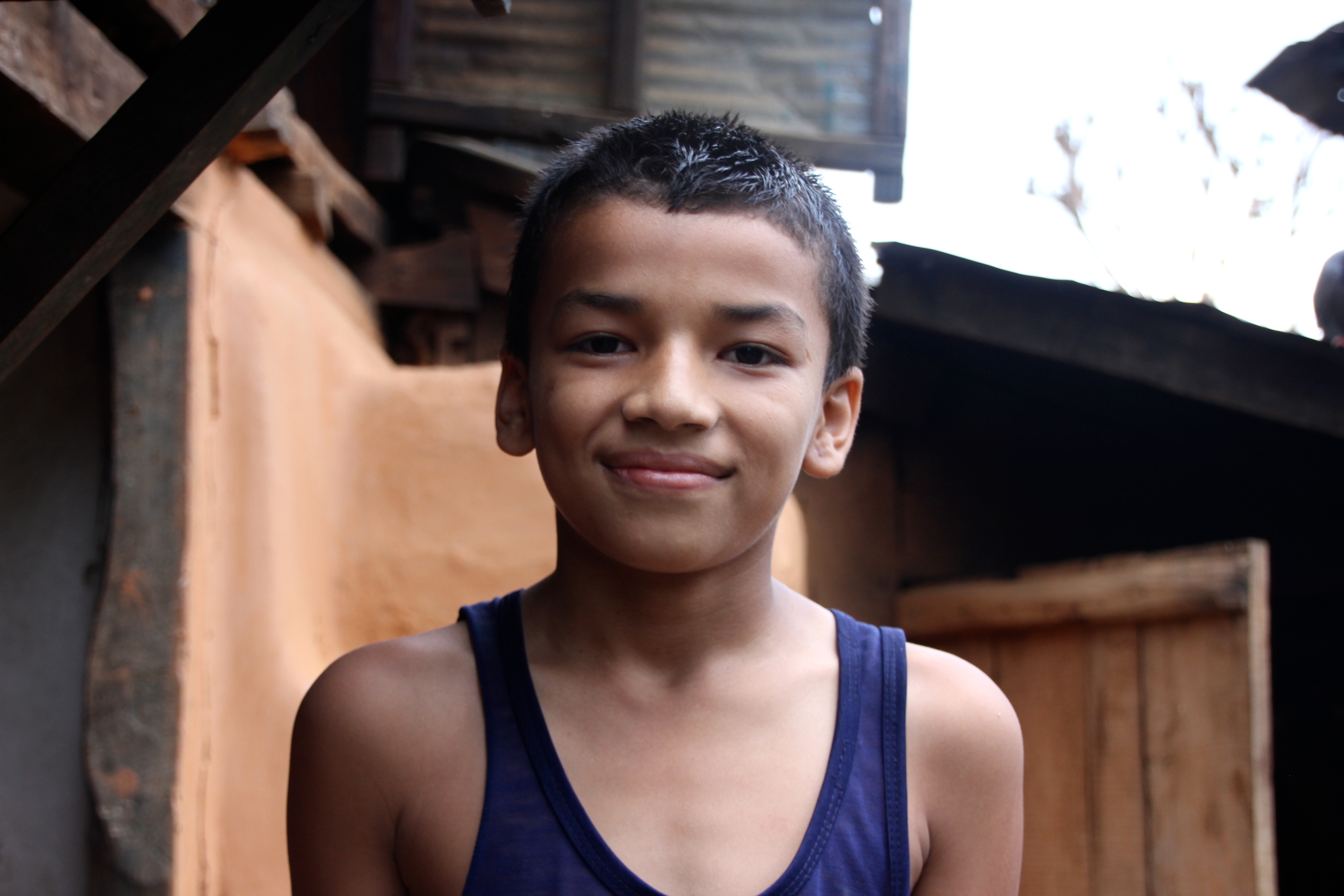
I interviewed Kushal twice. Once, so he could show me around his house (look for him in an upcoming radio piece for BBC’s The World). The second time, to ask him what he thought about this whole housing thing, and what his perfect house looks like in his imagination. He talked to me about magic, in english, and I recorded it:

“Everything is magic. I walk, you walk, it is a magic. We can jump, we can speak, anything is magic. This is a house, it is also a magic. In the stone age, there was nothing like this house. In the stone age people lived in caves and they didn’t feel safe because animals can any time harm them. But we can feel safe here. There are many inventions like radio, microphone, camera, and DVD, laptop, computer and radio, it is also a magic. The people are developing magic. I don’t know surely, but I want to do some magic in my life. My life is also a magic that someone has gifted me, and your life is also a magic that someone has gifted you.”

.      .      .

IMG_9437

Small Bundles in Big Spaces


IMG_9794

View across the valley, from Bharte

After my visit to Bharte, I went up to Besisahar to spend the night. Many of the international NGOs working in Lamjung operate out of a hotel called the Himalaya Gateway, and I wanted to sit in on a training by the Danish Red Cross on shelter distribution. Plus, I had to retrieve our first delivery of tin: two bundles for Uttam’s family.

I arrived bedraggled and hungry at the hotel at 8:15 pm after many hours of hiking up and down in Bharte in my flip flops (points for irony on the hotel name, Himalaya Gateway). I sat down and talked for a while with Laurienne, the head of CARE’s relief effort in Lamjung. I’d met her at one of the shelter cluster meetings and found her to be a really nice person, so I’ve kept in touch. It’s pretty funny that I’m running around in my flip flops in Bharte and taking a bus to Besisahar to a pick up our first two bundles of tin, while Laurienne is coordinating the transport of 1200 bundles of tin on 28 tractors – TWENTY EIGHT TRACTORS – we had a good laugh over just the image of 28 tractors climbing up the narrow jeep “roads” of Lamjung district. A bit of a nervous laugh, too. The delivery of all this tin is probably going to take a toll on Nepal’s fragile environment. The Red Cross has committed to almost four times that many homes in Lamjung alone – one of the less affected districts.

Speaking of damage, I got myself a pint of ice cream (“Ma’am, how many scoops would you like?…The whole container?…????…Certainly.”). I turned on the air conditioning in my hotel room which noisily and enthusiastically set to delivering air at the same temperature as the rest of the room. I took a shower and fell asleep on the fluffy bed.

The next morning I went to the Red Cross shelter training. It was super interesting, but probably not something I will be able to use much. The topic was how to conduct efficient mass distribution of tin sheets, building kits, and envelopes of cash. For your kind information, and so I can make some use of my training, I offer you the following tips on distributing thousands of corrugated tin sheets to remote Nepal: distribution area has one entry and one exit; recipients move through in a single straight line only, no criss-crossing; vests must be worn at all times and a flag clearly visible to signal that this is a humanitarian space; a question and complaint-receiver stays outside the delivery area.

Also, it is suggested that your team (and, one assumes, your tractors) arrive at your distribution area the night before.  Because there might be some problems with travel.  Maybe.

Mean time, I was coordinating our first delivery of a grand total of two bundles of tin for Archalbot. In the morning, I ran in to the Chief District Officer of Lamjung at the hotel, and of course, we are old friends. I said I was delivering two bundles of tin today in Archalbot and asked if he had any transport suggestions.

The Chief District Officer looked at me funny and said, “Two?” Awkward pause. “That…doesn’t seem like a enough.”

Right right, I said.  True enough.  But see it’s part of this thing that’s going step by step. I promised there’d be more.  There will totally be more.  Also, I’m two bundles ahead of the Red Cross, and I’m going to enjoy every bundle of my lead for each hour that it lasts.

It was about 2:00 by the time I hopped in to a truck with our two bundles of tin. The hardware store owner had a delivery vehicle that was headed south anyway, and agreed to take our tin sheets (and me) for free. And thank goodness this truck was large enough to house a killer whale, because only thing inside it was our two little bundles of tin, which you literally couldn’t even see in the gaping darkness.

We hit the road and I called Kripa to say I was on my way with Uttam’s roof.

IMG_9669When we arrived in Bote Orar to unload the tin by the side of the road, about eight people from Archalbot had come down to roll the sheets and carry them up to the village (note to self: get a tractor when it’s time to deliver tin to the other 15 families). I hoisted an end of one tin roll over my shoulder, uttam’s sister in law took the other, and we were off.

I could hardly believe it when I arrived at Uttam’s house.  I’d only been away for 24 hours, but what used to be the tarp shelter in one field was now two bamboo frames under construction, with lots of people about.

The family called me for snacks. They had gone to buy a few kilograms of meat – a pricey indulgence – to feed to all the people.

IMG_9695

Later, I was talking with Uttam’s brother. Even after all the days we’d been in Archalbot, working on the earth bag house, sleeping in Kripa’s home, stopping by to visit people in their yards and encouraging them to go cut bamboo, eating and bathing and washing our clothes with everyone else – after all this, Uttam’s family wasn’t completely convinced that we’d really show up with their tin.

It wasn’t until I’d called from the truck a few hours earlier, to say I was on my way from Besisahar with the tin, that the mood turned celebratory. That’s when someone was sent out to buy the meat.

Oh, and also, added Uttam’s brother, they’d made this excellent and spacious bamboo frame, and as I could plainly see, one bundle of tin wasn’t going to be enough to cover it.  They would need another, he informed me.

Very clever, Uttam’s brother.

Uttam and his brother building their bamboo house

Uttam and his brother building their bamboo house

If there’s one moment that will stay with me the most, it’s when I asked Uttam’s oldest brother, who is building the IMG_9677smaller upper house, to explain what each area of the inside would be when it was done.  He and his wife had clearly thought about this.  He pointed to the place where the kitchen fire would be, and the sleeping area (there weren’t exactly a lot of rooms, but that’s not the point).  I motioned to a spot at the edge of the house that was a few feet wide.  From the frame it was clear that the roof would slope down over it.
“What is this for?” I asked.

“That’s a place to stay if someone comes to visit,” he said.

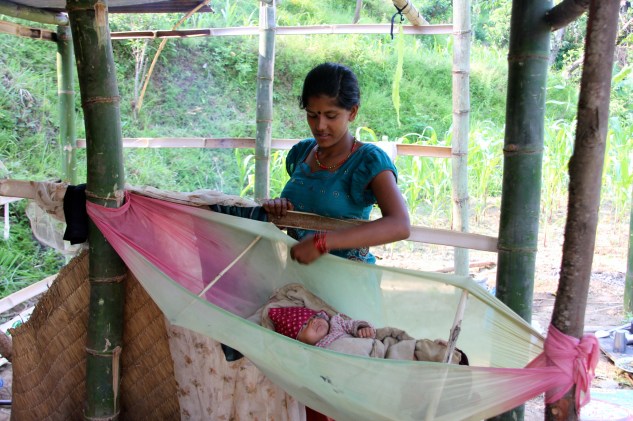
Uttam’s family’s two houses are still going up, but before I left the next morning, I was happy to take this picture of his wife and two month old baby.  Another small bundle in a big space…nice improvement.

.      .      .

IMG_9711

IMG_9440

Stones in the Sky


It sure is hot, I’ll tell you that much. No matter how much water we’re drinking, it just seems to turn directly in to sweat. I’m thirsty all the time.

It took me about two hours to walk from Archalbot to the next village over, Bharte. But it was two hours in the direction away from accessible travel. Bharte is next to Archalbot on the map, but once you get a little way in, it’s pretty far from anything. Instead of the clustered communities I’m used to in Nepal’s hills, Barte’s houses are often a few hundred meters apart.

Let’s just say it’s a lot of walking.

It took me about an hour and a half to get to Barte from Archalbot this morning. I met up with a guy named IMG_9645Pashupathi, president of Nepal’s Red Cross Chapter in Bharte. The first place we stopped was at a collection of households sharing a tarp in the yard.

We sat down and discussed the plan: we’ll provide one roof per family if they build walls. Each time we have this first conversation, it has a different feeling. Some people seem over-eager to get what they can whether they need it or not; some proud and cautious. We’ve even been some places where homeowners didn’t seem to see the point of what we were proposing—as if the entire situation seemed too overwhelming or pointless to try to break into. In Sirewari there was a friendly, open vibe, and people caught on right away. I took down the number of the person who seemed like my best contact, a young mother named Santa.

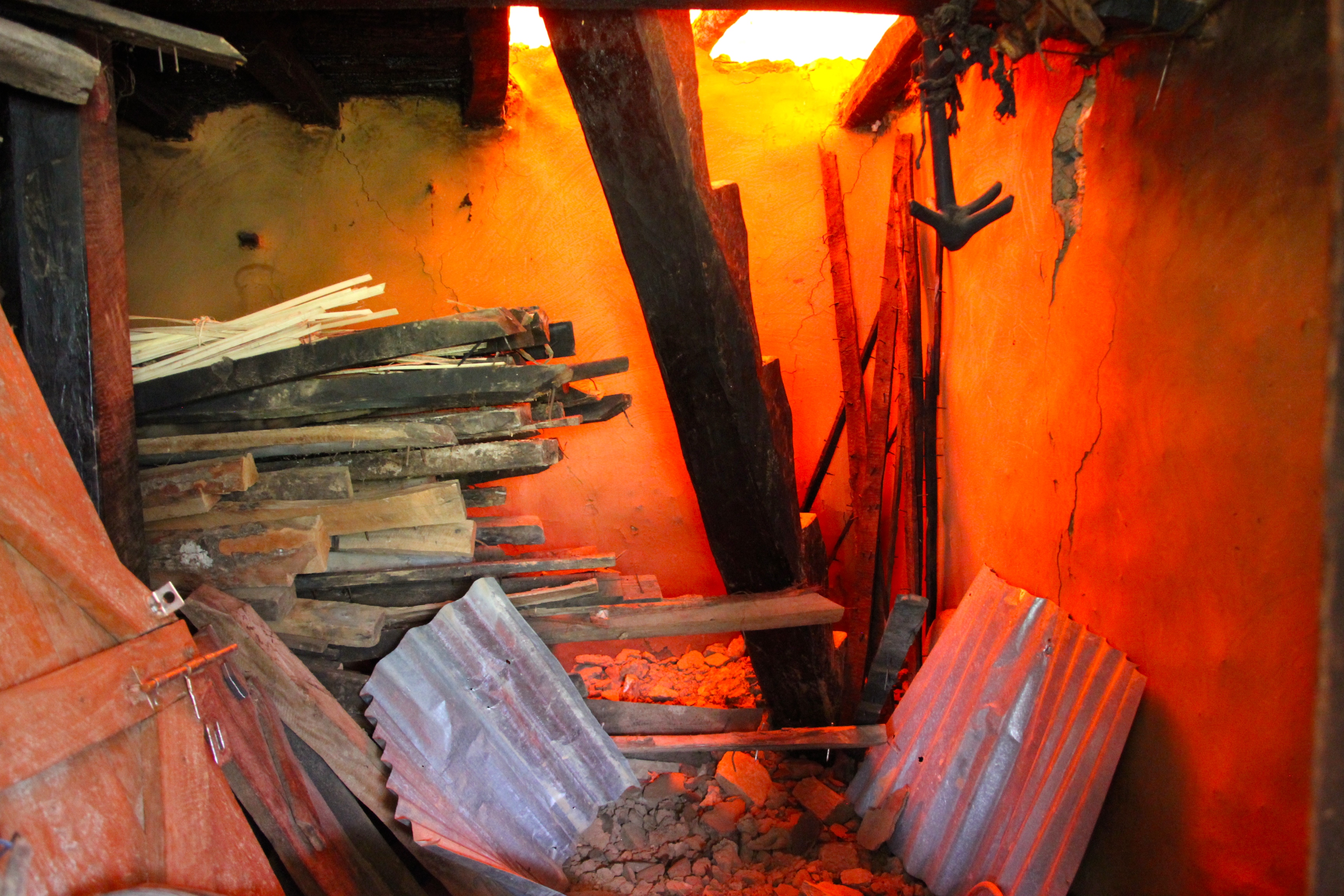
Next we went around back and visited the home a woman who unlocked the door of her boarded up house. I peered inside, where the orange tarp over a hole in the roof cast a firey glow onto the wooden staircase and various items and broken wood stowed in what used to be her living space. The scene looked ominously like those iconic photos of ground zero, leaving me momentarily mesmerized.

IMG_9644

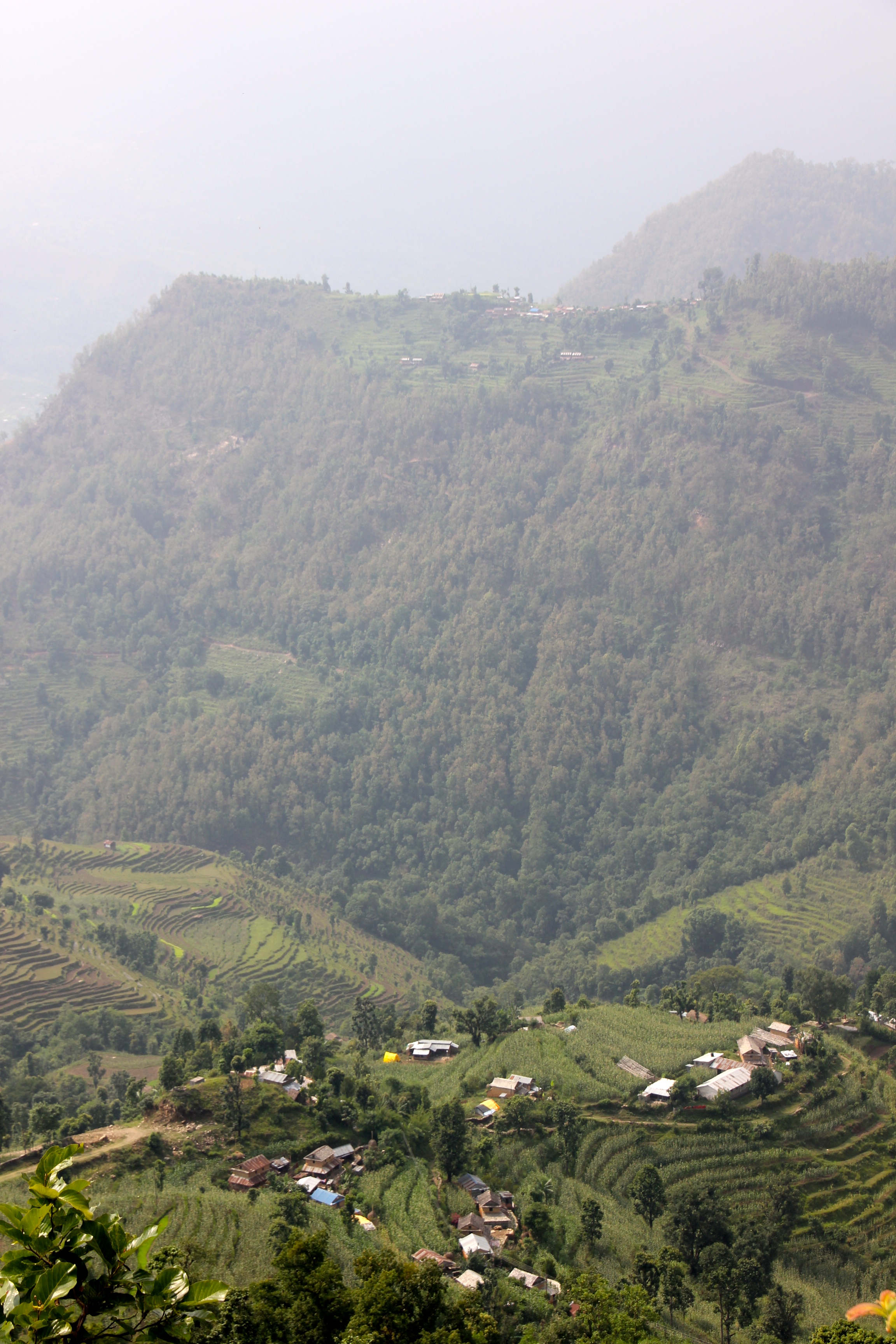
From there Pashupathi took me on a very long climb. It took us about an hour winding up quiet hillside paths to reach a soaring ridgetop in Lakhure. It looked like you could roll off either side of the hill and land all the way back in the valley. Summer clouds have obscured the piercing Annapurna peaks that would break the horizon in winter, but and endless fall of terraced fields across the valley are in full green bloom, spilling down from the sky in a dizzying cascade.

IMG_9784I went to four houses along this ridge in Lakhure, all of which were leveled in the earthquake, all of which belong to Dalit (“low caste”) families. This was my first visit to a place where houses where actually completely demolished. And what to you know – all four families had rebuilt themselves shelters, which they’d covered with traditional grass and reused tin. Most were using their tarps on top of these completed shelters to keep water off the fragile roofs.

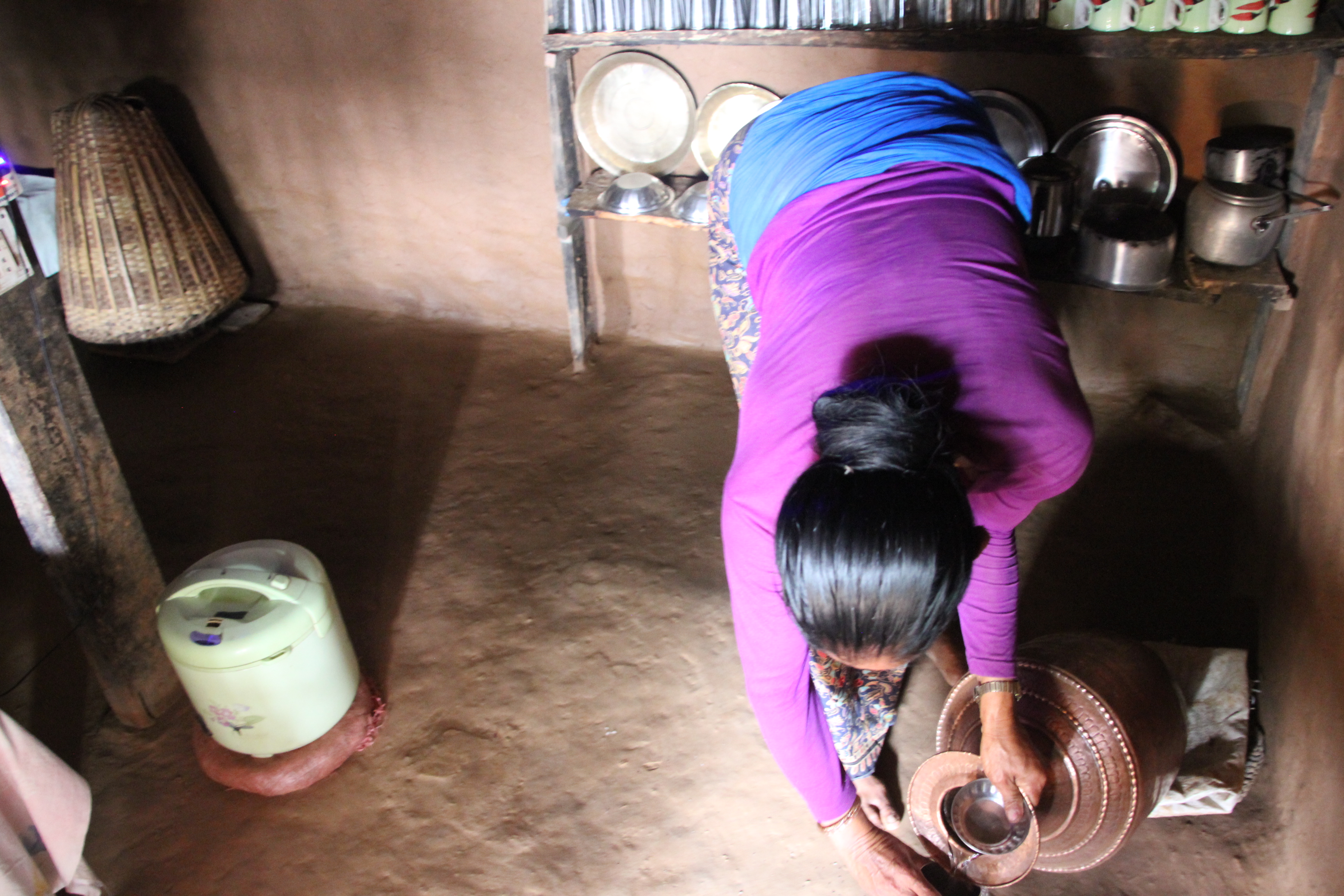
We spent some time talking with Bal Kumari, a widow – read, highly marginalized in rural Nepal – whose two daughters are married and whose two sons are still in school. She hired people to rebuild her fully leveled house in about 10 days. They literally took the stones of the rubble and put them back in to a house. Which, admittedly, used to be two levels, and is now it is one. But it’s a sturdy, warm, normal house. With old tin and a tarp on top (we will be bringing her new tin shortly). She still doesn’t know how she’ll repay the $300 debt this put her in to.

IMG_9664Other members of this community had cut and woven bamboo, or spent hours collecting and bundling grass for their roofs. I know the pundits talk about the resilience of the Nepali people so much it is becoming a cliché. But it is very moving to see this courage and persistence concretely, as stones and walls and laboriously crafted grass roofing.  The only aid they’ve received here is some rice, oil, salt, and tarps.
We’ll be bringing tin up to Lakure next week, and in the mean time, I hope we can find a way to employ a few of the people from these houses as day-laborers to help rebuild elsewhere in their community. They’ve certainly proven they know more than I do about it.

.      .      .

IMG_9660

Bal Kumari Bhujel inside her house, which was leveled in the earthquake. She hired help on credit and rebuilt it herself.

Uttam


Dilmaya and I spent two days in Archalbot, helping with the earthbag house and talking with members of the community about the upcoming week of building. The plan is for the whole group to take a one day gap on Monday to build the bamboo shelter for family living under the tarp. A lot of our time went in to talking with that family, especially with the son, Uttam.

Uttam is 21 years old and he’s the first person in his family to get an education. He stayed in school until sixth grade; his two older brothers didn’t go to school at all. But his younger sister got through eighth grade, and his youngest brother is currently in tenth grade. If the younger brother passes his school leaving exams, he’ll be the very first person in Uttam’s family to graduate from high school.

As a teenager, Uttam got a job in Dubai through a labor company, where he earned $200 a month. HeIMG_9708eventually learned to drive a bulldozer there – a fairly lucrative skill – but the company never raised his salary. In Nepal, he can’t drive a bulldozer without a license, and he says it costs a lot of money to obtain a license. So for now he’s got a job working in Chitwan.
Uttam and his wife met over the phone. Love marriage. Their baby is two months old and his wife is seventeen.

“Almost eighteen,” she said.

I wanted to take some time to appreciate Uttam’s situation from his point of view. It was frustrating for Dilmaya and me, as well as for the other neighbors, to have to work so hard to motivate his family to go gather bamboo for us to help them make a decent shelter. “It’s so hard to make them understand,” the neighbors kept saying with mild distain. And certainly enough, any time we discussed the plan with them, they seemed distrustful and obstinate. The truth is that if it hadn’t been for the baby and the insanity of their current living situation, it would have seemed like a poor use of our time, given how many people need help.

But what I began to realize as I talked with Uttam was that he didn’t believe anyone was really going to show up and help them build. The bamboo actually costs money because it’s on someone else’s land, and even if they arranged a barter instead of payment, Uttam’s family didn’t have any reason to believe anyone was going to reward their investment.

The more I talked with Uttam, I began to see the bias of the outside world, whose border was no further away than the border of the family. Uttam is facing tremendous odds. The fact that he can read is progressive in his context. He has traveled to Dubai and Chitwan for work and learned to operate a bulldozer. Bootstrapping has never meant trusting anything. It has meant knowing nothing is on your side, grabbing the closest rung on the ladder with a free hand, but never moving your feet off the rung you’re on when there’s no assurance the next one isn’t rot. Of course it is hard for Uttam and his family to “understand.” What he understands is the reality he is in, not the one someone else is telling him is possible.

Like all of us.

The truth is that, they have largely adjusted to seeming like a poor use of someone’s time.

Dilmaya and I were standing with Uttam outside his tarp tent at dusk, after a day of failed attempts at bamboo collection. They have almost fifteen people living in here. It was unclear to us how hard they were really trying. To some extent, maybe landowners were giving them a hard time about accessing the bamboo; on the other hand, maybe their efforts were half-hearted. We had no way of knowing.

“Well,” I said, “I can tell you one thing. If you don’t cut any bamboo and clear out this tarp thing, you can be sure nobody is going to come here and help you build on Monday.”

He looked at me with the squinty smile, like, “You’re funny. Fair point.”

As Dilmaya and I were leaving Sunday morning, Uttam’s relatives stopped by.

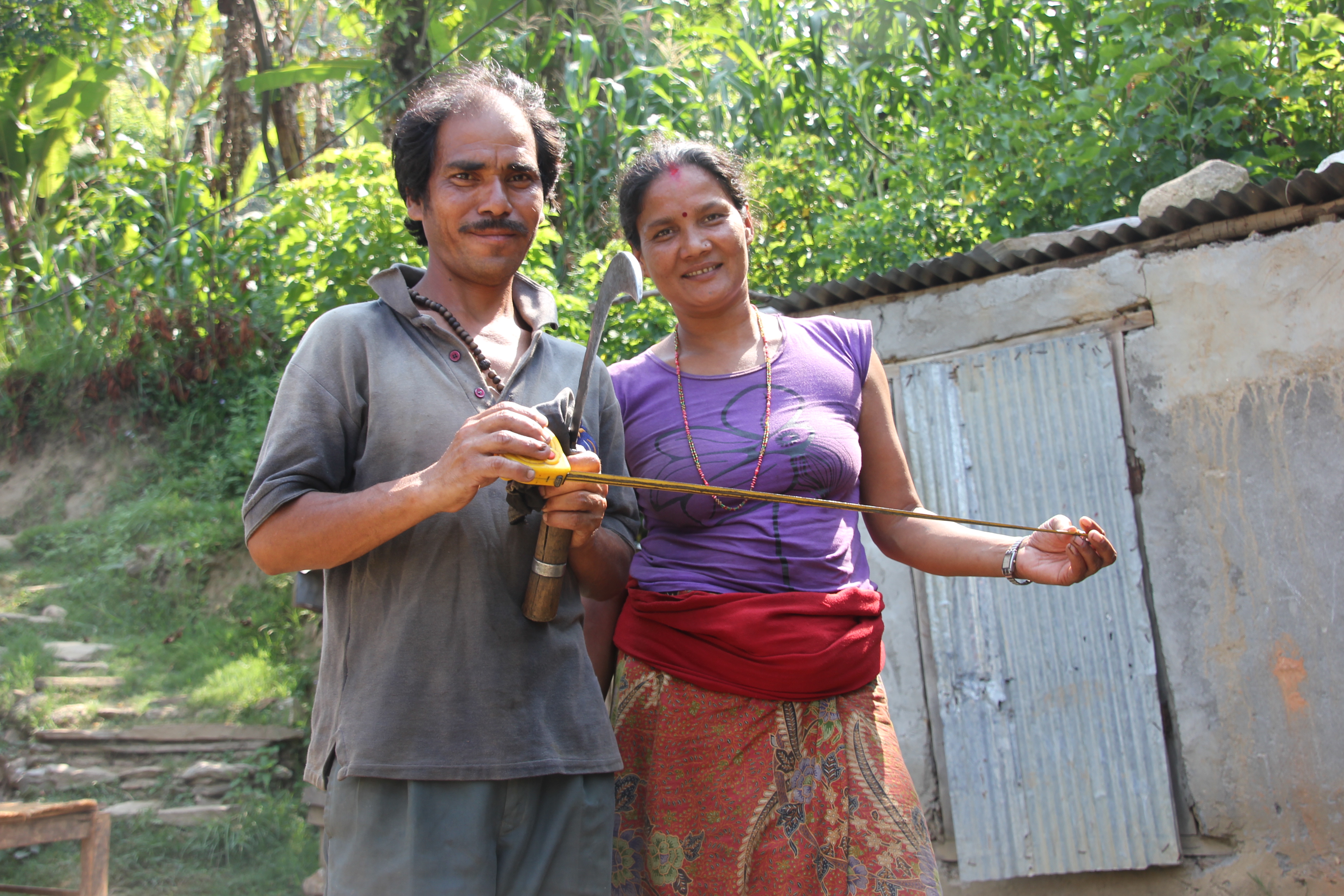
They were headed out with a sickle and tape measure.

.      .      .

IMG_9637

Possibility of Tin


The first part of the group left for Archalbot on Thursday: Robin and Colin, the French volunteers, and our field officer Dilmaya. I came a day later because I was working on IMG_9463getting our new office set up. Actually I was busy repainting it with the wrong type of paint, so before I left for Archalbot on Friday, I had to call a painter to redo my redo.

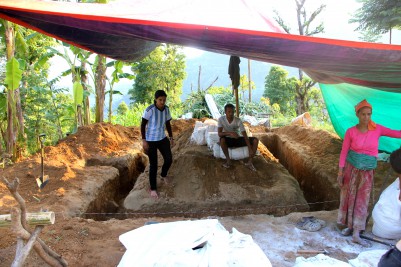
On Friday I rode out to Bote Orar, where the road to Archalbot turns off the main highway between Dhumre and Besisahar. When I arrived at about 5pm, the earth bag house already had a one-meter deep rectangular foundation.  Not bad for one day’s work.

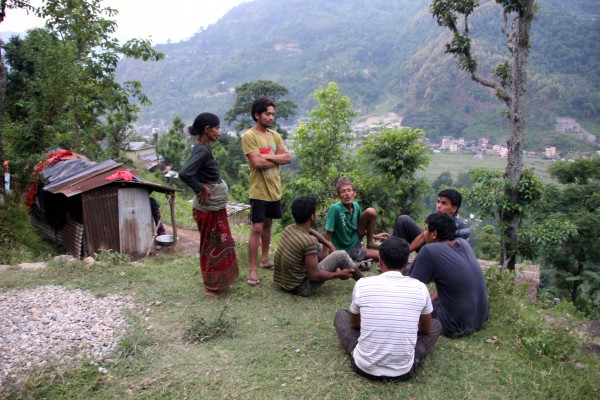
As dusk fell, Dilmaya and I accompanied some of the young men to a clearing on the edge of a terraced field for a community meeting. We sat across from the tarp-shelter in the field.

We’d explained the plan to our local organizers, Kripa and his cousin Surya: anyone who builds a shelter gets a tin roof from us; the earth bag house is a sample building style and we can provide materials if anyone else wants to do it; the family in the field will be a sample building project where the community works together build a bamboo house in a day. Kripa and Surya were getting a lot of questions about who would get tin for what, and they wanted to gather their neighbors and discuss this plan in front of us, to protect themselves from future accusations of greed or favoritism.

IMG_9471

With night falling around us, the discussion that unfolded was amazing. It basically boiled down to: “This organization is here to give us tin roofs for completed shelters. How are we going to help each other complete shelters?” They discussed the order of priority in the village – everybody agreed that the tarp family in the field was the top priority – and other matters such as where and how to get enough bamboo. Even the tarp family made their way over to the meeting, but they seemed guarded, unsure whether to believe us and everybody else. It was their neighbors who explained the plan and assured them they needed to start collecting bamboo.

People kept turning to us and saying, “How many houses are you going to build? Tell us and we’ll figure out who should get them.” And Dilmaya and I kept saying, “You tell us how many houses you’re going to build, and we’ll bring one bundle of tin per family. If we have the problem of too many people building, we’ll deal with it later. That’s never happened.”

Dilmaya did a great job of continually redirecting the discussion back to that point, that everything depended on their planning, and we’re there to meet them wherever they can get to. One guy asked if large families would be able to get more than one bundle of tin. We replied that’s not up to us; our allotment is one bundle of tin per family, and people can add more area with re-used tin or natural materials. “On the other hand,” we said, “as a community, if you guys tell us that a certain household really needs more tin than that, we’ll believe you.”  Because nobody’s going to be the jerk who tries to make off with unneeded extra tin under the scrutiny of the entire village.

There are still many of steps between this meeting and a rebuilt bamboo village in time for monsoon. But I’ve been doing community work in rural Nepal for nearly a decade, and this was as good as it gets at this stage. What you hope is that your attention will mobilize existing capacity and snowball in to a collaboration that combines the best of what we have with the best of what local people have. When we can frame our “aid” as an incentive, even though we want to give it away, people start to ask each other, How are we as a community going to capture the possibility of tin?  Our responsibility is to maintain a consistent and intelligent presence, to keep redirecting ownership back to the community, to closely monitor to make sure nobody’s taking advantage, and to live up to our word. We bring in a small quantity of crucial expertise in building, plus the final critical hardware: a new roof.

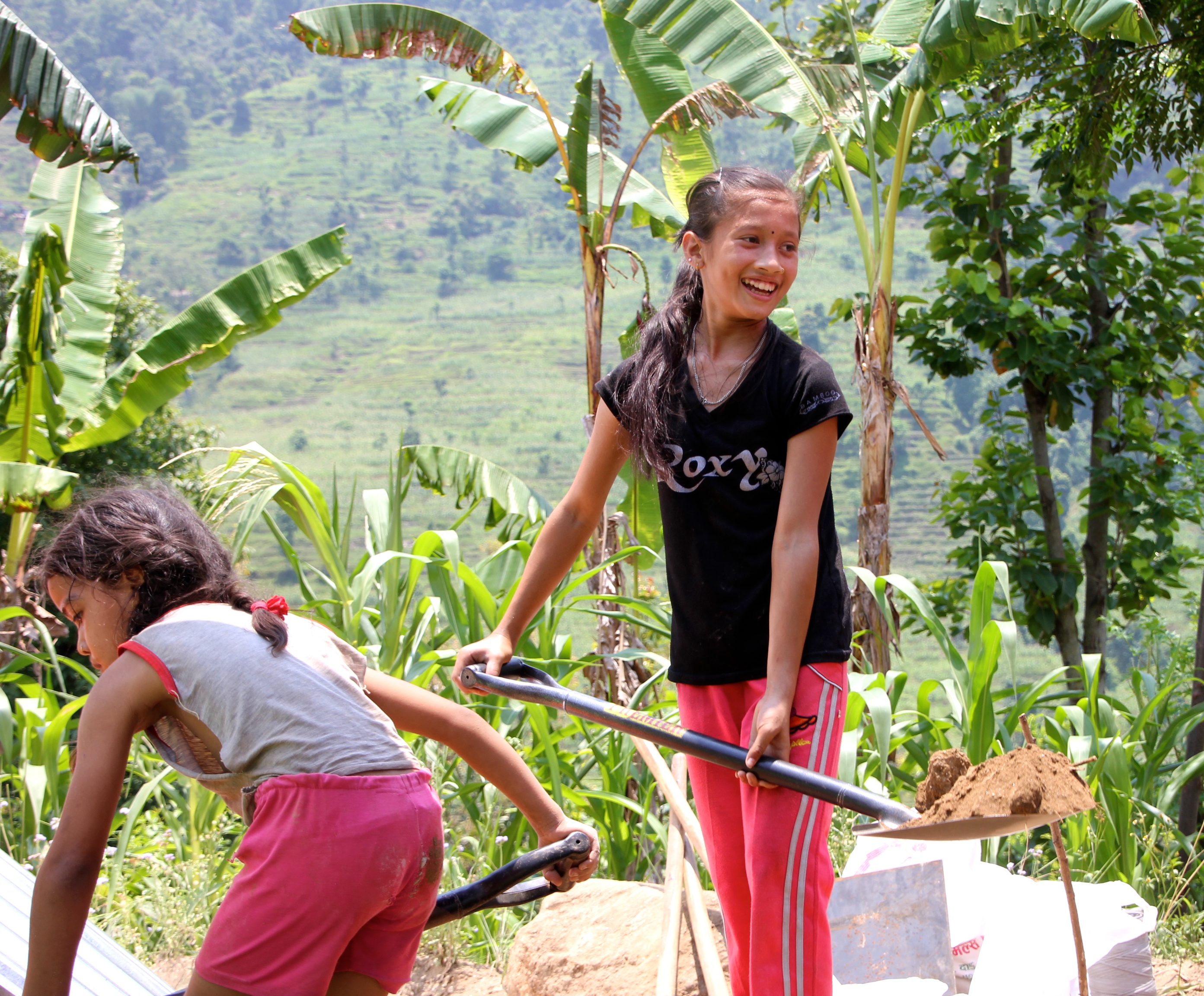
There’s also the simple value of spending time with people.  When we arrived, the corn field that needed to be cut down to make the earth bag house was still standing, and the family slashed it in half an hour–but IMG_9492they weren’t going to do that until they saw us standing there for real.  Kushal, the twelve year old boy we met during our assessment, called me almost every morning between Monday and Thursday, and he never had anything to say. He just wanted to see if I’d pick up.  Millions of rural poor go unseen by the world unless they are in the midst of a thrilling crisis that offers the chance for airdrops, mass collection of first aid materials, teeth-clenching field medicine, and smoky photos of catastrophe. But the persistent plight of invisibility and systemic disenfranchisement is too complicated and time consuming for most of the world to attend to by looking people in the eye.  It’s not the habit of our global society, of our governments or social organizations, to sit down in a clearing and say, “We’ll stay here and work on this with you. What do you think?”
I understand why large aid agencies can’t work like this. It’s not their job. They have the budget and infrastructure to strategize to best possible average and cast a wide net; their purpose is to get to the highest number of people, not to reduce the amount of waste or increase the amount of human connection. And Nepal needs them.  An organization like ours could never hope to reach any reasonable fraction of those in urgent need using our approach. But I’m reminded how much groups like us matter, even in the face of a gigantic task like building half a million houses in a few weeks. Because the best possible average still leaves out a lot of people, and for each one of those people, their house is 100% of the problem.

This strategy doesn’t always work, and I don’t know how things will turn out in Archalbot, although I admit I have a good feeling about it. But the hardest part is that you have to be willing to walk away if the community can’t carry its weight, and that’s devastating when it happens, because you and your team have put your heart in to it. You sit in the grass with people while they work things out. You tell them you are there for them and that you respect the wisdom they bring to the process as well as the result. When it falls through, it doesn’t just hurt your budget, it hurts your sense of hope and capability. It’s not something you write up in a report and send up the chain to management. You just go home and cry.

But what am I talking about?  Here’s to you, Archalbot.  We’ll stick it out for better or worse.  Show us how it’s done.

.      .      .

 IMG_9569

The Heart of the Matter

It seemed we took all the right steps to set up our first transitional housing project.   I attended two of the cluster meetings of INGOs and government, one on health and one on shelter. I read articles and talked with people who know about various forms of building and disaster housing. I learned two things: that we should keep design minimal and focus on raw materials and local building knowledge, and that we could only learn more by doing. Combine this with eight years of experience coordinating grassroots outreach in rural Nepal, and you have the basics.

We arranged our first project through our dental technician in Parbat, an assertive, organized woman named Anita who’s been very proactive about contacting us with information on communities in need in Parbat. We made a delivery of emergency tarps and supplies to Parbat a few weeks ago that went very well. Anita helped us locate a 23 homes in a village called Tanigaun where people were still living outside. She visited to do an assessment and collected data from the local government.

If all that weren’t enough preparation to rely on, our plan was basically just what the major relief agencies are doing: deliver sheets of corrugated tin roofing, and let people build using local materials. We planned to add a day working alongside a few especially vulnerable families to get their shelters up faster. On Friday night, Anita was on the phone with our field officer Gaurab until midnight, getting 25 bundles of tin, wire, and nails on to a tractor, which left the night before so that the supplies would be in Tanigaun in time for our arrival on Saturday.

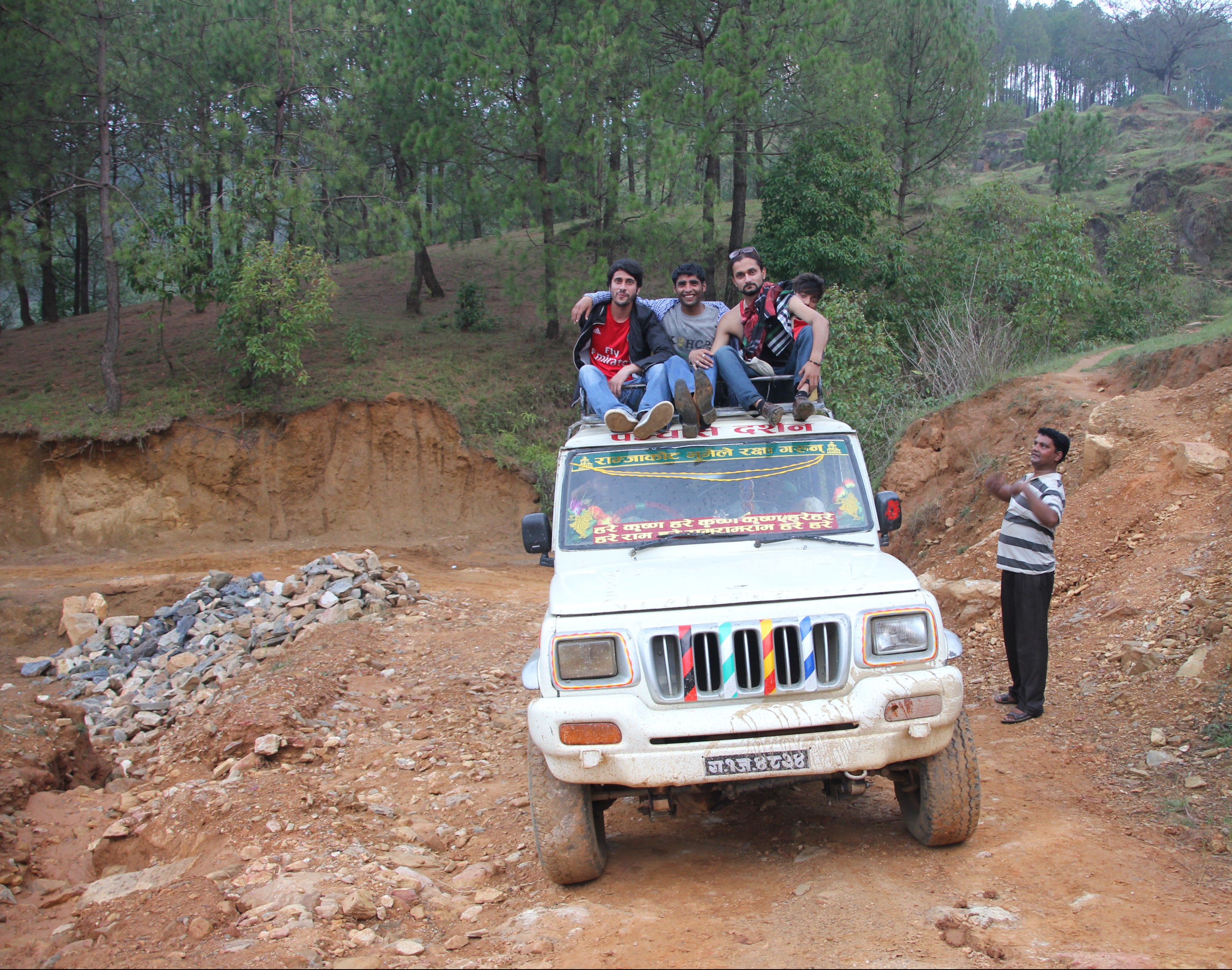
IMG_9410We were all in good spirits as we drove out to Kusma city at 7:30am. Four of our Gaky’s Light Fellows came to help build. In Kusma we met Anita and switched over to a jeep, which had the requisite 20-something boys covered in car grease clunking around underneath it with medieval looking tools right up until the moment we spun out of the lot with Gaurab and his friends sitting on top of the vehicle.

This is the part of the story with another bumpy 3-hour jeep ride on a dirt road through rolling green hills and the occasional village. One guy had to keep getting out of the jeep and laying stones in the road for us to loll over ruts and mud pits.

Which makes a good story—but honestly, a lot of Nepal is like that. The greasy jeep guys are always under your rented vehicle; the road is always rutted and laying stones to get over the next rut is just called driving. People sit on top of unreasonable modes of transport wherever they are. None of this is actually exotic in Nepal. And this is an anti-romantic post.

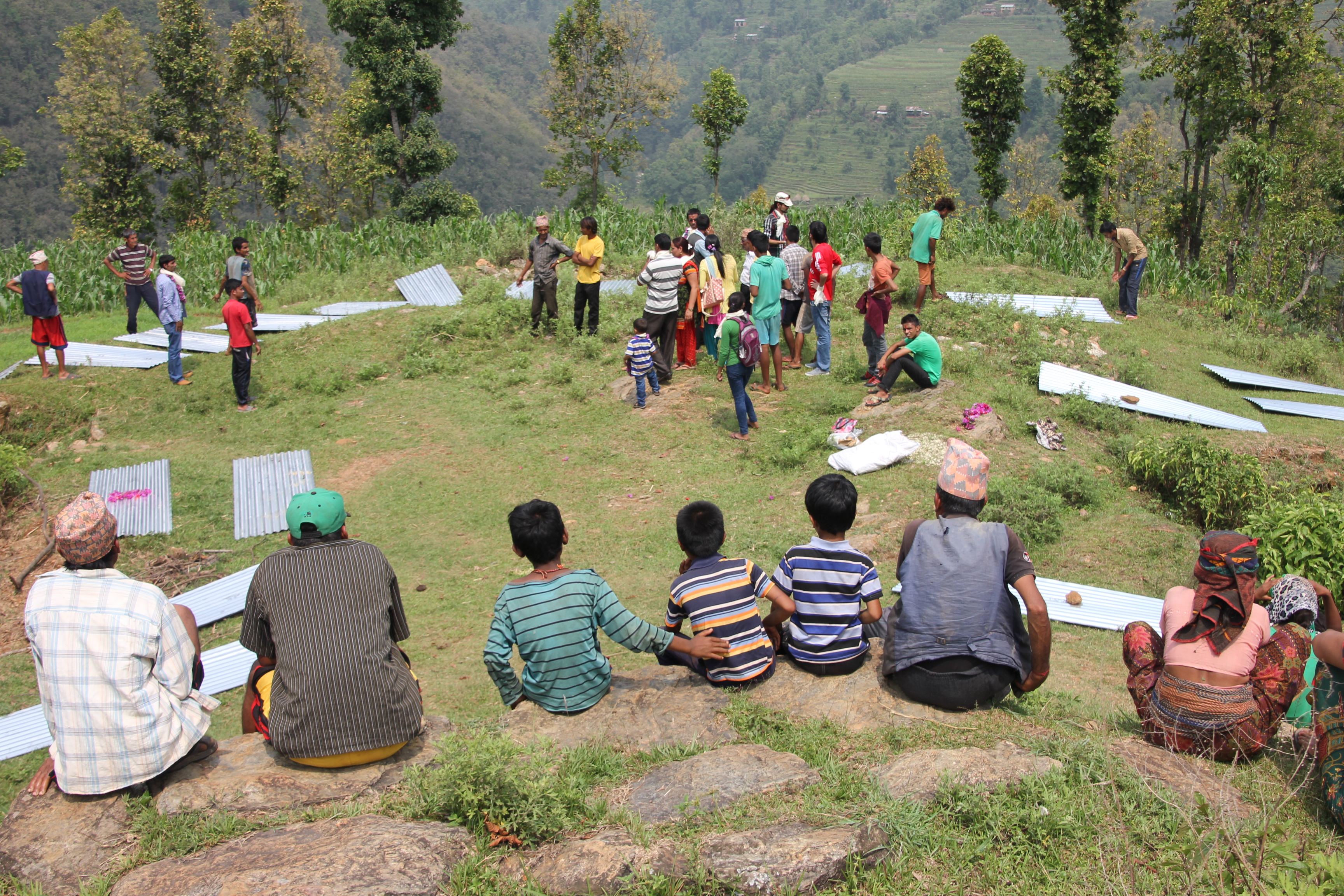
So I’ll cut to the chase…Tanigaun didn’t go anything like we thought it would. There was the welcome, the flowers, a woman grabbing my arm in tears. All the things you see in pictures that make you think you’re doing the right thing.

It wasn’t until we began helping people bring their bundles of tin to their houses that we realized we weren’t doing the right thing.

IMG_9373Many of Tanigaun’s homes have been damaged, some of them quite badly, and many are unlivable. A number of people were sleeping in the school. I visited the Dalit (in non-PC terms, low caste) area, and there were houses with large holes in them. Other houses had cracks of varying sizes here and there.

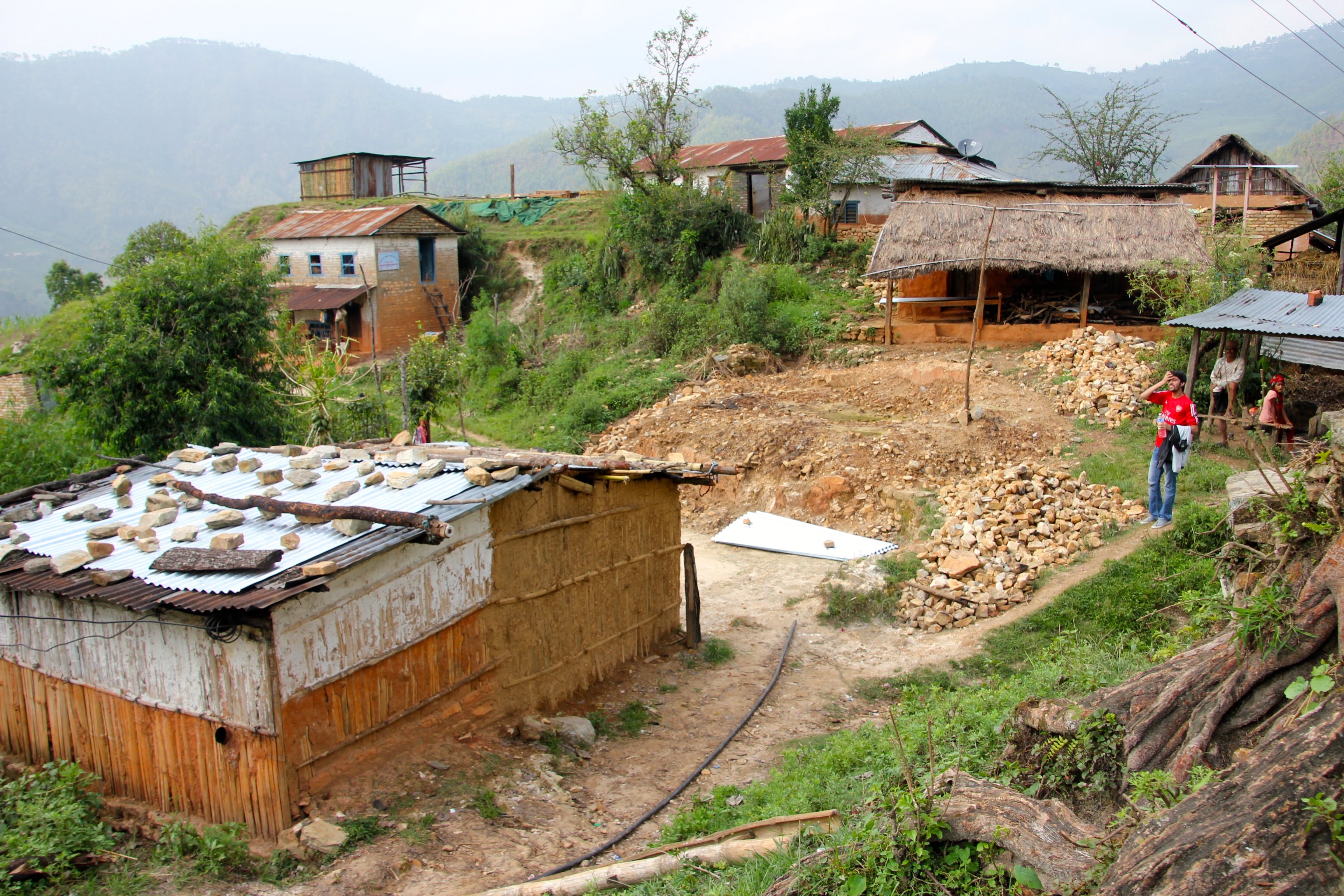
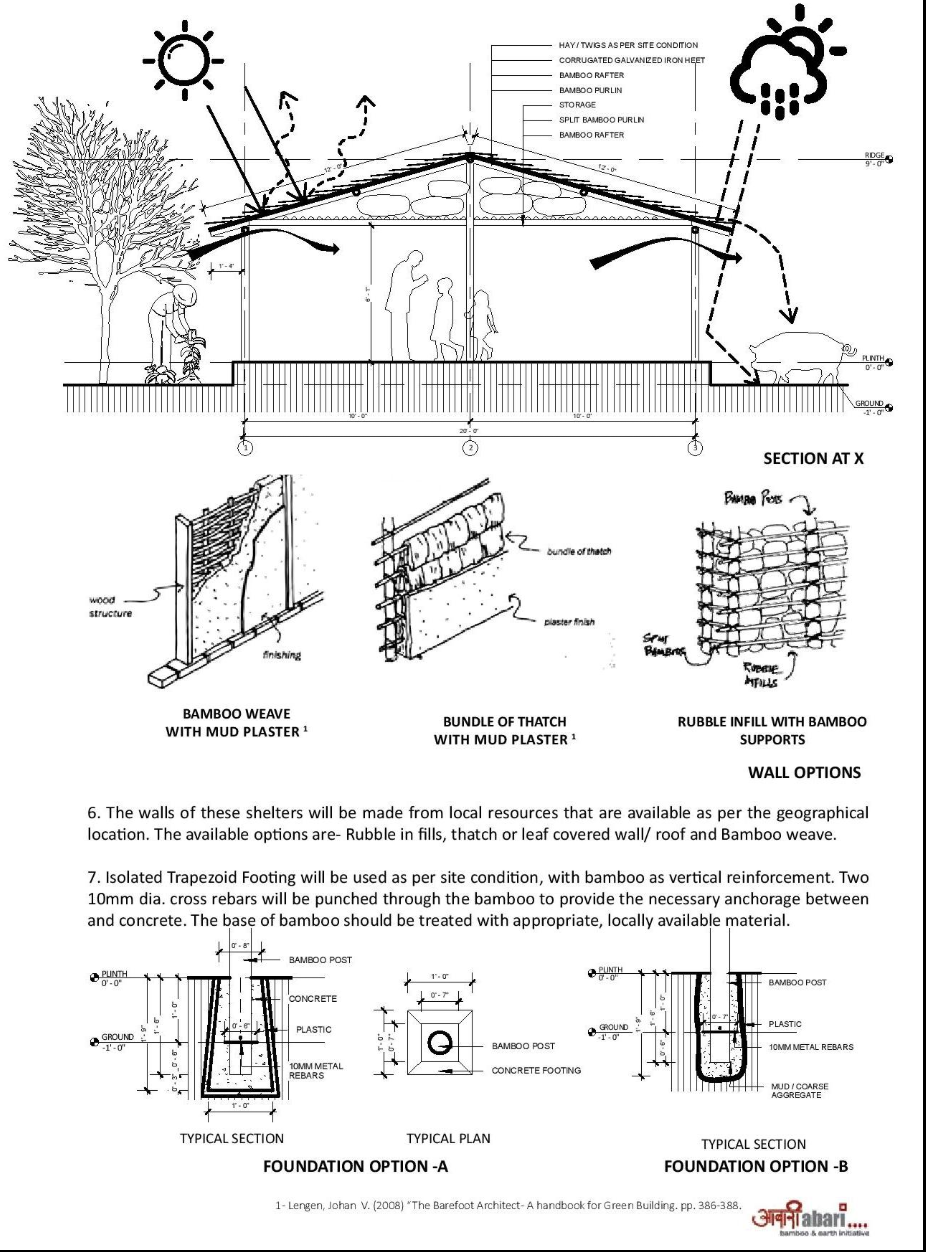
But there was plenty of reusable tin in Tanigaun. What’s more, a variety of public bamboo structures had already been made, using the same technique we hoped to help people with in their own homes. But if residents of Tanigaun were already in the habit of constructing safe, plastered-bamboo structures, why would anyone sleep in a school for a month?

In fact, raw materials were lying around everywhere, but the people appeared confusingly passive. One group of families showed us a shelter where they had four families living together, and begged us to reallocate more tin to them for space. But they were using corrugated tin as siding under a tin roof – which, in case you’ve never lived in a shiny tin house during a pre-monsoon summer, is a miserable idea, while a bamboo house with a tin roof is cool, sound-insulated, and sturdy. They had enough tin to cover double the area they were living in.  Already.

And that’s really the heart of the matter. Sheets of corrugated tin aren’t going to help anyone who isn’t motivated to build under them. What we should have done in Tanigaun was to come with nothing but manpower, demolition tools, and moral support. We could have provided tin later as needed.

IMG_9380

My heart sank all the way to my feet and I felt so ashamed I wanted to disappear. With all that planning, we’d still made the ultimate beginner’s mistake: providing material goods in place of mobilization. People were bickering over unneeded tin sheets, both exasperated with us and trying to impress us with their individual causes, playing out a story I’ve watched a million times—I’ve designed my entire dental care project to subvert this very drama.

I should have known. But this is exactly what all the experts are doing – without the personal contact that we were able to bring in.

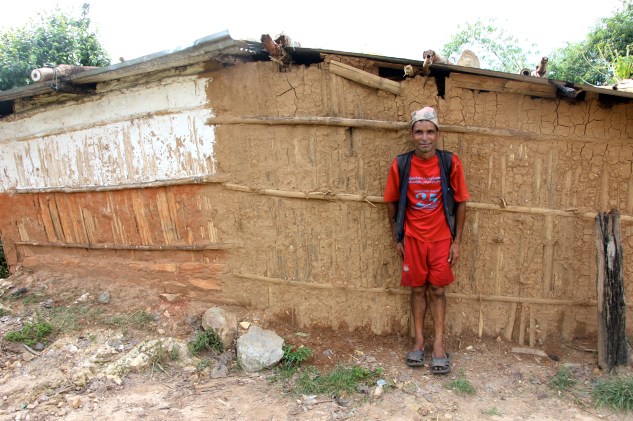
It wasn’t until late afternoon, when we were about to leave, that I stopped at a structure I’d passed a few times. There was one plastered bamboo hut sitting in the middle of the village, and I finally stood still and inspected it carefully. A line down the center gave away that half was old, half freshly made. Someone came over and told me it had been the house-owner’s kitchen, and after the earthquake, he’d simply added on another half.
“Ah – here he is now,” said the neighbor.

I looked up to see a man in shorts and a cap walking toward me, weathered with a look of curiosity lingering on his features that made him seem both coarse and naturally kind. He told me his name was Tulasi.

“Did you make this house?” I asked.

“Yes.” He didn’t elaborate. But he didn’t look the least bit impatient either.

I asked how long it had taken him.

“The first three days after the earthquake, I couldn’t really do anything. But then I started and it took me about a week and a half. My daughter and I built it.”

Tulasi had a funny way of talking, almost a stutter but not quite. In all likelihood, this man, who is also Dalit, has faced a great deal of discrimination in his life. His daughter told me that it’s just them and her little sister. Their mother is “gone” – either run off or passed away, I didn’t ask which.

“Where is your original house?” I asked.

He pointed to an empty lot across the road. He’d already demolished his old, cracked house. There was nothing but a pile of stones.

IMG_9392

Every now and then, I meet a type of person who has a prophetic quality. It has a sound like a thick velvet curtain that mutes the noise and nonsense of the rest of the world. You probably know what I’m talking about. These are usually the quietest people, the ones who are simply being their wisdom. They have nothing to prove, and often nothing they need to achieve. They simply exist with tremendous grace.

IMG_9396The inside of Tulasi’s bamboo house was cool and smooth. While not luxurious, it was far more than an emergency hut, and will certainly shelter this man and his two daughters through the monsoon. It will be safe in case of another earthquake. If they take care of it, it will last years, and indeed, the original half that was the kitchen turns out to be five years old. They have plenty of time to rebuild their main house in safety.

His daughter raised her hand towards a joint in the ceiling. “It was just leaking right here,” she said, “but we put your tin up already. So that’s solved.”

Everyone else’s tin was still sitting in their yard.

I wonder if Tulasi noticed that?

On the way home we had a long walk through the valley. The river rushing by and the green hills tumbling all around, endless in every direction, my thoughts spiraling out the same way, uncertain where to land. Everything seemed like a fool’s errand, and we were all disspirited.

I kept circling around this image of that simple bamboo house. This guy had built something magical in the middle of a gloomy swamp, and he didn’t even seem to notice or care that it was amazing. He just needed a house. It was only amazing because nobody else seemed to believe in houses – in every other respect, it was the most obvious thing in the universe.

It wasn’t until a few days later that Robin reminded me the World Food Program just distributed 1.5 million pounds of unedible rice, or that there was another disaster where over 800 people died from a relief distribution of moldy grain. You want to bat 100%, but that never happens. In our case, people will find some way of using our tin, even if it’s not the way we wanted, or even if they sell it. We learned an expensive lesson, but nobody was hurt – actually somebody will benefit, somewhere – and expensive lessons at scale cost millions of dollars.

And besides, I’d met Tulasi. Maybe when I tell my grandkids about being in Nepal after the great earthquake, the only part I will really need to make sure they understand will be Tulasi’s bamboo house.

We still had plenty of room to adapt for our next project. These were my meditations as I walked along the evening river with the rest of the group. I suddenly remembered Robin had called me earlier in the day while I was dealing with the tin situation. He’s my friend, the crazy truck driver, who gave a presentation on earth bag housing recently. I have desperately been wanting to try this out, but haven’t been able to find anyone to help. I rang him back.

“Bad news for us, good news for you,” Robin buzzed in to my ear over a bad cell connection. “The project we had planned in Gorkha has been cancelled. So we need to build an earth bag house before June 12.  Do you have a place where we can collaborate?”

.      .      .


IMG_9394

Throwing stones at Tin houses


Last Thursday, our meeting with two district officials in Lamjung was so encouraging that I’d been energized all weekend. I talked with a friend at home who did her thesis on post-earthquake housing in Haiti. My dad helped me get in touch with the inventor of earthbag building.  I pored over diagrams on the internet and learned the term “waddle and daub.” I was looking for every possible way to supplement a government housing kit consisting of tin roofing and tools. And of course, I talked with a few people about my safe-box idea.

Screen Shot 2015-05-29 at 11.40.19 PMAamod and I made our second trip out to Lamjung on Monday, for the shelter cluster meeting.   (Relief coordination between large iNGOs and the government is divided in to clusters of which shelter is one). We somehow managed to be an hour late again, which this time meant entering a room of a few dozen government officials and representatives from big international organizations.

We sat down in the corner and I took out my notebook. A slide up on the projector showed the names of about six multinational agencies, the villages where they’d been assigned to provide housing, and the number of households covered by each agency, which ranged from about 900 – 1500. Then on the bottom row was our name with two blank columns next to it – no villages yet assigned – and “100” in the righthand column under number of houses. Well, A for effort, anyway.

Besides, with the possibility of using the government’s housing kit, we were hoping to get that number up to about 300.

But the next hour was nothing like either our personalized visit with Lamjung’s district officials a few days earlier, or the big health cluster meeting I’d attended in Kathmandu. Today we were in a room of local politicians talking about use of resources. And my prior enthusiasm was quickly put in check.

Within minutes after we arrived, a discussion about reassigning some villages from one organization to another turned in to a 15-minute debate over whether aid agencies should be allowed to flash their logos while working. After all, it’s the government that should come out with the recognition – is housing aid to become no more than advertising anarchy?

All the big iNGOs have Nepal offices with all-Nepali staff. As I watched the Nepalis representing those agencies negotiate this discussion, even I started to get lost as to who was allied to what cause. I basically understood why these folks engaged a conversation about who would get credit instead of pointing out the more urgent matter of thousands of homeless people in Lamjung; let’s call that standard operating procedure, a necessary hurdle to eventually getting back to housing.

But when someone from one of these NGOs suggested that the Chamber of Commerce should broker
the massive upcoming procurement of corrugated tin roofing, I couldn’t keep up. This guy was working for a huge iNGO that needed to get tin in order to help build shelters.  To put this in context, Nepali P1070134villagers can build anything out of anything.  The overall approach being used with transitional housing is to provide a critical piece of hardware – THE ROOF – and let people build around it.

Foreigners in the room had already explained why their agencies were working on getting corrugated tin from multiple sources to meet the need as fast as possible. Why would this guy, tasked with representing his iNGO to the shelter cluster, encourage all these government officials to control and inevitably slow down the process?  Was he bluffing? Maybe he knew his suggestion would never work out, but would satisfy egos and clear the way. Or maybe he meant it. It was either brilliant or terrible, but I still don’t know which.

Finally, one of the European aid workers spoke up. I’d noticed him sitting off to the side, a burly, hearty looking man with clear blue eyes and a tousle of graying hair. He captured all my biases – obviously a disaster professional, not a Nepali-speaker, here for Earthquake and that alone, bored with these talking games that I’ve come to sort of enjoy as sport.  He was keeping a feel for the pulse of the conversation while mostly ignoring it, looking rather peeved.

In a few swift paragraphs, this guy listed the amount of corrugated tin available in Lamjung district, and in Nepal as a whole – about 10% of the tin needed for the number of houses destroyed. He knew exactly the number of trucks he needed to transport housing materials to his coverage area; the amount of square footage needed to store all the supplies. He pointed out that accomplishing all this was a massive task and that the monsoon will be starting imminently.

“If we could please finalize which of us are taking which areas, than we can all get to work,” he said.

Silence.

Even I was taken down a good notch, as I am so accustomed to all this politicking in Nepal that I’ve come to expect it, even though we’re in an emergency.

Corrugated Tin Roofing

Corrugated Tin Roofing

And there’s more. The government has established a policy to give two sheets of tin to each family that needs to rebuild – but there isn’t nearly enough tin in Nepal to deliver on this quickly without a lot of smart planning and international coordination. So instead, Nepal’s government has decided to give everyone $150 in cash to buy their own tin.

“And when you do that,” said the burly aid officer, “the price of tin is going to skyrocket, because there’s not enough tin available in the local market.”

“We have controls for that,” said an official.

“You can’t control that,” pointed out the aid officer. “When you put money in to a market where there isn’t enough product, the price will triple.”

The matter was never totally resolved.

Later, Aamod and I discussed why on earth Nepal’s leaders would willfully do something like that. The only reason can be to to pacify constituents quickly with cash rather than sorting out the more complex problem the population is actually facing. People will be pleased with receiving $150 and they won’t realize it’s useless because the thing they most need is nowhere to be found, or is now worth $450.

I wonder if this cash reimbursement matter is getting any coverage in the U.S. The only reason it won’t cause an economic collapse in Nepal is because there’s no more room to fall; people literally have nothing. So instead it will just put the most urgently needed commodity – sheets of corrugated tin, for goodness sake – out of reach by displacing the government’s responsibility to provide it on to people who can’t possibly solve a material shortage.

I actually watched a group of politicians look at each other, confront this fact, and, from what I could tell, decide to do it anyway. It felt as though this inflation matter was a good point, but a lot of trouble to solve. It’s a perfect example of the structural rot that weakened this country long before an earthquake shook its softened beams to the ground.

IMG_2599

Just to put icing on the cake, before we left, we found out that the district had changed its mind about providing a government housing kit for us to use. In fact, the friendly engineer we talked with the other day – Pradeep – a genuinely sincere guy who seemed to like our idea of collaboration, said the official policy is now that government is only to deliver its tin (or $150) in places where NGOs are NOT working. As for the entire housing kit, which includes things like nails, wire and hammer…that’s just a suggested kit. The big multinational agencies will use it, but the government won’t.

I knew it had all seemed to good to be true. Didn’t I say it was a miracle?

I made a hard pitch to Pradeep that he and I had the opportunity to set an example for how community organizations can collaborate to achieve the work of the government. There are countless groups like Eva Nepal running around providing aid with tremendous energy. He actually liked my idea a lot, but said I’d have to write a proposal and send it up the chain. We all know how long that will take, and in the mean time, people are living under tarps. It’s not the time to play games.

Looks like if we want to work on shelters in Lamjung, we’ll have to bring in all the materials ourselves.

.      .      .